
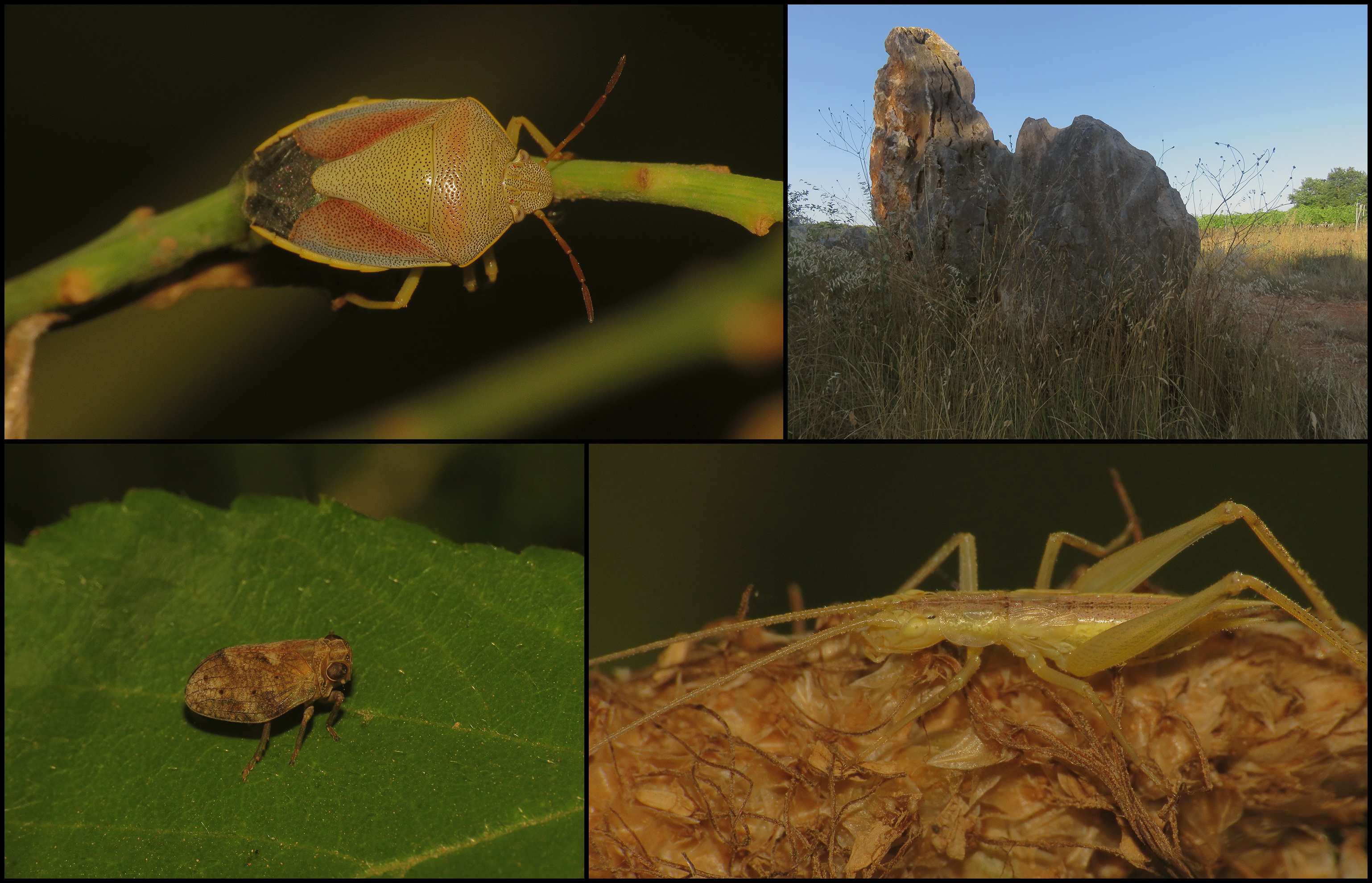
I was walking across fields and along the narrow paths surrounded by shrubs and small trees in the quiet area a couple of kilometers from my hometown.
 (Enlargeable)
It was late afternoon. The weather was hot and dry. 10th of July 2021 was the exact date.
 (Enlargeable)
The macro lens was mounted and ready to explore the small details along the way. I spent about half an hour observing these two small butterflies. Plebejus argus is the name of the species.

Not far from there I found a bunch of big rocks, near the dusty road at the edge of the meadow.

It looked that someone has brought them there as a decoration. They looked pretty cool in the landscape. But this isn't a post about those rocks. They are only part of the setting.

Insects ...

... spiders ...

... and small flowers of one particular plant are the main characters here.

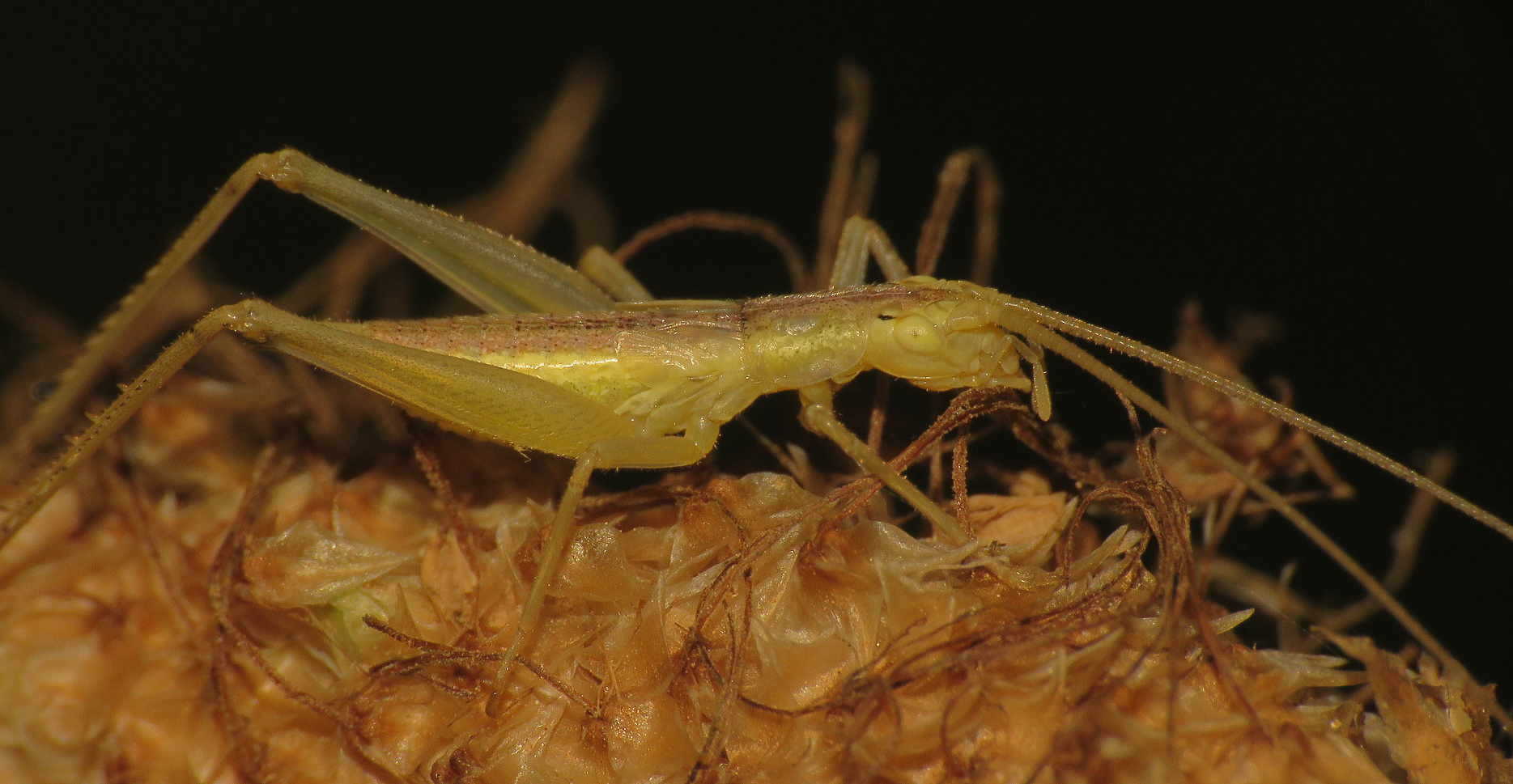
This is the nymph of a cricket.
 (Enlargeable)
The young, wingless version of the Oecanthus pellucens tree cricket.

The insect was well camouflaged on the flowerhead of the Plantago lanceolata plant.
 (Enlargeable)
This spider from the Oxyopidae family was photographed on the wild asparagus (Asparagus acutifolius) plant.
 (Enlargeable)
The name of the species is Oxyopes heterophthalmus.
 (Enlargeable)
In this series of photographs, you can see only the female ...

... and her cocoon.
 (Enlargeable)
This spiky beetle was hidden on the slightly folded leaf of a small shrub by the road. It looked like some kind of seed.

Hispa testacea leaf beetle can often be found on the Cistus incanus plant.

Here you can see the Agalmatium bilobum planthopper.

Al these small arthropods were found in the same area ...

... on the vegetation around those rocks that looked like abstract sculptures.

I spent more than a couple of hours there, so there is more, this post isn't over. Here you can see the flower of the Kickxia elatine plant.

I like the interesting shape of this very small flower.

From a certain angle, it looks like the head of some strange, cartoonish animal.

Here you can take a better look at the other anatomical features of this hairy plant.

This hoverfly, the Episyrphus balteatus, was resting on the twig of the Erica arborea shrub.
 (Enlargeable)
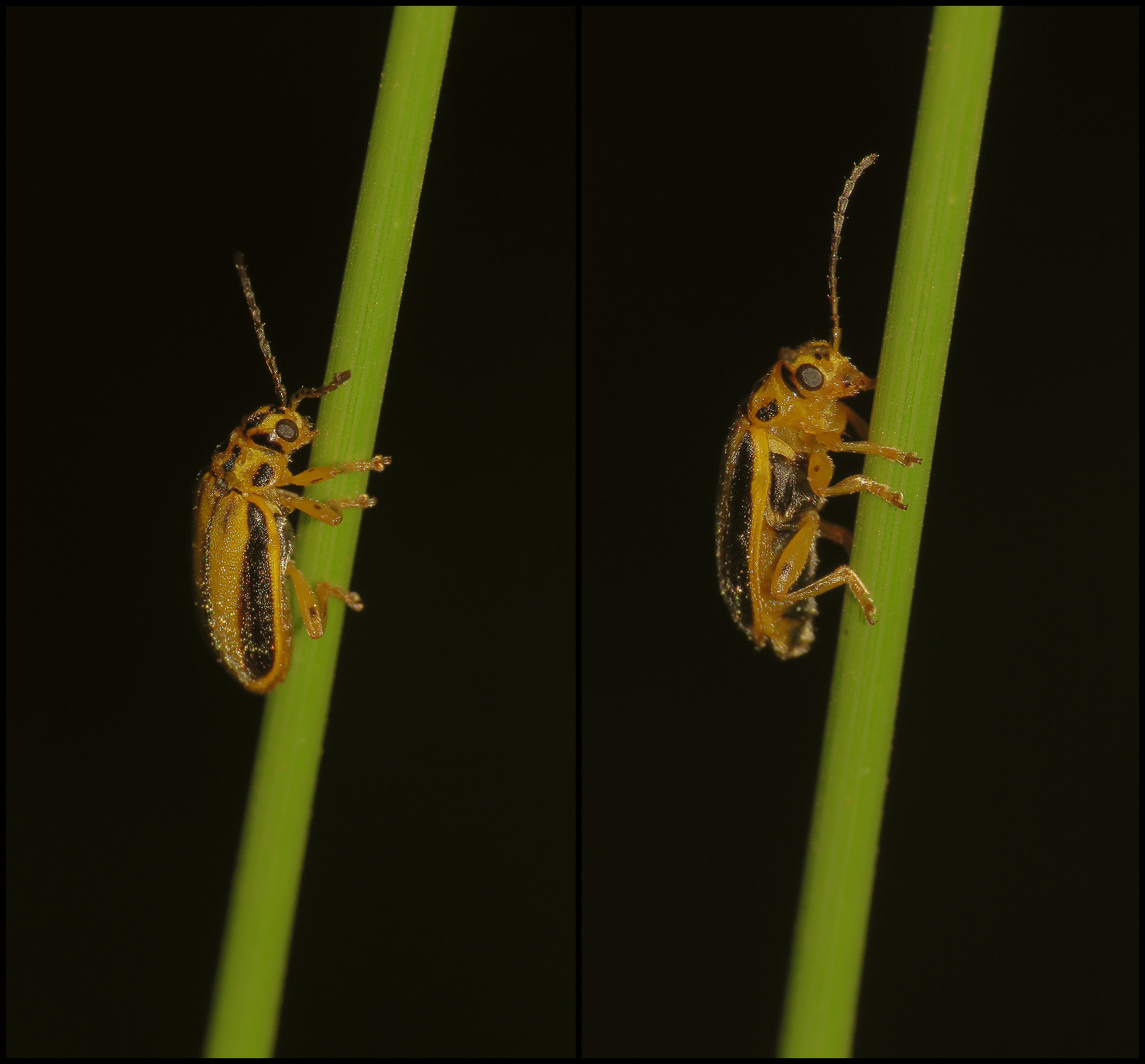
This small beetle was photographed on the straw of some tall grass.
 (Enlargeable)
Xanthogaleruca luteola is the name of the species. The family is Chrysomelidae (Leaf beetles)

On the leaf of the grass not far from there I found this interesting little thing. It looks like some kind of cocoon. Or pupa.

I can't tell you what is this exactly.

Here you can see a mating pair of Camptopus lateralis bugs.

In this photograph, you can see some small Cicadellidae. With many similar leafhoppers around, I'm not sure about the exact species. Could be the Synophropsis lauri.

This is the Oliarus panzeri lacehopper (Cixiidae family)

Here you can see the insect from a different angle.

This is the minuscule Scymnus apetzi ladybeetle.

Here you can see a small spider on the Foeniculum vulgare plant.

Argyrodes argyrodes is the name of this interestingly shaped species.

Here you can see the Dixus sphaerocephalus ground beetle. You can see these beetles in the evening, around and after the sunset, when they climb on various plants to feed on seeds. In this case, the beetle is eating the seads of the Plantago lanceolata. At this point, the night was very near.
 (Enlargeable)
While passing by this Spartium junceum shrub, I noticed that is covered with small snails ...
 (Enlargeable)
... so I stopped to take a couple of shots.
 (Enlargeable)
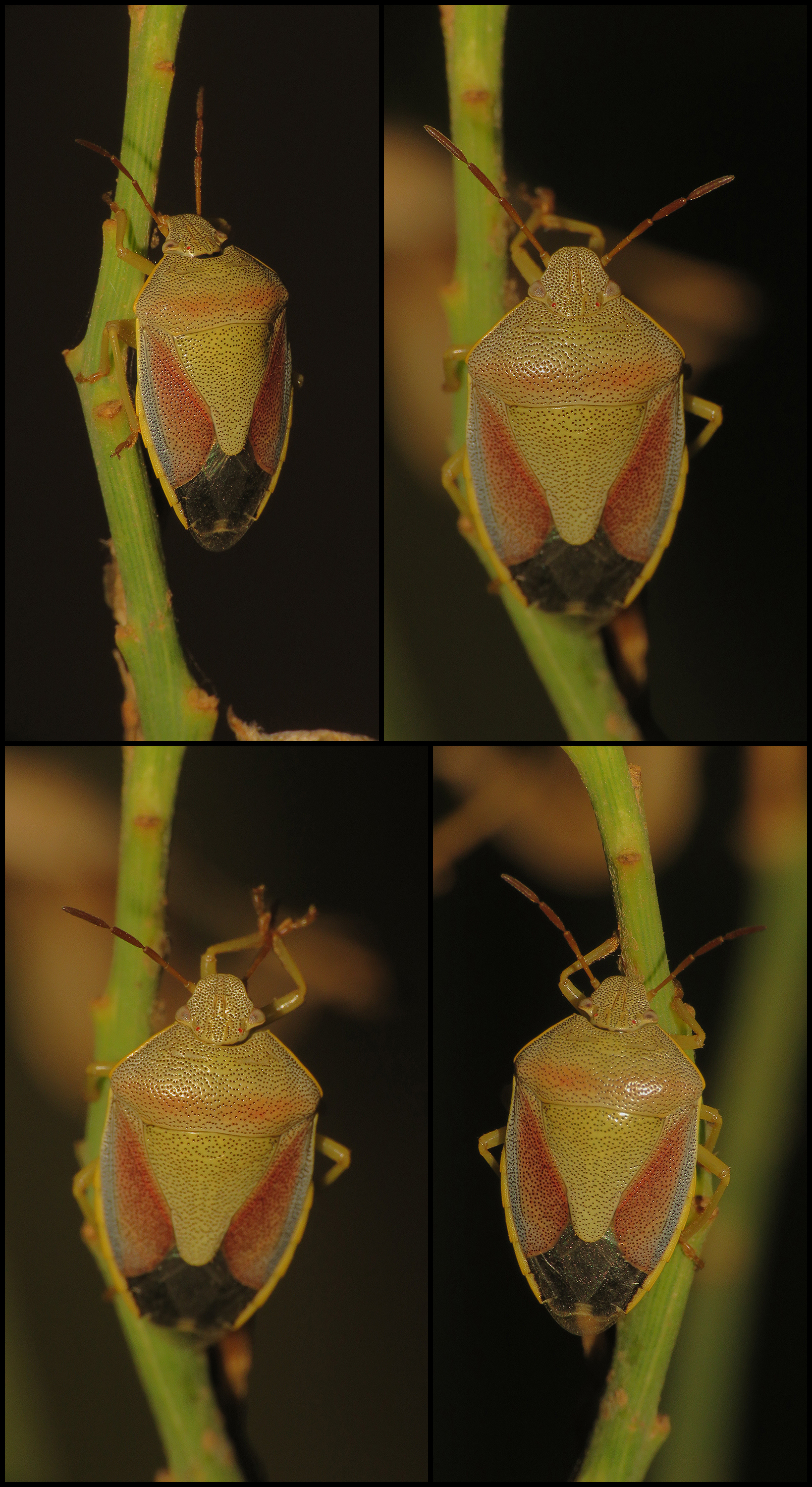
After a bit of exploring, I noticed that the plant is also hosting a group of shield bugs ...

... adults and nymphs.

These are the Piezodorus lituratus shield bugs. Here you can see an adult ...

... and this is the young, wingless nymph. After this photograph, I sat in my car and drove home because it was getting really dark.
AS ALWAYS IN THESE POSTS ON HIVE, THE PHOTOGRAPHS ARE MY WORK - THE END.