

Aunque suene algo absurdo, el miedo es el eje central que corre en nuestro interior; es enviado y almacenado en el sector principal de nuestro ser llamado "cerebro". Desde ahí parten los impulsos nerviosos, mismos que viajan a través de las neuronas transportando diversas informaciones, emociones y acciones.
En este punto, me centraré en una de las partes mencionadas: el miedo.
El miedo, aunque en realidad no es más que una de las tantas emociones que tiene el ser humano, pareciera ser la más fuerte de todas. Su evolución ha significado una parte fundamental a la hora de tomar precauciones; sin embargo, cuando esta emoción toma el control, el sistema nervioso simpático provoca un estado de lucha excesiva. Esto genera una respuesta crónica de "huida" ante las sensaciones, tanto físicas como emocionales.

Es ahí donde imagino —quizás de una manera acertada para algunos o errada para otros— que el miedo es el generador de las dolencias en todos los sentidos. Quiero decir que el estado de miedo se genera por shocks biológicos que pueden hacer sentir a la persona cosas como: desvalorización, enojo reprimido o conflictos de territorio. El factor común en todas estas situaciones es que el miedo ha sido el hilo conductor.
Para que comprendas esta postura, si es que aún no la habías escuchado, la explicaré ahora.
Cuando hablamos de "desvalorización", no nos referimos expresamente a lo material o monetario; aquí es algo íntegramente personal. Es la reacción a lo que la persona percibe sobre el trato de un tercero hacia ella misma.
En cuanto al enojo reprimido, son todas aquellas palabras que no hemos dicho por no querer incomodar. Ese enojo, muchas veces, suele ser hacia nosotros mismos.
Por otro lado, lo que se comprende como "conflicto de territorio" podríamos ejemplificarlo fácilmente con una pelea de perros, donde luchan por el espacio y por delimitar su fortaleza física y mental sobre otros. Este tema se ve mayormente en casos donde la convivencia se da entre demasiadas personas.
Ante estos eventos donde la persona suele callar para no incomodar, es que nacen las patologías físicas. Por ejemplo: el tragar consejos que nadie pidió, el recibir críticas sobre nuestra figura o forma de ser, o el no poder tomar decisiones propias; todo esto genera una enfermedad física.
Es decir, podemos generar una gastritis, donde el tema central es el "bocado": aquello que nos "tragamos" (una crítica o un consejo) que no queríamos ni nos gustó. Una vez que los síntomas físicos emergen, aparece una cadena donde cada sensación física de malestar genera desconcierto, el cual se convierte en miedo y, a su vez, altera el sistema simpático, haciéndonos sentir que estamos en huida y lucha constante.
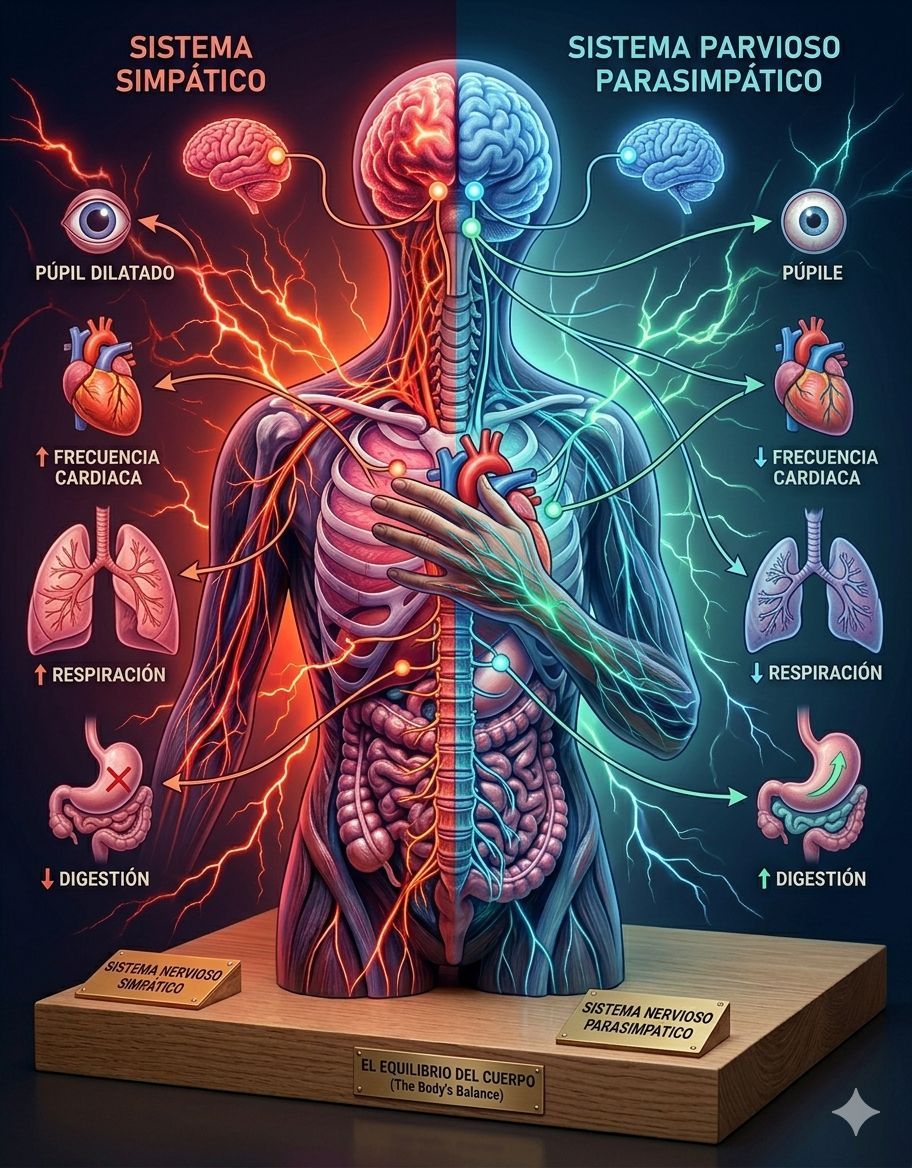
Entonces, en medio de esta lucha donde el cuerpo se desgasta y aparecen síntomas nuevos que desconciertan y generan aún más temor, la persona comienza a sentir que va a la deriva. Por ejemplo, al acudir a una consulta médica, el profesional, ante los síntomas, salta de una hipótesis a otra, de un medicamento a otro, y se acumulan órdenes de exámenes para dar con la patología real. En medio de este nuevo proceso, el miedo se alimenta, provocando que el sistema simpático se altere mucho más.
No obstante, pese a los síntomas que la persona pueda tener, y aun contando con una evaluación médica, hace falta algo esencial y primordial. Para que el cuerpo vuelva a su cauce, lo primero es "controlar el miedo". Y digo controlar, porque erradicarlo es imposible; recordemos que este es necesario para nuestra protección, ya que evita que nos aventuremos a situaciones extremas.
Una vez que el miedo ha bajado, el sistema simpático disminuye sus niveles de cortisol y adrenalina, permitiendo que el cuerpo vuelva a transitar por el sector parasimpático. Notamos este cambio, primeramente, en nuestro sueño, ya que el insomnio dejará de estar presente, liberando la vagotonía: ese estado de calma y reparación interna que da paso a una sanidad integral.

La salud está en nuestras manos. Así como buscamos cuidar el cuerpo porque así nos han enseñado por siglos, es justo también decir que cuidar de nuestra mente no es solo vigilar los niveles de estrés. Las emociones juegan un papel importante y, a veces, fantasmal; solemos deducir que son "solo emociones" y que no pasarán de hacernos sentir amor, dolor o rabia, cuando en las sombras el miedo está jugando un papel central sin ser notado.
Desde mi propia ventana:
Este enfoque es un estilo que he adoptado personalmente en pro de conocer mejor mis emociones para gestionarlas de mejor manera y así unir la salud física y mental, sin dejar de lado la salud emocional. No busco persuadir, sino más bien compartir y abrir una ventana a otras posibilidades de la salud, entendiendo que cada proceso es único y que la sanidad óptima se construye integrando todas nuestras dimensiones.
Próxima entrega: Lunes 18 de mayo de 2026.
English
Although it may sound somewhat absurd, fear is the central axis that runs through us; it is sent to and stored in the main part of our being known as the ‘brain’. Nerve impulses originate there, travelling through the neurons and carrying various pieces of information, emotions and actions.
At this point, I will focus on one of the elements mentioned: fear.
Fear, although in reality it is merely one of the many emotions experienced by human beings, seems to be the strongest of them all. Its evolution has played a fundamental role in helping us take precautions; however, when this emotion takes control, the sympathetic nervous system triggers a state of excessive fight-or-flight. This generates a chronic ‘fight-or-flight’ response to sensations, both physical and emotional.
This is where I imagine — perhaps correctly for some or incorrectly for others — that fear is the root cause of ailments in every sense. What I mean is that the state of fear is generated by biological shocks that can make a person feel things such as: devaluation, repressed anger or territorial conflicts. The common factor in all these situations is that fear has been the underlying thread.
To help you understand this perspective, if you haven’t heard of it before, I’ll explain it now.
When we speak of ‘feeling devalued’, we are not referring specifically to material or financial matters; here it is entirely personal. It is the reaction to how a person perceives the way a third party treats them.
As for repressed anger, these are all the words we have not spoken for fear of causing offence. That anger is often directed at ourselves.
On the other hand, what is understood as a ‘territorial conflict’ could easily be illustrated by a dogfight, where they fight for space and to assert their physical and mental dominance over others. This issue is most commonly seen in situations where too many people are living together.
It is in the face of these situations, where a person tends to remain silent so as not to cause discomfort, that physical ailments arise. For example: swallowing unsolicited advice, receiving criticism about our appearance or personality, or being unable to make our own decisions; all of this leads to physical illness.
In other words, we can develop gastritis, where the central issue is the ‘bite’: that which we ‘swallow’ (criticism or advice) that we neither wanted nor liked. Once physical symptoms emerge, a chain reaction sets in where every physical sensation of discomfort causes unease, which turns into fear and, in turn, disrupts the sympathetic nervous system, making us feel as though we are in a constant state of flight or fight.
So, in the midst of this struggle where the body wears itself out and new symptoms appear that are disconcerting and generate even more fear, the person begins to feel as though they are adrift. For example, when attending a medical consultation, the practitioner, faced with the symptoms, jumps from one hypothesis to another, from one medication to another, and orders for tests pile up in an attempt to identify the actual condition. In the midst of this new process, fear is fuelled, causing the sympathetic nervous system to become even more disrupted.
However, despite the symptoms a person may have, and even with a medical assessment, something essential and fundamental is missing. For the body to return to its normal state, the first step is to ‘manage fear’. And I say manage, because eradicating it is impossible; let us remember that fear is necessary for our protection, as it prevents us from venturing into extreme situations.
Once fear has subsided, the sympathetic nervous system reduces its levels of cortisol and adrenaline, allowing the body to return to the parasympathetic state. We notice this change, first and foremost, in our sleep, as insomnia will cease to be a problem, giving way to vagotonia: that state of calm and internal repair that paves the way for holistic healing.
Our health is in our own hands. Just as we seek to look after our bodies because that is what we have been taught for centuries, it is also fair to say that looking after our minds is not merely about monitoring stress levels. Emotions play an important and, at times, ghostly role; we tend to assume they are ‘just emotions’ and that they will do no more than make us feel love, pain or anger, whilst in the shadows fear is playing a central role without being noticed.
From my own perspective:
This approach is a style I have personally adopted in order to better understand my emotions so that I can manage them more effectively, thereby combining physical and mental health without neglecting emotional well-being. I do not seek to persuade, but rather to share and open a window onto other possibilities for health, understanding that every process is unique and that optimal health is built by integrating all aspects of our being.
Next instalment: Monday 18 May 2026.

Créditos / Credits:
Las imágenes usadas fueron creadas en Gemini AI.
El texto fue traducido en DeepL versión free.