

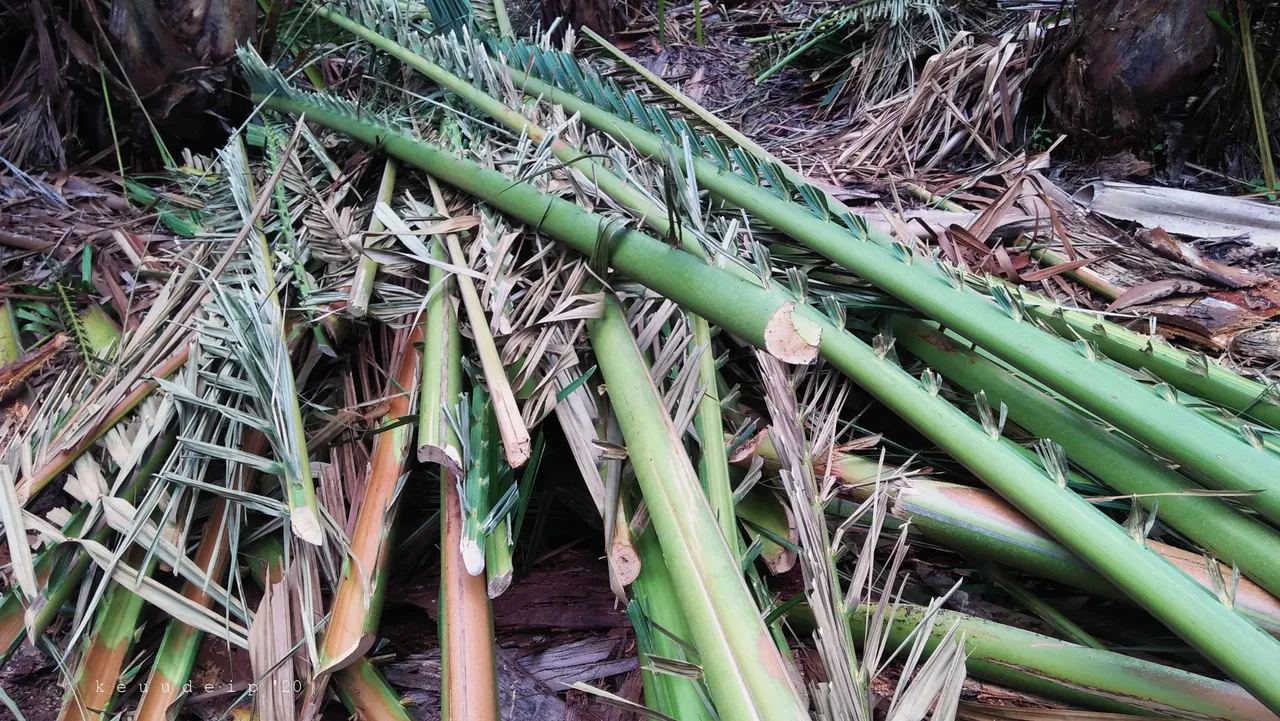
Wetlands near marshes, rivers, streams or watery places where these plants grow well are usually owned by local residents. These areas are owned only because they are overgrown by plants where each tree only blooms and bears fruit once in its lifetime. This plant has commercial value because it is a life support plant. The stem produces sago starch as a source of carbohydrates. The leaves are used for the roofs of traditional houses, as well as huts and stalls on the beaches and other places of recreation to create a comfortable, cool, natural and traditional atmosphere. Likewise the petiole, used for the ceiling of houses, and in the past, it was commonly found as walls and partitions of traditional houses. The fruits are edible, delicious when made into sweets or mixed in rujak (a mixture of fresh fruit pieces with special spices). Because of its various benefits, this plant, which is native to Southeast Asia, receives good care from the villagers who harvest its leaves, petioles and sago starch from its stems. It is also propagated by them by planting young seedlings. Scientifically, this plant is known as Metroxylon sago.




A hut on the beach with a roof made of rumbia leaves.

"My blog is my journal" (short notes containing experiences about various things).
Thank you for visiting.