
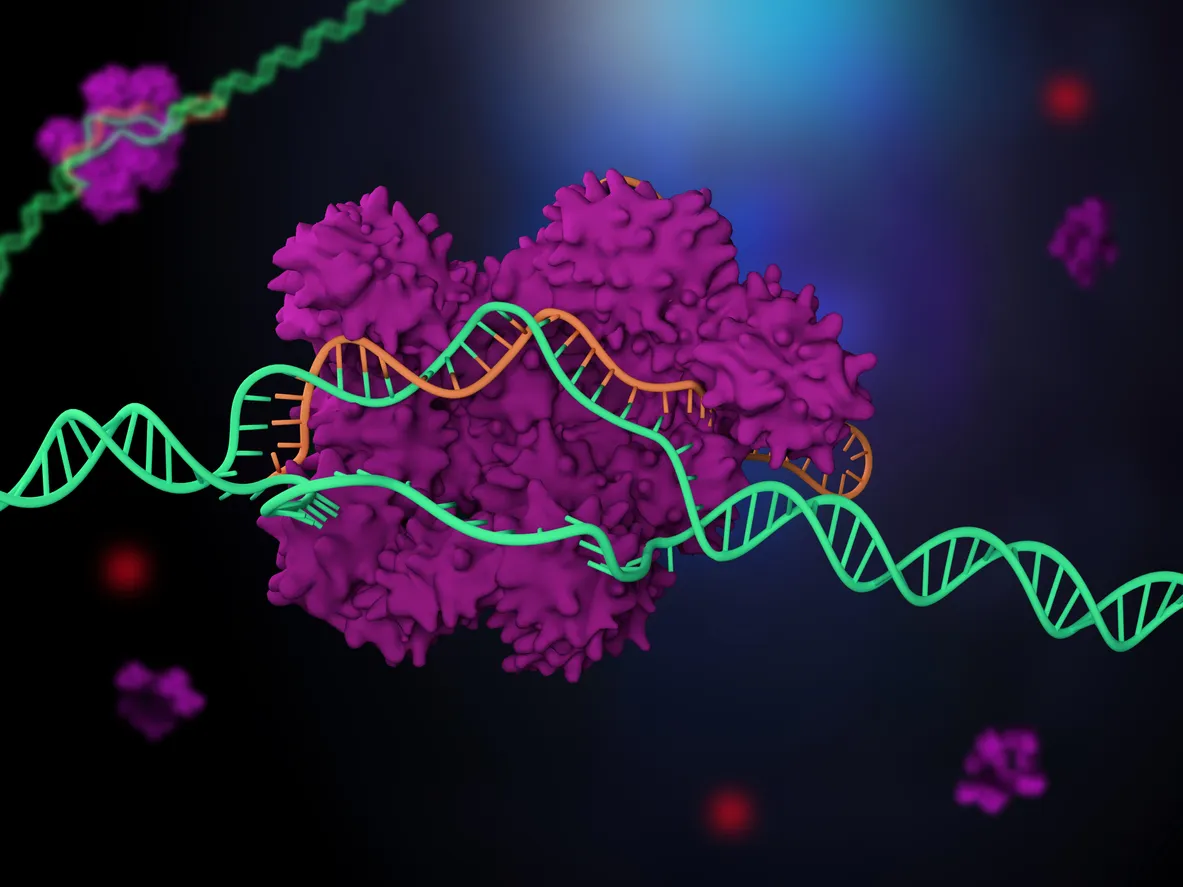
It is not the first time, and I suspect it will not be the last, that we spoke in this blog about the wonders of the genetic editing tool known as CRISPR and its amazing potential.
CRISPR is normally associated with a protein called Cas9 that acts like scissors to cut DNA, following the instructions of an RNA molecule that tells it where to cut.
As you all know, these CRISPR come from something similar to an immune system that some bacteria have, but since there are a lot of different bacteria, there are also a lot of proteins associated with these CRISPR each with different specialties.

Source
Among all their investigations they found a protein that did not cut DNA but RNA, also guided by another small RNA molecule and, hell, viruses are nothing more than a strand of RNA surrounded by proteins.
It seems that specifically the Cas13a protein, when it finds the complementary RNA to its guide RNA molecule, launches itself on it and start cutting it until it is torn to pieces.
This incredible system to diagnose the presence of a certain RNA in a mixture, was called SHERLOCK, in a set of initials of its name in English (Specific High sensitivity Enzymatic Reporter unLOCKing).

Source
Earlier this year, SHERLOCK has been adapted to detect the SARS-CoV-2 virus, the genome of which is an RNA molecule.
The test is fast (1 hour) and has a sensitivity capable of detecting up to 10 copies of the virus per microliter (one millionth of a liter).
But at the moment we have to wait because, fortunately, these things have to be very tested before applying it to humans and it still has to pass the controls of the US FDA.

