

Portada inspirada en los recuerdos de los autos clásicos que todavía ruedan por Cuba.
Hola comunidad 
Clásicos que nunca se fueron
Esta es una serie semanal dedicada a los autos que marcaron época y que, contra toda lógica, siguen rodando en Cuba. No solo como joyas automovilísticas, sino como parte viva de la cotidianidad.
Aquí no hablo solo de marcas, modelos y años. Hablo de memoria, de trayectos, de taxis, de padres llevando a sus hijos a la escuela, de paradas, de terminales y de un país donde durante décadas no se pudo comprar un auto nuevo… y por eso los viejos nunca se fueron.
El modelo de hoy
Chevrolet Bel Air – 1955
El Chevrolet 1955 no fue solo un automóvil. Fue el inicio de una nueva era para la marca y uno de los diseños más icónicos del siglo XX.
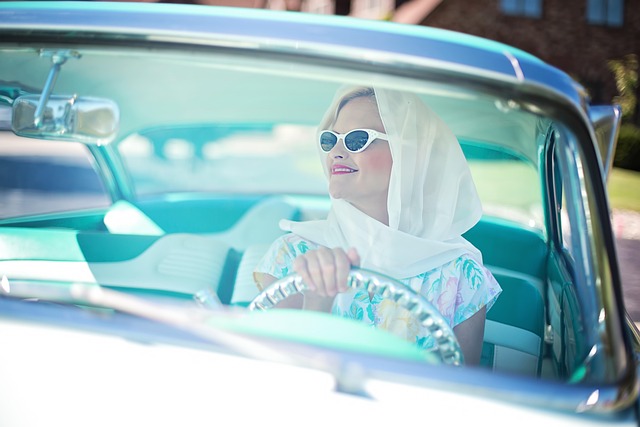
Fuente Pixabay
Bajo, cromado, elegante y con un carácter completamente distinto a lo que Chevrolet venía haciendo hasta entonces.
Pero en Cuba, más que un ícono americano, fue parte de la vida cotidiana.
Chevrolet 1955 – Las líneas disponibles
En 1955 Chevrolet no ofrecía un solo modelo, sino tres grandes series:
150 (One-Fifty) → versión más básica, orientada a flotas y uso comercial
210 (Two-Ten) → gama intermedia
Bel Air → versión más equipada y lujosa

Fuente Pixabay
Y dentro de ellas existían varias carrocerías:
Sedan 2 puertas
Sedan 4 puertas
Hardtop Sport Coupe (sin marco central)
Convertible
Station Wagon (Nomad, Townsman, Handyman)
El Bel Air era el más deseado por sus detalles cromados, interiores más cuidados y combinación de colores de carrocería en dos tonos.
Ficha técnica destacada (Bel Air 1955)
Marca: Chevrolet (General Motors)
Año: 1955
Motor base: 6 cilindros en línea “Blue Flame” 235 cu in
Motor opcional: V8 Small Block 265 cu in (el famoso inicio del mito Chevrolet V8)
Potencia: entre 162 y 180 HP según configuración
Transmisión: Manual 3 velocidades o automática Powerglide
Tracción: Trasera
Chasis: Body-on-frame

Fuente Pixabay
1955 fue el año en que Chevrolet lanzó su primer Small Block V8, un motor que cambiaría la historia del automovilismo americano.
El Chevrolet 55 y la cultura automovilística
El Bel Air 1955 es considerado uno de los autos más influyentes del movimiento:
Hot Rod
Custom culture
Drag racing en Estados Unidos
Muchos fueron modificados para competencias de aceleración por su bajo peso y gran potencial del V8.
Es, junto al 56 y 57, parte de la famosa trilogía “Tri-Five” Chevrolet.
Mi recuerdo personal

Cuando era niño, cerca de mi casa había un garaje que perteneció a un médico (Quesada) muy famoso del pueblo. En aquellos tiempos en que había pocos médicos, tener un auto así era símbolo de prestigio.
Su hija, Juanita —a quien todos llamaban Juanita la de Quesada— vivía a una cuadra de mi casa. A veces sacaba el Chevrolet del garaje y lo paseaba por el pueblo.
Mientras yo jugaba y montaba bicicleta, ver aquel 55 rodar por las calles era un espectáculo.
Lo monté varias veces. Recuerdo especialmente cuando Juanita recogía a mi padre y a mis hermanos en el camino para ir a la ciudad. Aquello no era solo transporte; era una experiencia.
En esos años el combustible no era problema, el transporte tampoco. Pero tener un auto así seguía siendo un lujo heredado, una continuidad familiar.

Hoy, muchos creen que en Cuba hay demasiados Chevrolet 55 en perfecto estado. La realidad es distinta. Existen, sí. Pero no tantos como se imagina. Muchos están deteriorados. Sin embargo, el 55 es uno de los más queridos, y quizás por eso es también uno de los más restaurados.
El Chevrolet 1955 no fue solo un diseño revolucionario ni el nacimiento del mítico V8 de Chevrolet.
Para mí:
Fue el brillo del sol reflejado en el cromo mientras yo sostenía una bicicleta demasiado grande para mis piernas.
Fue la imagen de Juanita sacándolo del garaje como quien despierta algo importante.
Fue el sonido del motor perdiéndose en la esquina del pueblo.
Hoy algunos siguen rodando.
Otros descansan en silencio.
Pero el 55, al menos en mi memoria, nunca dejó de andar.
La próxima semana seguimos rodando con otro clásico que marcó nuestras calles.
La imagen principal inspira la serie y será la portada fija de todos los capítulos, el resto de imágenes son de pixabay y algunas propias hechas con el móvil. Como siempre la versión en inglés fue hecha con el traductor de Google.
English Version
Cover inspired by the memories of classic cars that still run through Cuba.
Hello
Classics That Never Left
This is a weekly series dedicated to the cars that marked an era and that, against all logic, are still running in Cuba. Not only as automotive jewels, but as a living part of everyday life.
Here I don’t speak only about brands, models, and years. I speak about memory, about journeys, about taxis, about fathers taking their children to school, about stops, about terminals, and about a country where for decades it was impossible to buy a new car… and that’s why the old ones never left.
The model of today
Chevrolet Bel Air – 1955
The 1955 Chevrolet was not just an automobile. It marked the beginning of a new era for the brand and became one of the most iconic designs of the 20th century.
Fuente Pixabay
Low, chrome-trimmed, elegant, and with a completely different character from what Chevrolet had been producing until then.
But in Cuba, more than an American icon, it became part of everyday life.
Chevrolet 1955 – Available lines
In 1955 Chevrolet did not offer a single model, but three major series:
150 (One-Fifty) → the most basic version, oriented toward fleets and commercial use
210 (Two-Ten) → mid-range line
Bel Air → the most equipped and luxurious version
Fuente Pixabay
And within them there were several body styles:
Sedan 2-door
Sedan 4-door
Hardtop Sport Coupe (without center pillar)
Convertible
Station Wagon (Nomad, Townsman, Handyman)
The Bel Air was the most desired for its chrome details, more refined interiors, and two-tone body color combinations.
Technical highlights (1955 Bel Air)
Brand: Chevrolet (General Motors)
Year: 1955
Base engine: Inline 6-cylinder “Blue Flame” 235 cu in
Optional engine: 265 cu in Small Block V8 (the famous beginning of the Chevrolet V8 legend)
Power: between 162 and 180 HP depending on configuration
Transmission: 3-speed manual or Powerglide automatic
Drivetrain: Rear-wheel drive
Chassis: Body-on-frame
Fuente Pixabay
1955 was the year Chevrolet introduced its first Small Block V8, an engine that would change the history of American motorsports.
The Chevrolet 55 and car culture
The 1955 Bel Air is considered one of the most influential cars in the movement of:
Hot Rod
Custom culture
Drag racing in the United States
Many were modified for drag racing due to their light weight and the great potential of the V8.
Together with the ’56 and ’57, it is part of the famous “Tri-Five” Chevrolet trilogy.
My personal memory
When I was a child, near my house there was a garage that belonged to a very well-known doctor (Quesada) in town. In those times, when there were few doctors, owning a car like that was a symbol of prestige.
His daughter, Juanita —whom everyone called Juanita la de Quesada— lived a block away from my house. Sometimes she would take the Chevrolet out of the garage and drive it around town.
While I played and rode my bicycle, seeing that ’55 rolling through the streets was a spectacle.
I rode in it several times. I especially remember when Juanita picked up my father and my brothers on the road to go to the city. That was not just transportation; it was an experience.
In those years fuel was not a problem, transportation neither. But owning a car like that was still an inherited luxury, a family continuity.
Today, many believe that in Cuba there are too many well-preserved ’55 Chevrolets. The reality is different. They do exist, yes. But not as many as people imagine. Many are in poor condition. However, the ’55 is one of the most beloved, and perhaps that is why it is also one of the most restored.
The 1955 Chevrolet was not only a revolutionary design nor just the birth of the mythical Chevrolet V8.
For me:
It was the sunlight reflecting on the chrome while I held a bicycle too big for my legs.
It was the image of Juanita taking it out of the garage as if awakening something important.
It was the sound of the engine fading away at the corner of the town.
Today some are still rolling.
Others rest in silence.
But the ’55, at least in my memory, never stopped running.
Next week we keep rolling with another classic that marked our streets.
The main image inspires the series and will be the fixed cover for all chapters; the rest of the images are from Pixabay and some are my own, taken with my mobile phone. As always, the English version was made with Google Translator.