
If you prefer the English version, click on the following link 👉 HERE
¡Qué hermosa invitación nos hacen los amigos de 
Cuando las sobras se hacían poesía
Venezuela en la década de 1960 era un país que despertaba entre el zumbido de los radios de transistores y el pregón matutino. En nuestra casa, el eco de los sartenes de hierro contra la hornilla era el despertador oficial. Mientras el país se modernizaba y Caracas se llenaba de edificios altos —y ranchos—, en la cocina de Blanca Tomasa se libraba una batalla silenciosa y creativa, aprovechar las sobras del día anterior. Para mi madre, la comida del día anterior no era un "recalentado" tedioso; era una materia prima noble esperando su segunda oportunidad —nada se botaba—. Ella poseía el don particular de una madre: el arte de la transformación. Ella recreaba la alegría en la mesa con lo que otros hubieran considerado el final de una jornada.
Recuerdo especialmente el ritual de las caraotas negras, ¡dios!, en mi hogar, las caraotas eran sagradas. Pero si por casualidad quedaba un cuenco del día anterior, mamá no se limitaba a entibiarlas. Ella picaba cebolla blanca muy finita, casi transparente, y la ponía a dorar en un poco de manteca —los tres cochinitos— hasta que el aroma inundaba cada rincón de la casa. Luego, vertía las caraotas y las dejaba reducirse hasta que quedaban espesas, casi como una pasta brillante. Ese era el relleno estelar de las arepas del desayuno. Al morder esa arepa de concha crujiente, caliente, con el sabor intenso de la legumbre aliñada de nuevo, uno sentía que la vida era generosa. No hacía falta carne ni lujos; esa cebolla sofrita era el secreto de un reino donde mi mamá era la reina indiscutible.
Pero la magia no se detenía allí, pues, el arroz blanco, ese compañero fiel que a veces sobraba en la olla, encontraba su destino más glorioso en las "torticas". Mamá batía un huevo con un toque de sal, agregaba el arroz frío y, si la suerte nos sonreía, un poco de queso llanero rallado. Con una cuchara, dejaba caer porciones de esa mezcla en el aceite hirviendo. El resultado eran unas almohadillas doradas y crocantes por fuera, pero tiernas y llenas de historia por dentro. Era el sabor de la sencillez elevado a la categoría de manjar. Verla mover las manos con esa agilidad, mientras el sol de la mañana entraba por la ventana de la cocina, es una imagen que guardo como un tesoro de la Venezuela de ayer, donde la familia se sentaba a la mesa sin la distracción de las pantallas, solo con el sonido de los cubiertos y las risas.
Incluso la yuca, cuando quedaba de la cena, tenía su propio renacimiento, ya que mammá la cortaba en palitos delgados, como si fueran soldados alineados para la batalla. Los freía hasta que adquirían un color oro viejo y los servía con un toque de salsa de tomate. Para nosotros, aquello era mejor que cualquier golosina comprada en la bodega. Era una "comida rápida" artesanal, hecha con sobras, pero sazonada con una dignidad que solo las madres de esa época sabían imprimirle a la escasez o a la economía del hogar.
Evocar estos momentos me hace comprender que la cocina de Blanca Tomasa era un reflejo de la Venezuela de los 60: un lugar de esperanza, de inventiva y de un profundo sentido de pertenencia. Cada vez que siento el olor de la cebolla caramelizándose, vuelvo a ser ese niño que esperaba con ansias ver qué maravilla saldría de la cocina. La comida de mi madre era un abrazo constante, una forma de decirnos que, sin importar lo poco que hubiera, siempre habría suficiente si se ponía el corazón en el fogón.
Pero las hallacas o el sancocho cocido en leña, es lo máximo…
Escribir estas líneas me ha transportado de tal manera a esa cocina con piso de madera curada y olor a café recién colado, que me ha pasado lo inevitable, se me ha abierto el apetito de una forma voraz. Casi puedo sentir el crujir de las torticas de arroz y el calor de la arepa rellena de esas caraotas refritas. Creo que voy a tener que dejar de escribir para ir a ver qué ha quedado en mi nevera de ayer, a ver si logro rescatar un poquito de esa magia que mamá nos regaló a manos llenas. ¡Gracias a
𝗘𝗻𝗰𝘂𝗲𝗻𝘁𝗿𝗼 𝗱𝗲 𝗧𝗮𝗹𝗲𝗻𝘁𝗼𝘀: «Sabores del recuerdo»
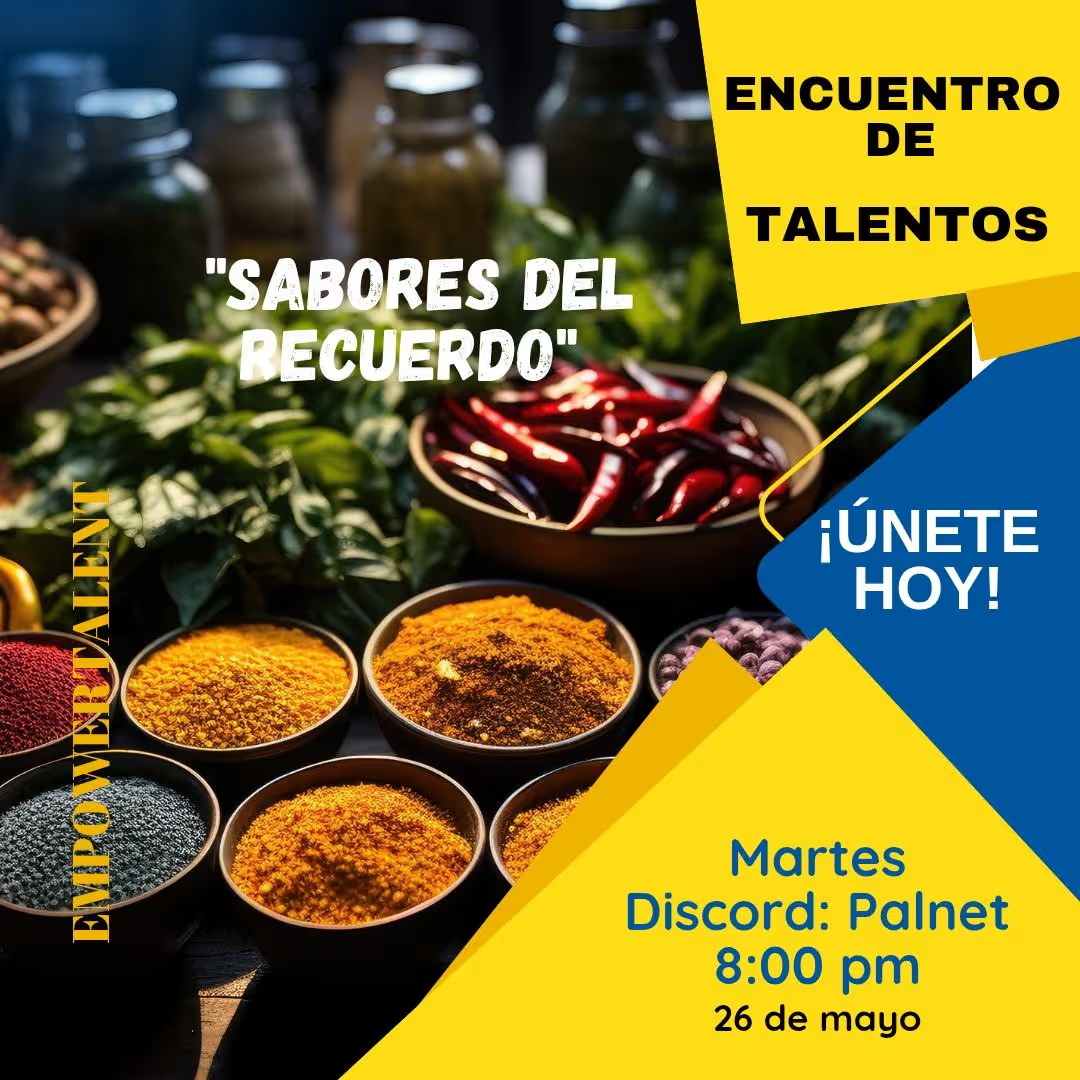
Portada de la convocatoria.
🔆****🔆****🔆****🔆****🔆****🔆****🔆****🔆****🔆
Dedicado a todos aquellos escribas que contribuyen, día a día, a hacer de nuestro planeta, un mundo mejor.


What a wonderful invitation our friends at
When leftovers became poetry
In the 1960s, Venezuela was a country that awoke to the hum of transistor radios and the morning market cries. In our house, the clatter of iron frying pans on the hob was the official alarm clock. Whilst the country was modernising and Caracas was filling up with high-rise buildings —and shacks—, a silent and creative battle was being waged in Blanca Tomasa’s kitchen: making the most of the previous day’s leftovers. For my mother, the previous day’s food was not a tedious ‘reheat’; it was a noble raw material awaiting its second chance —nothing was thrown away—. She possessed that special gift of a mother: the art of transformation. She recreated joy at the table with what others would have considered the end of a day.
I particularly remember the ritual of the black beans –my goodness!– in my home, beans were sacred. But if, by chance, there was a bowl left over from the day before, Mum didn’t just reheat them. She would finely chop white onions, until they were almost transparent, and brown them in a little lard – the three little pigs – until the aroma filled every corner of the house. Then she would pour in the beans and let them reduce until they were thick, almost like a glossy paste. That was the star filling for our breakfast arepas. When you bit into that arepa with its crispy, hot crust, with the intense flavour of the freshly seasoned beans, you felt that life was generous. There was no need for meat or luxuries; that sautéed onion was the secret to a kingdom where my mum was the undisputed queen.
But the magic didn’t stop there, for the white rice —that faithful companion that sometimes went to waste in the pot— found its most glorious purpose in the ‘torticas’. Mum would beat an egg with a pinch of salt, add the cold rice and, if luck was on our side, a little grated Llanero cheese. With a spoon, she would drop portions of that mixture into the boiling oil. The result was little golden, crispy pads on the outside, but tender and full of history on the inside. It was the taste of simplicity elevated to the status of a delicacy. Watching her move her hands with such dexterity, whilst the morning sun streamed through the kitchen window, is an image I treasure as a memento of the Venezuela of yesteryear, where the family would sit down at the table without the distraction of screens, accompanied only by the clatter of cutlery and laughter.
Even the cassava, when there was some left over from dinner, had its own rebirth, as Mum would cut it into thin sticks, as if they were soldiers lined up for battle. She would fry them until they turned a deep golden colour and serve them with a touch of tomato sauce. For us, that was better than any sweet bought from the corner shop. It was a homemade ‘fast food’, made from leftovers, but seasoned with a dignity that only mothers of that era knew how to imbue into scarcity or the household budget.
Recalling these moments makes me realise that Blanca Tomasa’s kitchen was a reflection of 1960s Venezuela: a place of hope, ingenuity and a deep sense of belonging. Every time I catch the scent of caramelising onions, I am once again that little boy who couldn’t wait to see what marvel would emerge from the kitchen. My mother’s cooking was a constant embrace, a way of telling us that, no matter how little there was, there would always be enough if you put your heart into the cooking.
But hallacas or sancocho cooked over a wood fire are the best…
Writing these lines has transported me so completely back to that kitchen with its weathered wooden floor and the smell of freshly brewed coffee that the inevitable has happened: my appetite has been whetted in a voracious way. I can almost feel the crunch of the rice cakes and the warmth of the arepa stuffed with those refried beans. I think I’m going to have to stop writing to go and see what’s left in my fridge from yesterday, to see if I can salvage a little of that magic that Mum gave us in abundance. Thank you to
Talent Showcase: «Flavors of Remembranc»
Cover of the call for applications
🔆****🔆****🔆****🔆****🔆****🔆****🔆****🔆****🔆
Dedicated to all those writers who, day in, day out, help to make our planet a better place.