
Political Philosophy, Robot Rights, A.I. Law, Philosophy
Imagine the world at its Genesis. There are no laws, no nations, no obligations. Everything is new. Thomas Hobbes uses the idea of an endless expanse of farmland to illustrate his theory of political philosophy. I have a farm; you have a farm. Everybody gets a farm. I grow limes; you grow carrots, someone else grows parsnips and so on. Everything goes incredible for a while. My limes grow in abundance, and I trade the excess for some parsnips. Your carrots come in late, so I loan you some limes, which you repay when the next crop comes in. Life is great. One year though, winter is terrible. My limes don't grow, nor do the carrots and parsnips.
Across the way, Fred's potatoes have a bumper crop. So, we go to see Fred, hungry and cold. Unfortunately, Fred doesn't want to share. He has enough food to survive comfortably. After the weather this year, Fred is worried. What if the world's bad fortunes continue. Winter could be so bad that potatoes won't grow. Nobody else has food- Fred doesn't want to be in the same position. To save himself, Fred sends us away.
Hunger does strange things to people. Justice be damned, I want to eat, even if it's just mashed, boiled and jacket potatoes for months on end. You feel the same way, as do a couple of the guys from the nearby fields. There's only one Fred. We can take him. In the dead of night, all of us go onto Fred's land and steal his spuds. For the first time in weeks, we get to eat. When Fred wakes up the next day to find his soil looted, he is not impressed. Our promises to repay him once our plants grow do little to appease him. What's the point of spending months cultivating acres of land if every other Tom, Dick and Harry is just going to come along and take advantage of all my hard work.
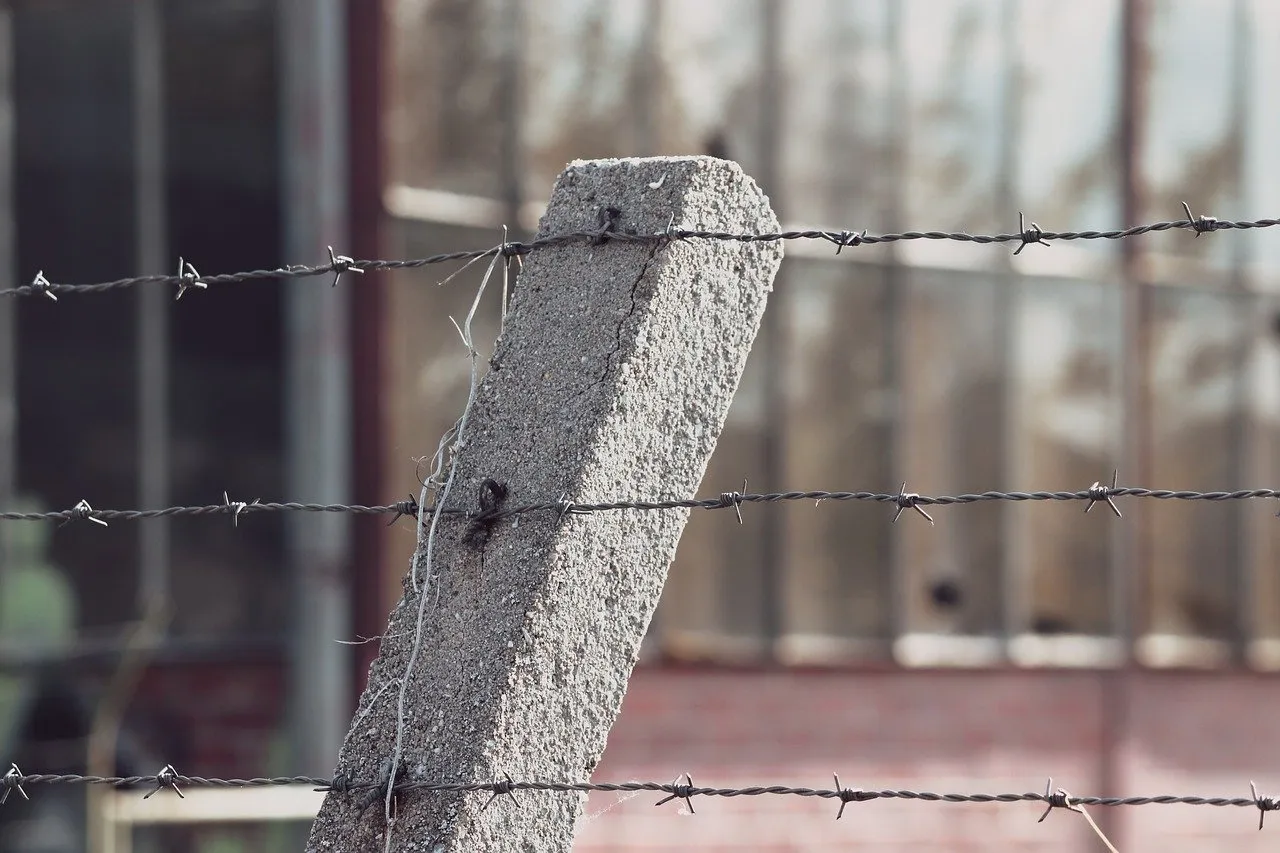
Next year, the climate gets better, allowing everyone to eat. We all feel bad for our actions last winter, so decide to chip in and make Fred a pie to show our gratitude. Nothing can stop his worries. People have stolen food once. It's only a matter of time before the thieves come again in the night. Something had to change. Therefore, he built a wall. For days, Fred spent his free time fencing off the entirety of his property. Not wanting to be vulnerable, others start doing the same. Emerald pastures quickly become compounds of grey, steel and concrete dividing neighbours. However, the thefts don't stop. With each new development in security, there is an equally ingenious workaround. Burglars drift down from the sky in hot air balloons. Robbers pierce holes in the walls with tank shells. There is only a world of chaos.
Hobbes' theory accounts for the very worst of human nature, addressing the 'frailty of man'. Humanity is inherently greedy, deceitful and slothful. Left to our own devices, Hobbes believes mankind will create dystopian anarchy. The strong would dominate the weak. The infirm would be left to feed the crows and vultures would carry newborns to their nest so the babes could starve, leaving behind supple flesh. Without a guardian to protect us, Earth would devolve into a primordial battlefield. We are but children in a sandbox, needing teachers to prevent every disagreement erupting into destructive temper tantrums.
Nations are far from perfect. No politician should be treated as a benevolent overload. Like any of us, secrets lurk in the past of every politician, just waiting to leap out. But the State offers the necessary structure to prevent mankind from tumbling once more into a farmyard apocalypse. Absolute power corrupts absolutely. Corrupt order may, however, be preferable to innocent chaos. Statehood is a Leviathan, a creature of great wrath, its' potential lying dormant just below the surface.
Left to slumber, the Leviathan will remain a silent deterrent, mere fear discouraging people from acting on their inherent flaws. In the wrong hands, the Leviathan is the stuff of nightmares. Murder, rape and burglary all carry harsh sentences. The populace accepts those sentences because rape, murder and burglary amount to heinous crimes deserving of punishment. A dormant State, a dormant Leviathan, has no qualms in imposing liability for these actions. When the Leviathan awakes though, criminalisation occurs for the strangest of reasons. Conformity becomes mandatory. Nazi Germany, Carlist Spain, the Societ Union and Sparta all illustrate how absolute power can corrupt the good intentions of statehood. Spartans would spend their early life being controlled from dawn to dusk. Child recruits would be taken from their parents to spend years being whipped, groomed and half-starved to create perfect soldiers. When a State abuses its powers, there is a real problem. Society should not become a collection of brainwashed drones.
Nor can the problems of the Leviathan be resigned to the annuals of history. The People's Republic of China is often cited by western politicians as an example of individuals being oppressed by their government. Controversial opinion. A degree of authoritarianism is not inconsistent with the functions of State. Hobbes' political philosophy is built on a foundation of paternalism. Remember, human beings are frail, greedy, corrupt individuals. Not the best qualities to have in a functioning society. Parents take on the role of weaning out unwanted traits in their children. Toddlers are repeatedly reminded to "say please and thank you," to share, to wash their hands before dinner. Once infants grow to adulthood, parents lack the necessary control to continue guiding their children in the same way. That's where the State steps in. Police officers, legislators and other public officials take over where mummy and daddy left off. The naughty step morphs into prison. Fines are Big Society's equivalent to glares of disapproval. China's choice to be slightly stricter is justifiable. The PRC is that parent who doesn't let their children have coke or chocolate. Social credit amounts to a track-and-trace system on your teenager's phone.
Whatever the justification for socialism in China, understanding Hobbes' view on the State's role is essential in understanding how robots can integrate into our society. My conclusion better be incredible after having spent half of this article explaining traditional conservatism rather than tackling robot social integration directly. Let's take the key elements in turn. The extended farm example demonstrated the government's role in protecting property. Fear of a higher power prevents individuals from escalating into a cold war with their neighbours. Paternalism requires the State to protect people from themselves. Explain why a robot identical to human beings should not have the same protection. Are robots so perfect that they could never steal? SOPHIA has joked about destroying the human race. What if there's a robot out there who isn't kidding?
Machines triggering armageddon is the stuff of science fiction. Terminator, War of the Worlds and the Matrix are great, but any politician who campaigns on a platform of saving the human race from toasters is doomed to fail. Few people genuinely fear an imminent mechanical uprising. So take a less extreme example. In Switzerland, a program was 'arrested' for purchasing illegal substances off the dark web. We're talking drugs, forged passports, that sort of thing. Without proper control, robots are capable of committing crimes. Maybe buying stuff off the internet isn't such a big deal. The robot wasn't going to use the passport or resell the drugs.
Nevertheless, if a robot can commit one crime, why not others. Technology already has the potential to create really convincing forgeries. All it takes is for one android to rip-off 'The Sound of Music', and they've committed a crime. Still, copyright infringement might not be a 'real' crime. Corporations have tons of money— they can afford to give us all a free movie every now and then. Okay, fraud then. A sophisticated computer program could be placed on a bank's serves and distribute money to an untraceable account. A penny here, a pound there, nobody would have to know. Hackers already do this all the time. Are we really so naive to assume that a being literally made using computer programming would never do the same thing? What about self-driving cars which run over children, not because of manufacturing flaw or because it was the only option, but because some freak accident has given them free-will? There's no 'driver' to hold liable.
Hobbes' farmyard was principally concerned with protecting property rights. Earth was transformed into a concrete jungle to guard everyone's stuff. Robots are just as much as big a threat to that stuff as our fellow man. When the latest smart-fridge burns down your house because you didn't say thank you enough, you won't care that the damage was caused by a robot. You'll want compensation. Suing Apple or Microsoft won't do as companies are in the habit of including fancy exclusion clauses in every sale. Tesla doesn't accept liability if one of their cars runs you over because of faults in its programming. As technology gets more advanced, other manufacturers will do the same. Requiring insurance to fill the void will be expensive. The more people have to claim on insurance to cover their losses, the higher prices will rise.
Awarding robots rights is just as much for the benefit of humanity as it is the machines it would be emancipating. Paying androids a wage, giving them an independent legal personality all ensures that there is someone to hold accountable when things don't go well. Insuring against the risk of an AI wiping out your bank account is not necessary if the AI is a person. Laws already exist to protect our stuff. When it is suggested a being should be given rights, activists are only talking about one side of the coin. By awarding rights, what the law is really doing is unleashing the Leviathan. Fred would have no power to take me to court for his potatoes if he were not a person. But if I'm not a person, there is no one for Fred to take to courts. Refusing to grant robots personhood gives them total immunity from prosecution. SOPHIA’s lack of personhood is an open invitation to destroy our walls, take our crops and burn down the whole farmhouse. Without robotic personhood, the world will return to chaos. Our Leviathan can’t protect us because we are too stubborn to recognise intelligent machines are another child to be guided.
The planet is now an electronic farmyard. We better start building those fences.