

Checklists are the the way to stop making simple mistakes. They take the mental energy out of trying to remember every thing and free you up to be creative. Study after study has shown, a simple list really can change the world. Some more examples:
- Studies consistently find that if you want to save money — then make a list of what you need at the shops and buy only that
- Checklists in medicine save lives — just a simple bit of paper. A study in the Hopkins hospitals in America showed that by introducing a checklist for correctly washing your hands, and using the nurses to ensure the OR doctors followed it, infection rates reduced by 20%.
A doctor caring for a patient has to deal with the patient’s primary ailment as well as attend to details such as inserting intravenous tubes. A checklist reduces the risk of missing a step and reminds a physician to follow accepted procedures and protocols. (Mauboussin)
Atul Gawande writes in the New Yorker how checklists outline a higher standard of baseline performance, providing two main benefits:
First, they helped with memory recall, especially with mundane matters that are easily overlooked in patients undergoing more drastic events. (When you’re worrying about what treatment to give a woman who won’t stop seizing, it’s hard to remember to make sure that the head of her bed is in the right position.)
A second effect was to make explicit the minimum, expected steps in complex processes. [Researchers were] surprised to discover how often even experienced personnel failed to grasp the importance of certain precautions.
Tom Graves discusses the use of checklist and how they relate to the SCAN (Simple; Complicated; Ambigous; Not know) framework for sense making and decision making (Also see Cynefin framework).

Checklists help to reduce the cognitive load, by reminding us of concerns that must not be forgotten — concerns which, if they are forgotten, are likely to increase the potential variety (and hence potential risk) in the context. And by providing a clear, explicit structure and sequence, checklists also help to keep the panic at bay when the variety-weather suddenly turns stormy.
As Gawande demonstrates in his book, checklists provide a proven means to reduce risks and undesirable outcomes in inherently-complex contexts. They do not represent an attempt to ‘remove’ complexity, or even to reduce it, but do provide a key part of tactics to better manage it. The implication is therefore that well-designed checklists will have a very high value in most enterprise-architectures.
Back to Mauboussin:
A checklist is also helpful in a stressful situation. Emergencies make it harder to think clearly and act appropriately because the chemicals of stress actually disrupt the functioning of the frontal lobes, the seat of reason. A READ-DO checklist provides a recipe for action that lets you take concrete steps to address the problem, even when you’re not thinking clearly.
So how do you go about developing a good checklist? Gwande outlines several steps in “The Checklist Manifesto”
- They are not comprehensive how-to guides, whether for building a skyscraper or getting a plane out of trouble. They are quick and simple tools aimed to buttress the skills of expert professionals
- Define a clear pause point at which the checklist is supposed to be used (unless the moment is obvious, like when a warning light goes on or an engine fails).
- You must decide whether you want a DO-CONFIRM checklist or a READ-DO checklist. With a DO-CONFIRM checklist, team members perform their jobs from memory and experience, often separately. But then they stop. They pause to run the checklist and confirm that everything that was supposed to be done was done. With a READ-DO checklist, on the other hand, people carry out the tasks as they check them off — it’s more like a recipe.
- Keep the list short by focusing on “the killer items” — the steps that are most dangerous to skip and sometimes overlooked nonetheless.
- The wording should be simple and exact, it should fit on one page. It should be free of clutter and unnecessary colors.
All this has been summarised in his PDF “Checklist for Checklists”

References
Mauboussin — The Success Equation- Untangling Skill and Luck in Business, Sports, and Investing
Tom Graves — http://weblog.tetradian.com/2012/07/23/checklists-and-complexity/
Gwande — Checklist for checklists — http://www.projectcheck.org/uploads/1/0/9/0/1090835/checklist_for_checklists_final_10.3.pdf
Gwande — The Checklist in The New Yorker https://www.newyorker.com/magazine/2007/12/10/the-checklist
Gwande — The Checklist Manifesto — http://atulgawande.com/book/the-checklist-manifesto/
WHO — Surgical Safety Checklist -http://www.who.int/patientsafety/safesurgery/checklist/en/
___________________________________
Let me know what you think? I’d love your feedback. If you haven’t already then sign up for a weekly dose just like this.
Links that made me think…
The Tyranny of Small Decisions
opus1journal.org
Decisions that are small in size, time perspective, and in relation to their cumulative effect may lead to suboptimal resource allocation.
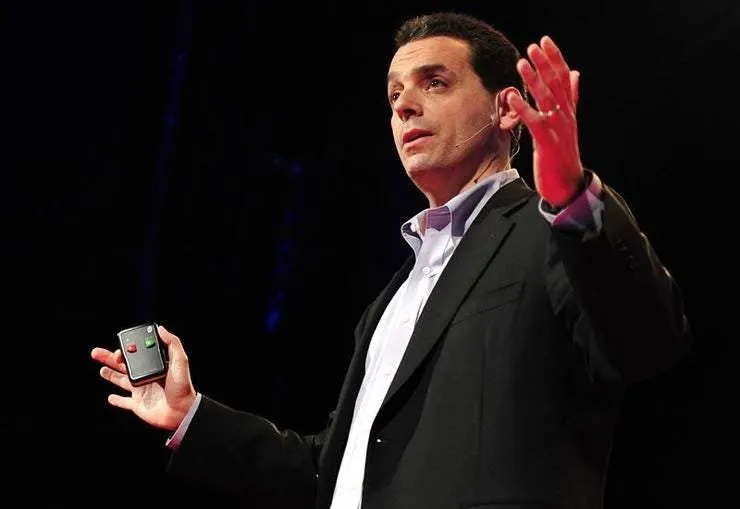
Dan Pink: The puzzle of motivation | TED Talk — www.ted.com
Career analyst Dan Pink examines the puzzle of motivation, starting with a fact that social scientists know but most managers don’t: Traditional rewards aren’t always as effective as we think. Listen for illuminating stories — and maybe, a way forward.

The Complexity of Simply Searching For Medical Advice | WIRED — www.wired.com
How the anti-vaccine movement used an information void to inject itself into the top results.
Posted from my blog with SteemPress : http://selfscroll.com/10x-curiosity-issue-68-the-checklist-revolution/