
As I travel along on this Autism journey with my children I am learning so much. Every appointment I go to I take a pen and pad so I can write notes and keep up with what is going on in each of my children’s sessions.
Last week at therapy Master 5 received another diagnosis. He has Dyspraxia. Apparently it is very common in children with ASD and needs to be assessed and monitored as part of his overall treatment plan. So I figured I better get my head back in the books and find out what we are dealing with.

Dyspraxia is a condition that affects the persons ability to plan and coordinate physical movements. Which sounds simple, but I am discovering it is far from it. As I found out a child with Dyspraxia can also have verbal apraxia, which Master 5 also suffers from.
Dyspraxia can affect so many things. Symptoms usually include difficulty with both fine and gross motor skills, balance and posture, walking, running, jumping. It can also effect their ability to write, tie shoes up, do up buttons and zippers.

It also has an impact on their life skills and emotions. Children with dyspraxia can have poor academic achievements, different behaviours, poor communication and difficulty with speech.
They also have poor social skills and unfortunately they become anxious about socialising and this can become worse over time. They often behave immaturely and have trouble making friends.
Verbal apraxia causes them difficulty in coordinating their mouth and tongue movements and as such affects their language and speech development. They find it difficult to pronounce certain words correctly and may have to speak very slowly. They also seem to have trouble speaking at the correct pitch and speed. They also often repeat themselves, be it a word in the sentence or the whole sentence again and again.
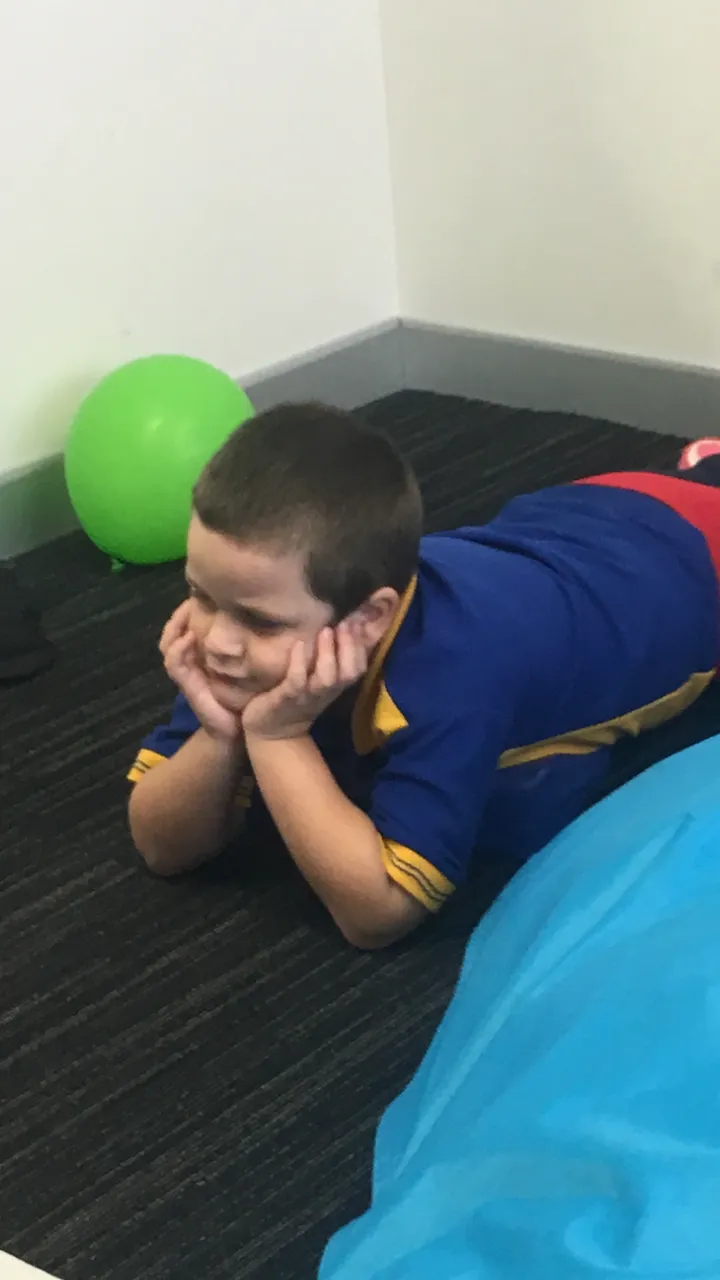
This makes so much sense to me now and explains why Master 5 repeats the same word in a sentence 10 times before he can finally finish what he was saying. It also explains why he asked the same question again and again despite the fact that I answer him every time.
Children with dyspraxia also have problems with any activity that requires hand-eye coordination. Throwing and catching a ball, building blocks etc.
They often drop things and appear clumsy, often they will fall and trip over or bump into objects and other people.

The exact cause of dyspraxia is not known, doctors and scientists believe that it is caused by some sort of disruption occurring when the nerve cells are sending signals from the brain to the muscles in the body.
Symptoms and signs of dyspraxia can start at a very early age. Babies can be fussy and find it hard to eat and settle. They often don’t meet their developmental milestones such as rolling, crawling and beginning to walk at the same time as their peers. Toddlers can be messy eaters, even more so than others and often prefer to eat with their fingers.

Getting a diagnosis can be difficult, their is no specific standardised testing to obtain a dignosis for dyspraxia at this stage. If you think it’s a possibility that you child has dyspraxia their are a few things my doctor recommended.
Firstly, start keeping a record of all the behaviours and challenges your child is struggling with. Take them to your general practitioner for evaluation, they may send you on to see a speech therapist or an occupational therapist for further evaluating. Ask them to rule out any other neurological disorders first.

If they receive a positive diagnosis you will then have to begin therapy. This may include speech, occupational and physical therapists. All of these specialists will be able to help come up with a plan of action.
This may include special exercises to help manage and improve their condition. They will also teach you specialised perceptual-motor training exercises that encompass movement, speech and language skills.

Lastly, make sure that you inform everyone of your child’s diagnosis. Teachers, carers and if your child is in the special education program at his or her school here in Australia, make sure they add it to their IEP, individualised Education Program, as this may mean they are eligible for more assistance and resources through our local government.
As always, thank you for reading. I hope you find this information helpful.
