
It's happening right now. No one--not even the U.S. Government--can stop economic collapse.
It's called deflation. No matter how many dollars the government prints, those printed dollars do not become inflation until they circulate and push prices against the limited goods. Consumers are not spending, especially to go out on a limb as they did before 2008 when we had the last boom in real estate.
Here is a typical scene before 2008: My husband came home from work and announced that he had gotten a raise and a bonus check. He wanted to celebrate by buying a new car and I could have his old one. Then he wanted to plan a vacation to Florida and maybe investigate real estate, a little investment for the winters.

The key to the husband's ease in spending is the good feeling. Feelings precede action. Knowing the future will be generous, more money and opportunity around the corner allows for consumers to spend. The more we feel we have, the more generous we are--not only in matters of money but in our understanding of individual differences, setting aside our prejudices, perceiving others as OK, not a competitor for limited goods and opportunities. The emotional euphoria with money in hand is: Go now and pay later. Money will always be there. A job is always waiting for me. Tomorrow will be always better.
After the bubble burst in 2008 many people lost their homes, businesses closed, and workers settled for feeling lucky to have a job, even if it meant a smaller salary and more work to replace those who were let go. Those employees still left standing after the smoke cleared had to maintain their pre-2008 expenses, take care of another person who lost his job, so the euphoria changed to pessimism and spending diminished to essentials. Thus, the stores that the out-of-work used to frequent had to cut back. The store's employees then spent less. With no help from the government (as with inflation) the U.S. economy ushered in DEFLATION.
Invisibly present is the emotional pessimism that leads to deflation: tomorrow is not going to be better than today, the loss of hope. The emotional pessimism of each individual, collectively, determines the constriction of money, blaming, the demonstrations of anger, and even a reversal against democracy toward an irrational and radical foreign enemy. When subjected to loss, humans hold authority responsible, they blame authority--doctors, teachers, Big Business--anyone in power is cast in a bad light and subject to careful scrutiny to "get the goods on them." In good times, we turn our heads away from authority's frailties, granting them the benefit of the doubt or just deny their peccadillos.
Blaming can lead to self-damaging conclusions or, as in the case of BitCoin, a productive solution. BitCoin offers a solution outside the reaches of government, a solution once offered by Swiss banks, foreign accounts in other countries. Recently, Americans in Uruguay have been "fired" from the local banks because of U.S. complications in handling Americans accounts. There is nothing illegal, just "too much hassle," as one person put it. U.S currency used to be exchanged freely at private exchanges in Canada, now the U.S. requires the exchanges to get the name, residence, and phone number--no matter how small the amount. These Governmental requirements are instituted to stop terrorism and preserve U.S. safety. What could be wrong with that? In like manner, the Inquisition was in charge of converting heretics with torture and stopping any ideology against Church doctrine. This is graphically portrayed in the novel and movie, Ihe name of the Rose, with Sean Connery, a great story depicting how far a government can go all in the name of 'helping' and preserving the safety of the country.
The governmental invasions into privacy and pseudo attempts at solutions to economic bad times only contribute to the pessimism, frustration, and anger. Self-damaging alternatives to loss can lead to Joining the opposition, which makes NO sense unless you understand the importance of self-suffering and the human need to feel in charge of one's misery--even to the point of making life worse. Human beings have to preserve their pride, being in charge. When faced with life in the slower lane a man feels whittled down, as if he's lesser than before. Living with less defeats a man's pride and in cases where pride is more important than rational solutions, he will resort to strategies that have the appearance of solving his problems but ultimately increase the consequential self-damage--even to the point of suicide: mass slayings, suicide bombings, etc.
One example is George when he lost his job. He took the family's remaining savings and 'invested' in the commodity market, on the high and low of silver. He knew nothing of trading commodities and was even warned against gambling his money away. But he would be the exception. He was smart. He had a degree to prove it. When he lost all his money, it was as if he took his remaining funds and threw them away, making his initial loss worse. George was cornered, but needed to preserve the feeling of power, to defeat himself, to actively lose rather than feel defeated. He would, of course, never admit to this. His crime was being fool hardy (pride) but still with the desire to win.The problem at the tipping point.
For years the public has heard of the 'ravages' of inflation, strategies to beat inflation, the idea of cooling an overheated economy fueled by inflation--emotional words making inflation the enemy. Logically, then, if inflation is bad, then deflation is good. Yet bankers and money planners know that deflation spells the halt of the economy and the inevitable, never uttered word: Depression--a terrible event that our parents were promised never to occur again. The banks are insured by the FDIC, a stamp to give credence to that promise and we believe that little sticker on the bank window, like the Church's 'indulgences' to buy out of man's sins in purgatory. We want to believe it as we turned a blind eye to the government's gradual erosion of our paper money during inflation. But the FDIC insurance cannot ensure all the banks all at one time. Such is the case with the Canadian government when faced with Alberta's national disaster.
Alberta is facing the longest recession in its recorded history and the province’s Finance Minister is warning that the provincial government won’t be able to create enough jobs to employ the thousands of Albertans currently out of work.
Facing the twin shocks of low energy prices and the costly Fort McMurray fire, Alberta’s economy is in free fall and the province’s two-year old recession is getting worse, according to the first-quarter financial update released Tuesday.
Announcing that Alberta’s deficit is now expected to grow to nearly $11-billion this year, Alberta Finance Minister Joe Ceci said the once debt-free province will be $32-billion in debt by the end of the current fiscal year.THE GLOBE AND MAIL
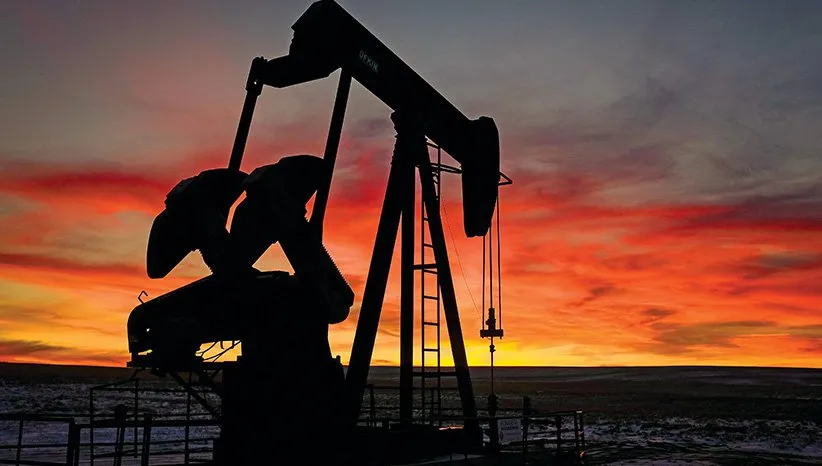
Yet, it wasn't long ago that Americans complained of rising oil prices, inflation again. They wanted lower oil prices, but the falling oil prices spells deflation right into less money in everyone's pocket. Canada, too, will be limited as to how much it can spend in the U.S. The Canadian dollar is now in the seventy cent area and--no one would suspect--doomed to touch around fifty cents before the downward slide finishes. (It is also noteworthy to see how mother nature contributes to human disaster. During the Great Depression, the U.S. endured the Dust Bowl, which did not help Nature and the economy is another topic,;how jet streams and the affairs of men overlap.)

But someone (or someones) did something about this looming crisis in an atmosphere outside the reaches of well-meaning interference. Satoshi Nakamoto, a fictitious name or a group launched Bitcoin which offers privacy and security beyond a government that has as its sole purpose self-perpetuation.
Governmental 'out-reach programs' to improve the economy smell uncomfortable like self-defeat on a collective, mass scale. Given the human tendency to preserve pride, even at the expense of losing--as with individuals--Can we postulate that governments can also be victim to this tendency of making this worse while trying to look like making things better?
For more great articles like this, be sure to visit The Human Twist.