
En decenas de casas, oficinas y galpones hay un submundo de operaciones de alta tecnología donde se especula en el mercado de monedas virtuales como el bitcoin en un ambiente semilegal, sólo limitado por el costo del hardware y los cortes de electricidad.
It is assumed that Eleazar's lair * is dangerous and clandestine.
But arriving at her does not merit covering her face with a dark hood.
Neither does it require a secret key to be provided to a porter in shady glasses and microphones with headphones, or to leave the cell phone behind for fear of being tracked by the authorities.
His work cubicle is a quarter of six square meters, acclimated with air conditioning, full of computers, cables and multiple connections. It is a smaller area of an upper middle class family's apartment in La Lago, the most exclusive area of Maracaibo, in western Venezuela.
Thirty-year-old, head of a young family and passionate about gourmet food, does not want his real identity to be known. Ask me to call him by his alias: "Han Solo". One of the most famous fugitive rebels of popular culture.
The housing of a CPU (the hardware of a computer) rests dismembered in front of him, on a desk of brown veins.
The computer, on, is the basis of an architecture of gray plastic tubes, medium size. Two professional video cards are attached to them with stickers. Your micro fans work at full force.
"Han Solo" looks at your monitor. Lines on lines of yellow, purple and gray texts follow each ten seconds. It details the categories: "total shares (total shares)"; "Rejected (rejected)"; "Time (time)"
The operations do not stop. They have hours after hours processing. Even days
They are pulsations of an outlaw trade in this nation of the Caribbean tropics, whose economy is governed by a tight control of change since 2003. A hurricane of inflation, price speculation and scarcity has abated since then.
"Han" is one of the many comptrollers of cryptocurrencies or digital currency: a "miner" of bitcoin. "This is like the Cosa Nostra. In Venezuela we operate in the shadows. "
Comptrollers of the bitcoin boom
Bitcoin is both a digital currency and a system. A technology expert - or several; It is a mystery - known under the pseudonym of Satoshi Nagamoto, created in 2008 in response to the global economic crisis.

His legacy was revolutionary: a profitable currency that did not depend on government or any central bank. It is private property and is based on a public code, with free access. With it, in some parts of the world, goods and services can be paid, and it serves to save.
Its backbone is a chain of computer blocks, known as blockchain, a kind of public accounting book in which all transactions are recorded after verifying a massive and decentralized network of computers in different regions of the world.
It is the work of the millions of "miners" like "Han Solo": check with their teams and in a random way that the algorithms of operations with cryptocurrencies are correct and that they are not duplicated.
They are called like this because their teams must dig deep into the system until they solve the complex algorithms of bitcoin transactions. And the parent then pays them a commission in their respective wallets or digital wallets.
The more problems they solve, the better they pay. They, together, are the true central bank of bitcoin.
Rising
Confidence in bitcoin and the more than 800 digital currencies created has grown exponentially in recent years.

In 2009, 1,309.03 bitcoins could be purchased for a single dollar. Today, every bitcoin is priced at US $ 4,609. Only in 2016 its value increased by 125%.
The government of Japan approved in February to consider it as a legal tender and declared it exempt from taxes. Russia flirts with official mining.
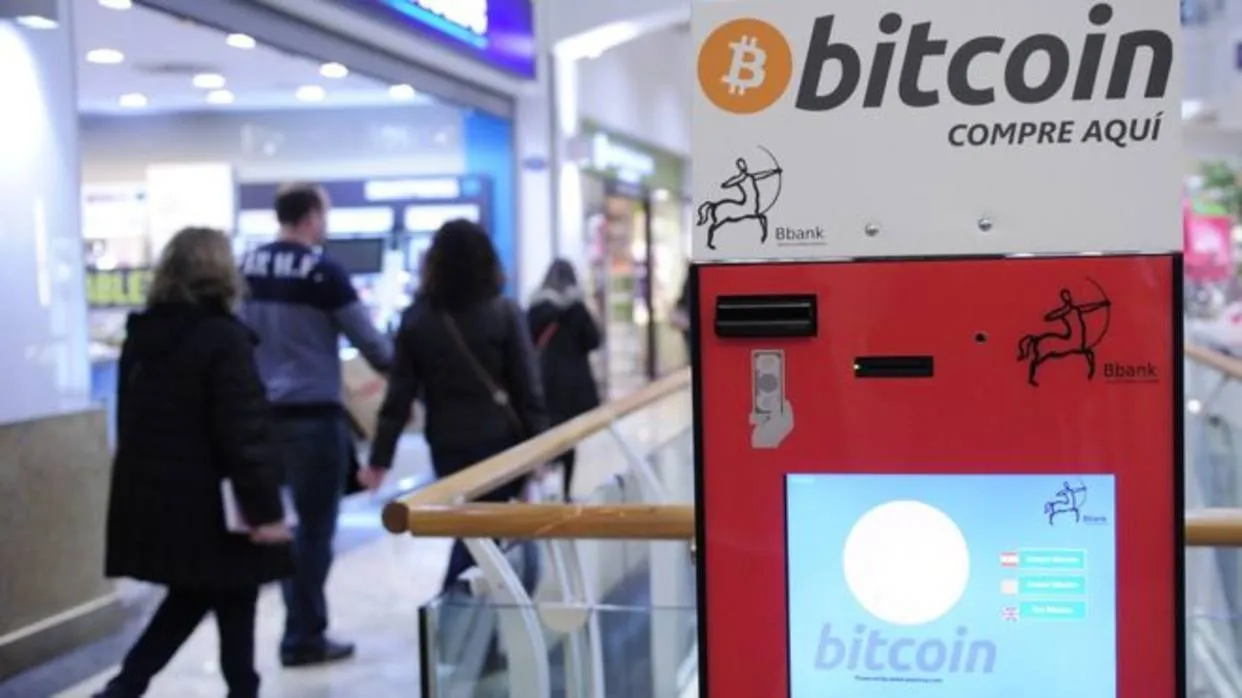
In Europe there are already ATMs to buy crypts or withdraw their value in local currency.
Even President Donald Trump has his own digital currency, latrumpcoin-it's priced at US $ 0.06 per unit.
Juggling between good and evil
Bitcoin not only arouses applause. Also frowns in the domes of governments and financial entities.
It is worrying that the anonymity and the difficulty of calculating their transactions favor their use in criminal operations, such as money laundering, illegal arms purchases, drug trafficking and terrorist financing.
The Central Bank of India said earlier this month that it is "susceptible to misappropriation."

Your misuse is not a myth.
China banned the ICO (Initial Currency Offer) a few days ago, the possibility of buying low-priced cryptocurrencies to finance a nascent project, due to the growing wave of fraud complaints.
The US Treasury Department warned investors about the false ICOs that are based on news and rumors invented to inflate their prices.
The hackers who stole exclusive material from the servers of the cable network HBO last July fixed a "rescue" in exchange for the return of scripts and episodes of series such as "Game of Thrones" and "Ballers".
The payment of US $ 6 million had to be made in bitcoins.
Collar agents "geek"
"Mister Bitcoin", nickname of a "miner" from western Venezuela, ran into the occupation thanks to his core of friends.
Graduated as a public accountant and gamer (video game player) by hobby, he saw the best of both worlds in the cosmos of cryptocurrencies.
Six of its processors actively decipher bitcoin codes and algorithms since January of this year.
"It's a lie that we make money without doing anything. We must study the market. We must be aware of the news. You have to know what you are going to invest in. Demand attention and dedication, "he says proudly to BBC Mundo.
Drive a late model truck. Dress and fit brand. Regularly check the bitcoin market seesaws on your latest generation iPhone. Only a handful of people close know of their trade.
The miners in Venezuela are generally young entrepreneurs, mostly male, familiar with the world of technology and middle-class or well-off members.
Identity verification filters apply to those who wish to join their WhatsApp or Telegram groups. They do not want infiltrations. They are geek neck agents.
Underground
The mining club does not have exclusive headquarters in Venezuela. It operates clandestinely in dozens of houses, offices and warehouses in cities such as Maracaibo, Caracas, San Cristóbal and Valencia, under the noses of the local police.
In that underworld there are residential areas with restricted access in Maracaibo where expensive sound and electrical control equipment is installed to mine digital currencies, told BBC Mundo Alberto Marín, a journalist specializing in the area of technologies.

"There is terror among the miners to talk about it."
Levels of interpersonal trust and consanguinity open the doors to membership. Some family member or close friend can introduce you to the business.
Nobody is a boss. There are no hierarchies. They all work for themselves - for the blockchain, really.
The secret to voices is that, the less people are mining, the greater the probability of algorithms and profits will be processed by the members of the select circle.
Hermeticism is indispensable. "Mister Bitcoin" highlights it.
Why do they work in secret? "We have to stay in hiding. The less they know, the safer we will be. "
He says he has friends in Caracas and Valencia who have received visits from officials of state intelligence agencies, more interested in their pockets than in their alleged crimes and "have had to move."
One of the difficulties of crypto-mining in Venezuela is investing in hardware, which must be updated as the difficulty of the blockchain algorithms increases.
Acquisitions are made in foreign markets, given the shortage of suitable equipment in the intern. An optimal processor, known as antminer (ant mine), can cost between US $ 3,500 and US $ 4,000.
These investments are decoys of criminals and extortionists.
Black and white in the government
The leftist government of Nicolás Maduro deals with cryptocurrency mining from duality. First, he expressed his allergy to bitcoin since last year with arrests and seizures of equipment in massive mining farms.
But, a few days ago, the Minister of Agriculture, Wilmar Castro Soteldo, surrendered to digital currencies. They are a weapon of sovereignty, a safe alternative, he said.

"The world economy can be saved by redeeming the gold standard as a reference and the emergence of cryptocurrencies. It is one of the great alternatives that the peoples have to preserve the integrity of humanity, "he said on September 5 in his program broadcast on the State channel, VTV.
The miners were left speechless. It was the first public praise of Bitcoin by a senior Venezuelan official.
It happened just weeks after the US government announced financial sanctions against the Maduro government, which the ruling party called an "economic blockade."
Risk of jail due to necessity
A brother of "Han Solo" welcomed the mining. It was November 2016.
"I had to get into this out of necessity. I had no way to pay the employees of my business, "he admits, in his computer shelter dismantled in the north of Maracaibo.

Today they manage nine teams, distributed among their offices and homes.
They operate them remotely with a sophisticated device that cost them US $ 300, almost 6 million bolivars at the change of the black market.
The comptroller of bitcoins, ethereum, decred and other cryptocurrencies has served as an umbrella in the face of the crisis. Each has received commissions of up to US $ 1,000 per month (19 million bolivars, according to the parallel rate of foreign currency).
The legality of this occupation is a totally gray area in Venezuela, warns Robert Albarrán, an expert in information technologies and an enthusiastic entrepreneur in the world of cryptocurrencies: "There is no legal provision against the miners, but actions have been taken. It can lead to the imputation of crimes. "
The State has prosecuted criptomineros for money laundering, computer crimes, contraband, exchange fraud and electricity theft.
Mining between blackouts and doubts
A key aspect in Venezuela is the government restriction of foreign currencies. Another is electricity, subsidized 80% by the government.
Light, the lung of digital mining, is extremely cheap: the average per capita rate is 3.01 cents per kilowatt hour, the lowest in Latin America, according to the Ministry of Energy.
However, since 2009, the national electricity distribution system has failed in magnitude.

Power outages and momentary service interruptions are frequent in the 23 states of the country. And if the light or internet fails in Venezuela, there are no calculations of possible bitcoins.
"Han" affirms that the miners are responsible for the aggravation of the electric service. Speak properly: he and his brother have collapsed the transformer in their area.
A technician from the electricity company confirmed that at least 80% of the light consumption of their community corresponds to their equipment. "It's overloaded. I install another team and it explodes, "he says, drawing a sarcastic smile.
The peaks of electricity consumption in bills can give clues as to where they are. And, to avoid this, they literally soak their beards in the houses of the neighbors: they pay them "rents" for their electricity services to distribute the load of the CPUs in other connections and surf incognito under the official radar.
Another miner, who "Han Solo" advised on the installation of mining equipment in his office and residence, defends the guild eloquently on condition of anonymity.
"Give me the electricity bill and I'll pay for it! Why not fight better bachaqueode food, fuel smuggling, drug trafficking? You have to remove that stigma. If you generate currency, it does not mean that you are a delinquent, "he remarks, seriously, crossing his arms at the entrance of the room.
"Han Solo" listens attentively. Check data again on your computer.
Read news about China and ICOs on a laptop nearby. Enter a page called Poloniex.com to pontificate with a graph the annualized performance of bitcoins.
He boasts that most people or the government itself have no idea how to mine cryptocurrencies.
Many do not even know of its existence, he argues.
He will mine while he can. He will do so full of doubts and fears.
"I do not know how much longer this will last."
(*) Eleazar is a pseudonym of the miner who declared BBC Mundo on condition of anonymity to protect his identity.