
Source: https://pixabay.com.

Global eTrade Services (GeTS) has launched Open Trade Blockchain (OTB) to link trade between China and the Association of Southeast Asian (ASEAN) nations. The ASEAN nations comprise of Brunei, Cambodia, Indonesia, Laos, Malaysia, Myanmar, Phillipines, Singapore, Thailand and Vietnam. The region has a population of 640 million and GDP of $2.57 trillion. China, on the other hand, has a population of 1.4 billion and GDP of $21.3 trillion. The platform will propel trade volume between China and the ASEAN community to become the single largest transaction between two regions.
Source: https://pixabay.com.

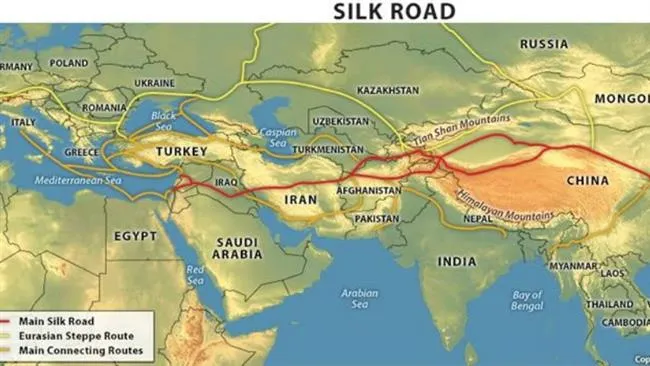
The launch will see the region get its first cross border blockchain platform that is aligned with China's Belt Road Initiative (BRI) and the Southern Transport Corridor, and this is envisaged to give greater connectivity to China's "DIGITAL SILK ROAD". GeTS is a leading provider of eGovernment products and services based in Singapore. It has a comprehensive suite of services that assists traders to meet regulatory and compliance requirements from government agencies and trade associations in over 20 countries worldwide. GeTS is a subsidiary and key growth engine of CrimsonLogic, which is co-owned by government and a port authority.
Source: https://ifpnews.com.
The platform "is a permissioned blockchain network run by trusted nodes which are hosted by whitelisted accredited trade compliance companies", said a joint statement from CrimsonLogic and GeTS https://www.crimsonlogic.com. The OTB will "enhance the security of trade related documents, from Certificate of Origin, to Commercial Invoice and will enhance the transparency and trust between shippers, freight-forwaders and customers", the statement went further.
This will create greater understanding, boost overall efficiency, security and transparency for global trade.
Source: https://pixabay.com.

Companies and users of the platform, even those that are not tech savvy, will be able to utilize the platform as it is built with an Easy-To-Consume service layer and offers drag and drop menus in the paper workflow. A great feature of OTB is that although it is a private blockchain, partners and stakeholders are able to integrate and scale OTB with their own systems. It has an open infrastructure which provides fundamental utilities such as building blocks, co-create and develop new systems.