
There is no doubt computer technologies changed our lives. Computers are used in most aspects of human experiences nowadays. Be it at home, at work, traveling, schools, hospitals, businesses, etc. We take computers for granted and forget that it wasn't too long ago when it all started.
Of course, historians and academics would dig deeper into the past and go as far to the invention of abacus, numbers, and mathematics to give a broader context to the history computer technologies in our lives. However, the most interesting innovations in computer technologies that truly changed everyday human experiences started only half a century ago. Half a century is a very short period of time compared to the history of mankind. It is fascinating to see a lot of computers made during this time are already obsolete and found their place in museums.
We visited the museum of living computers, where there were many computers from the past. Most of the computers there are fully usable, and visitors can play with them and get the feel of how it all started.
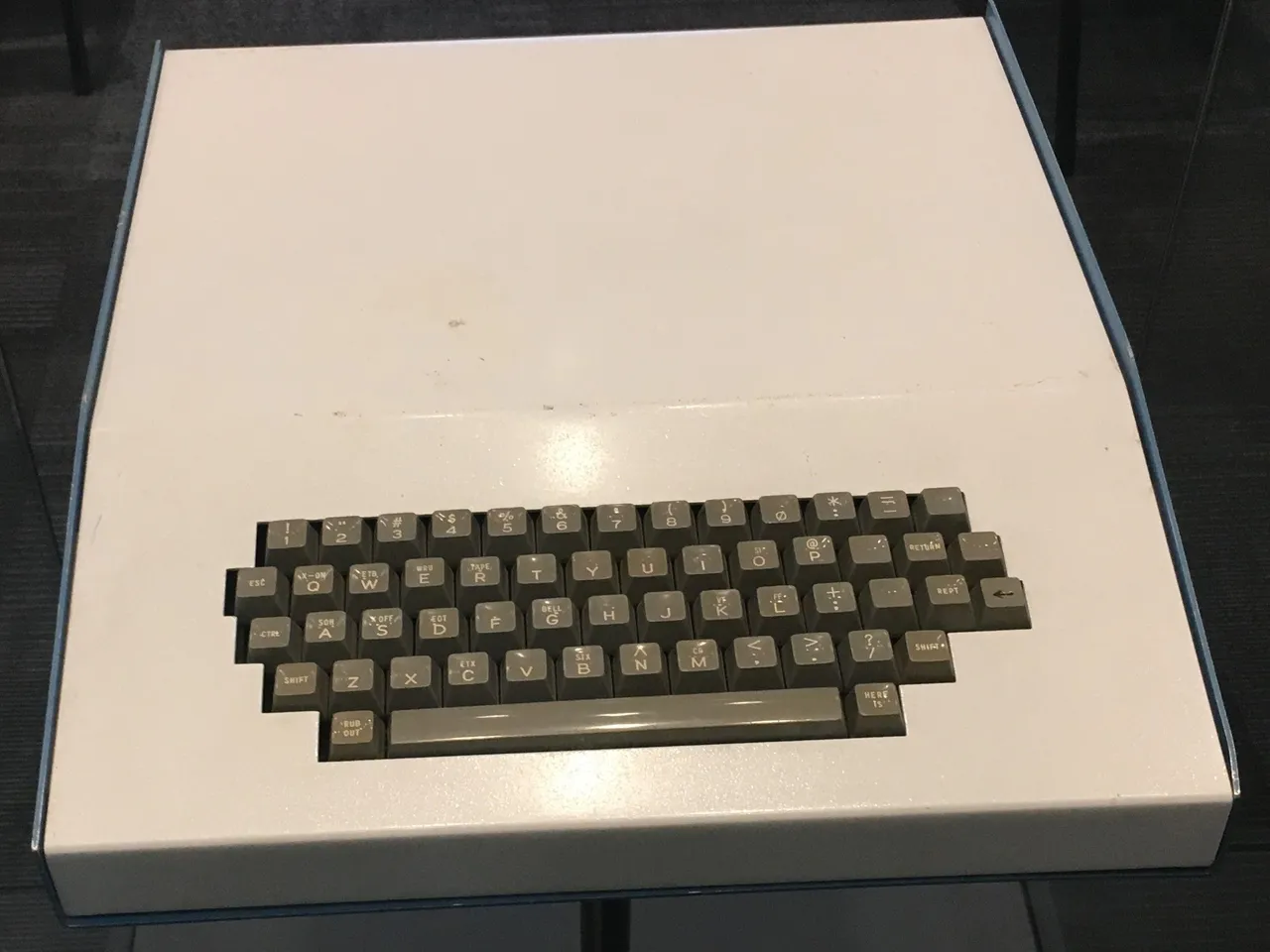
This is Apple I prototype computer that was taken from Steve jobs office after he left Apple in 1985. After Steve Jobs left Apple, staff was invited to take whatever was still in his old office. When Don Hutmacher, who worked at Apple as manufacturing engineer, arrived there wasn't much left and grabbed old Apple I computer in a prototype metal case.

There was a large section of the museum dedicated to Apple. When we think of Apple "the two Steves" come to mind: Steve Jobs and Steve Wozniak.
Steve Wozniak was an engineer's kid, raised in the shadow of a thriving electronics industry. Woz, as his friends called him, built his first computer in 1971 with his pal Bill Fernandez. Bill also introduced Woz to an electronics enthusiast names Steve Jobs. Though Jobs was nearly five years younger than Woz, the two bonded over a shared passion for electronics, Bob Dylan, and practical jokes.


Apple's contribution to the advancement of computer technologies is absolutely incredible. Apple computers that were displayed at the museum were the ones from 1976 to 1999, from the garage to the iMacs. Of course, there are other small and big players in the industry that had significant contributions. Among them, one of the biggest ones is without a doubt Microsoft.


While Apple's business model was to build both, the operating system and the hardware, Microsoft took a different approach. Their business model entails focus on the operating system and software and letting other companies deal with the hardware. First with DOS, then Windows Microsoft conquered globe with their software. I will be discussing more Microsoft in one of my future posts, where I would like to share our trip to Microsoft's campus.
There were many more different home computers by other companies as well.


Museum also had sections designated for digital art, robotics, history of microprocessors, virtual & augmented reality technologies, mobile technology, gaming, mainframes, as well as a simulation for self-driving cars. I would like to share rest of our tour of the museum of living computers in my future posts.
Thank you for reading. Feel free to share your thoughts in the comments section.