
Culture (in English), culture (in English) and tsaqafah (in Arabic) is a way of life that is developed and owned collectively by a group of people and passed down from generation to generation. According to J.J. Hoenigman, the reality of culture is divided into three parts: ideas, activities and artifacts, while this time I want to discuss the cultural reality of aspects of its activities.
As with other countries, Saudi Arabia also has many traditions as a form of their identity. The moment of Ramadan there is a great shot to talk about. The reason, there are certain habits, where this habit is not much found in other countries, such as NKRI (Unitary State of the Republic of Indonesia).
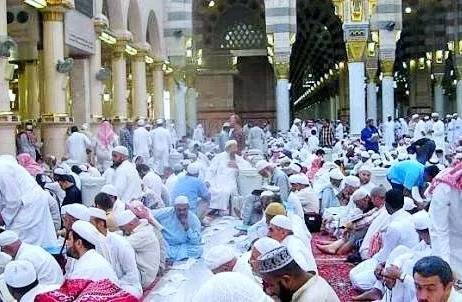
In the past story, I was able to express my admiration for the city of Madinah shortly after arriving there. Medina is one of the holy cities among the three other holy cities that look so clean, majestic and elegant. Had time terbesit, whether the cleanliness of the city of Medina occurs only in times of Ramadan alone or indeed a clean culture has become the lifestyle of the local population.
In fact, the month of Ramadan there is clear perpotensi cause garbage in very large numbers with their maidat al-Rahman (the food supply in many places for people fasted), the former junk food should practically strewn everywhere.
For Muslims Ramadan is believed to be different than any other month. The glorious indication and promise of double reward in this month is contained in both the Qur'an and the Hadith. Perhaps, that is what the Arab Saudi people really appreciate. If allowed, I would say no hunger there during the month of Ramadan, whether natives or citizens of other countries who are visiting there. Food, beverages and fruits of various types are very easy to get for free before the breaking of the fast.
This kind of cultural reality can be witnessed not only in Medina, but also in other cities.If in Indonesia found many hungry people are needing food, it was found there so many people provide food in need of people to consume them. Undoubtedly, the food providers scramble for pedestrians as the target of "coercion", by tugging at his hands, to eat the food that has been provided. Typically, each food provider has an area or plot for the capacity of tens or even hundreds of people. Between one plot and the other coincide. Obviously, when pulled, we will see what kind of food he provides. "Worth consumption" or not for us Indonesians.

Because of the many foods there are so many types; from the privileged to the standard levels, from the appropriate Indonesian stomachs (like rice) to non-grains (like wheat and other country staples). Likewise drinks.
In the month of Ramadan their appreciation of the students and students also increased. In the last ten months of Ramadan (asyr al-end), for example, there are many institutions and entities distributing money for free, simply showing the student card. Of the many philanthropists there are also only memeberikan conditions show passport, to ensure that people who want to be assisted it does not live in Saudi Arabia illegally.

Basically, this kind of culture is not just happening in Ramadan. Only, in the month their numbers are much higher than usual. It seems that it is a form of hope and prayer to gain multiple rewards in the seconds of the emergence of lailalul qadar.
I honestly say, their culture is more appreciative of education and more sensitive to the social appeal of Indonesians. This cultural spirit should be adopted. I think Indonesia is very far away in these two affairs. Often I hear my friends have statements, "Ah, good here than in Indonesia, here we just study without having to think financially to just eat and educational expenses". That's about.
It seems, the assumption was not wrong. I myself feel what friends feel. Let's see, what is the cost of education in Indonesia? To be smart and educated just as if must be rich first. Education as if the domain of a rich person. We also have to accept a reality when there is a scholarship fund given by the LG, PEMPROP or the central government must first become the target of honorable board members and some other elements. It seems that the principle of a partisanship of the underprivileged people does not exist in their minds.
It is time for Indonesia to have a culture of respect for education by creating a friendly education of the small people, and a culture of social sensitivity so that the Indonesian nation is better able to compete in international level.
https://www.kompasiana.com
https://www.google.com
https://www2.kemenag.go.id