
The automobile is an idea that has been in conception since the late 1700s, at which point it sparked an imagination of the idea that one day mankind will traverse across the Earth atop a self-propelled carriage, where we are not bound by rails, nor must we continue to commoditise horses for labour.
Through the centuries since, the automobile has undergone evolutions in design, propulsion, and use; from Richard Trevithick's steam locomotive, Benz's Patent-Motorwagen, and to the Ford Model T. The successful formula which has become the general template - was 4 wheels, a steering wheel for directional control, a lever for changing gears, and floor pedals to modulate power.

In recent times, the automobile has undergone a new period of evolution, as we transition to a new era for cars, and car enthusiasts. We are now at the cusp of entering a new decade, and if 2019's excitement persists, then 2020 may be another exciting year for the automobile.
My favourite cars for 2020.
For your entertainment and learning, I have compiled here a list of cars for 2020 (that were announced in 2019 ) which I'm most excited about, in good order of geography…
TL;DR Content List:
- Ferrari Roma
- Ferrari SF90 Stradale
- Maserati Alfieri
- Aston Martin DBS GT Zagato
- Gordon Murray T.50
- TVR Griffith
- Lexus LC F
Image(s) Source: GIPHY
The Italian Job.
Starting with perhaps the most charismatic and charming, we're stopping by the Mediterranean for some typical Italian flair.
Ferrari Roma


If you've read some of my past automotive related articles, then you may know that I am a huge fan of Ferrari's newest "entry level " grand-tourer, the Roma. This is a car that has captivated me with its looks, and while some people may mock its design for being too similar as an Aston Martin, I think that's a compliment, and it certainly hasn't distracted me from loving it anyway.
The Roma marks a return to Ferrari's fuss-free design language, eschewing the need for unnecessary lines and vents strewn across the bodywork, to keep alive its timelessly elegant design language. The interior as well is an evolution from past Ferrari's, with more conscious attention to detail, and new gadgetry to enhance the driving experience.


While its appearance may heed to a gentile cruiser, it certainly does not lack in power. Underpinning the traditional front/mid-engine and rear-wheel drive layout, there sits a step-up of Ferrari's award-winning twin-turbo V8, putting down over 600hp and more than 560 lb-ft of torque, through a new 8-speed transmission.
Managing all that power alongside the human driver, is an array of sophisticated motorsports-inspired computer systems, ensuring a theatrical driving experience, without having an accident. I'm also excited to see where Ferrari could take the Roma next, and how its stature could translate into a new breed of Ferraris to come.
Image(s) Source: Netcarshow
Ferrari SF90 Stradale


Another of Maranello's most exciting announcements for 2019, was the Ferrari SF90 Stradale, a fire-breathing supercar for the new generation. This was a car that I have not had the chance to discuss before, and what a joy it is to finally get it off my chest.
The SF90 is an interesting change for Ferrari, as it has hypercar-like performance and technology, without being put under a limited production run, meaning it remains available for the public to purchase, assuming the potential buyer meets Ferrari's expectations and they can afford paying over half a million dollars.
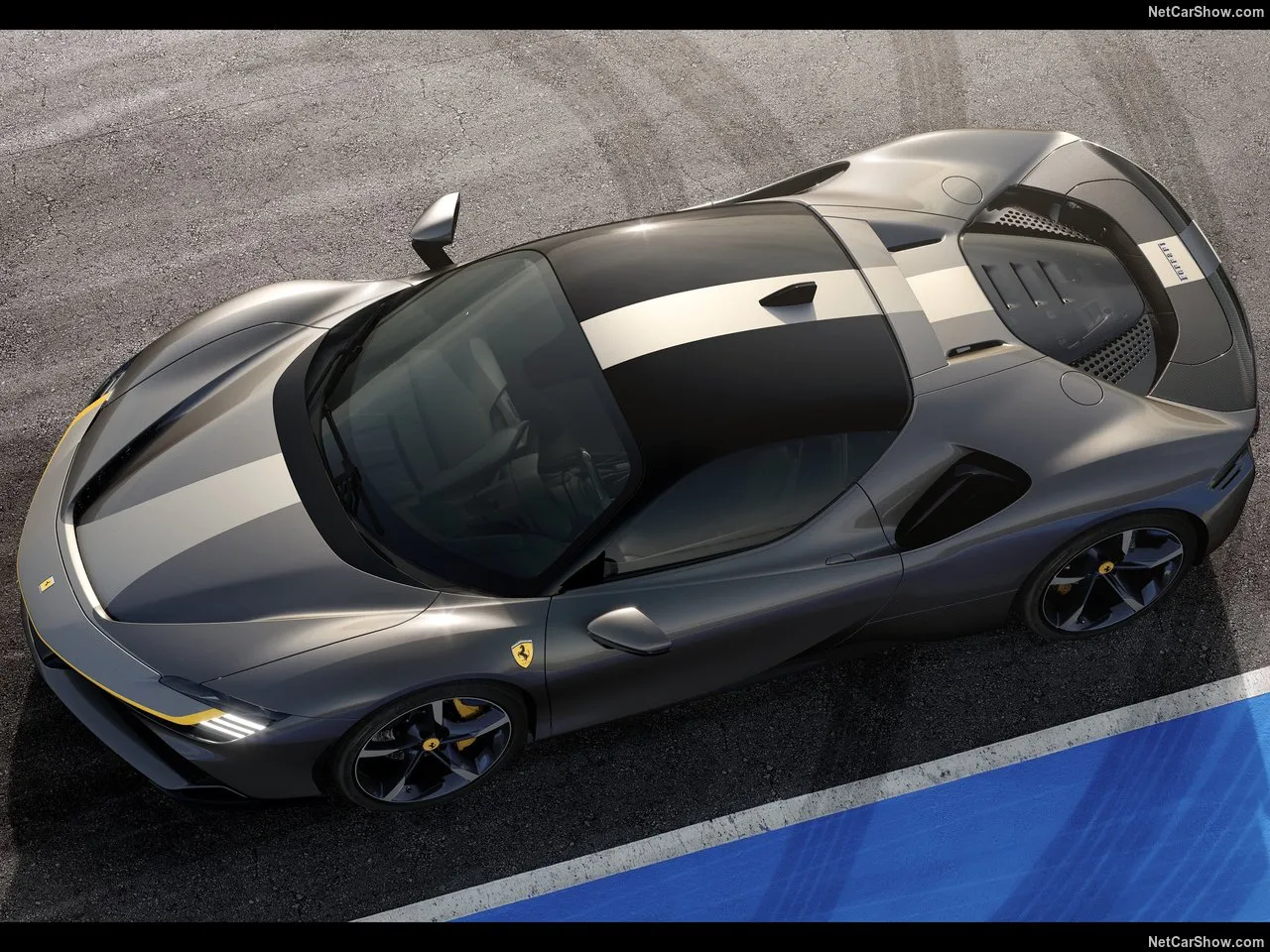

It is a truly purposeful supercar, to be engineered, designed, and conceived as a thoroughbred. Its design, while not fuss-free as the gentler Roma, retains an elegant shape, keeping in mind of the aerodynamics. Speaking of, the SF90 may need all the aero-work it deserves, since its mid-mounted twin-turbo V8 produces 769 hp. Adding to that, are 3 electric motors; one sits between the engine and transmission; while the other two occupy the front wheels; bringing about a total of 986 hp.
Much of the SF90's technology, including the advanced computer systems and new interior screens, were later found in the Roma, showing a true sharing of its Prancing Horse heritage. While the SF90's hybrid systems may have created a heavier car than originally intended, it may be just as mad and exciting as any hypercar should.
Image(s) Source: Netcarshow
Maserati Alfieri


For decades, Ferrari and Maserati, have feuded for supremacy, both on the race track and on the road. Over that course, it has been made clear now as to the winner of said feud, as Maserati's current fate has forced it to share much of the spare parts that were graciously given by its fellow Italian carmakers, including its blood-rival from Maranello.
Despite the morose nature of such a statement, the Trident had established and maintained its core group of enthusiasts, which remain dedicated to the brand. However, its confused state may come to an end, as 2020 marks a new beginning for Maserati, with the announcement of the Alfieri, hopefully alongside other cars from the venerable marque.


Note however, that the Alfieri has thus far been a concept, but more news will be announced soon, along with actual production, assuming the Italians haven't gone off for lunch and forgot to get back to work. When launched, the Alfieri will become a successor to the GranTurismo and GranCabrio, taking the position of being a 2+2 grand-tourer, with the engine in front, and rear-wheel drive.
There's very little information going around as to what may power the Alfieri, though apparently Maserati has confirmed that it will have the option of 3 different powertrains - petrol (possibly a V6 ), hybrid, and electric. With a completely redesigned car, we can hope that the Alfieri will become a renaissance moment for Maserati, with more following suit.
Image(s) Source: Netcarshow
Her Majesty's Secret Service.
Moving up and away from the Mediterranean, we are now within the borders of Her Britannic Majesty's United Kingdom, among the first innovators of the automobile.
Aston Martin DBS GT Zagato


Before we dive in thoroughly into what the British car industry has to offer for 2020, a bit of the Italian after-taste has me thinking of a duo that has lasted for the better part of 60 years - Aston Martin and Zagato. Not enough do we have traditionally British luxury and class, now draped with a beautifully crafted Italian coach-built body.
It's design is nothing short of sumptuous, with ever more little details to attend with each passing minute, from the 18-carat gold Aston Martin wing badges, to the classic Zagato double-bubble roof sloping from front to rear, leaving no need for a rear-windscreen. Perhaps then, the DBS GT Zagato does not embody the typical stiff upper lip of its traditionally British contemporaries, but remains a symbol of ultimate luxury.


And certainly a prospective buyer will be very acquainted with luxury, as the DBS GT Zagato may only be purchased alongside a hand-built DB4 GT Zagato Continuation, a remake of the classic 60s Aston Martin racer which kickstarted the Anglo-Italian partnership - and will cost a total of around 6 million British pounds, so its certainly a purchase worth thinking over twice when discussing that much money.
The DBS GT Zagato is built atop the DBS Superleggera, and shares much of its components, including the 5.2 litre twin-turbo V12, sending about 760 hp to the rear-wheels. The interior, while sharing a similar format as the Superleggera, will certainly be more posh in the Zagato version, with more leather, and jewelry-like touches, which will no doubt undergo extensive personalisation by Aston's clientele.
Image(s) Source: Netcarshow
Gordon Murray Design T.50

While most carmakers design a car for the future, only Sir Gordon Murray would stick by his ground to proclaim that some things are just better in the old-fashioned way, while still taking advantage of new and upcoming technology. Sir Gordon's latest creation to be announced soon, is perhaps the only worthy successor to his previous creation, the legendary McLaren F1.

Like the F1, the soon-to-be-launched T.50 is an analogue supercar, made to be driven only by the bravest and able of drivers, and it has all the things that make car enthusiasts cry havoc - naturally-aspirated V12?... check! manual gearbox?... check! lightweight bodywork?... check!
To be more precise, the T.50 will come powered by a mid-mounted, naturally-aspirated, and 650 hp V12 engine, which is mated to a properly old-school manual gearbox, and sitting on top of a diet-friendly 980 kg bodywork. One interesting touch that no other car has, is a 400 mm "ground-effect " fan that occupies the rear fascia of the T.50, helping to create exceptional downforce on a car that has no need for skirts and spoilers.

But even with all the fantastic details that make ordinary petrolheads climax, there are some bad news. The T.50 will unfortunately be limited to just 100 cars in total production, and each one will cost GBP 2 million, with priority reservations going to current McLaren F1 owners. Clearly then, this will not be remotely attainable for even the most affluent people.
The good news in this, is that the T.50 will not be the last car from Sir Gordon, and will in fact be the benchmark and template which will set the pattern for future cars, more affordable and not-limited, to be forged by Sir Gordon's automotive genius.
Image(s) Source: Gordon Murray Design
TVR Griffith


Strictly speaking, the Griffith is not a 2020 car, and was in fact planned to be launched within 2019. However, considering the fortunes of a small company as TVR, delays were expected, and customers who've had reservations did not yet receive their Griffiths, thus pushing back its launch date to mid-2020.
First announced in 2017, it was by miracle that the Griffith had survived this long in the first place, since TVR had only just been resurrected solely for its launch. One trait which the Griffith shares with the T.50, is that both had been blessed by Sir Gordon's touch, which can only mean good things.


In essence, TVR's Griffith is built in line with the traditional format of a British sports car - light, plucky, understated, and built with a can-do attitude. It has a familiar front/mid-engine and rear-wheel drive layout, with the engine being a 5.0 litre Cosworth-tuned Ford V8, the same used in the Mustang. Power is rated at 500 bhp, with acceleration to 60 mph taking about 4 seconds, and onto a top speed in excess of 200 mph. One other trait shared with the T.50, is the Griffith's use of an old-fashioned 6-speed manual gearbox.
The design is sleek and modern, while keeping in touch with TVRs of yesteryear, and much work has been made to keep the car aerodynamic and lightweight. Overall, the Gordon Murray designed carbon-fibre tub keeps the Griffith's kerb weight at just 1250 kg, with a 50:50 weight distribution for better balance. While the interior sports some luxury amenities such as air-conditioning and leather, the Griffith maintains its true purpose as a sports car, with digital screens aplenty for performance information, alongside various buttons and knobs to control the car's electronics within easy reach.
Image(s) Source: Netcarshow
The heart of a warrior.
Before we can end, we must first go to the far east, where we find the ancient nation of Japan, and with its longstanding heritage embodied in automotive history.
Lexus LC F


I've talked a lot about Toyota in previous posts, but now we focus on its future for performance cars - where will they go next? Well for one thing, it is certainly a murky and shaky path for them, as I hold my hopes for the launch of a rumoured high-performance Lexus. Unless Nissan plans on launching a new GT-R or 370Z successor in 2020, Lexus may just be my only saving grace.
What is currently echoed in hush whispers, is the creation of a more potent variant of Lexus' flagship grand-tourer, the LC 500, under their "F" performance division. Little is heard or seen of the "LC-F", but some reports have propped up certain tantilising claims. Firstly, we may see a new powertrain headlining Lexus' F division, with a 4.0 litre twin-turbo V8 creating at least 600 hp.
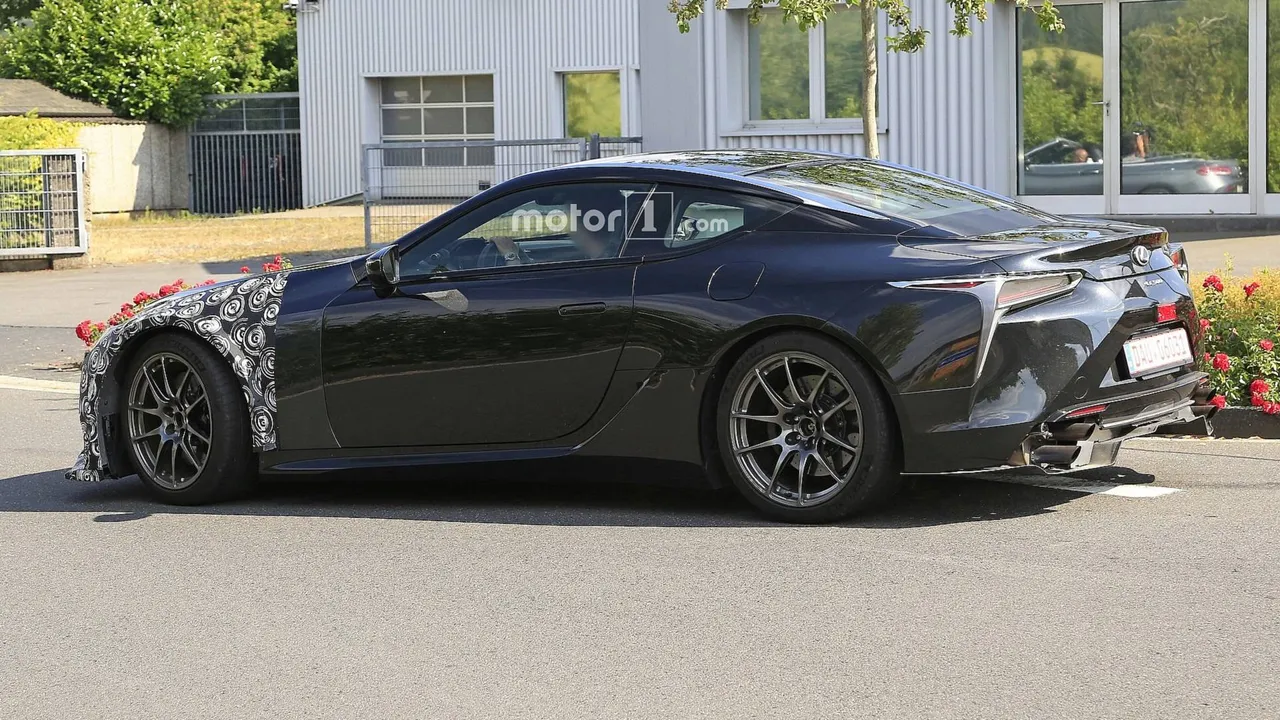
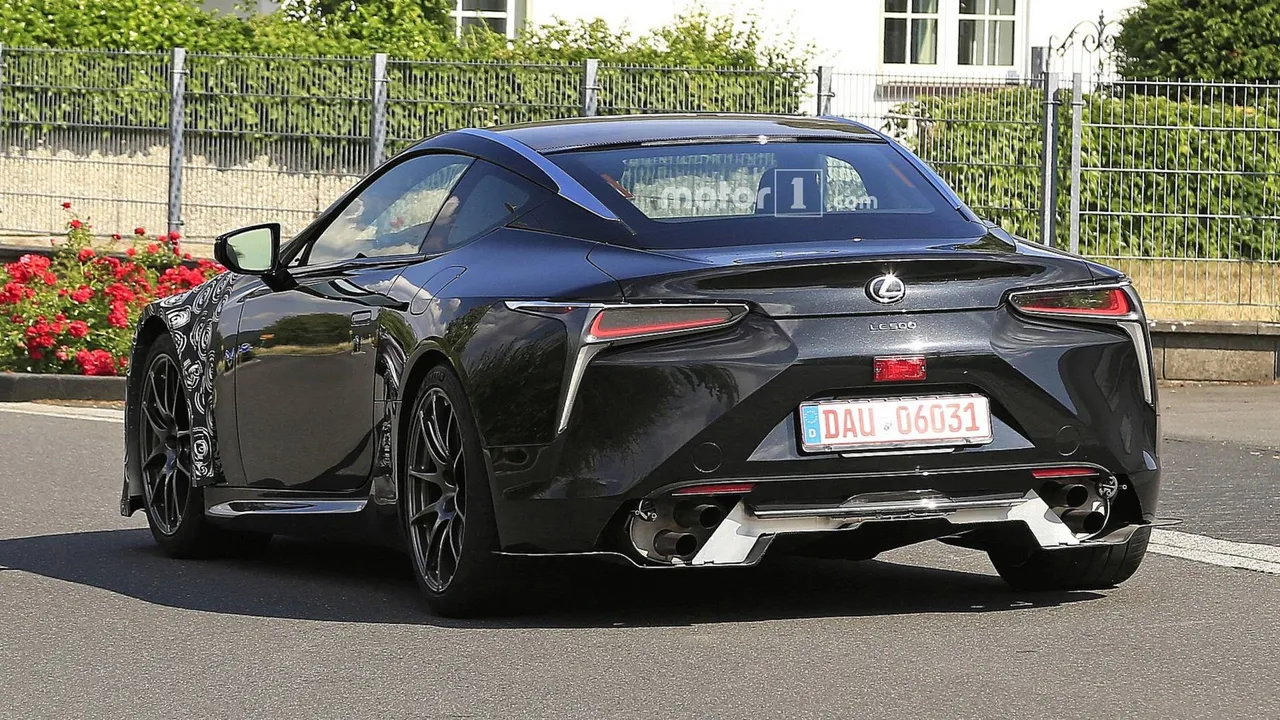
Since the 2007 IS F, every Lexus F has a rich and characterful 5.0 litre naturally-aspirated V8 forming the core, finely tweaked and tuned by their best engineers. However, when compared to engine architectures of today, that NA V8 seemed archaic, as charismatic as it may have been. With this new 4.0 L turbo engine, we can hope that the LC F, and any future F model, could become formally competitive with anything that Europe, or the United States could throw at it.
I have always secretly liked the LC 500 since its launch only a couple of years ago. It has most of the things that you need in a luxury sports car, except for performance. While it certainly has a lot of power, the added weight of all the leather and insulation meant that the LC 500's balance was off, and it clearly was not intended for spirited driving, rather for relaxed cruising. With great hope, the LC F could fit that gap, where enthusiasts seek Lexus-like quality and reliability, but couple with good performance and handling that is expected of a sports car.
Image(s) Source: Motor1
An exciting year ahead.

Overall, 2020 is hopefully going to shape up as a great year for carmakers and car enthusiasts alike. As we begin this transition into a new era for the automobile, with electrified propulsion and autonomous driving, we are now seeing the slow end to an era for the old-school, petrol-powered, and analogue cars.
This small list of 7 great cars which I'm anxiously awaiting for is hopefully the beginning for great things to come, and I do wish that it keeps on giving. Happy New Year, friends!
Image(s) Source: GIPHY
