
Note: This post is not intended as investment advice and should not be construed as such. It describes my own collecting activities and speculative opinions. If you choose to follow my opinions and begin collecting certain items also, then you bear any and all risks of loss. End of disclaimer; bring on the fun part.

Many collectors have a personal interest in the items they collect. I’m more of an investor than a collector: I acquire certain items that are likely to increase in value in the coming years. I’m not knowledgeable enough as a collector to identify nuances, so I don’t bother with the small stuff. I only collect items that I believe are likely to increase substantially in value. If you’ve read my blog before, you might have noticed my posts about investing in whisky and in physical bitcoin tokens (specifically, aged single malt whiskies from certain distilleries and 2011-13 Casascius physical bitcoins…I won’t touch anything else in those categories).
I collect another type of item also and would like to share more information about it with you: Disney Dollars. They have been gaining in popularity, but most remain relatively affordable for the first-time collector who is just getting started. If you’re lucky, you can find some bargains. And if you are willing to risk some guesses, anticipating which Disney Dollars are most likely to increase in demand, then that risk could pay off in a big way.
Disney dollars may increase even more in value in coming years. Source: ebay.com screenshot.

Value Checklist: Factors Affecting the Demand and Supply of Collector’s Items
Before we get into Disney Dollars, let’s discuss what makes a valuable collector’s item. First, the most important characteristic is demand. What creates demand? It must be an item that enough people know and like to collect; otherwise, it will not have any demand. With aged, single malt whisky, for example, some people collect it to drink the whisky while others like having it. People also will be more likely to buy and hold an item if there is some reliability that the item is original and of high quality. There are some things people are reluctant to collect because counterfeit versions proliferate in the market. If the item has some difficult-to-copy seal, serial number, or independent authentication, this could add to investors’ comfort level.
Second, basic economics tells us that the flipside of demand is supply. People love to collect things that are rare, which makes them more special. Scarcity fuels demand. If there is a large supply of the item, then each one is not likely to increase as much in value. Only a few thousand Casascius physical bitcoin tokens were minted and loaded with bitcoin value; the man who made them was told by the government to stop loading them in 2013. Hence, those are very scarce collector’s items, only having been made for three years (the unloaded tokens they continued to make later are basically worthless).
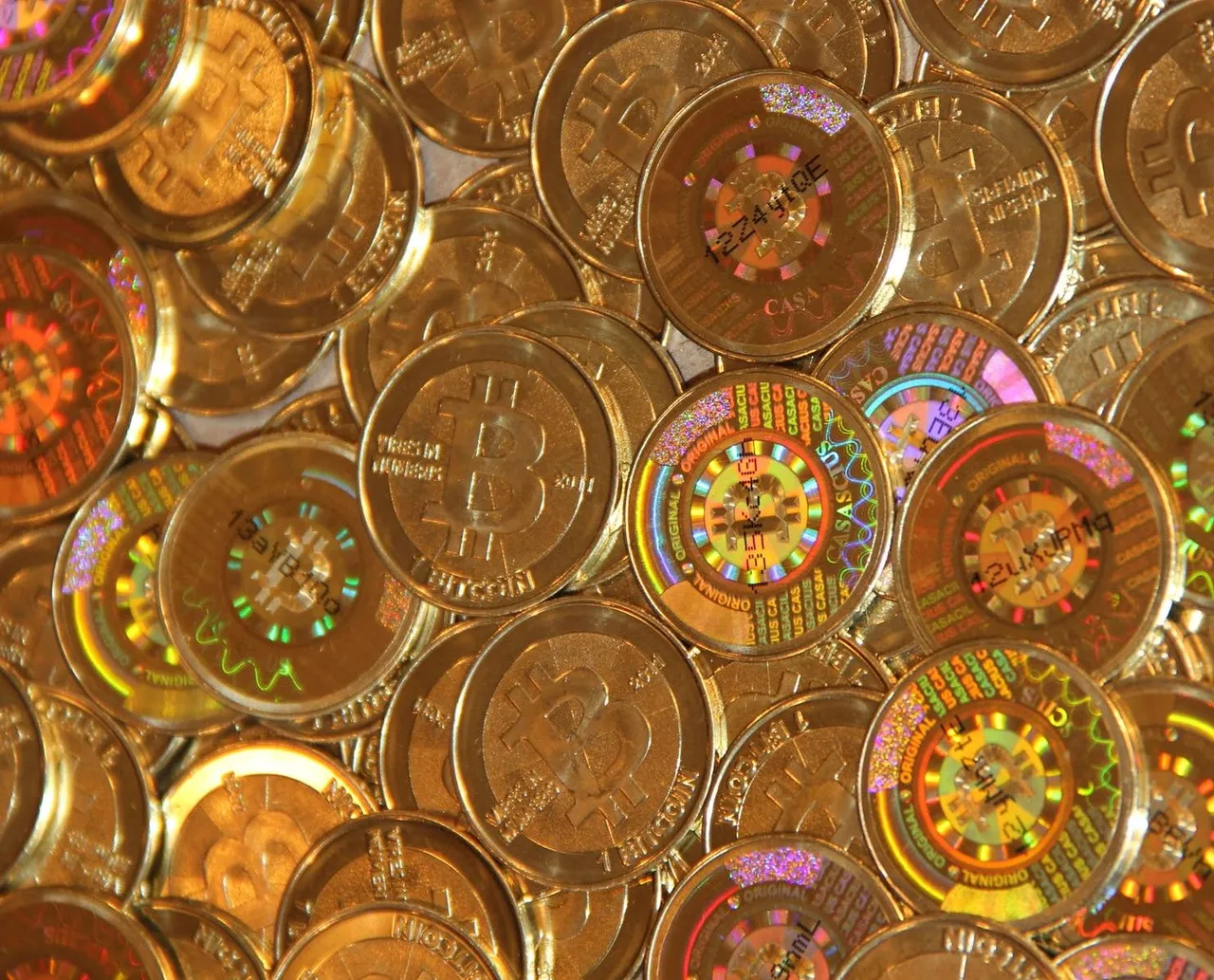

Casascius physical bitcoins and collectible whisky. Top image: Courtesy of Casascius Mint. Bottom: Robbreport.com.
Supply can increase or decline over time as well. People drink their whiskey, which leaves less of it. Others open and redeem their physical bitcoins so they can spend the BTC value online, which completely destroys the additional value of the token as a collector’s item. Other items can get lost, damaged, or destroyed over time, again reducing available supply.
Can supply increase? Yes, but not if the original item is identifiably from an early set. Pepsi could begin making Crystal Pepsi again, as it did briefly in 2015 and 2017. But someone collecting the original Crystal Pepsi might have a full bottle from the first US/Canadian run in 1992-93. And if it’s reliably identifiable as being the original version, then increased supply will not dilute its value, because it’s really an increased supply of something newer (a later version). Having newer ones on the market could even increase consumer awareness and boost an item’s value in the marketplace. (Note: I would not buy the plastic bottles anyway, since they don’t hold up well over time.)
Crystal Pepsi. Image source: Adage.com.

Third, looking into your crystal ball in the future, are there any notable events or trends that might affect the price? Are there any demographic realities that are favorable or unfavorable? For example, perhaps you want to invest in Susan B. Anthony (an American women’s rights pioneer) memorabilia and realize that in two years, it will be the 200th anniversary of her birth, so perhaps things might be slightly more valuable with additional media attention then. Maybe you’ve heard that a movie series is being made of some book you read and believe that that will increase demand. For marginal items, it’s a good idea to have an exit strategy anyway.
This can work in the other direction also. From my posts, you’ll see that I’m a baseball fan. I own some baseball cards in my collection. But when I realize that fewer young people are interested in the sport and that the average fan’s age has increased to 57 years old, I’m worried that in 10 years or more, there may not be much demand for my cards. Demographics is working against that item; I no longer collect baseball cards with any hope that they’ll increase in price. Conversely, the cryptocurrency market continues to expand, which should continue to fuel the price of 2011-13 Casascius physical bitcoin tokens.
The Value Proposition with Disney Dollars
Now imagine there’s an item which represents a global brand, something almost as universal as a popular sport or a cryptocurrency: Disney parks and characters. Also imagine that there are many different versions and denominations of this item, each with its own appeal to fans, and its own dates and serial numbers to ensure some differentiation. Lasting quality is good: they were printed on cotton paper that has held up very, very well. Imagine that it has a face value and the issuer continues to accept it from any moron who wants to spend it for face value rather than sell it (for more money) to a collector.
And imagine further that the issuing entity has announced it will no longer make any more of these items, as it announced in 2016.

Top: Statista.com. Bottom: A Disney dollar from 2000. Source: Creative Commons via Flickr.com by Michael Mandiberg.

Ladies and gentlemen, I give you the Disney Dollar, always intended by Disney to be a special collector’s item. From Mickey, Minnie, Goofy, and Donald to Cinderella, Ariel, Snow White, and Aurora to Pirates of the Caribbean to Cruella to Space Mountain, they feature lots of characters and places. Printed for the first time in 1987 and ended forever in 2016, Disney Dollars have been accepted for face value at most Disney parks and resorts. But many people have collected them rather than spending their DDs.
Excuse me? No further supply, but they are still accepting them as payment for a lower value than collector’s are paying? So there we have a capped supply and we still have people spending these items like they’re dollar bills, though most are worth more. So supply is actually decreasing (unless Disney is putting its received notes back on the market, but then they would not be in uncirculated collector condition anyway).
Silver American Eagles. Source: JMbullion.com.

As a comparison, the U.S. Mint makes Silver American Eagle coins that contain one ounce of pure silver. Those have a face value of $1 as legal tender, but no one in his/her right mind would use one to make a $1 payment; the spot price of the silver they contain is much higher, and thus you’d only sell it for the price of the silver and the coin (currently closer to $17). Yet Disney parks and attractions continue to accept Disney Dollars for face value, presumably removing some of them from supply. (And to be fair, if you have a Disney Dollar that is folded or in crinkle-poor condition, you might want to spend it, since collectors prefer mint or uncirculated bills.)
A smart collector would have accumulated Disney Dollars during the time they were distributed by Disney, but that ended. 2016 was the year Disney announced it would no longer make DDs and it also sold out of its remaining inventory. One also could have invested in 2016, buying on the secondary market immediately after learning that Disney would stop making DDs, though the market might have been over-inflated for a few months then as the press widely reported on this scramble (for a more recent example, see Necco wafers).
You can still buy packs of some of the later-issued bills for just a few dollars per bill, since those have not increased much yet. But some of the most collectible years and styles have increased greatly in value already. Of course, it is still early in this game and there are several versions which can be expected to increase in value in the coming years.
In fact, this year may be the best possible time to begin looking into Disney Dollars as an investment. Why? Because as of now (2018 at the time of this writing), we have two years’ worth of collecting data to tell us which Disney Dollars are more valuable than others. From looking at the years/versions that interest current investors and collectors, we can conclude WHY some of them are the most valuable, apply the same logic to others, and make educated guesses about which others are likely to increase in value in the coming years. Many of them are still relatively affordable.

Disney dollar from the pirate set and a look at Disney dollars selling at online auctions. Sources: willcad.org (top) and ebay.com screenshot (bottom).

Reasons I Like the Long Term Value Potential with Disney Dollars
To recap: Here are the main reasons Disney Dollars are a great collector’s item and one that is likely to continue increasing in value over time.
(1) Disney is one of the most respected brands in the world
(2) Disney Dollars have many characters/versions from which to choose, giving them great value to both fans and collectors
(3) Disney stopped making Disney Dollars in 2016 (supply capped)
(4) Disney still accepts Disney Dollars at its facilities and always will (supply constantly reducing)
(5) Disney Dollars have an established track record as collectors’ items, yet many years/versions still remain affordable for entry-level collectors
This post became too long as I was writing it, so I broke it into two parts. To continue reading, please move on to the next part, Investing in Disney Dollars, Part 2: Picking Winners. Here is the link:
https://steemit.com/collecting/@donkeypong/investing-in-disney-dollars-part-2-picking-winners
Top image: Creative Commons via Flickr.com by quintadomedia.