
Dunkler Wiesenknopf-Ameisenbläuling ■ Dusky Large Blue
Maculinea nausithous
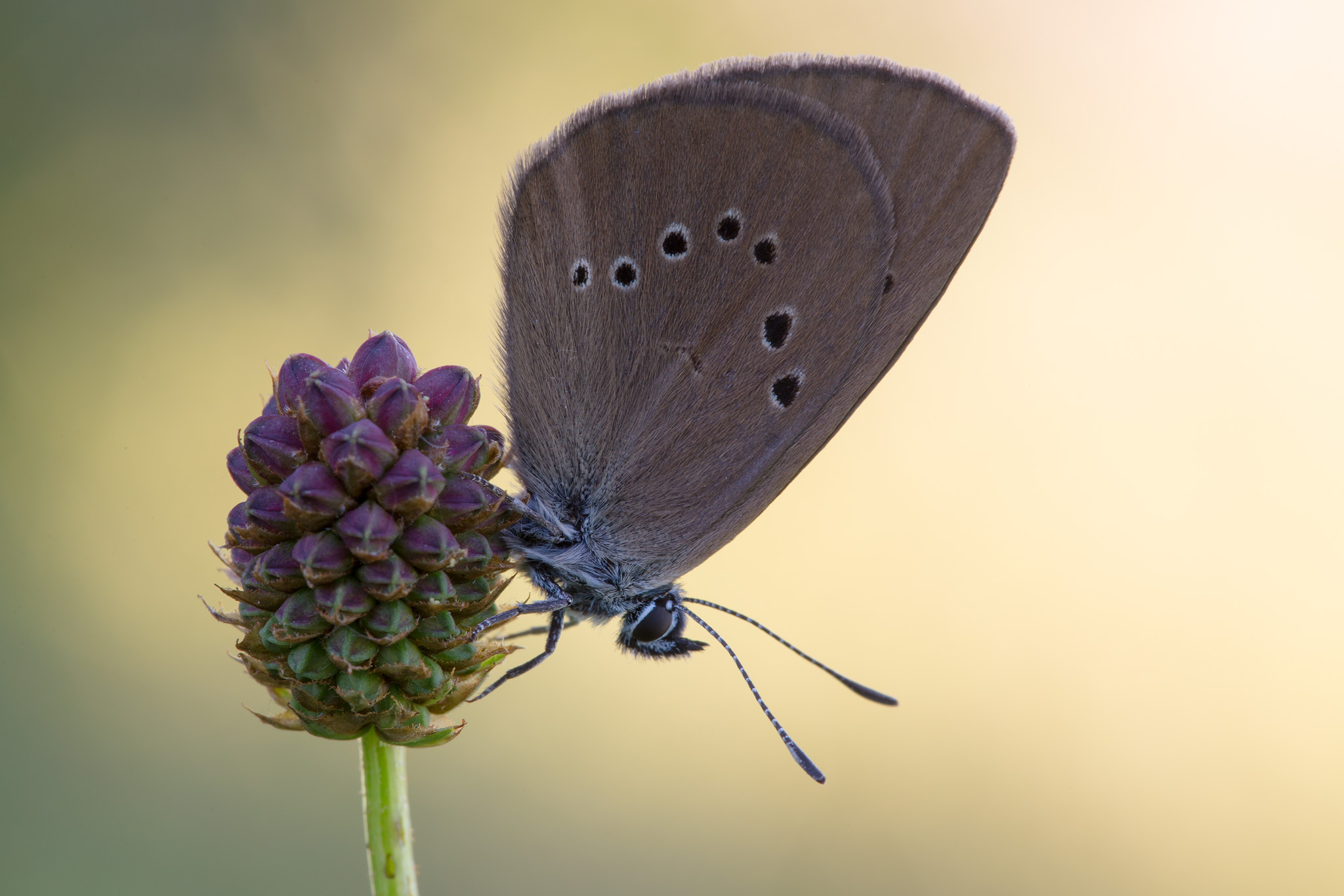
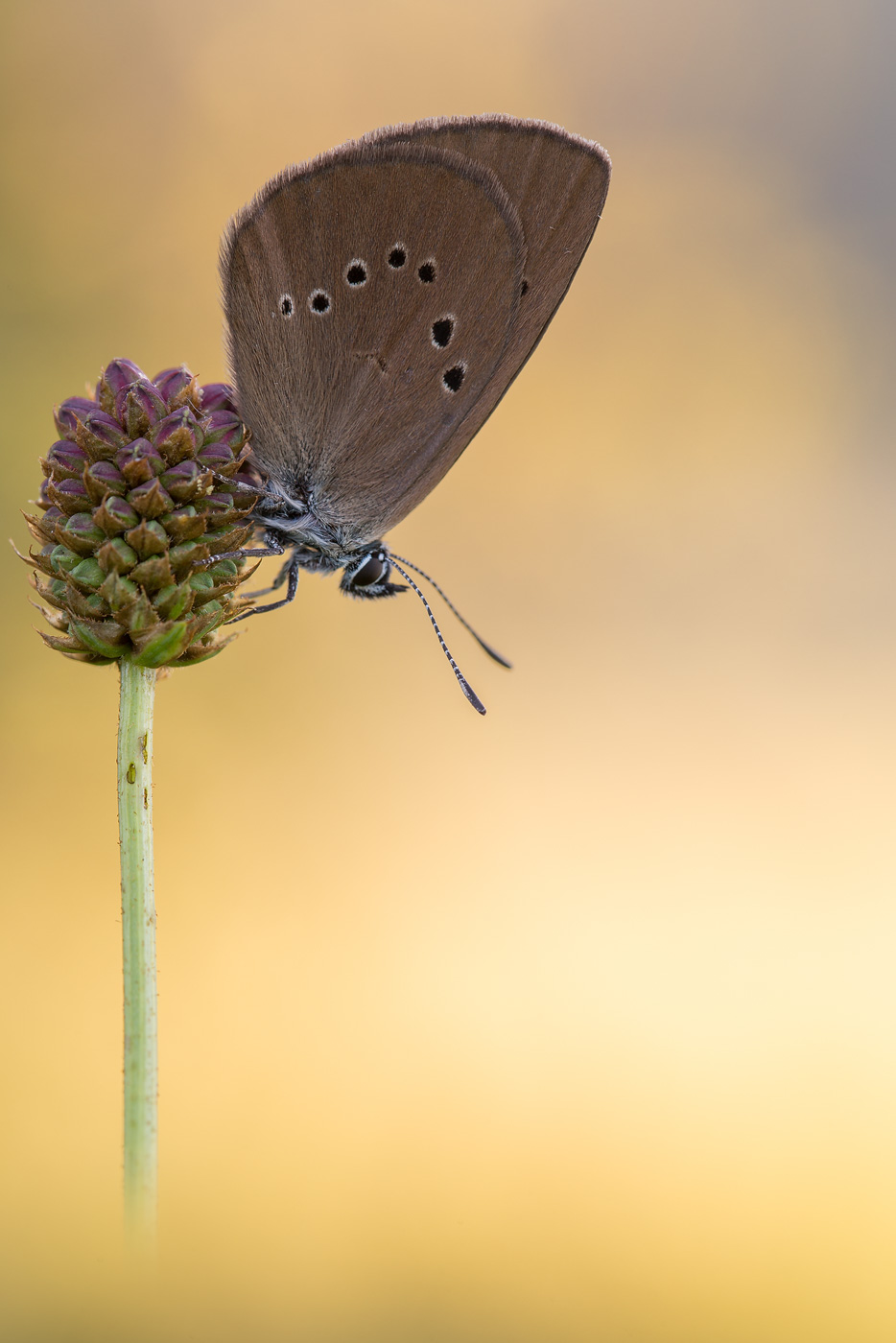
Dieser Ameisenbläuling lebt wie noch viele weitere Bläulinge in enger Symbiose mit Ameisen. Der dunkle Wiesenknopf- Ameisenbläuling legt seine Eier ausschließlich in die Blüte des großen Wiesenknopf Sanguisorba officinalis. Nur dort wo der Wiesenknopf zusammen mit den Ameisen Myrmica rubra, Myrmica samaneti oder Myrmica scabrinodis vorkommt, kann dieser Bläuling überleben. Er ist ein absoluter Spezialist der hohe Ansprüche an seinen Lebensraum stellt.
Like many other large blue, this ant blue lives in close symbiosis with ants. The dusky large blue lays its eggs exclusively in the flower of the great burnet Sanguisorba officinalis. Only where the great burnet occurs together with the ants Myrmica rubra, Myrmica samaneti or Myrmica scabrinodis, this blue can survive. He is an absolute specialist who makes high demands on his habitat.
▲ Click on the image for full resolution ▲
▲ Click on the image for full resolution ▲
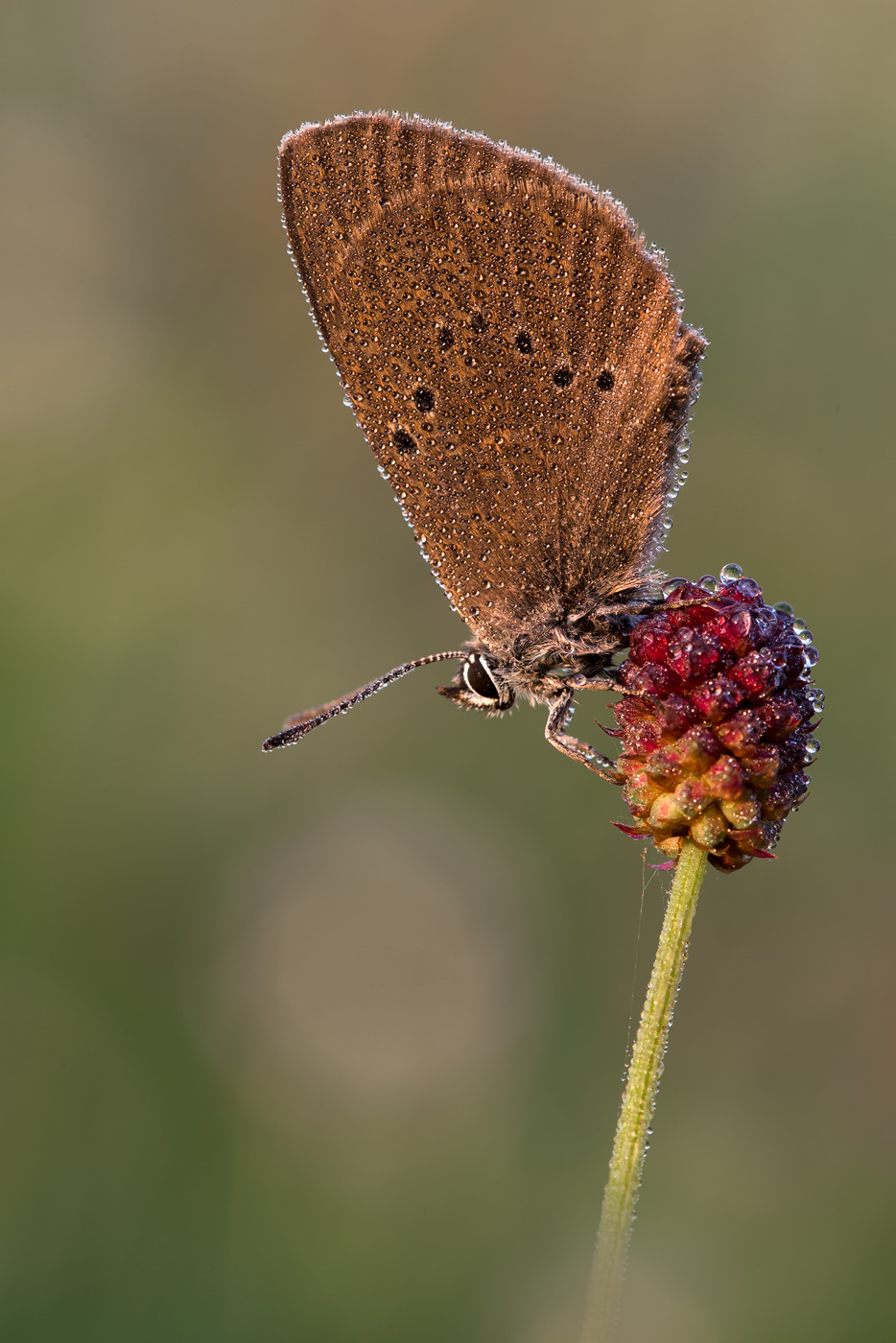
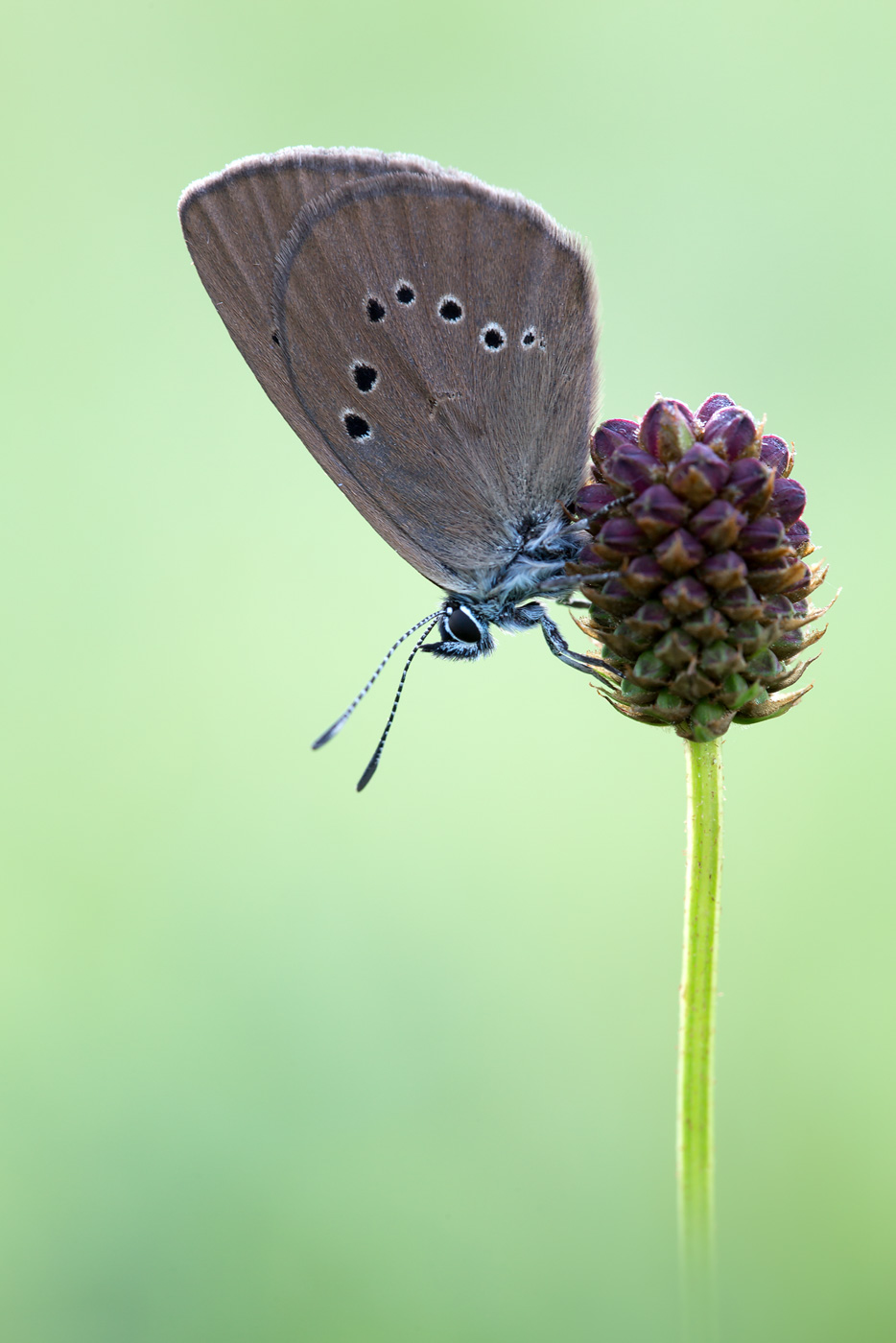
Wenn man das Habitat kennt, ist es leicht den Falter früh am Morgen zu finden. Er verbringt die Nacht ausschließlich auf seiner Futterpflanze, dem großen Wiesenknopf. Der Falter ist oft mit Tautropfen benetzt. Dann ist es besonders einfach, ihn zu fotografieren, denn er verspürt wenig Neigung davon zu fliegen. Erst wenn die wärmende Sonne auf ihn trifft und die feinen Tröpfchen verdunsten, fliegt er davon.
If you know the habitat, it is easy to find the butterfly early in the morning. It spends the night exclusively on its forage plant, the great burnet. The butterfly is often wet with dew drops. Then it is particularly easy to photograph it, because it feels little inclination to fly away. Only when the warming sun hits it and the fine droplets evaporate does it fly away.
▲ Click on the image for full resolution ▲
▲ Click on the image for full resolution ▲
Bei dieser Aufnahme hatte ich richtiges Glück. Beide Falter saßen absolut parallel zueinander. Langsam habe ich mein Stativ nach vorne geschoben und mich immer näher herangewagt. Die letzten Millimeter konnte ich mit dem Makroschlitten justieren. Um beide Falter perfekt in einer Schärfeebene zu fotografieren habe ich das Livebild auf dem Monitor der Kamera kontrolliert.
I was really lucky with this picture. Both butterflies sat absolutely parallel to each other. Slowly I pushed my tripod forward and came closer and closer. The last millimeters I could adjust with the macro slide. To photograph both butterflies perfectly in one focal plane, I checked the live image on the monitor of the camera.
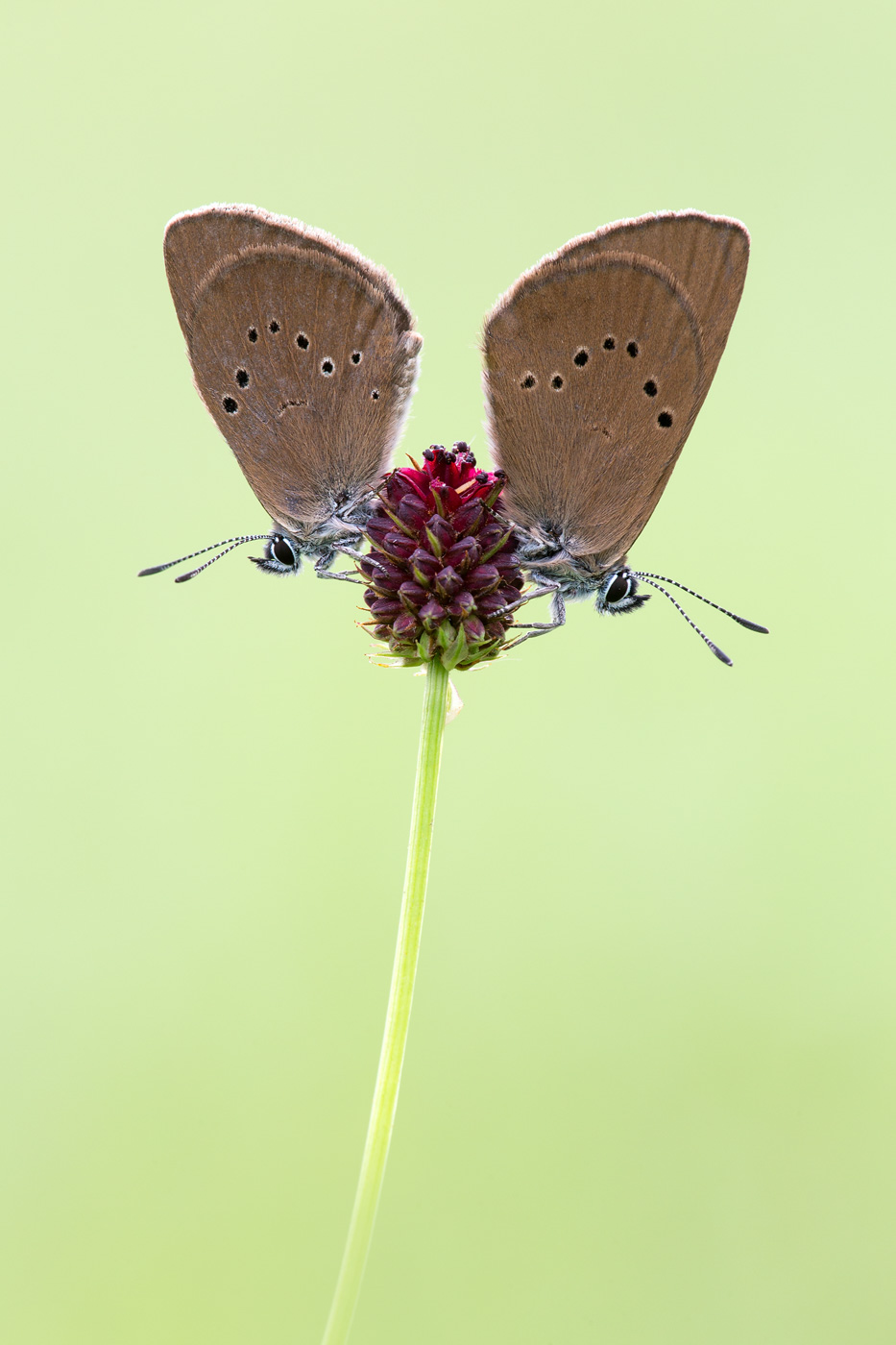
▲ Click on the image for full resolution ▲
Eine Kopula zu beobachten ist immer ein ganz besonderes Erlebnis. Es schaut aus wie ein Tanz, wenn sich die Falter immer wieder um den Wiesenknopf drehen. Bei genauer Beobachtung bestimmt hier das Weibchen die Richtung und das Männchen muss sich diesen Vorgaben beugen. Direkt nach der Kopula legt das Weibchen seine Eier in die Blüte des Wiesenknopfs. Mit den Fühlern prüft das Weibchen, ob der Wiesenknopf nicht bereits besiedelt wurde.
Watching a copula is always a very special experience. It looks like a dance when the butterflies turn around the great burnet again and again. On close observation, the female determines the direction and the male has to bend to these guidelines. Directly after the copula the female lays her eggs in the flower of the great burnet. The female uses the antennae to check whether the great burnet has already been colonized.
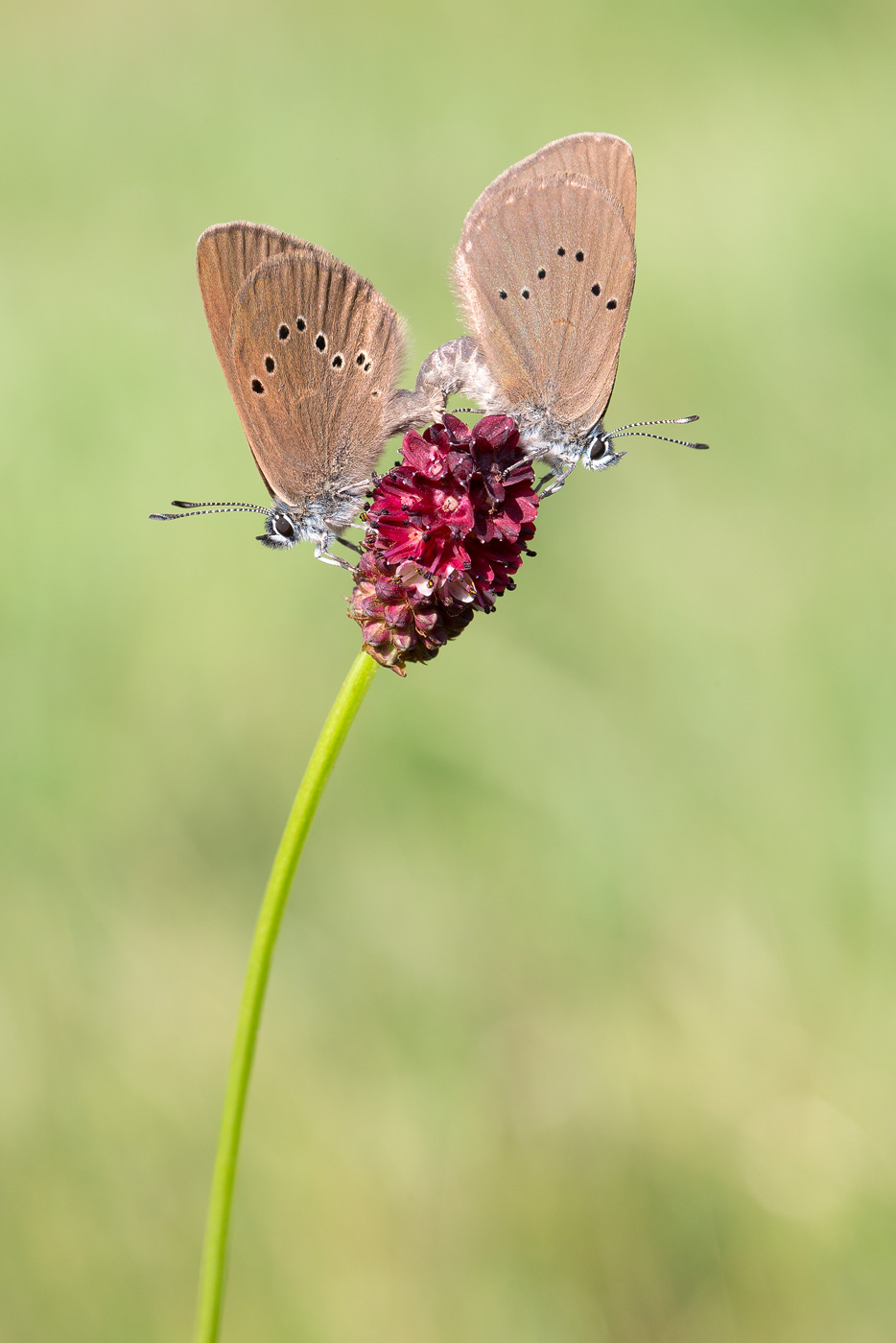
▲ Click on the image for full resolution ▲
Zu diesem Bläuling könnte ich noch viele Besonderheiten und wissenschaftliche Erkenntnisse schreiben. Die spare ich mir, da unser lieber 
I could write many more peculiarities and scientific realizations to this blue. I'm saving them because our dear
Schutzstatus:
Europarechtlich streng geschützt:
Fauna-Flora-Habitat-Richtlinie der EU (FFH), Anhang II
(Arten, für deren Erhaltung besondere Schutzgebiete ausgewiesen werden müssen)
Fauna-Flora-Habitat-Richtlinie der EU (FFH), Anhang IV
(streng zu schützende Arten von gemeinschaftlichem Interesse)
Protection status:
Strictly protected under European law:
EU Habitats Directive (FFH), Annex II
(Species for the conservation of which special protection areas must be designated)
EU Habitats Directive (FFH), Annex IV
(species of Community interest to be strictly protected)
| Category | Macro |
| Camera | Canon 5D Mark III |
| Lens | Canon EF 180 mm 1:3.5L Macro USM |
| Location | Germany, Bavaria, Lower Franconia, South Spessart |
Wenn dir mein Beitrag gefällt, freue ich mich über deine Nachricht.


If you like my contribution, I am looking forward to your message.
Many thanks and greetings from Germany 🦋
Frühere Beiträge in der Übersicht │ Previous articles in the overview