
Buchen-Schleimrübling ■ Porcelain fungus
Oudemansiella mucida
Im Spessart ist die Rotbuche dominant und als häufigster Baum zu finden. Wo sie vorkommt, haben andere Bäume kaum eine Chance. Die Buche wächst schneller als alle anderen Bäume wie z.B. Birke, Eiche und Fichte. Sobald die Buche eine Eiche überragt, kann diese nicht mehr überleben, da ihr das Licht fehlt. Würde man den Wald sich selbst überlassen, könnten nur noch an wenigen Stellen Eichen und andere Bäume, sich gegen die Dominanz der Buche behaupten. Eine nachhaltige Waldwirtschaft, ist für den Spessart seit Jahrhunderten von Vorteil. Nur durch den Mensch kann der Mischwald mit seiner hohen Biodiversität erhalten werden. Verbleibt Totholz im Wald, bietet es Nahrung und Unterkunft für eine Vielzahl von Lebewesen. Die Pilze sind die Wächter im Wald. Sie zersetzten mit Ihren Organismen den Baum zu neuer Erde. Die Erde wiederum bietet Nährstoffe für junge Bäume und sorgt für gesundes Wachstum. Den Buchen-Schleimrübling findet man fast ausschließlich an Buchen. So trägt auch dieser Pilz seinen Teil dazu bei, den Kreislauf in der Natur am Leben zu erhalten.
In the Spessart the red beech is dominant and the most common tree. Where it occurs, other trees hardly have a change. Beech grows faster than all other trees such as birch, oak and spruce. As soon as the beech overhangs an oak, it can no longer survive because it lacks light. If the forest were left to its own devices, oak and other trees would only be able to compete against the dominance of beech in a few places. Sustainable forest management has been an advantage for the Spessart for centuries. Only human beings can preserve the mixed forest with its high biodiversity. If deadwood remains in the forest, it provides food and shelter for a variety of living creatures. The fungi are the guardians in the forest. They use their organisms to decompose the tree into new soil. The soil in turn provides nutrients for young trees and ensures healthy growth. The porcelain fungus can be found almost exclusively on beech trees. In this way, this fungus also contributes its part to keeping the cycle in nature alive.
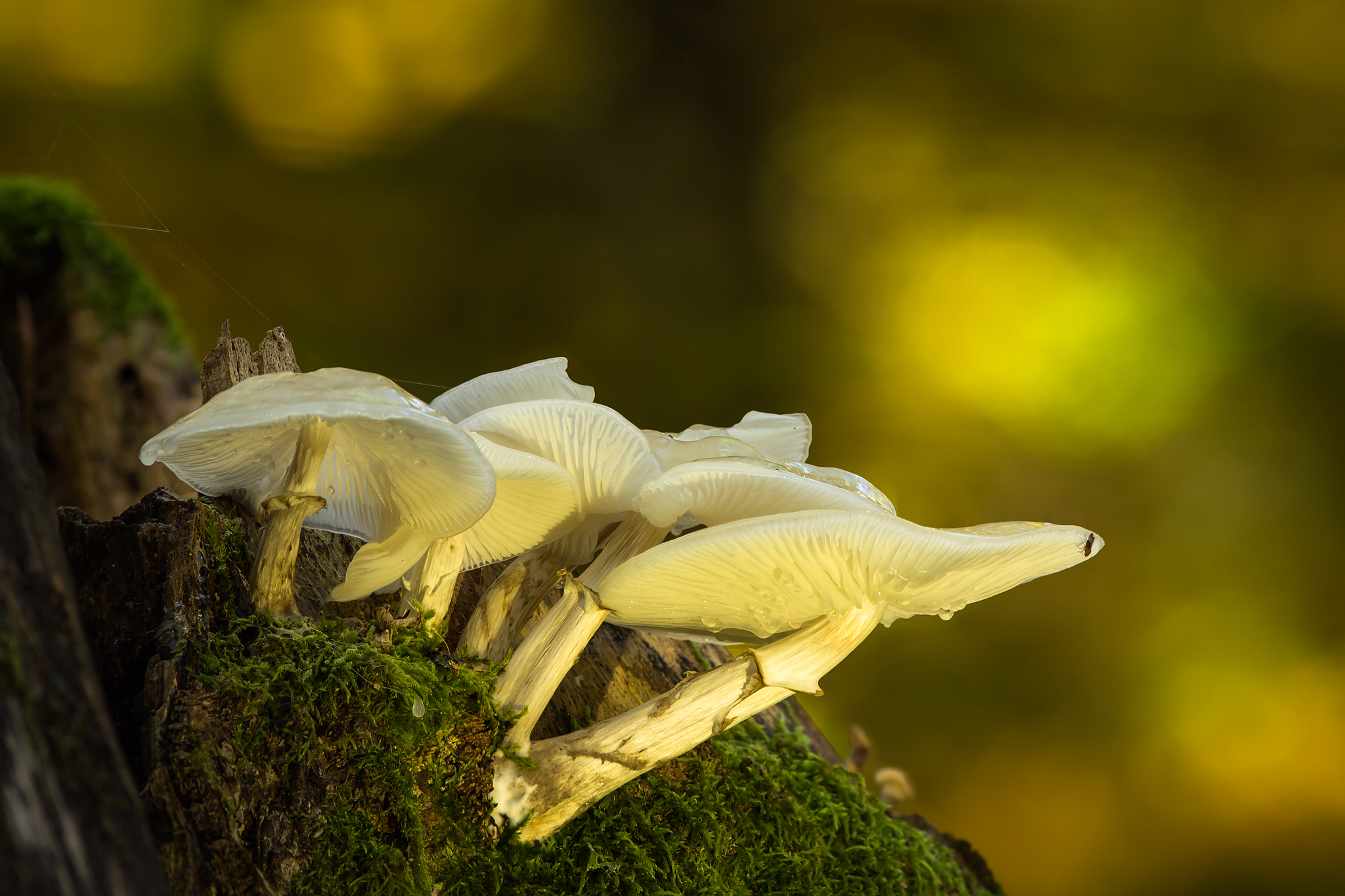
▲ Click on the image for full resolution ▲
| Kategorie | Macro |
| Einstellungen | ISO 100 │ 200 mm │ f/5.6 │ 1/25 Sek. |
| Camera | Canon EOS 60D |
| Objektiv | Canon EF 200mm f2.8 L |
| Standort | Deutschland, Bayern, Unterfranken, Spessart |
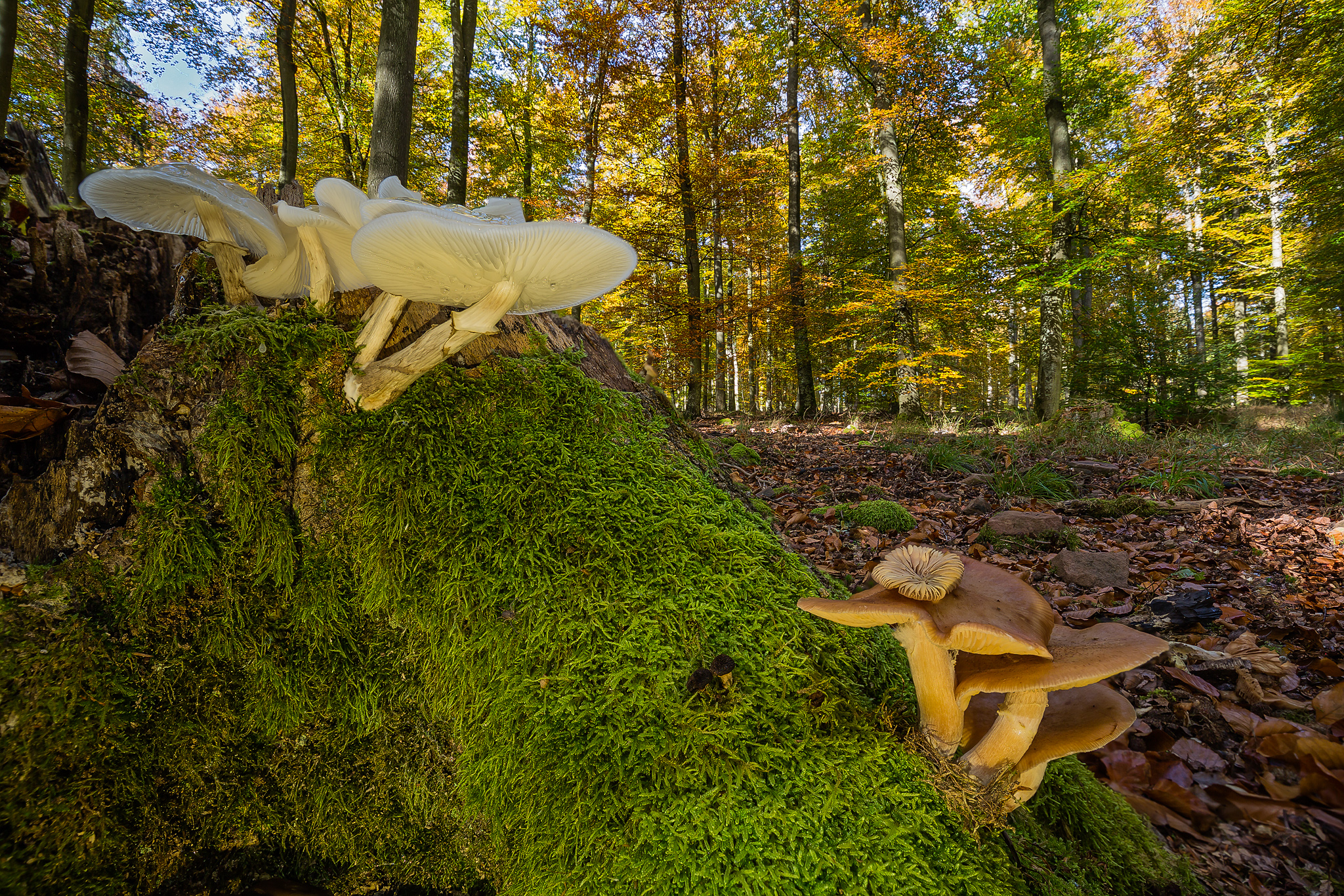
▲ Click on the image for full resolution ▲
Leider konnte ich die braunen Pilze in der rechten Ecke nicht eindeutig identifizieren. Über einen Bestimmungshilfe würde ich mich sehr freuen.
Unfortunately I could not clearly identify the brown mushrooms in the right corner. I would be very happy about an identification aid.
| Kategorie | Landschaft |
| Einstellungen | ISO 100 │ 16 mm │ f/9 │ 1/5 Sek. |
| Camera | Canon EOS 5D Mark III |
| Objektiv | Canon EF 16-35mm f4.0 L |
| Standort | Deutschland, Bayern, Unterfranken, Spessart |
Wenn dir mein Beitrag gefällt, freue ich mich über deine Nachricht.


If you like my contribution, I am looking forward to your message.
Many thanks and greetings from Germany 🌳🍂🍄
Frühere Beiträge in der Übersicht │ Previous articles in the overview