
You might have noticed that the economy looks different for a lot of us. A lot of people are upset that they can't count on their old recipes anymore. What previously was considered a "good job" or a prosperous region has been slowly but surely been losing its attractiveness, and more and more people are disenchanted with their job and career.
So you might say it is time to upgrade our thinking:

1) Economy Transformation
“Every few hundred years throughout Western history, a sharp transformation has occurred,”
Peter Drucker observed in a 1992 essay for Harvard Business Review.
“In a matter of decades, society altogether rearranges itself – its worldview, its basic values, its social and political structures, its arts, its key institutions.
Fifty years later a new world exists. And the people born into that world cannot even imagine the world in which their grandparents lived and into which their own parents were born.
Our age is such a period of transformation.”
For Drucker, the newest new world was marked, above all, by one dominant factor: “the shift to a knowledge society.”
From https://hbr.org/2014/10/what-peter-drucker-knew-about-2020
Drucker already was talking about the knowledge economy in 1969.
He was then talking about the shift from "factory work" to "paper work".
Like the shift from Agrarian economies to industrial economies, there was a shift of economic opportunities in the last 50 years.
While most people assume we are still in the knowledge economy, it looks like we have shifted to a different version which one might call the Idea Economy.

The shift to the knowledge economy was hard on factory workers in the developed world.
The developing world was able to take advantage but there to these factors will shift the things that matter, maybe even faster.
Because they are going through this shift in an era of exponential technological progress.
The shift from the knowledge economy to the idea economy is going to be equally hard on many types of “white collar” workers.
Certain types of “good jobs” are already quickly being automated, outsourced or lose their value because of abundance due to exponential technological progress.
As I wrote about in my article about checking your assumptions, this means that the old recipes for “a successful life” and the formula for earning a decent income will seem to stop working for more and more people.
With this post I want to explain the reason WHY those recipes stopped working.
Overall, I want to hit the right tone with this article and show you that:
- Things are changing (have been changing for a while)
- It will impact ALL your assumptions about how you will make a decent living
- I think the switch will be brutal for many people.
- If you understand the new rules of the IDEA economy, the opportunities are huge. Especially if you are an early adopter on platforms like steemit.com :)
Transitions between economies
The first place to start is maybe this awesome graph from http://bigpictureguy.com/wordpress/why-innovate/idea-economy/

As you can see here, throughout human history, we have made several step changes in the way we as humans have been able to "make a living" on our planet.
Then with the invention of the steam engine, we saw a huge multiplier effect where now it was possible on a large scale to use machine power to replace muscle power...
Not only to work the land, it was now also possible to automate all kinds of manual actions so the output of "stuff" was getting huge.
Transportation especially was a game changer because it made previously scarce resources and manufactured goods much more accessible and cheap.
Fast forward 200 years and we obtained huge improvements in standard of living overall.
The nature of “work” and what type of job is well rewarded has been shifting though.
In the beginning of the industrial age, most people made their income from extracting raw materials or making stuff in factories.
Miners, factory workers were the backbone of many communities.
But as technology got better and better at replacing muscle power, less and less people were involved in those sectors.
As capital and manufacturing expertise turn out to be fairly mobile together with transportation efficiencies it made these kinds of jobs outsourceable. As a result whole communities suffered. Many people were stuck there because of home ownership. With the deteriorating economic conditions, their once valuable housing dropped in value and they can't afford to move to areas with better jobs.
All along, the ideal was to escape the blue collar job and become a white collar worker.
A new type of worker emerged in the middle of all this: "the knowledge worker".
You may have noticed that the people who did best the last few decades, tended to be not the people making stuff, but the people who are involved with moving information around:
Knowledge worker according to wikipedia:
Knowledge workers are workers whose main capital is knowledge.
Examples include software engineers, physicians, pharmacists, architects, engineers, scientists, design thinkers, public accountants, lawyers, and academics, and any other white-collar worker, whose line of work requires the one to "think for a living".[1]
https://en.wikipedia.org/wiki/Knowledge_worker#Definition
So the standard answer for those that wanted a good income has been "go to college" and "get a good job".
But as I wrote in my "Checking your assumptions" article, there seems to be a growing realization that this "formula for success" is tapped out. See how many baristas in your Starbucks have a college degree? They tried that formula and failed.
**Why is that? **
Dan Pink explains this well:
Thanks to Youtuber Brianna Crowley for the edit.

What it comes down to is that certain types of knowledge work which depend on logical, linear, analytical thinking are actually easiest to hand over to computers.
A lot of that kind of work is either automate-able by software or outsource-able to those developing countries with literally millions of knowledge workers graduating every year.
Or it completely loses value because information and knowledge has become abundant.
2) You need to adjust your assumptions about how life works
Another great graph from http://bigpictureguy.com/wordpress/why-innovate/idea-economy/

Things keep shifting. What matters in the economy keeps shifting.
For the Agrarian Economy you needed land + animals + people. Work the land and defend it against other people trying to steal it.
In the industrial and market economy you needed Capital to buy machines + raw materials + energy + people. Most of all you needed intellectual capital and needed to defend that (e.g. patents, brand, keeping your most talented people from going to work for the competition)
Now we are coming up to the idea economy, which again is going to shift what matters.
Making generic manufactured goods has ceased to be an economic opportunity, for many people.
everything can and will be copied and margins will keep dropping on most consumer goods.
What matters most is, you guessed it... ideas.
Creating whole new ways of solving problems, products, services etc.
In Big picture guy’s words:
In today’s new economy Ideas are the critical determinant of opportunity. The ability to produce standardized products year after year, the bulwark of a mass market economy, is inconsequential in an environment where production and distribution have become commodified and commonplace. It is the idea and the ability to execute it with agility that delivers economic value.
What will stop mattering in the near future?
These forces of Outsourcing, Automation and Abundance are irreversible.
As a knowledge professional, trying to hold on to the old ways you earned an income is going to be more and more a losing proposition.
Playing by the old rules is increasingly going to stop working.
Unfortunately many people resist change, they are uncomfortable with giving up something they know
(although it is visibly deteriorating) than trying something that is uncertain.
Kevin Kelly sums it up like this :
If your job consist of finding the right answer, or if it can be measured in terms of productivity (how many x/ hour) sooner or later it will be automated.
From : http://www.newyorker.com/news/news-desk/will-a-robot-take-your-job
People have lost their jobs before, and everything turned out fine:
Two hundred years ago, 70 percent of American workers lived on the farm. Today automation has eliminated all but 1 percent of their jobs, replacing them (and their work animals) with machines. But the displaced workers did not sit idle. Instead, automation created hundreds of millions of jobs in entirely new fields.
If history repeats itself, robots will replace our current jobs, but, says Kelly, we’ll have new jobs, that we can scarcely imagine:
In the coming years robot-driven cars and trucks will become ubiquitous; this automation will spawn the new human occupation of trip optimizer, a person who tweaks the traffic system for optimal energy and time usage. Routine robosurgery will necessitate the new skills of keeping machines sterile. When automatic self-tracking of all your activities becomes the normal thing to do, a new breed of professional analysts will arise to help you make sense of the data.
Success in the future will be about doing things, that can't be automated, outsourced or which are not abundant.
What will stop mattering is what you know, or what your college degree says you are supposed to know.
Doesn't matter. It is obsolete and abundant.
What companies want to know is, what can you do with what you know?
Can you create? Come up with good questions? Can you collaborate with a global virtual team? Can you access and learn new information and incorporate that in your new projects. Are you techno literate? Can you solve problems creatively? Are you good at human relationships with co-workers, suppliers and clients.
3) The transition will be brutal for people doubling down on old formulas
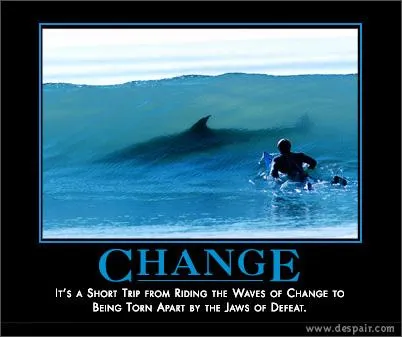
Young people will still plonk down insane amounts of money for a college degree, which only prepares you for those kinds of jobs that are in the line of fire.
Older people will still borrow insane amounts of money to buy houses they don’t really need, betting that they will keep earning the same wage or better and won’t lose their job.
Money they borrowed and have little chance of ever paying off.
These forces are flipping things upside down, what were pretty reliable formulas before, now stopped working.
Paths that before looked pretty uncertain now are becoming more and more viable.
(There are kids making a career off playing videogames on youtube, go figure..., how many parents are undermined by that "you won't ever achieve anything if you keep playing games!" "But mom ...")
I talk about this in my article about checking your assumptions:
https://steemit.com/life/@the-traveller/idea-economy-mental-models-checking-your-assumptions
Basically it comes down to this: Professionals which are going to try to outdo a computer or outwork a few million eager professionals in developing countries have little chance of success. Success not meaning millions but simply a decent income.
4) It’s not all bad, in fact it can be great!

Where there is risk, there is opportunity. Rather than losing a piece of the pie to AI, Automation etc., the pie will get exponentially bigger.
If you can look ahead a bit and see where things are going, in fact there are great opportunities:
No longer do you need access to massive capital to realize ideas. I know people who have started their won pet product lines with a few thousand dollar.
All it takes is an idea, applying the new tools from the new economy and start experimenting.
Don't fear the AI, it’s going to mostly take over parts of your job you hate anyway
The much dreaded AI in fact presents huge opportunities.
Entire new industries will be created from taking existing things and “cognifying” it as Kevin Kelly calls it.
Much can be learned from the story of Garry Kasparov.
In 1997 he was world champion, went up against IBM’s Big Blue at chess and lost. Most people think that is where it ended…
Obviously if he would have kept playing against the computer with the same rules he would have kept losing.
So he changed the rules...
If the computer had access to all historic chess moves ever made, he figured he should have the same access to a similar database.
So he started to hold freestyle chess matches where anything goes.
People teamed up against computers, computers vs computers and teams of humans with computers (called centaurs) against computers.
Interestingly the most successful teams seemed to be the centaurs. People teaming up with AI.
More interestingly, rather than being the end of chess, it elevated the whole game to an entire new level. Because computer programs enabled top players to get much more and excellent practice against computers, the human vs human games increased as well.
**I think this is showing where the rest of the economy is going too: **
Humans, using technology to do the heavy lifting, the boring repetitive stuff which will allowing them to focus on what makes them uniquely human.
If you think about it, it was ever thus.
With the advent of tractors, the answer was not to try to outwork a tractor plowing a field. That is obviously impossible.
The modern farmer replaced humans with technology.
In the face of AI and outsourced knowledge work, the answer is not doubling down on trying to outwork the automation.
It is to focus on those areas which are uniquely human and which can’t be outsourced, automated and which are not abundant.
As Dan Pink points out, it will force us to focus on that what makes us human.
The creative side (expressed in many areas not just art), relationship side, exploration and investigative side.
Kevin Kelly says: The jobs of the future will be about finding better questions, something computers can’t do.
Don’t believe this crap that there are no jobs and AI is going to take away everything
If you have a blue collar job and do manual labor I don’t think you are necessarily screwed.
All this technology breaks down. There are in fact many essential maintenance jobs that are not being filled (I am not talking janitors here, real wrench-in-hand jobs).
Aviation in particular is heading for a huge crunch because a huge part of the engineer population (proper engineers who get their hands dirty, not the keyboard jockeys :) ) is retiring soon and it takes a lot of time to train a new engineer.
Much longer than pilots in fact. Pilots will lose their jobs to automation loooong before aviation maintenance engineers do.
Mike Rowe makes an excellent case for the profound disconnect between the real jobs that are out there and the qualified people that are missing to fill these jobs. http://profoundlydisconnected.com/

I know several companies that are unable to expand because they lack certain types of people that can do certain kinds of metalwork for instance. They’d pay fortunes for qualified people but can’t find qualified people so they have to train them themselves: https://www.theguardian.com/sustainable-business/2015/jun/22/skills-gap-small-business-qualified-staff
Manufacturing is not dead, it is very much alive. The tools of production and design process are going to be very different though.
Mass production will be less and less rewarding. You do need to realize that mass production is not a game that will go well for you long term. But there are a LOT of things to do outside traditional manufacturing, that can be very lucrative.
Creating new and unique stuff, making custom solutions, troubleshooting and repairing technology will be very important.
3 D printing and custom producing solutions that solve very specific problems are going to be hugely important.
Open source hardware like Arduino can allow a clever chap make automated solutions for small businesses now that even huge companies could only have dreamed about 15 years ago. Custom is the way to go.
In fact more lucrative than some white collar jobs because certain categories of jobs can’t be done through a telephone or an Internet line.
For white collar jobs, yes a lot of them will disappear. But is that a bad thing? A lot of these jobs are boring and mind numbing anyway. People will have to move their backsides but those that take a Kasparov-like strategy of “if you can’t beat them, join ‘em” will reap huge rewards.
Again generic work will not be rewarded, if your job can be described in how many forms you process a day, guess what… there’s an app for that…so if you are the first to automate your own job away, you can have a great income, without having to do so much. That’s leverage.
If you can’t or won’t do that, you need to figure out which parts of your job you can become more creative: people person?
Focus on that, personalized services, custom work, go out to the customer and learn about their company.
Business person? Figure out new models around these new ways of working, find a common problem solve it and automate the solution. Plenty of professionals available to help you with the tech side.
More person to person work e.g. is to focus on coaching specific skills you take for granted.
You’d be surprised how many young people have actually no social or person to person skills for instance.

Pic source
A huge problem is demographics, social care and elderly care and all services around that are going to get huge with few people specialized in that.
Have grandparents that you help a lot? Found cool optimizations that work especially well for them and their situation?
Congratulations, you have a job for the foreseeable future.
The whole technology side of life is exploding, with the consequence that people will need a digital designer for their life (much like an interior decorator). A subsector of that will be personal digital security, plugging vulnerabilities in people's digital lives. That will be huge.
In short, 80 % of the jobs in the next 15 years have probably not been invented yet. So I would not worry too much about there not being many jobs left.
There will NOT be many OLD jobs left, that’s pretty sure. But I think there will be plenty stuff to do.
What you need to avoid is getting caught in this transition without a plan…
An Action plan, to adapt to the idea economy: based on my previous posts:

Pic is stock, rights owned by me.
The first step is to get familiar and experiment with new technology and see what it can do.
You need to become techno-literate so that you create a healthy relationship with technology.
Then it will greatly help you to figure out where you can leverage technology in life to increase your per hour output.
Up until this point I would not do anything drastic yet about changing your Knowledge economy job, first you need to learn:
In order to do that, you need to take responsibility for your learning, the education system is obviously screwed and won’t help you with this.
Pic source
What are you doing about your learnin’?

Now comes the difficult part:
Change:
Recognizing situations where it is necessary or advantageous to change is a skill in itself.
But in an ever changing world it will be a necessity.
One of the new rules of the new economy is to let go at the top
6) Let Go at the Top. As innovation accelerates, abandoning the highly successful in order to escape from its eventual obsolescence becomes the most difficult and yet most essential task.
It is not because you change that you will be good at it, another skill you need to master is experimentation. But that’s an article for the next time.
This post is part of my JULY EXPERIMENT: I share ALL SBD's earned from this post with:
1 quality commenter
1 Re-steemer (that gives me a good reason why they are re-steeming)
What else am I missing with this article, agree? Don’t agree?
I would love to have your comment, maybe you can win some decent money. Anything thought provoking is great. Disagree, fantastic! Let me know! Have a question? Even better, a great question is sometimes better than a page long comment!
So please comment, question, challenge and RESTEEM to get as many people in the conversation as possible.