
Hello, and welcome to my page!
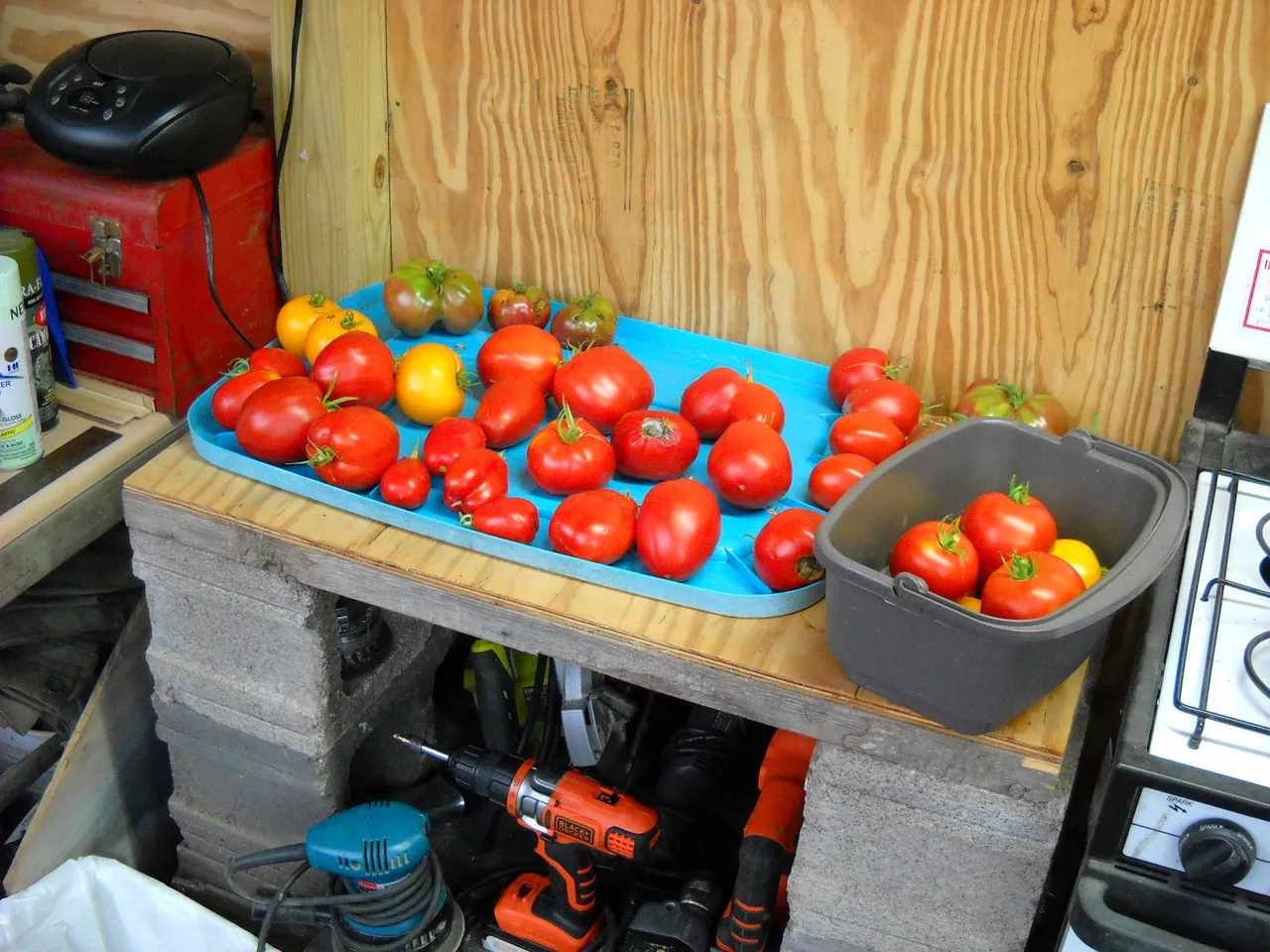
It seems that I'm well into canning season now. I've been canning my produce for several weeks, including green beans, summer squash, and now tomatoes. The tomatoes have been a bit slow to ripen this year, but I finally got enough ripe tomatoes to be able to can a batch. This is my first good picking so far this year.
Canning tomatoes takes a bit more work than some of the other things I can. I peel the tomatoes before cutting them up and canning them. The easiest way to peel tomatoes is to put them into almost boiling water for a short time, take them out of the hot water, and put them into cold water to stop them from cooking from the heat they pick up. That process makes the skins easy to peel. Of course, that requires a setup that includes a pot on the stove with heated water, a pot with cold water, a container to put the skins and stems into, and a pot to put the peeled tomatoes into. I had all of that set up at my greenhouse canning station.

Here's some tomatoes in the almost boiling water.

This is the cold water bath.

Then we have the pot for the skins and stems, and the pot for the peeled tomatoes. I use stainless steel for all of these things because the acid in the tomatoes can leach aluminum from an aluminum pot.

After I get all the tomatoes peeled, I cut them into big chunks and put them into the canning jars. I use pint jars for this process because that's how much I use for cooking at one time. I use the cold pack method for canning tomatoes, and I heat up the jars while I'm waiting for the water to boil in the canner. For canning tomatoes, I use a water bath canner. The high acid content of tomatoes makes water bath canning safe for them.
Once the water in the canner is boiling, I put the lids on the jars and put them in the water with a jar lifter. The water usually stops boiling while you're putting the jars into the canner because of the heat difference between the full jars and the water.

Once all the jars are in the canner, you put the lid on it and wait for the water to start boiling again. Once the water is boiling again, you start your processing time. You don't want the water to be boiling hard, it moves the jars around too much. A gentle boil is good enough to keep the heat up where you want it to be. The processing time for pints is 40 minutes at altitudes up to 1000 feet above sea level, 45 minutes for quarts. You have to add a bit more processing time as your altitude goes up.

When the processing time has passed, you shut the burner off and take the top off the canner. Let the canner sit and cool for at least 5 minutes before you remove the jars with the jar lifter. I set the jars on a towel with a bit of space between them to cool off when I remove them from the canner. The water bath canner that I have is large enough to do 8 pints, or 7 quarts at a time.

I let the jars cool off overnight before I take the rings off the jars, I want to make sure that the lid has time to seal properly without being disturbed. When you can tomatoes, the jars are usually sticky the next day because a bit of the juice oozes out of the jars during the canning process. It's a good idea to wash the outside of the jars before you store them in the pantry so they don't develop any mold on the outside of the jar during storage. Washing also helps to keep the lids from starting to rust during storage due to the tomato acids.
I still have a lot of tomatoes on the plants at various stages of ripening, so I expect to get a couple more batches of tomatoes canned. Out of this first batch, I had enough peeled tomatoes to do 15 pint jars in total, 2 batches.
Well, that's all I have for this post, I hope you found it interesting!