
The Evolution Of Tekken
No matter how old you are, if you’re a gamer, chances are you’ve played Tekken—the legendary fighting game that defined the 90s era. It was actually the very first game I ever played on a computer, making it especially memorable for me.
Today, there are thousands of games available across every genre. But when it comes to fighting games, my choice has always been clear—I will always choose Tekken. While there are many great titles like Street Fighter, Soulcalibur, and Dead or Alive, the Tekken series remains my all-time favorite and will always hold a special place in my heart.
Tekken (also known as Iron Fist) is a fighting game franchise created, developed, and published by Namco. The first Tekken game was released in December 1994 and quickly stood out as one of the pioneers of 3D fighting games at the time.

Over the years, the franchise has grown significantly, with multiple releases—including seven main installments and several updated versions and spin-offs. Its popularity has also expanded beyond games, inspiring movies and various other forms of media.
Evolution of Tekken:
Although there are 10 releases of this game we are going to highlight only the 7 main releases of the series.
Tekken :

This is the game of the series. It was released in 1994. It was an arcade game then it was ported to PlayStation. The game featured 8 characters. Every character has his own sub-boss, stage, and theme. The PlayStation version featured some more remix of themes and a special dress for Kazuya(one character of the game). Every game consists a cutscene for every character and it only opens when a character finishes the arcade mode. The game ends after Kazuya exacting revenge on his father Heihachi Mishima, beating him in the tournament and tossing him off the same cliff that he was thrown off by Heihachi.
Tekken 2:

Tekken 2 was released in arcades but it again released in 1996 for PlayStation. After some years it was also ported to Zeebo. In this version, there was a total of 25 characters but only ten were playable and other 15 to unlock. This version consists of 4 new modes Survival, team battle, time attack and practice. This version also featured remixes and a cutscene after the completion of the arcade mode. The canon ending of the game consisted of Heihachi surviving the fall and entering the King of Iron Fist Tournament 2 and defeating Kazuya and throwing him into an erupting volcano and reclaiming the Mishima Zaibatsu. During this event, Kazuya fell in love with Jun Kazama.
Tekken 3:

Tekken 3 was released in 1997 for arcades and again released for PlayStation in 1998. This version of the series introduces a new cast of characters including the debut of Jin Kazama, the love child of Kazuya and Jun Kazama and two other characters Ling Xiaoyu and Hwoarang as well. This game consists a total of 23 characters and remixes to the characters of arcade mode. The canon ending of Tekken 3 consisted of Paul Phoenix defeating Ogre, then leaving believing himself to be victorious, only to have Ogre transform into True Ogre. Then Jin Kazama faces him and defeats Ogre, avenging his mother. With ogre out of the way Jin's grandfather Heihachi shoots him and leave him to die but Jin survives, being revived by the Devil Gene inherited by Jin's father.
Tekken Tag Tournament (1999):

Tekken Tag Tournament is a 1999 fighting game developed and published by Namco for arcades. It is a spin-off the Tekken series. Not canon to the main storyline, Tekken Tag Tournament features nearly all the characters in the previous Tekken games and introduces a two-on-two 'tag team' battle mechanic. It was released as an arcade game, before becoming a North American and European launch title for the PlayStation 2 in 2000. The arcade version ran on the same Namco System 12 board with a 32-bit engine as Tekken 3, while the ported home console version received upgraded graphics.
A follow-up, Tekken Tag Tournament 2, was released in 2011. A remastered version of the game titled Tekken Tag Tournament HD was released for the PlayStation 3 in November 2011, as part of Tekken Hybrid.
Tekken 4:
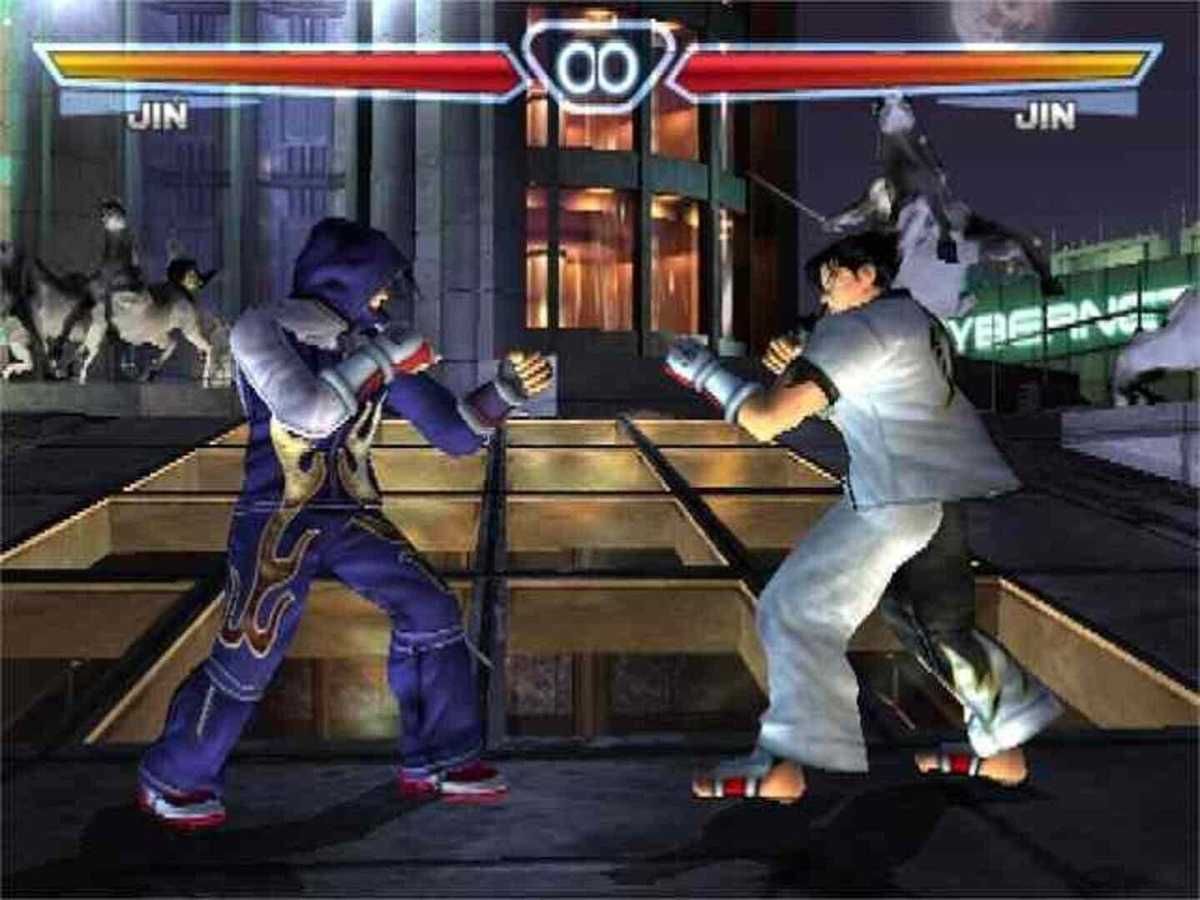
Tekken 4 has the name 4 in it but it was the fifth instalment of the game. This game was released in 2001 for arcades and again released in 2002 for PlayStation 2. This version includes a new Story mode which plays the cutscenes when played. There were 23 selectable characters in this game. In the story of the game, it revealed that Kazuya survived the fall into the volcano and enters the Iron Fist Tournament 4 to take back Mishima Zaibatsu. In the canon ending Heihachi defeats Kazuya but JIn fights with Heihachi and defeats him. He unwillingly uses his devil form but revives to his original form after seeing his mother Jun after 6 years.
Tekken 5:

Tekken 5 was released in 2004 in arcades and again released for PlayStation 2 in 2005. There were 32 choosable characters in Tekken 5. This game introduces a new mode called Tekken Force mode. In the canon ending Jin Kazama defeats his grandfather and inherits Mishima Zaibatsu.
Tekken 5: Dark Resurrection (2005)

Character Additions & Content New Characters: Introducing two characters who would become very popular: Lili Rochefort (a wealthy, gymnastics-style fighter) and Sergei Dragunov (a Russian soldier with a Sambo style). Armor King also returns to the roster.
Customization: The character customization system is much deeper than the standard version, allowing players to customize the appearance of fighters with more accessories and colors.
Rankings (Ranks): Introducing a new ranking system such as "Divine Fist" for players who reach the highest level of proficiency.
Tekken 6:

Tekken 6 was released in 2007 for arcades. Later it was released for PlayStation 3 and Xbox 360 making this game the first one to release for multiplatform. It is playable online alongside standard versus. In this game, Jin Kazama tries to kill Azazel and think killing Azazel may purge Jin himself from the Devil Gene inside his body. After the battle, Raven found Jin's body but the devil still remains inside him.
Tekken 6: Bloodline Rebellion (2008) :

Tekken 6: Bloodline Rebellion was a major update to the original Tekken 6, bringing drastic changes to both mechanics and content. This version later served as the primary basis for the PlayStation 3 and Xbox 360 console ports.
Revolutionary New Mechanic: "Bound" Bound System: This was the first game to introduce the Bound mechanic. When an enemy is slammed to the floor while floating, they bounce slightly, allowing players to extend their combos. This permanently changed the way players juggle.
Rage System: Introduced when a character's health (HP) is low (usually below 5%). The character will glow red and deal significantly more damage, providing an opportunity to turn the tide.
Additional Characters & Content The game introduced two new characters crucial to the story and competition:
Alisa Bosconovitch: An android with a fighting style using chainsaws and rockets.
Lars Alexandersson: A new protagonist with blood ties to the Mishima family and leading the rebel forces.
Tekken Tag Tournament 2 (2011):
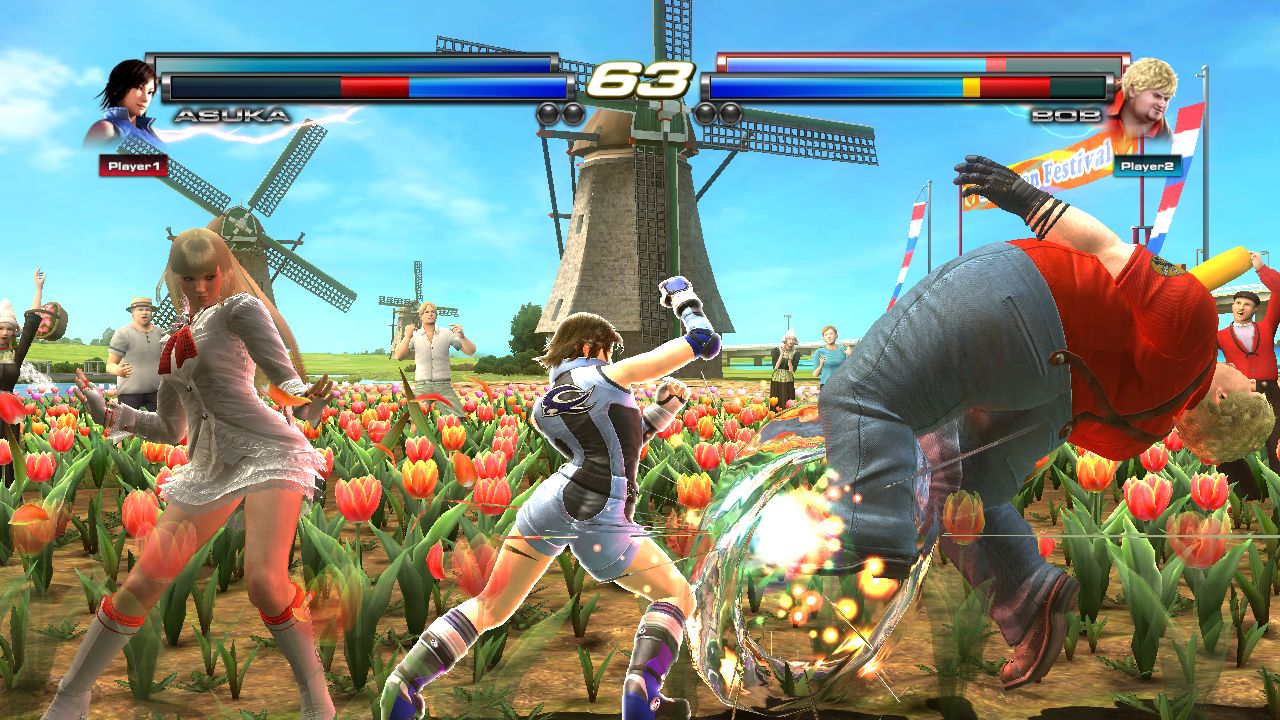
Tekken Tag Tournament 2 (2011) is often referred to by players as the "encyclopedia" of Tekken. It's a massive celebration of the franchise's entire history before the story finally picks up where it left off in Tekken 7.
Highly Complex Tag Mechanics Unlike the first installment, TTT2 introduces a much deeper teamwork system:
- Tag Assault: Allows both characters to attack simultaneously in a single combo. This creates a nearly limitless variety of combos.
- Tag Crash: A rescue mechanic where a backup character can quickly step in when the main character is pinned to the ground, but at the cost of losing their Rage meter.
- Solo vs. Tag: Players have the unique option of fighting with a single character (with increased health and damage) against a team of two.
Largest Roster in History This game holds the record for the largest roster in Tekken history:
- 59 Characters: Nearly every fighter from Tekken 1 to Tekken 6 is featured.
- Return of the Legends: Characters like Michelle Chang, Angel, Kunimitsu, and Forest Law return with modern graphic models and updated moves.
To play Tekken Tag Tournament 2 (TTT2), there are three main consoles that served as launch platforms:
- PlayStation 3 (PS3): Released in September 2012. This is the most popular platform for the game, where online play and music customization are very popular among the community.
- Xbox 360: Released alongside the PS3 version in September 2012. This version boasts very stable performance and is often used in major tournaments of its time.
- Wii U: Released in November 2012 as the console's launch title, "Tekken Tag Tournament 2: Wii U Edition.
Tekken 7:
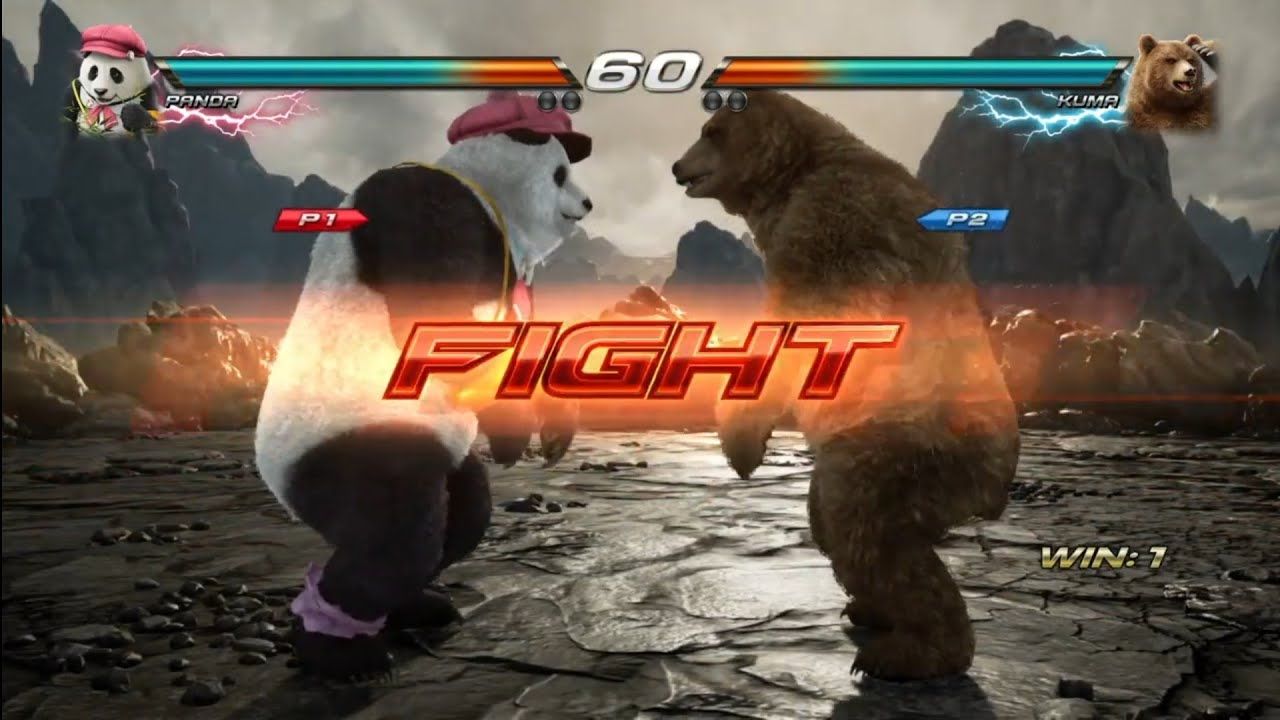
Tekken 7 was released in Japanese and Korean arcades in 2015. This version included the second, third, and fourth guest characters. It was then re-released on June 2, 2017, for Xbox One and Windows, along with the PlayStation 4. In the story, Heihachi once again takes control of the Zaibatsu and attempts to expose Kazuya as possessing the Devil Gene. However, during their battle, Kazuya kills Heihachi and throws him into erupting lava. Jin, who has recovered from his coma, then decides to kill Kazuya to end the cursed Mishima bloodline.
Tekken 8:

Tekken 8 (鉄拳8) is a fighting game released in 2024, co-developed by Bandai Namco Studios and Arika and published by Bandai Namco Entertainment. The eighth main installment and tenth installment in the Tekken series, it will be released for PlayStation 5, Microsoft Windows, and Xbox Series X and Series S. The game follows Jin Kazama as he breaks free from the conflict he has faced throughout several games, represented by the broken chains in the game's symbol. Jin in the game wants to kill Kazuya because his father caused chaos in the world.
Tekken 8's story is the climax of the Mishima family's long conflict. The battle between Jin Kazama and Kazuya Mishima is not just about strength, but also about breaking the family curse and determining the future of the world.
I hope I have covered all the important updates to this game well. Over time, many games will come and go, but not Tekken 8—this game will always hold a special place in our hearts. Thank you to the developers for their dedication and incredible work.