
Behold! The final illustration in my companion planting series. The Apple and Fruit Tree Bundle represents my selection of beautiful and beneficial companion plants that will greatly enhance the health and harvest of fruiting trees.
These illustrations are my own sketched and inked drawings. For the grand finale in this series of companion plants, I decided to use my photoshop skills to color everything in using some of my own artistic wizardry. By combining my art with my knowledge and garden planning, it builds a sort of vision board to help me work towards my future goals and dreams.
The Apple and Fruit Tree Bundle
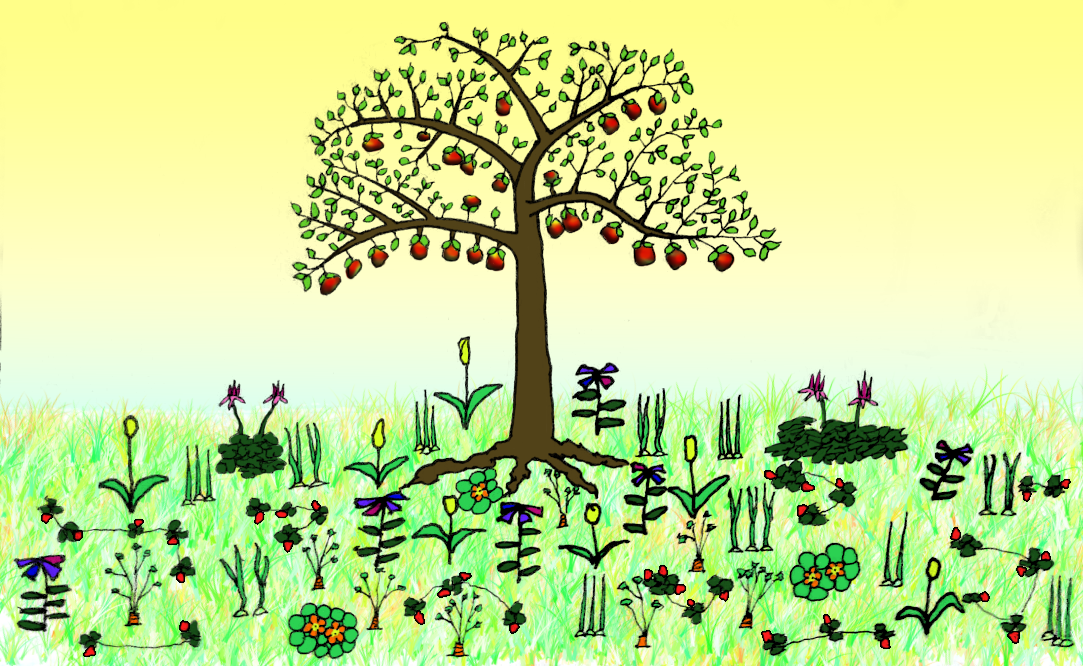
There is nothing that beats the delicious sweet flavor of fruit picked fresh off the limbs of a tree. Whether it be #Apples, #Blueberries, #Gooseberries, #Pears, #Peaches, #Apricots, #Nuts, or #Grapes, all fruit trees tend to have similar challenges to overcome in order to harvest lots of delicious, ripe fruit.
One thing all fruiting trees and shrubs have in common, is they dislike having a bare soil underneath the canopy of the tree. An unhealthy barren soil is often a sign of other problems that could lead to disease for the tree, which weakens the fruiting ability of the tree. Toxic soil, wrong pH, erosion/mudslides, disturbed/scratched soil surface, and lack of organic material can all be reasons for an unhealthy soil. Amazingly, restoring the life of the soil can be easily remedied by adding companion plants to cover the surface of the soil around fruit trees.
Invasive, non-native weeds might grow and compete with the fruit tree roots for nutrients, water, and air. Keep these aggressively invasive weeds away from fruiting trees by digging them out carefully if necessary. More often though, weeds can also become beneficial volunteer plants, capable of healing a distressed soil area.
My only recommendation for all of these plants, is to only introduce companion plants to fruit trees planted in the ground. Potted trees have more limited space for roots, and cannot sustain a diverse culture of many plants. For potted trees, I prefer to layer the soil surface heavily with organic mulch, such as wood bark chips.
For people with more space on their land for fruiting trees and shrubs, they can enjoy all of the wonderful benefits of a diverse permaculture by adding a full array of companion plants around the fruit trees.
(*) - Plants marked with an asterisk, not pictured above. I've selected the plants I prefer most for inclusion. Feel free to use them if you so wish.
Super Companions
These companion plants have a special symbiotic relationship with other plants in this list, which causes them to be super-charged with extra health. You'll be able to enjoy a rocking fruit harvest, as well as an increased yield of these flowers and vegetables.
- Borage
- Lungwort
- Bulbs
- Carrots
- Chives
- Garlic
- Strawberries
Additional Companions
These plants will not have any added benefit for being included in this planting bundle. However, including these plants are likely to help benefit nearby fruiting trees.
- Columbine
- Comfrey*
- Daylilies*
- Nasturtiums
- Plantain*
Benefits Explained
Carpet the soil surface with anything and everything possible. Just don't leave it bare! Soil becomes bed of diseases when left barren, and trees cannot live in an unhealthy soil for long.
Trees tend to dominate the subterranean levels, so they are able to out-compete nearly all petty plants for deeper minerals, nutrients, and moisture. That's why adding companion plants should be a total no-brainer.
By keeping the top of the soil filled with organic material, the soil can absorb moisture like a sponge. On rainy days, flood waters will absorb through the soil and the excess can run off, and this is good because roots need to stay oxygenated to avoid rot. On hot days, an organic top soil layer will retain plenty of moisture, and hold moisture in longer. Organic material on the surface also cools down the soil, so that feeder roots do not become overheated. On icy cold days, the dead plant material on the surface also works as an insulator, preventing the ice from freezing the roots.
We can also enjoy increased pollination from having nearby companion plants nearby. A lawn of #clover, for instance, would make a sacred paradise to attract colonies of bees. Many fruiting trees will only set #flowers for a few weeks, or less, and so without nearby plants attracting those bees, they might not discover the flowers on a fruit tree in time before its flowers fade.
Plants like Carrots and Comfrey are mining plants, capable of absorbing deeper minerals, and exporting them to the surface, making them available for other plants after their leaves decay. These plants also act to help rebuild the structure to the soil, protecting from erosion.
Bulbs, Chives, and Garlic are wonderful plants to have nearby because they ward off animals that dig through the soil. The smelly sulfur from these plants leaches into the soil and acts as a barrier against digging animals that tend to have sensitive noses. Big holes in the ground can often mean the death of surface tree roots, so having some of these bulb-type plants as a perimeter around the tree can certainly help. Or you can do it more as I illustrated, and pop them in everywhere like a mine-field of obstacles to create a nuisance maze to obnoxious critters.
Strawberries and delicate flowers are also great to have because they form lots of organic matter that decays quickly, which becomes food for worms and other compost-forming micro-organisms. With a constant supply of green plant matter decomposing year-round, fruiting trees will benefit from a cocktail of the best organic fertilizers made freely by nature: worm castings.
Maintenance-free fruiting trees that provide an endless harvest of delicious, healthy fruit. Isn't that the dream?
Illustration
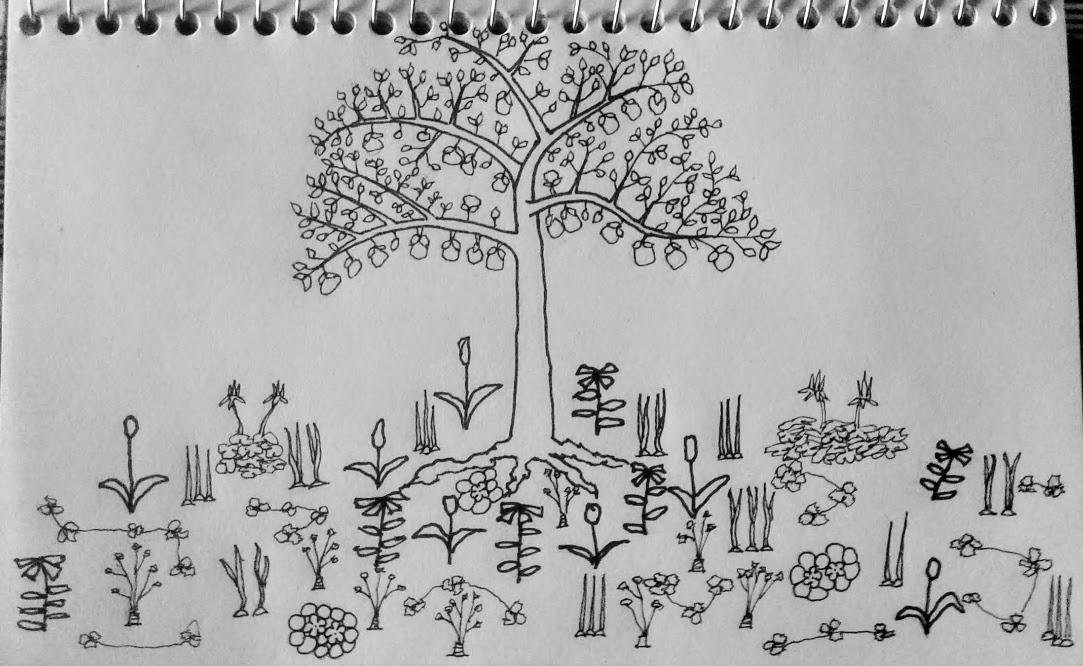
This image was drawn in pencil, and later inked in pen. For coloring, I used photoshop to add multiply layers on top.
Give it a shot, and click the line-art images to save the fullsized images to your own PC. You can print them out to color on paper, or do as I did, and color them in using your favorite computer program.
This concludes my series on companion planting bundles. Be sure to check out some of the other articles I made in this illustrative series from the list below:
- 1: Companion Plants Illustration: The Peas Bundle
- 2: Companion Plants Illustration: The Brassicas Bundle
- 3: Companion Plants Illustration: The Carrot Bundle
- 4: Companion Plants Illustration: The Tomato Bundle
- 5: Companion Plants Illustration: The Beans, Lettuce, and Corn Bundle
And thank you for checking out my hand-drawn art illustrations. May it inspire you to grow and thrive in all that you aspire to do.
#apple #apples #fruit-trees #fruit-trees #companion-planting #plantain #strawberry #strawberries #chive #chives #green-onion #green-onions #spring-onions #garlic #columbine #lungwort #borage #nasturtium #nasturtiums #daylily #daylilies #bulbs #tulp #tulips #daffodil #daffodils #carrot #carrots #comfrey #mulch #art #creativity #illustration #ink #ink-pen #ink-illustration #digital-art #photoshop
