
So, Molière achieves two goals - one, conceptual, and another, artistic, in the making of the episode we talk the previous part. It prompts the viewer to realize how hard it is to expose ourselves to a society that is extremely respectful of the doctrine, the prophet who is accepted to be called in several ways - hypocrisy, nonsense, hypocrisy - but which otherwise has a single, deeply striking effect - the collapse of trust between people. Artist Molière also achieves a second goal - the blindness of the sincerely devout Orgon acquires the dimensions of a tragic delusion that has sinister fateful replies at the end of the play, on the peace and well-being of the family.
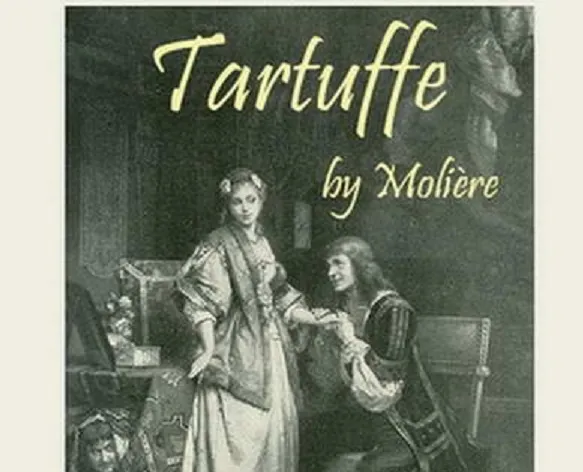
The failure of the truth discovered by Damius seems to intensify the realization of Dorin's tempting conception, convincingly accomplished by the suppressed Elmira. The impact of the successful maid of the housekeeper and the mistress of the house on the blinded Orgon, who listens patiently, hidden under the table, all the naked suzerain boldness of the two-person Tartuffe (IV action, scene 7), is determined unanimously by all commentators of the comedy as true her intrigue. The incessant screams of the horrified Orgon against the adulterer-adulterer whom he has received with a gentle, pious soul at his home ("Get out of the way!", "Leave home ...!") Actually mark the final sobering of the truly godly master and the indiscriminate exposing the foul-minded guest-intruder. The fifth act of the comedy "Tartuffe" could not be considered as a particularly high artistic achievement of the playwright Moliere. It is very edifying, it brings a new, irritating sensation of veracity, conspiracy. Some argue that Molière , a black-minded man who had little faith in the complete eradication of hypocrisy from the morals of society, has set out against his own, generally pessimistic, philosophy of life. Such a statement is based on a number of logical conclusions drawn from the life and creativity of the great comedian. But it should also be remembered that, at a time when the strict canons of classicism are weighing on stage makers, certain ideological and artistic compromises are imposed. Moliere must have been convinced internally that the admonitions of the "Brotherhood of the Holy Communion" preachers in the honorable families had a number of devastating consequences both in the moral plan and in the plan of their property prosperity. Ordinary overcrowding of the Orgon family is hardly a purely authorial fiction without any real-life reasons. Molière writes the fifth act with the obvious intention of firstening the end, for he still remembers his work as a comedy, and secondly, after the failure of the first version of Tartuffe, the comedian may have felt obliged as a right-wing classicist and to make a flattering dramatic curse of Louis the Great. Which King would resist the generous compliments of the Tartuffe final.
One of Moliere's first connoisseurs of art, who finds the serious dramatic crisis in the Tartuffe comedy, is the German philosopher Hegel. He said that the Molière's" Tartuffe "as the expression of a real villain, the pious god-devil, is far from gay, seriously, and the delusion of the deceived Orgon comes to the torture of misfortune, which can only be solved by Deus ex machina. In a deeper form, later a number of French critics analyzed in detail, in which, under the ridiculous situation often played out by the playful stereotypes of the farce, serious moral problems arise - the boundaries of trust, the ruthlessness of the hypocrisy, the ingratitude of generous patronage, the kinship of hypocrisy with betrayal, n. French writer Stendal admits that when he first watched the comedy "Tartuffe" he laughed "only twice, no more": Moliere's comedy is too much of a satire to bring me a casual, cheerful laugh." In Tartuffe, classicist Molière performs, in the manner of his philosophical comedies, the intrigue on the edge of funny and sad, between comic and seriously dramatic. In our analysis we deliberately focused your attention on the crisis situations in the play, which, despite the author's serious moral commitment, was designed to instigate, above all, laughter. But in a classicist comedy, laughter is rarely just dazzling, casual and cheerful. Under classical laughter, there is always anxiety and anxiety about the vivid human moral principles - honesty, sincerity, truthfulness, responsiveness to the other, and so on. When abnormal social conditions and corrupt public institutions begin to distort and strangle them, dramaturgs with an irreconcilable civic conscience, including the genius French comedian Molière , mobilize their creative powers and, depending on the magnitude of the dangers coming from outside, guard through laughter, satire or the seriously dramatic reproach, the moral resistance of the original, struggling with the wrongs, the human personality.
I hope you enjoy it and it was useful for you to meet Moliere and his Tartuffe.