

Many people feel super stressed and over-worked. The stress and tiredness make us unhappy, impatient and sometimes frustrated. These characteristics affect our health immensely. So we are often very busy (or it feels like so). Meditation gives you more time by making your mind free, mindful and more focused - it is about becoming one with your mind, and learning about yourself that you may not known before you undertook the practice of meditation. Our concentration is increased and we experience inner peace - that is what attracts so many people to meditation as everyone can benefit from that.
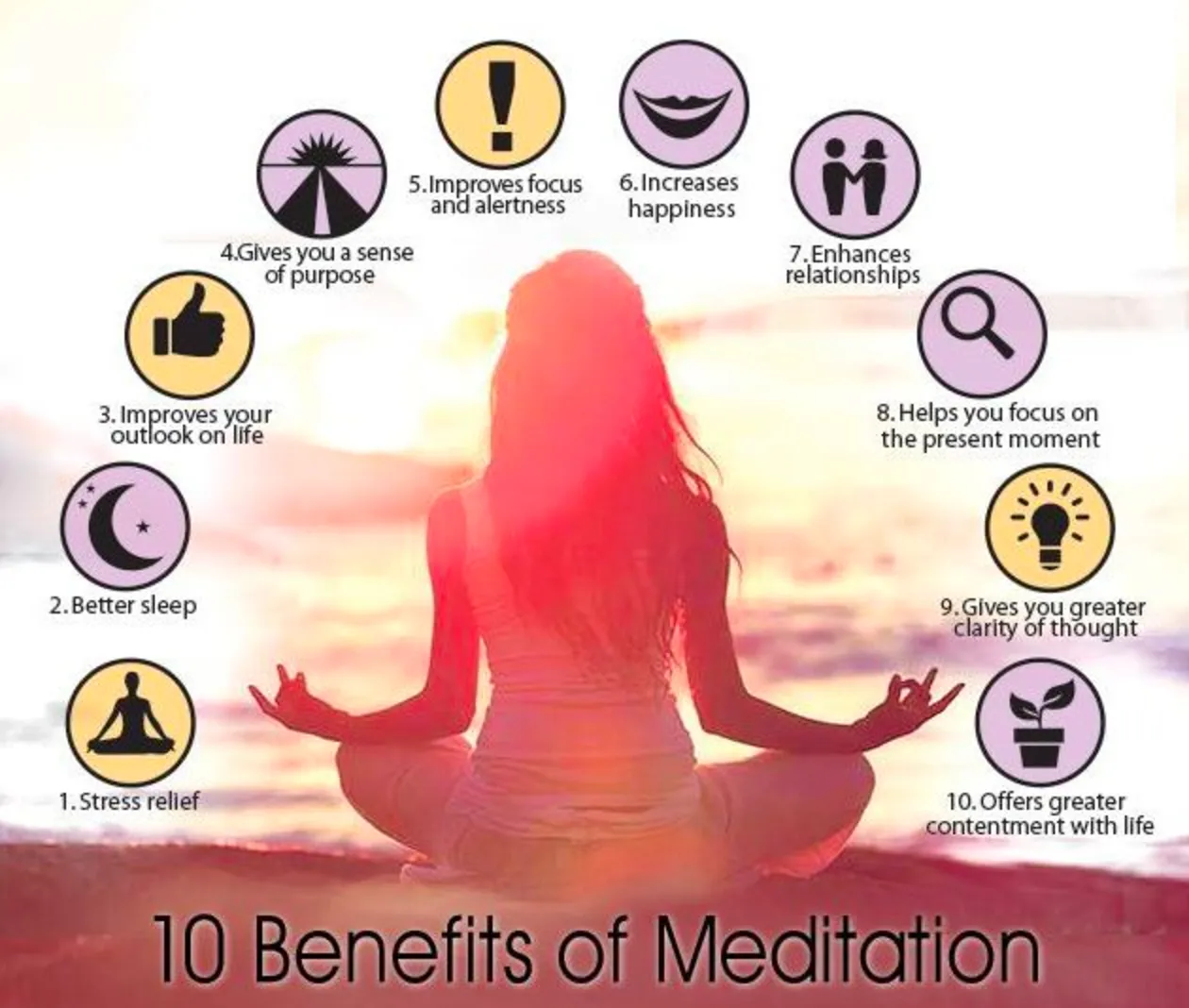
1. You will become more mindful and aware
It means that you are more aware of your thoughts. Stress can ruin your daily routing and meditation offers you the time to reflect on your thoughts and focus mainly on your breathing. It gives you the awareness to refocus your mind on the present moment and positive thoughts.
2. You gain more control over your emotions
When you are happy, you want to express those emotions freely - as well as anger and sadness. Don´t allow the various archetypes of your mind to seize power of your emotions. The more you meditate, the more you will notice the thoughts and actions that trigger the emotions you might not find desirable.
3. Knowledge of self
Don´t rush through life and miss out on things you are going to regret later. That brings our conscience out of control. Meditation enables us to have a deeper understanding of our inner self and we can gain a better understanding of our life´s purpose.
4. You can learn a useful new skill
Meditation is a skill, and like any skill, it takes much time to practice it. Learning how to meditate is useful for the development of your mind. You can´t fail at meditating, because there is no right or wrong to do it.
5. You can experience more well-being
If we remain in meditation, our mind will gradually become more and more peaceful, and we will experience a purer form of happiness. Eventually, we will be able to stay happy all the time, even in the most difficult circumstances.
When we practice mediation we need to have a comfortable seat and a good posture. The most important feature of the posture is to keep our back straight. I recommend you to sit cross-legged - it is a good idea to become accustomed to sitting in the posture of Buddha Vairochana.
The seven features of Vairochana’s posture are:

The legs are crossed in the vajra posture. This helps to reduce thoughts and feelings of desirous attachment. The right hand is placed in the left hand, palms upwards, with the tips of the thumps slightly raised and gently touching. The hands are held about our fingers´ width below the navel. This helps to develop good concentration. The right hand symbolize the union of method and wisdom. The two thumbs at the level of the navel symbolize the blazing of inner fire. The back is straight but not tense. This helps us to develop and maintain a clear mind, and it allows the subtle energy winds to flow freely. The lips and teeth are held as usual, but the tongue against the back of the upper teeth. This prevents excessive salivation while also preventing our mouth from becoming too dry. The head is tipped a little forward with the chin slightly tucked in so that the eyes are cast down. This helps prevent mental excitement. The eyes are neither wide open or completely closed, but remain half open and gaze down along the line of the nose. If the eyes are wide open we are likely to develop mental excitement and if they are closed we are likely to develop mental sinking. The shoulder are level and the elbows are held slightly away from the sides to let air circulate.
Breathing Meditation
Let yourself relax and become curious about your body seated here - Try to notice the shape of your body, its weight, but also the connection with the floor/chair. Then we turn our attention to our breath. Feel the natural flow of your breath - in and out. See if you can feel the sensations of your breath, one breath at a time. If we concentrate on our breathing in this way, negative thoughts and distractions will temporarily disappear because we cannot concentrate on more than one object at a time. You notice at the beginning that your mind may start wander and you´re thinking about other things. It is very natural - try to redirect your attention back to breathing. Let yourself relax even more deeply and then offer yourself some appreciation for doing this practice today. Stay here for 15-20 minutes.
Although I grew up in a family that practices buddhism, I never really got involved. If I remember correctly, I started meditating a little over a year ago and ever since then my awareness is more mindful and controlled. To successfully practice meditation, you not only have to be in touch with inner positive thoughts, but also with external forces. For example, surrounding yourself with like-minded positive people. The environment play a big role, which leads me onto the topic electromagnetic fields. I will cover it in the following post.
There is also an exciting story I have to tell you about - I met an interesting person who could intensively feel my electromagnetic field. Doesn´t it sound crazy?
Much love, Lisa
Where there is peace and meditation, there is neither anxiety nor doubt.
- St. Francis de Sales