
Epistaxis is defined as bleeding from the nasal mucosa and is common problem seen by and cared for by the primary care physician. Although more than 90% of nosebleeds are self -limiting and easily managed, the clinical spectrum includes life-threatening situation that require emergency intervention. Epistaxis is usually an isolated phenomenon but may be a herald of systemic disease.
There are two types
A. Anterior
Bleeding from the anterior nasal mucosa and it is common site of epistaxis and the easiest to treat. Anterior bleeds are usually the result of cracks in dry nasal mucosa, mild local irritation, or trauma. The bleeding site is typically from the vessel-rich area called Kiesselbach's plexus, also known as Little's area.
B. Posterior
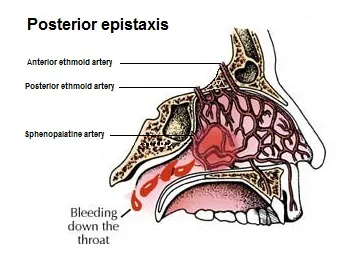
Posterior bleeds are less common and potentially more serious. Posterior bleeds tend to occur in older patients and are associated with the presence of hypertension, diabetes mellitus, atherosclerosis , and bleeding disorders. The bleeding site is usually posterior to the inferior turbinate, and blood comes from the sphenopalatine artery.


Causes of epistaxis
A. Local
Dry nasal mucosa
Infection
Allergy
Trauma
Foreign body
Tumor
Nose picking
B. Systemic
Hypertension
Atherosclerosis
Bleeding disorders
Hereditary hemorrhagic telangiectasia
Medication: aspirin, warfarin, antihistamines, nasal steroids, diuretics