


Aunque en Cuba el consumo del chocolate fue sustituido por el café en sus inicios, todavía persiste como una de las costumbres. Hoy me gustaría compartir con los amigos de la comunidad de #Hive sobre el proceso para obtenerlo.
A veces se mencionan las características de los nacidos en esta geografía y se olvida la que en la leyenda se considera “alimento de los dioses”, propio de las tradiciones gastronómicas que nos distinguen. Entre las bebidas favoritas de los cubanos se encuentra el chocolate.

Al menos para mí es uno de los componentes esenciales del desayuno ideal, mezclado con leche y oscuro, endulzado al gusto, donde predomine la tonalidad que lo caracteriza.
Muchas personas en cambio lo eligen para las noches del escaso frío tropical. Una taza de leche con chocolate se considera garantía de buen alimento. Y, dentro de la repostería, la natilla de chocolate es de las favoritas, para comerla de esa manera o relleno de tortas y otras creaciones culinarias.

En el mercado nacional escasea el polvo para elaborar esas delicias. O lo adquirimos con una presentación que no le hace justicia a la calidad.
En la familia cubana se suele creer que el café siempre estuvo aquí, pero en realidad este desplazó al chocolate, asociado con las clases menos favorecidas. Ese desalojo en las preferencias ocurrió por diversas razones del contexto económico y político de siglos atrás.
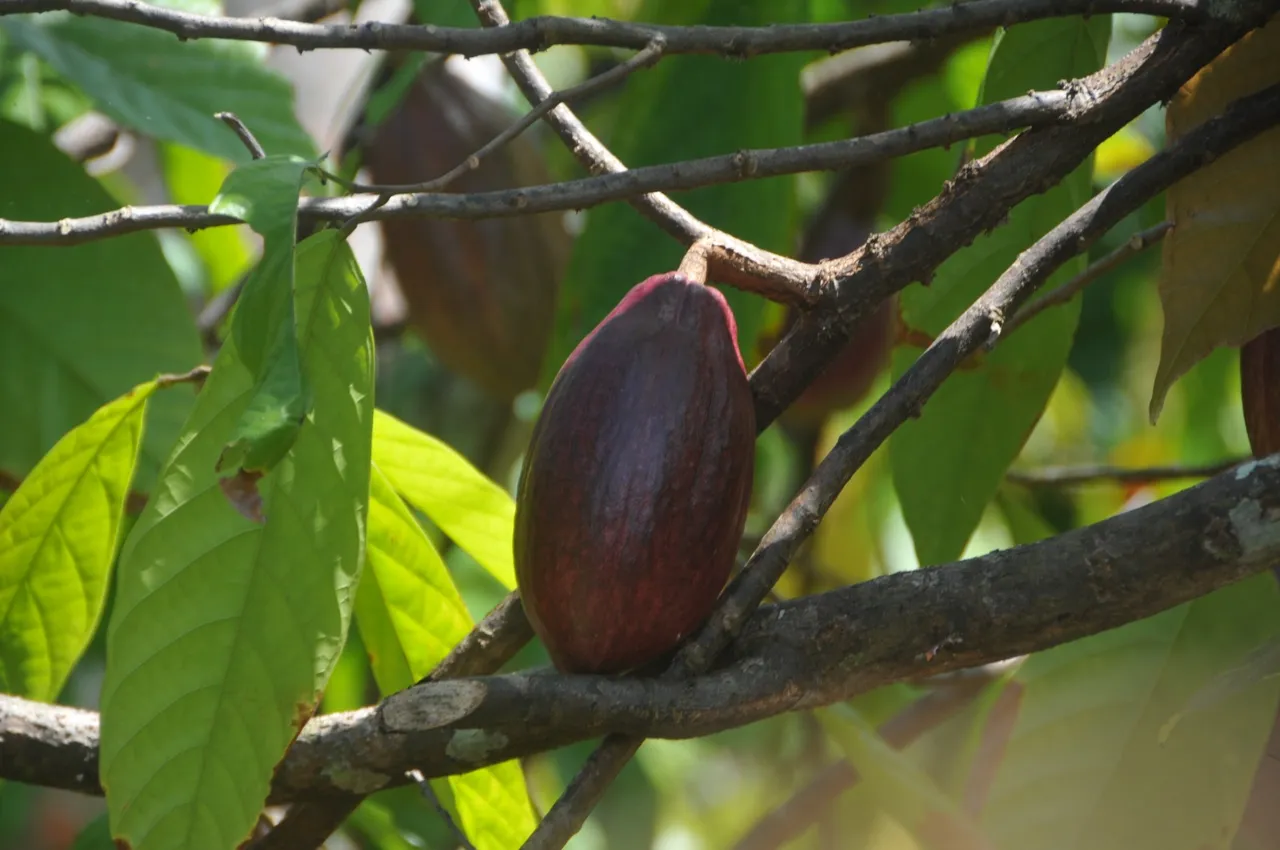


Cuando se habla de la procedencia nacional de este producto, invariablemente se asocia con Baracoa, en el extremo oriental del territorio. Allí abundan los árboles de cacao, de diferentes especies, y los frutos se encuentran al alcance de la mano.
Esta localización no es casual.
Por aquella zona predominan las precipitaciones por encima de la media nacional, los suelos son de reconocida calidad y la temperatura y humedad son estables. Por eso, aunque el cacao se encontraba en otras provincias, se estableció con mejor acomodo en ese municipio costero.


Al crecer, el fruto primero es verde, luego violeta y al madurarse adquiere una tonalidad amarilla. Los campesinos dedicados a este cultivo sostienen la baya en una mano y con un machete la abren poco a poco mientras la giran.
Por dentro tiene una masa blanquecina que cubre las semillas, de ahí se obtiene el chocolate, pero en un proceso que exige especialización. La cáscara no se desecha, sino se emplea en el mejoramiento de los suelos.


La masa, tras un riguroso proceso de selección, se fermenta durante varios días y se seca al sol. Luego las semillas las tuestan y las trituran. El proceso casi siempre es artesanal. El molino puede ser manual, sin embargo estos campesinos expertos han introducido los eléctricos, que no están reñidos con la sostenibilidad.
La masa resultante es amarga. Del cacao cocido con agua toman lo que llaman en la zona el chorote. Y en ese recorrido benefician el producto con aglutinantes como la harina. Logran hacer una bola de cacao. Y ya está listo el chocolate. También, se saca la manteca, ampliamente utilizada en la industria cosmética y con fines medicinales.

Durante años en Cuba se consideraba al chocolate como la bebida preferida. Solo se consumía líquido, quizás con canela y vainilla u otros aderezos. Luego se crearon las barras Peter que aquí perduran como nombre genérico del inventor, se popularizaron los bombones y tantas confituras como conocemos.
Entre las calles Amargura y Mercaderes, en La Habana Vieja, se encuentra el Museo Casa del Chocolate, para honrar esta tradición. También se trata de una opción para conocer estos detalles del cultivo, cosecha, procesamiento y comercialización del cacao, que es sustento e identidad de numerosas familias.

Mientras nos dejamos llevar por el olor de esta delicia a lo cubano, se pueden apreciar vasijas y objetos que se usaban para elaborar o consumir chocolate. Y se promueve un menú chocolatero, donde destacan las variantes elaboradas principalmente de forma artesanal.

Texto y fotos de mi propiedad
English
On the Chocolate Route
Although in Cuba the consumption of chocolate was substituted by coffee in its beginnings, it still persists as one of the customs. Today I would like to share with the friends of #Hive community about the process to obtain it.
Sometimes the characteristics of those born in this geography are mentioned and the one considered in the legend as"food of the gods" is forgotten, typical of the gastronomic customs that distinguish us. Among the favorite beverages of Cubans is chocolate.
At least for me it is one of the essential components of the ideal breakfast, mixed with milk and dark, sweetened to taste, where the tone that characterizes it predominates. Many people, on the other hand, choose it for the nights of scant tropical cold. A cup of milk with chocolate is considered a guarantee of good nourishment. And, within pastry, chocolate custard is one of the favorites, to eat it that way or as a filling for cakes and other culinary creations.
In the national market, the powder to elaborate these delights is scarce. Or we acquire it with a presentation that does not do justice to the quality.
In the Cuban family,it is often believed that coffee was always here, but in reality it displaced chocolate, associated with the less favored classes. This eviction in preferences occurred for various reasons of the economic and political context of centuries past.
When talking about the national origin of this product, it is invariably associated with Baracoa, at the eastern end of the territory. There, cocoa trees of different species abound, and the fruits are within reach.
This location is not accidental.
In that area, precipitation predominates above the national average, the soils are of recognized quality, and the temperature and humidity are stable. That's why, although cocoa was found in other provinces, it became better established in that coastal municipality.
As it grows, the fruit is first green, then violet, and when ripe it acquires a yellowish tone. The peasants dedicated to this crop hold the berry in one hand and with a machete they open it little by little while rotating it.
Inside it has a whitish mass that covers the seeds, from there chocolate is obtained, but in a process that requires specialization. The shell is not discarded, but is used for soil improvement.
The mass, after a rigorous selection process, is fermented for several days and dried in the sun. Then the seeds are roasted and crushed. The process is almost always artisanal. The mill can be manual, however these expert peasants have introduced electric ones, which are not at odds with sustainability.
The resulting mass is bitter. From the cocoa cooked with water, they take what in the area is called 'chorote'. And in that process, they benefit the product with binders like flour. They manage to make a cocoa ball. From there, chocolate is obtained. Also, the butter is extracted, widely used in the cosmetic industry and for medicinal purposes.
For years in Cuba, chocolate was considered the preferred drink. It was only consumed liquid, perhaps with cinnamon and vanilla or other dressings. Then Peter bars were created, which here endure as the generic name of the inventor, bonbons and as many confections as we know also became popular.
Between Amargura and Mercaderes streets, in Old Havana, is the Chocolate House Museum, to honor a tradition. It is also an option to learn these details of the cultivation, harvest, processing and marketing of cocoa, which is the sustenance and identity of numerous families.
While we let ourselves be carried away by the smell of this Cuban delight, we can appreciate vessels and objects that were used to make or consume chocolate. And a chocolatier menu is promoted, where those made mainly in an artisanal way stand out.
Text and photos are my property