
Here are some tarantulas from various pet stores for this #spiderday
Check out this expensive purple bloom bird eater. Her Latin name is Pamphobeteus platyomma this one's coloring makes her super expensive I believe she was listed at over $380 at the animal show I went to. This gal was also huge, as big as your hand, not quite as big as a goliath bird eater but close to that size.

In contrast here is one of the largest spiders you can buy or that even exists in the world. This is a goliath bird eater Theraphosa blondi.
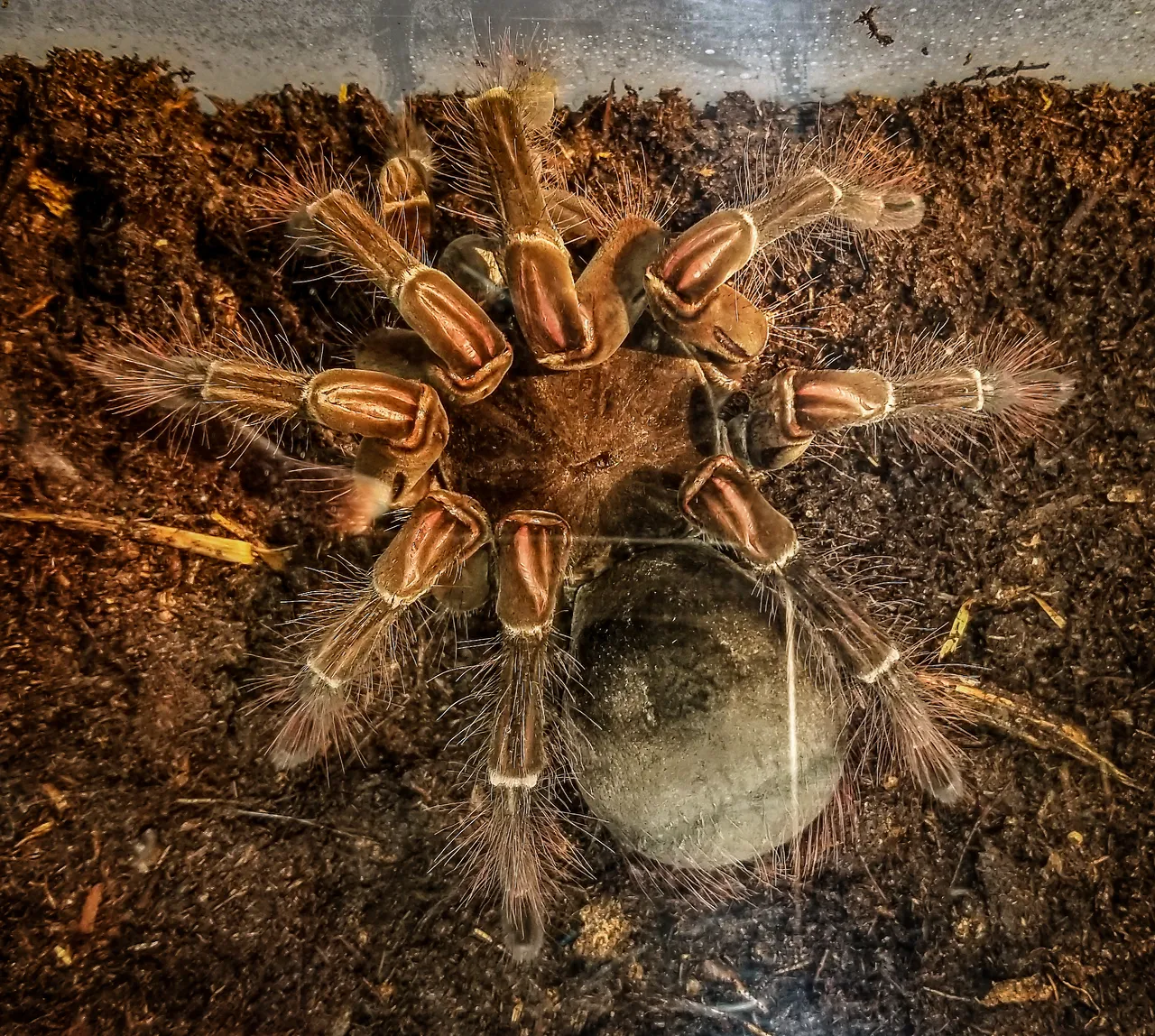
They are large enough to eat birds but are too slow to really catch any birds, they will eat rodents easily though.

These spiders are native to South America in the Brazil Argentina area.

Some people in South America even eat them because they are so large. They roast them in banana leaves and once cooked they are said to have a shrimp-like flavor. I would probably never eat one but I do want to get one as a pet one day. They live up to 25 years so be ready for a long-term pet if you ever get one.

Now for a tiny little dwarf tarantula. This one is barely larger than a wolf spider and is called Trinidad Tiger Dwarf Tarantula aka Cyriocosmus elegans. They can be handled easily and are docile and will fit in the palm of your hand as they stay tiny. The coloring is quite bright and interesting making them a bit of an expensive spider to buy, this one was listed at $190.

Here is a skeleton knee spider. They have a few different color morphs so I'm not sure what this one is. I like its stark black and white coloring to accent its skeleton pattern on the legs.

I suspect this one is Ephebopus murinus commonly called skeleton tarantula. All the skeleton tarantulas are from South America and have typical features of tarantulas from this area (i.e. they make burrows). Notice how hairy they are, this indicates they can be tamed down to be handled. Hairy species of tarantulas are able to differentiate prey from predators and things they can't eat so they won't bite everything that gets into their area (like my short haired cobalt blue tarantula).

Here is a really large Chilean Rose Tarantula (Grammostola rosea), I already have one as a pet but not nearly as large as this one. This one is almost as big as a bird eater, hopefully mine will get this large one day. Who knows if there are subtle morphs within Chilean Rose Tarantulas that make some larger than others...

That's all for now happy #spiderday