The Cryptocephalus trimaculatus beetles on the following photograph ...
... are mating on the thorny plant in the bush near the sea, on one of the many shrubs that make walls of vegetation around the meadows. This colorful insect with Crypto in its name, is a leaf beetle from the Chrysomelidae family.
The plant on which these beetles were found and photographed is called Dracha here in my area. Paliurus spina-christi is the scientific name. Because of its many thorns and elastic resilient structure it was used to make barriers for the cattle some time ago ... till not so long ago, actually. On this photograph, the thorny branches are covered with small yellow flowers ... while on the following shot ...
... you can see the seeds forming in between the flowers.
This spider with shiny abdomen (I don't know the exact species) is passing across the foliage ...
... in search for a quiet sheltered place to rest and wait in ambush. It founds it on the lower side of the twig, among the thorns. When the spider assumes the ambushing posture, kind of disappears in its surroundings.
This mating pair of Graphosoma lineatum bugs ads a bit of vivid red to this mostly green post.
When the seeds are completely formed they look like this. Small, edible discs.
There is a fresh green sprout among the reddish thorns that looks like spider ...
... because it's a spider, of course :). The hairy crab spider Heriaeus hirtus.
here you can see another mating scene. These small leafhoppers (and again, I don't know the exact species) look like very small version of cicada.
I never had the opportunity to see a leafhopper spread its wings. I mean, never before this shot. They usually spread their wings only when they jump, and that happens too fast to be visible. On this occasion the wings were spread long enough to take a good look.
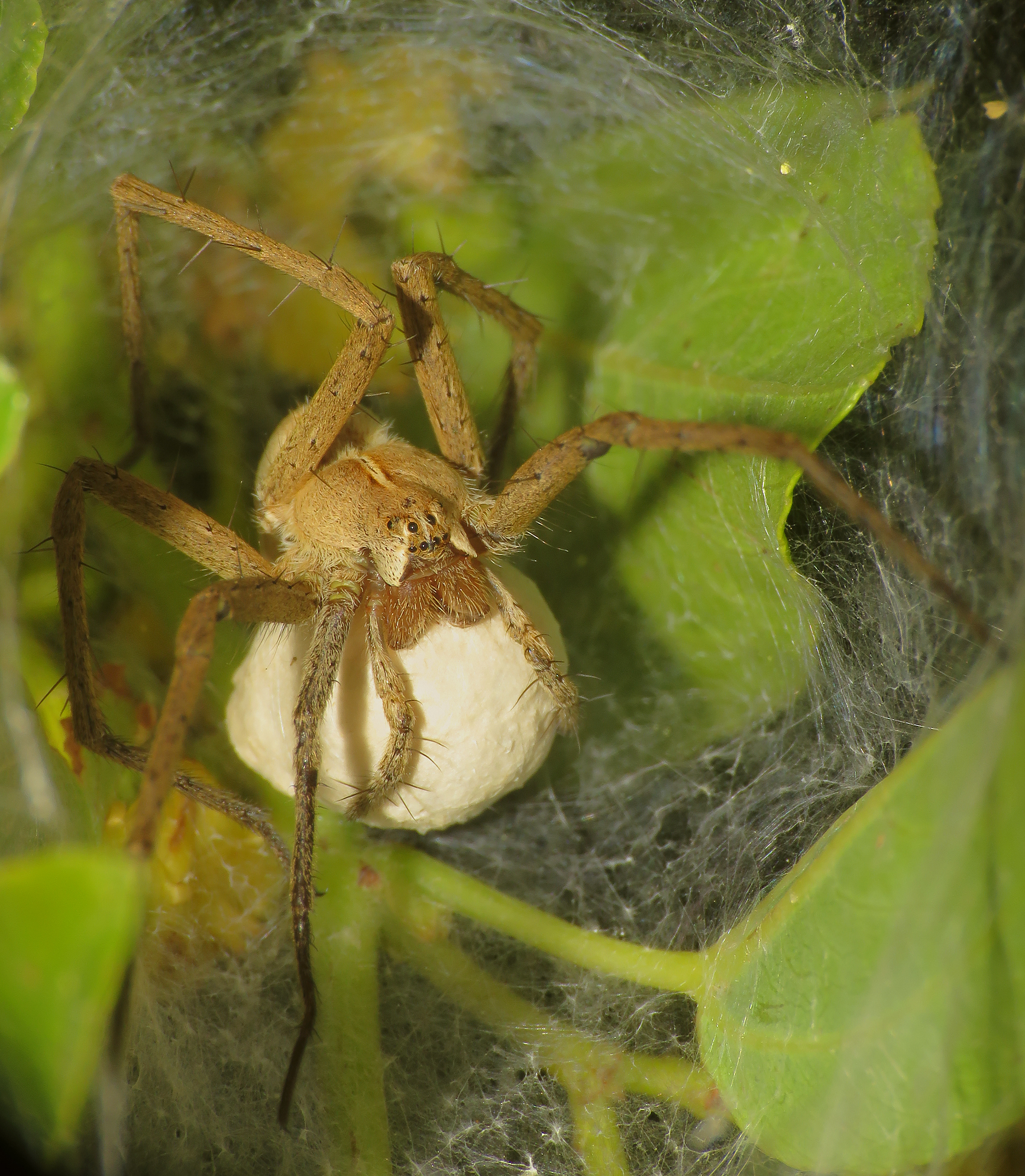
If you take a good look at the thorny branch in the foreground of this photograph, you may notice a silky formation under the leaves.
Here I got closer to that thing, and as you can see, there is a spider inside.
The pretty large female of the Pisaura mirabilis spider is guarding her cocoon.
These spiders like to build their nests in hard to reach, protected places, so you'll encounter this species soon in the next part of this series, on another thorny plant ... and now ...
... with the last look at Paliurus spina-christi shrub ... is time to end this post - THE END.
As always in these posts on HIVE, all the photographs are my work.