
The 19th of September this year was a nice, sunny Monday. I drove about forty kilometers north of my hometown and photographed some plants, insects, and spiders there.
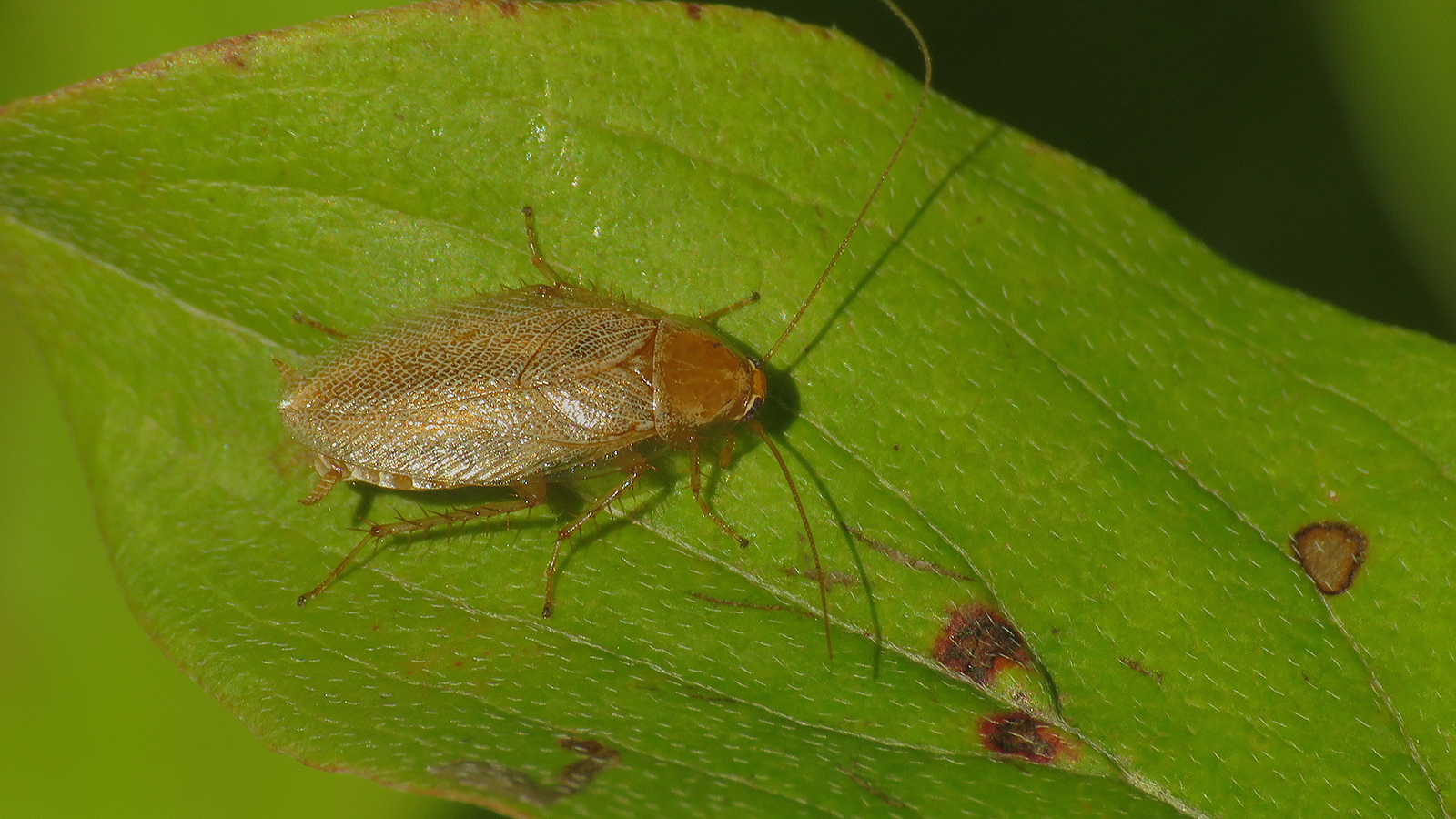
You can see a cockroach in this opening picture.
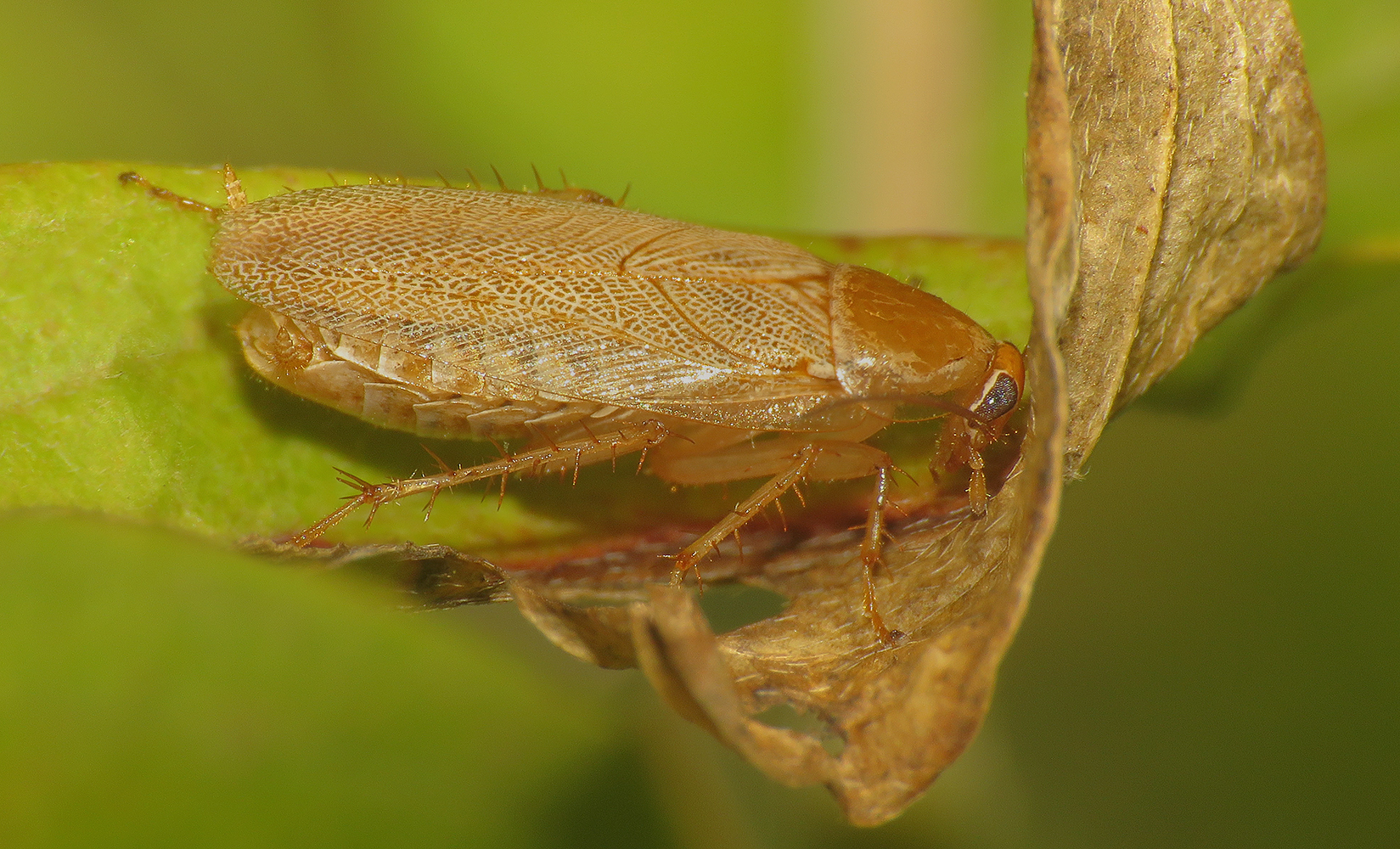
This is the Ectobius vittiventris, a small species from the Ectobiidae family that can be found only on and around shrubs and trees, never in houses and urban environments.
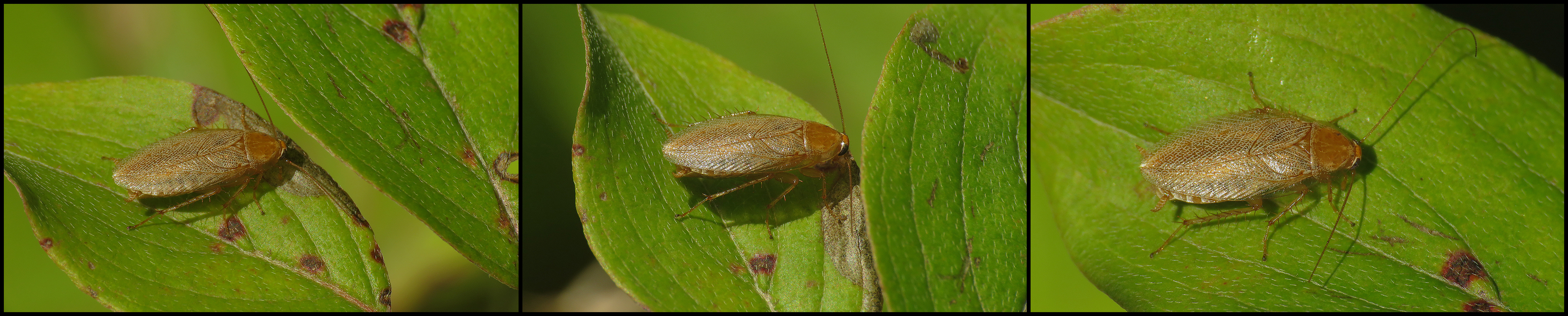
It was photographed on the Cornus sanguinea plant ...

... that grew along one of the many narrow country lanes in the rural area around the town of Zminj.
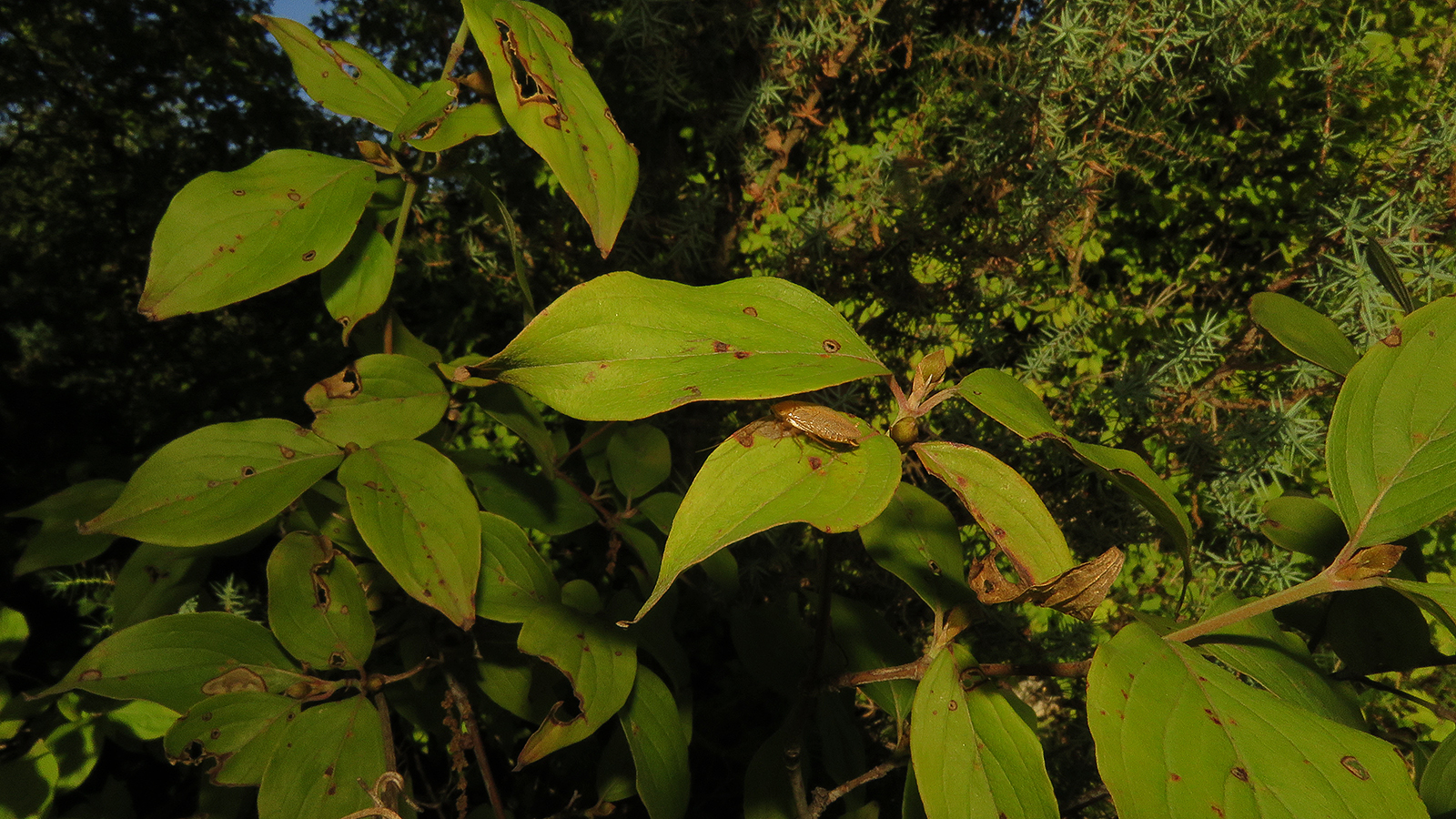
If you enlarge this photograph by clicking on it, you may find the small cockroach among the foliage.

This cricket was found on the same shrub.

It's a hairy scale-cricket from the Mogoplistidae family. Arachnocephalus vestitus is the name of the species. This a male.

On another leaf, closer to the top of the shrub ...
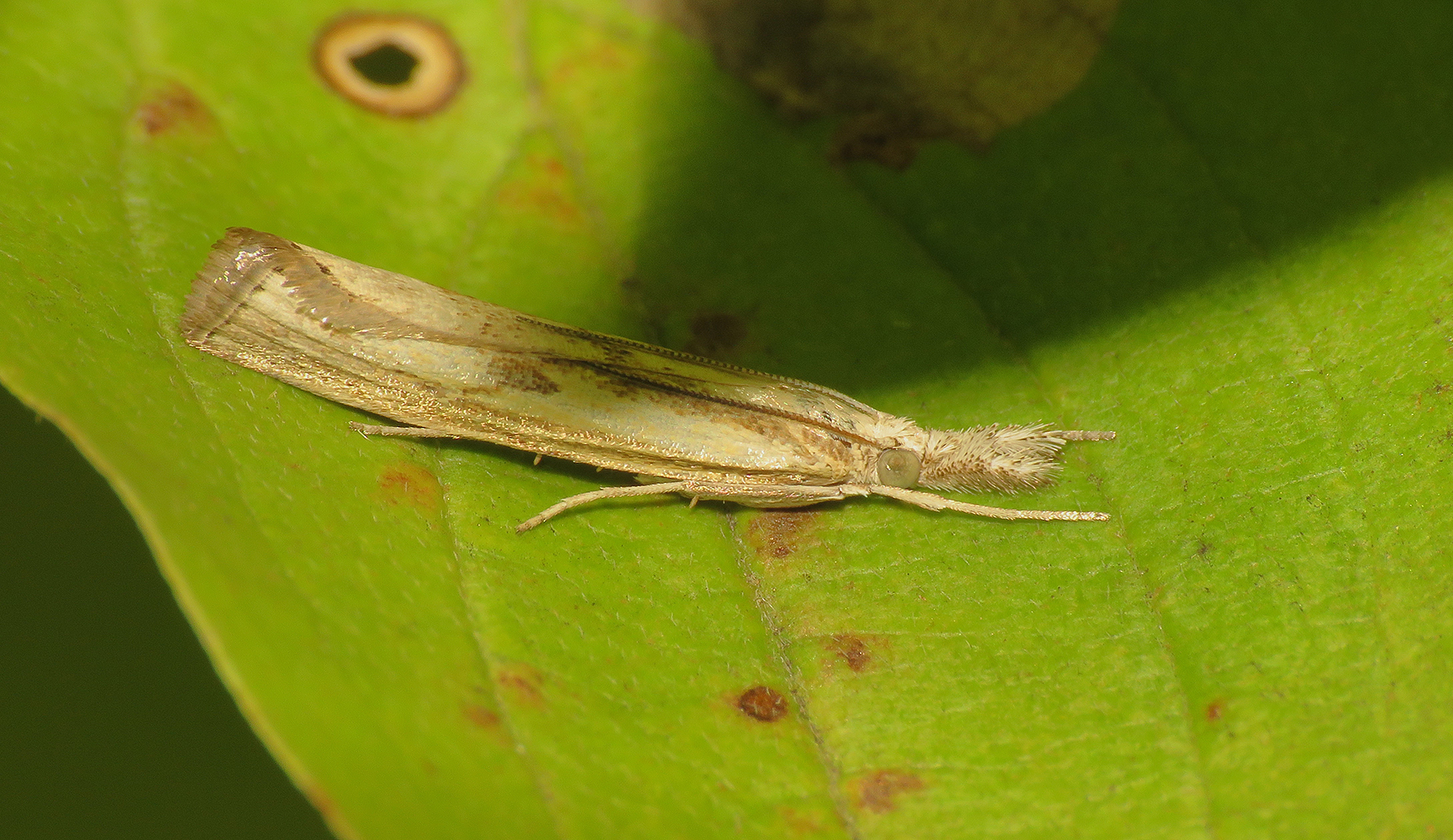
... I found a moth. The Agriphila inquinatella. A species from the Crambidae family.

Across the street from the Cornus sanguinea ...
... there was another interesting shrub. This one has lost most of its foliage ...

... but it was decorated with a multitude of colorful fruits.
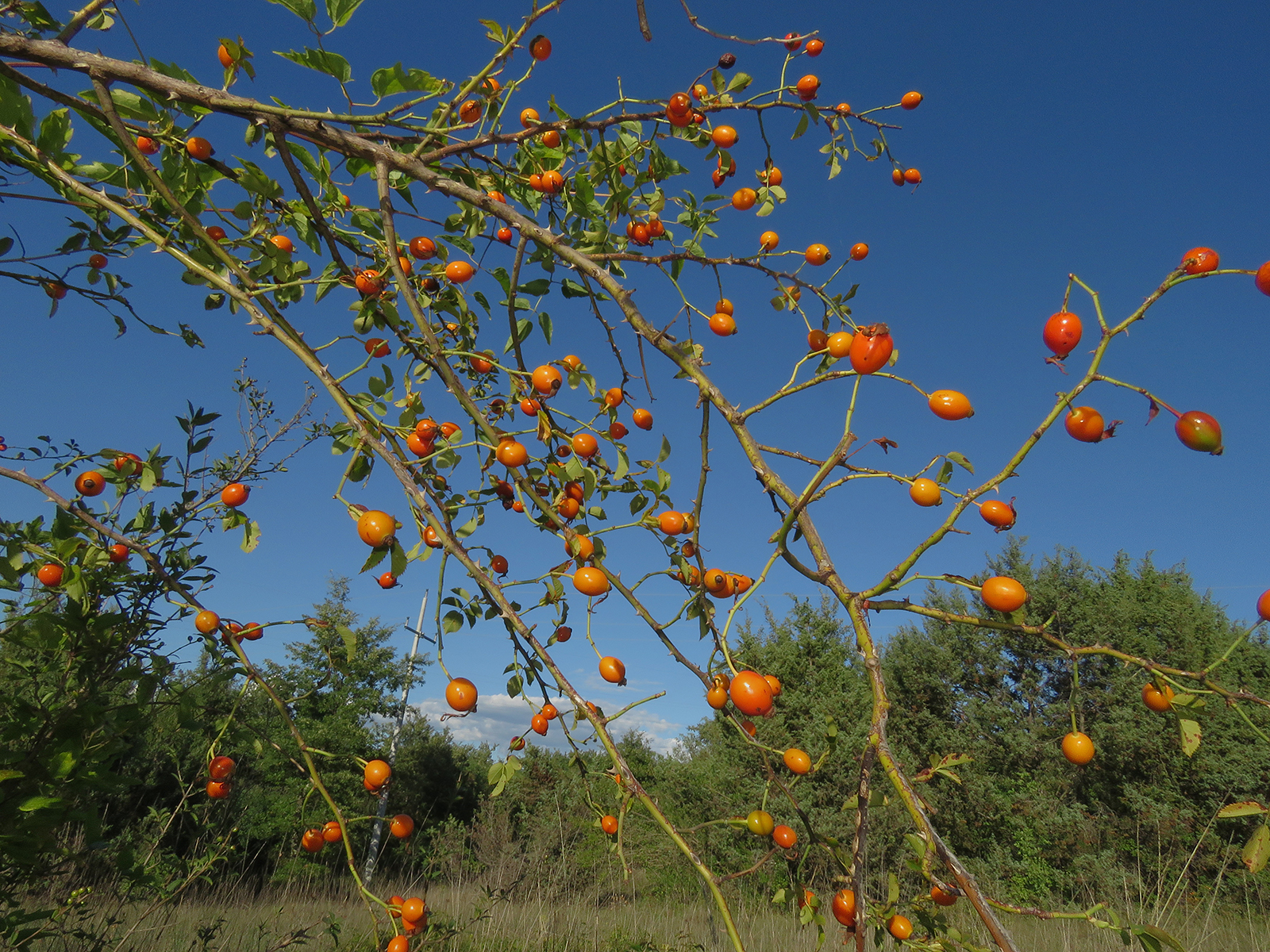
I didn't find any insects there ...

... but I had about five minutes of fun photographing the fruits on this wild rose (Rosa canina). The rose hips are edible and rich in vitamins C, B1, B2, and provitamin A. Great stuff for marmalade and herbal tee.
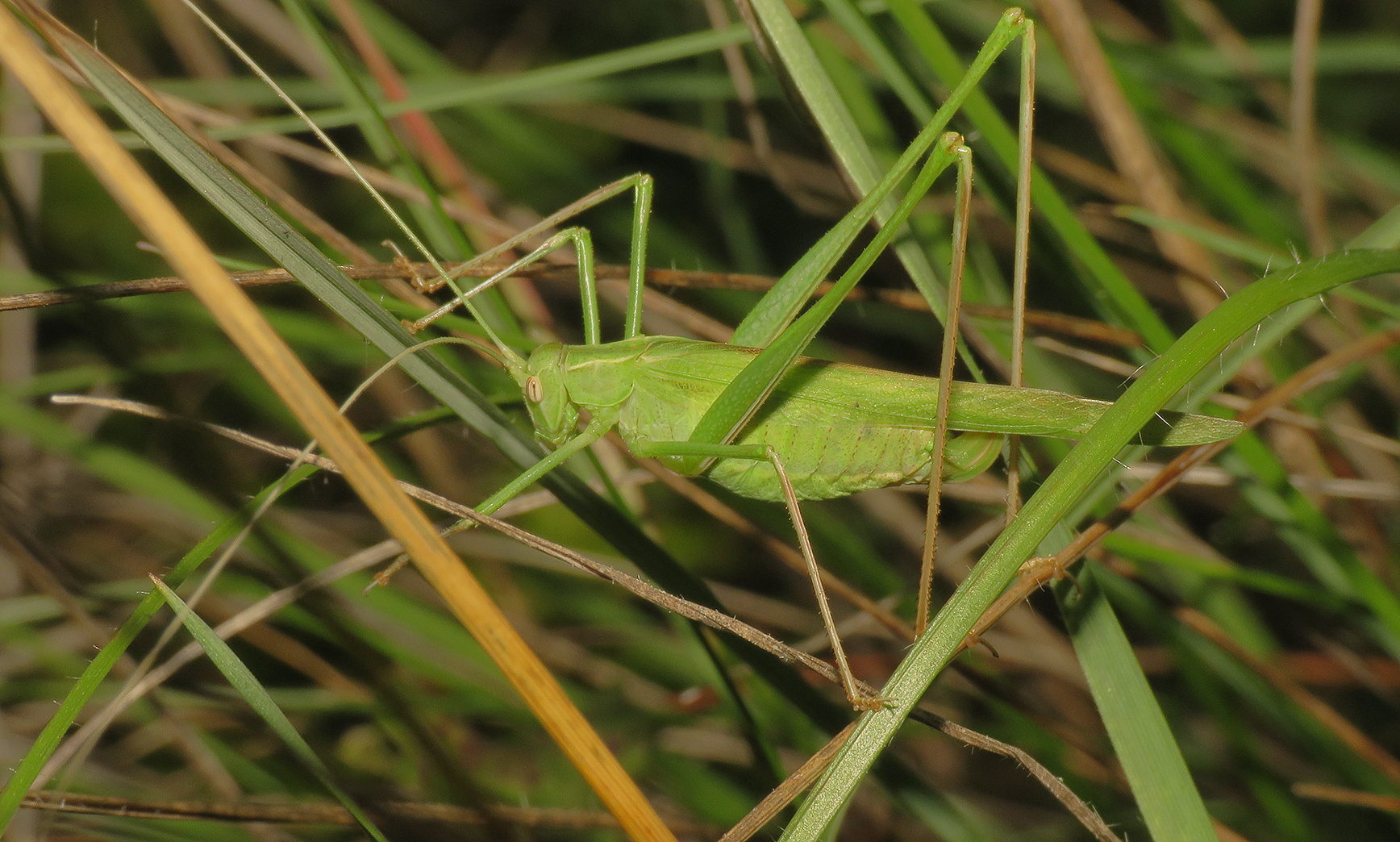
In the grass around the rose, I found the Tylopsis lilifolia, an elegant bushcricket with long legs and antennae ...
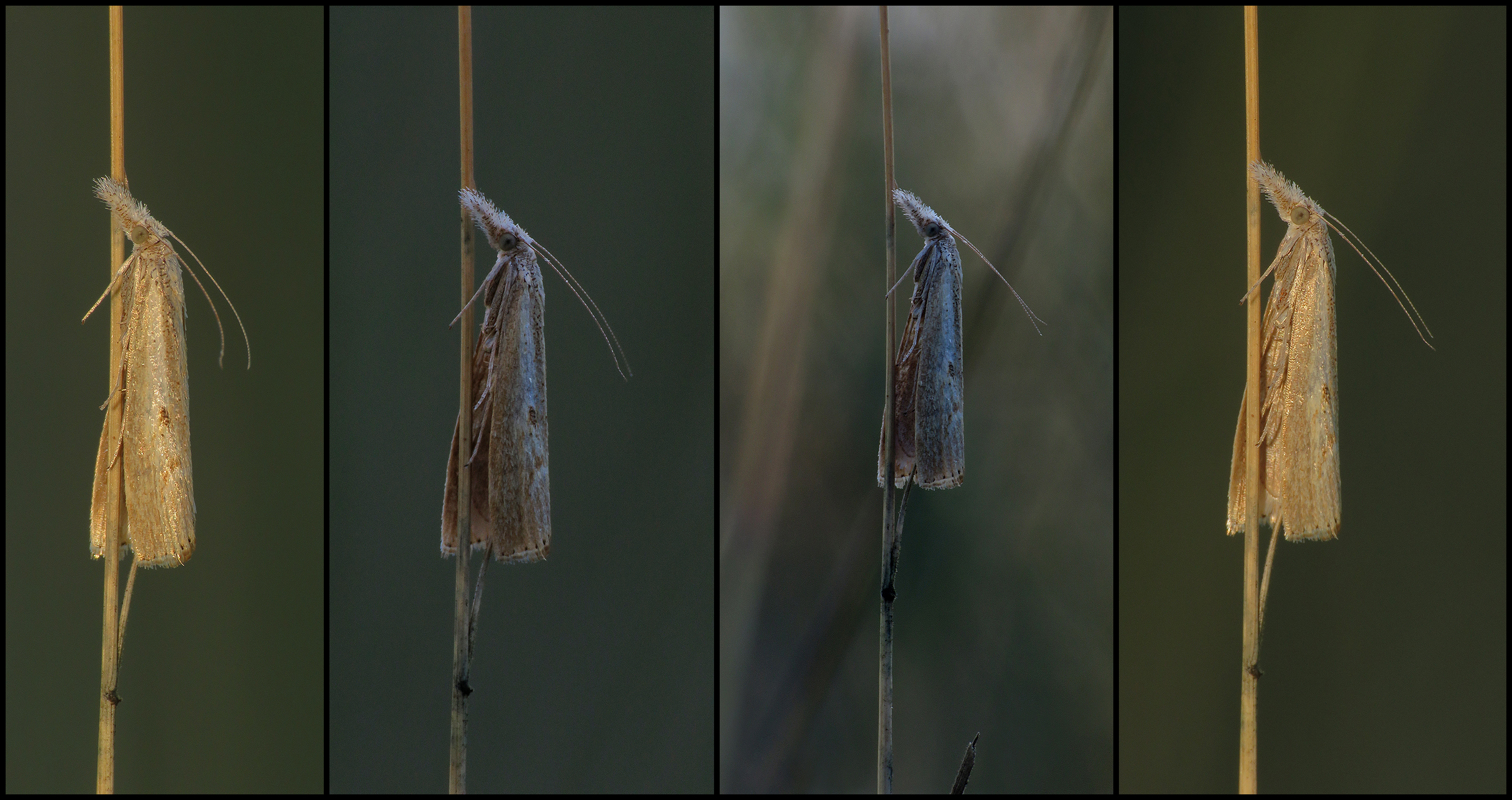
... and another Agriphila inquinatella. The caterpillars of this moth feed on various kinds of grass from the Poaceae family.
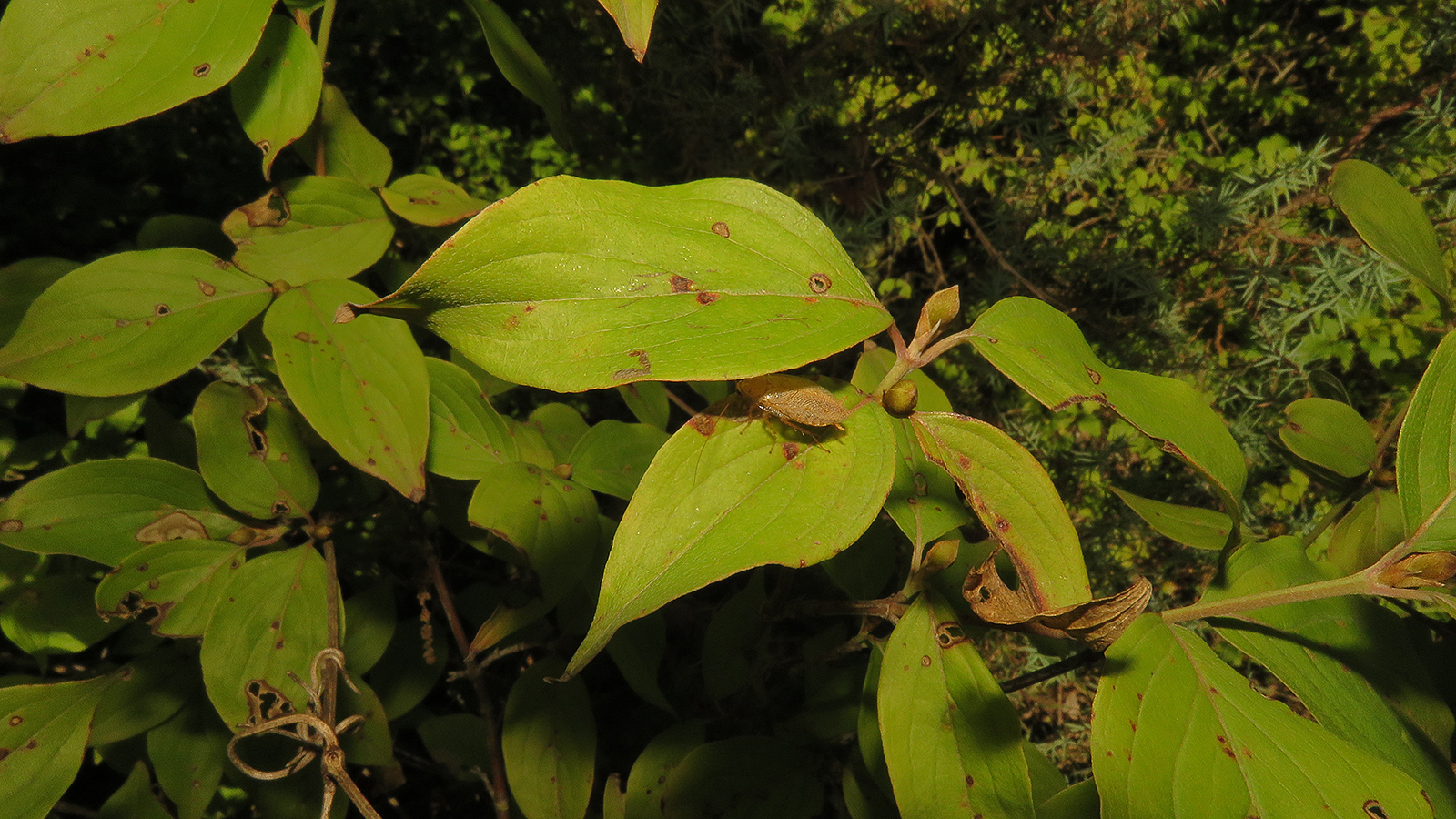
Meanwhile, on the Cornus sanguinea ...

... the cockroach has found a nice hiding place on the decaying, brown-colored top of the leaf. That patch of brown made the insect less prominent.

On one of the neighboring leaves, the Phaneroptera nana bushcricket was resting well-camouflaged on the green surface.
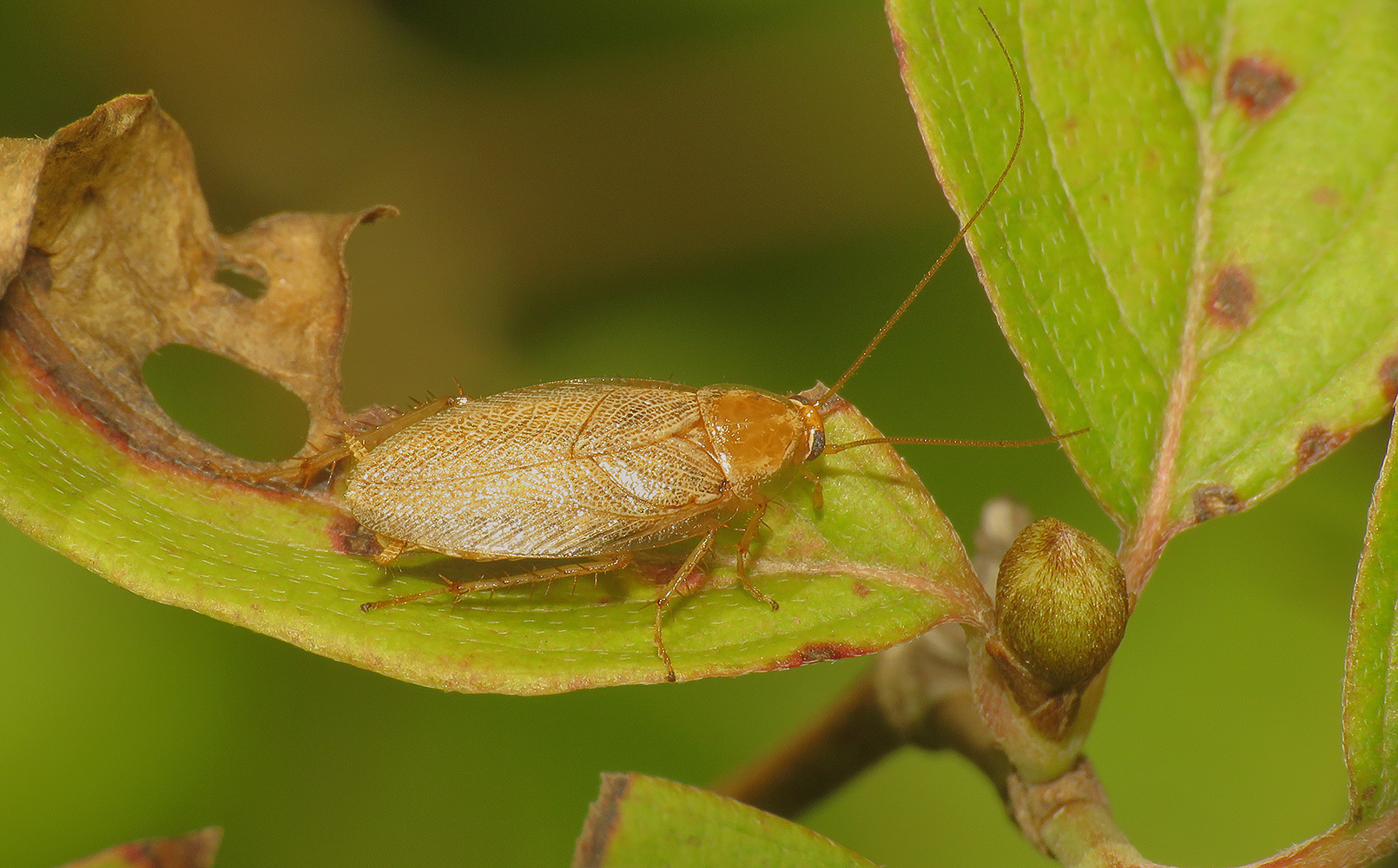
A minute or two later, when this photograph was taken, the Ectobius vittiventris has left its hiding place.
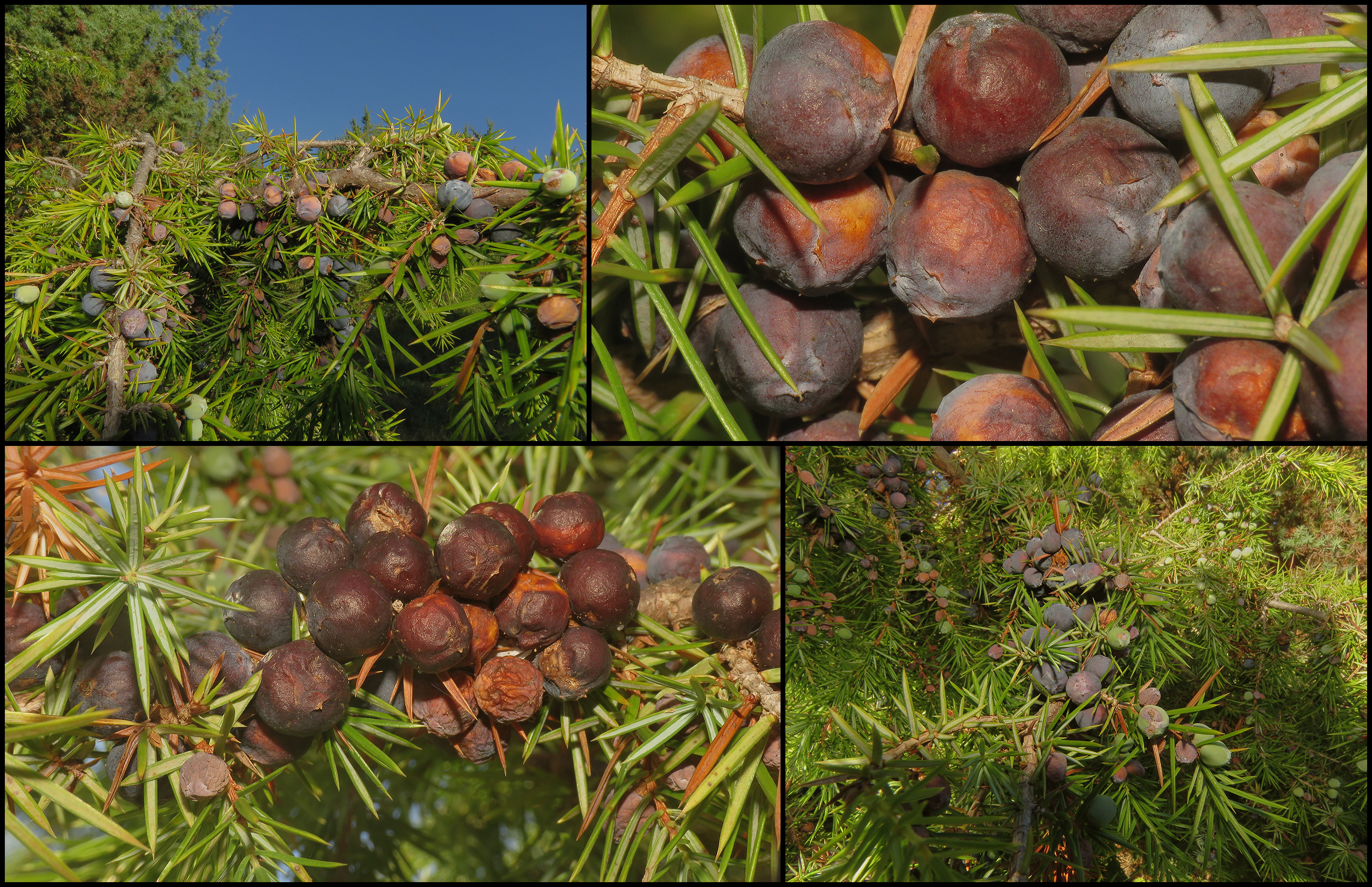
Here you can take a look at the small tree behind the Cornus sanguinea. The coniferous Juniperus oxycedrus. The berry-like seed cones shown in these four photographs can be used to produce an excellent refreshing, non-alcoholic drink.
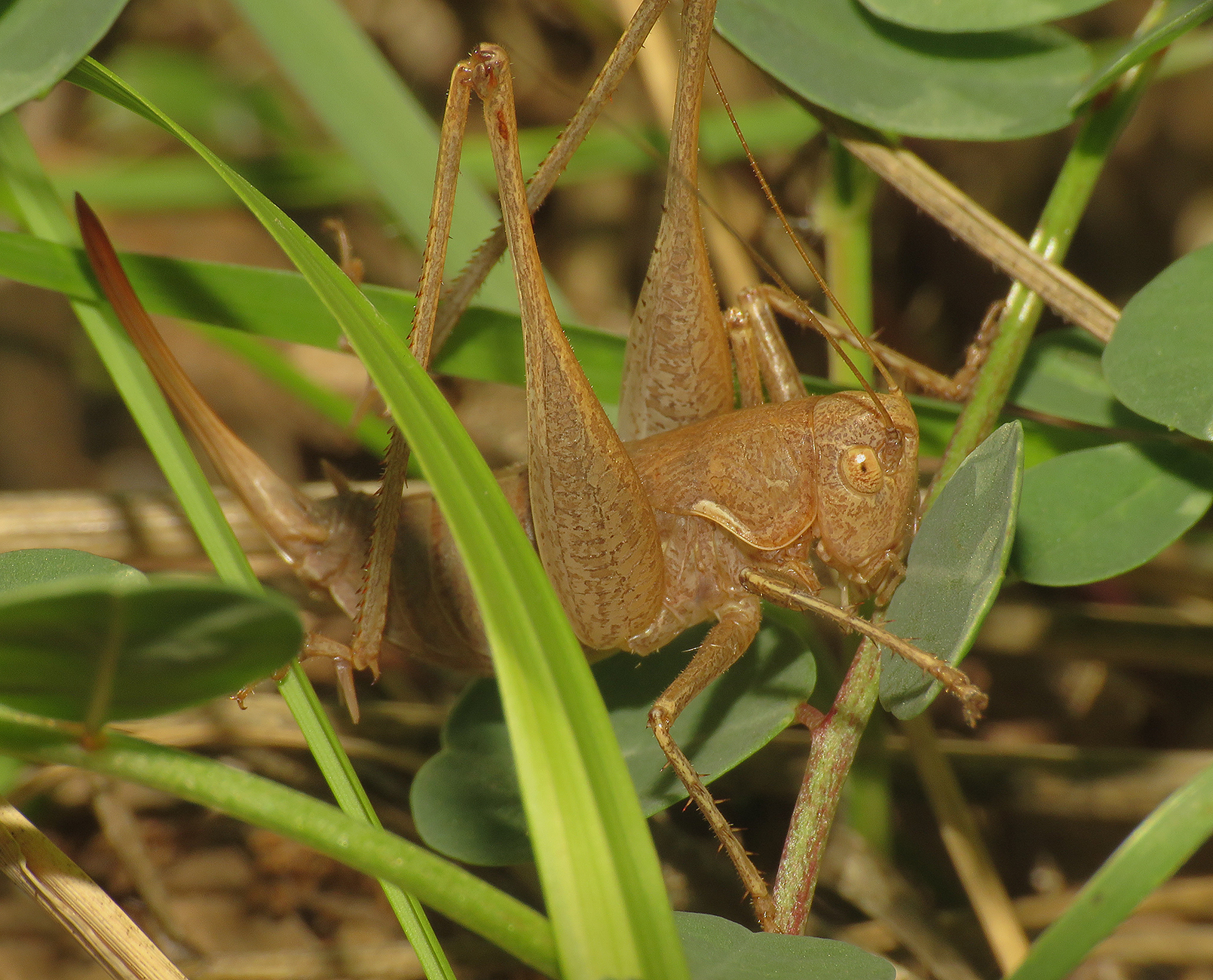
This photograph was taken ten or twelve meters further ...
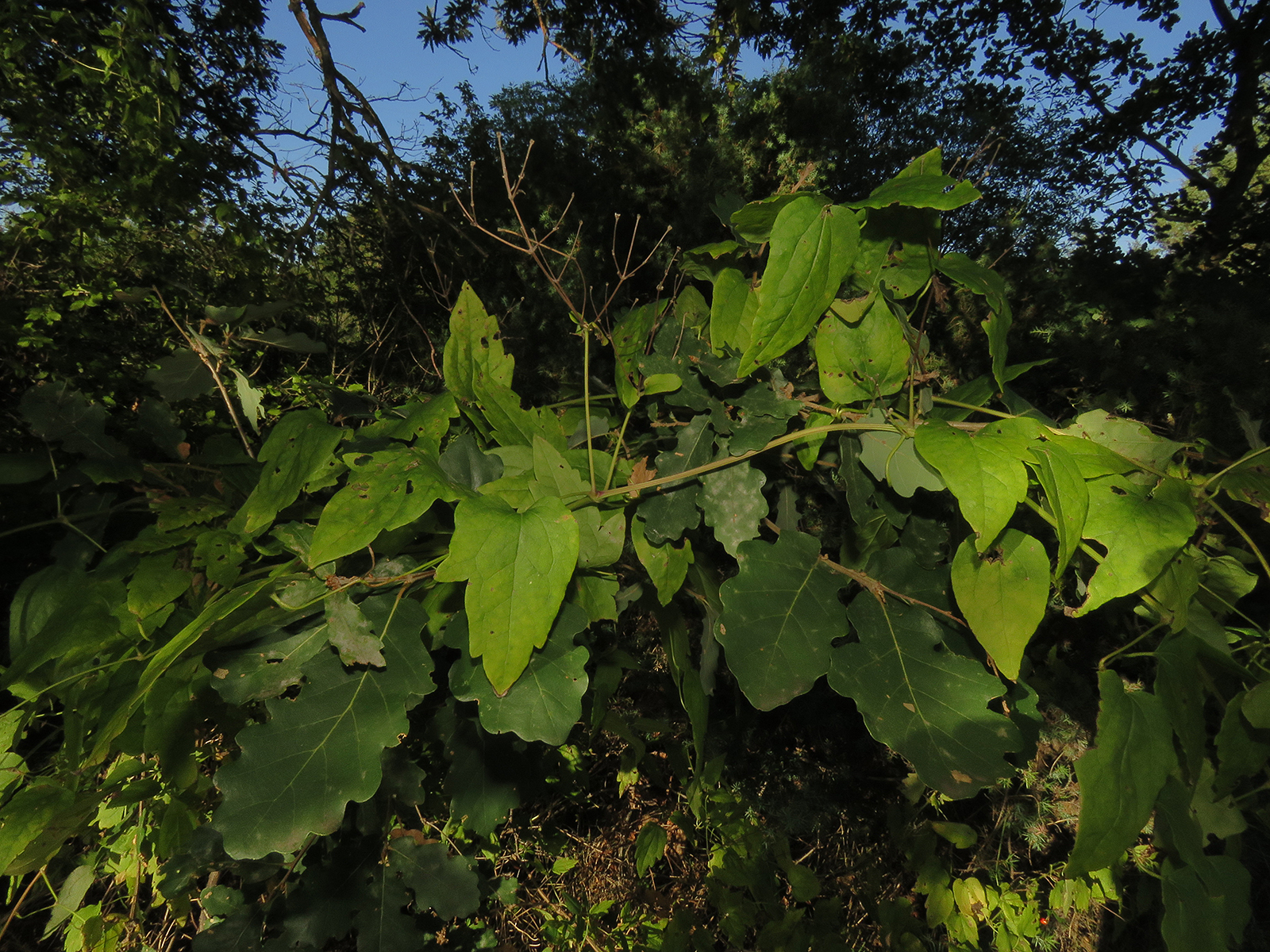
... in the grass around the group of small oak trees connected by a dense growth of various shrubs and climbing plants.
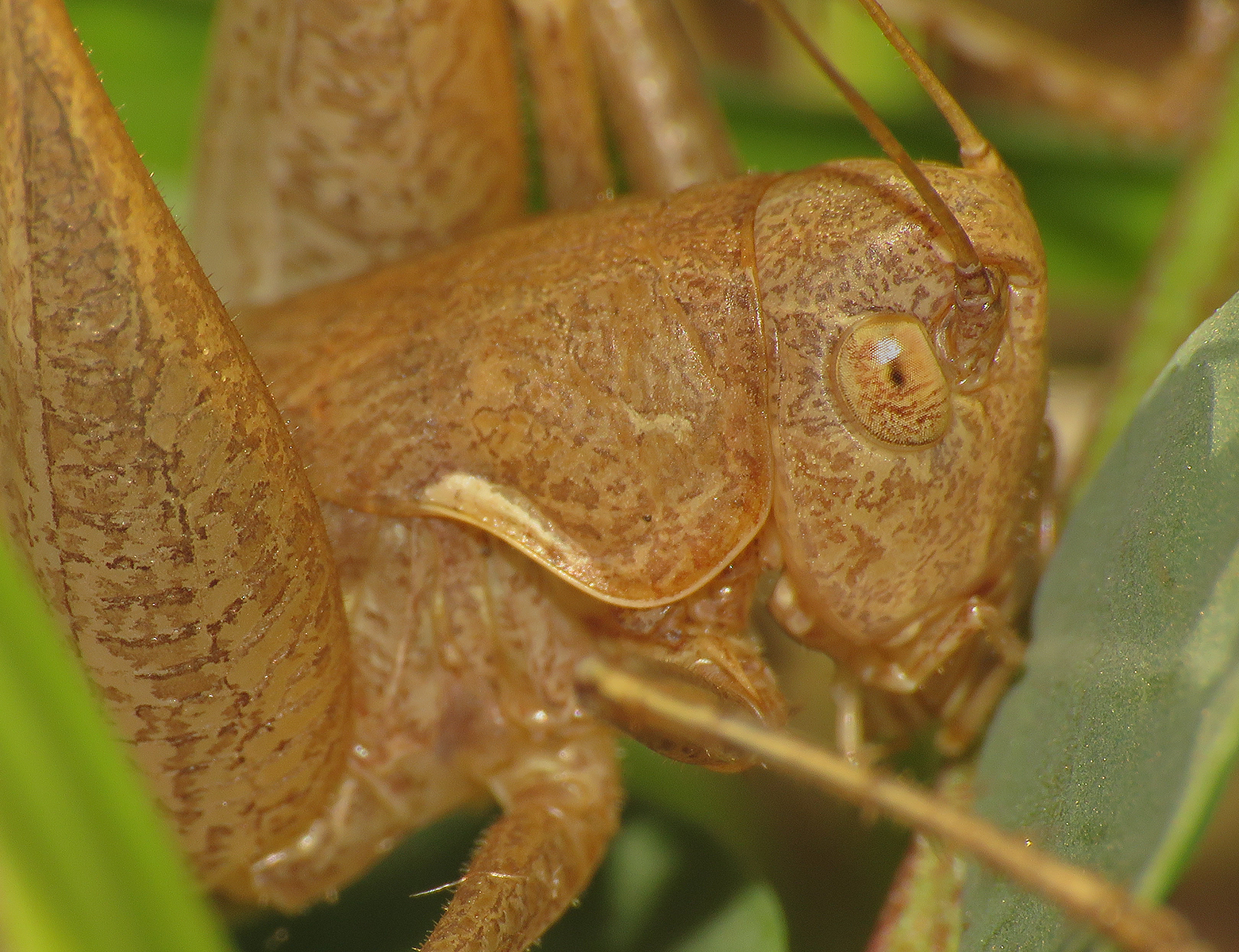
You can take a good look at another bushcricket here.
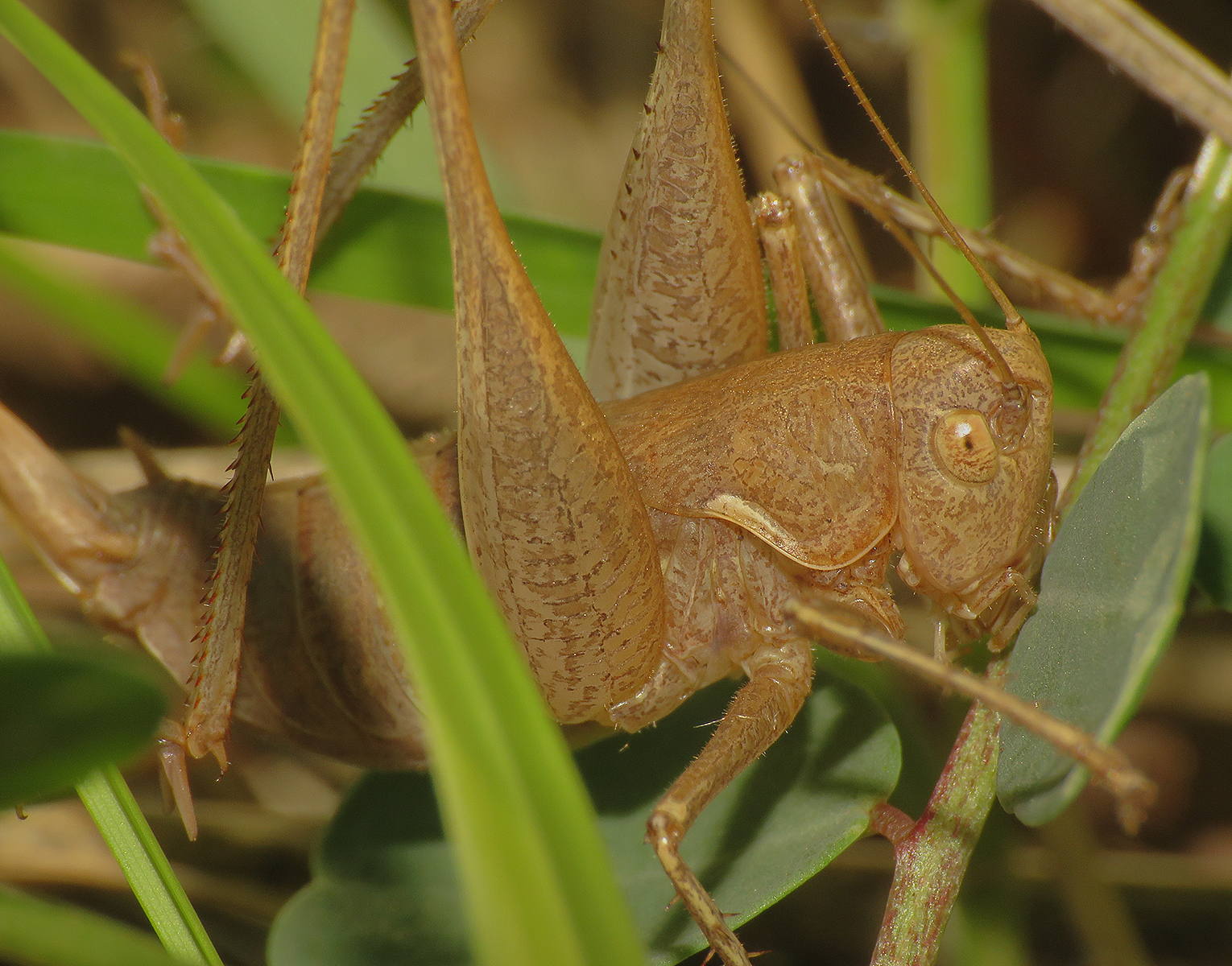
This is the Rhacocleis germanica, the third and last species from the Tettigoniidae family in this post.
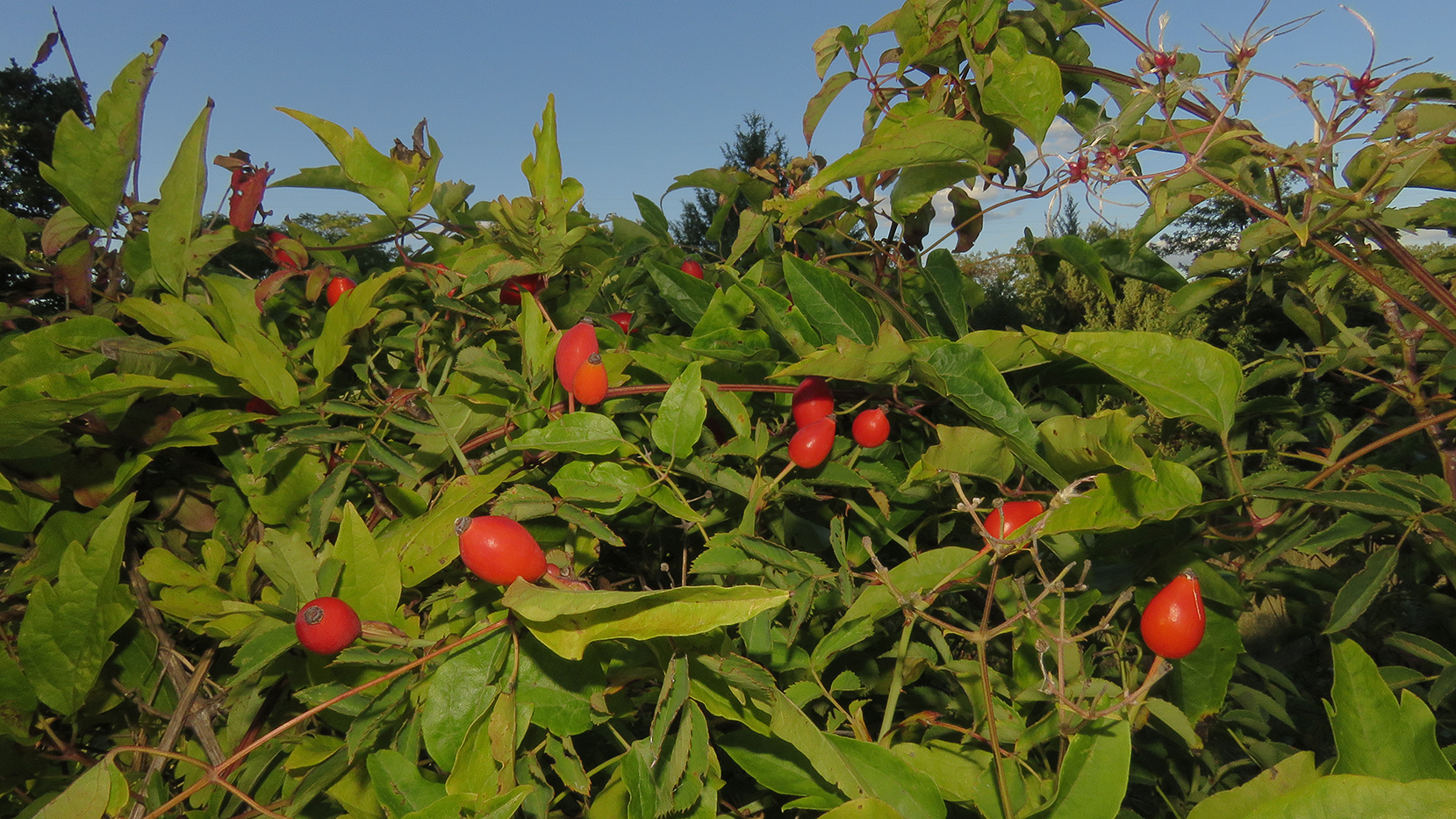
Here you can see the Rosa canina rose hips in a slightly different environment. Unlike in the case of the shrub shown earlier in the post, it looks like these fruits have grown on the wild rose that hasn't lost any foliage. That's an illusion, of course. A climbing plant, the Clematis vitalba has enveloped the shrub and changed its autumnal look. In the grass around this lovely plant arrangement ...

... I found a green spider. This is the Micrommata virescens, commonly known as the green huntsman spider, a species from the Sparassidae family. These mainly diurnal spiders, do not build a web and hunt insects in green vegetation, where they rely on their camouflage.
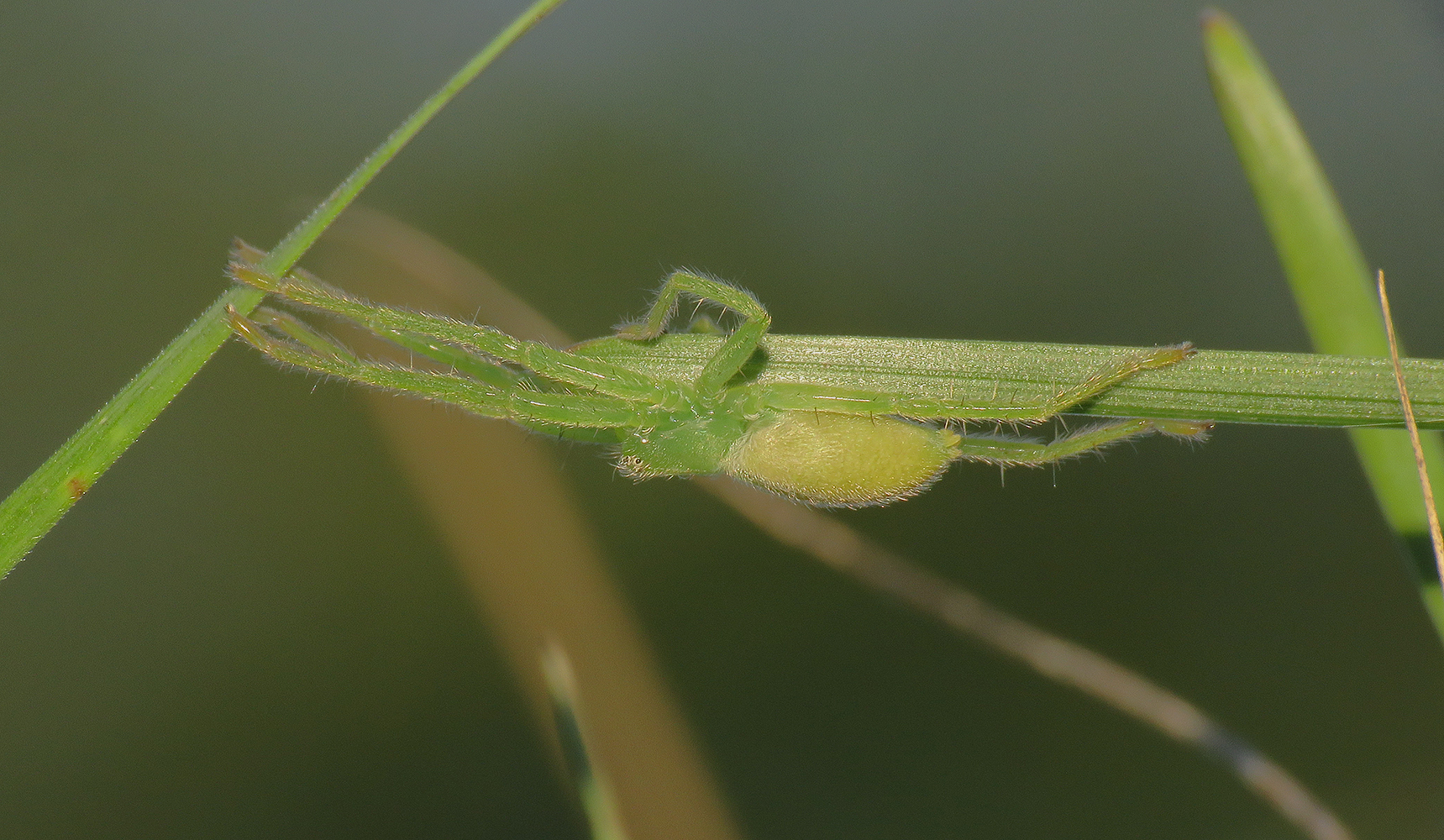
At one point, the Micrommata virescens assumed this cool pose, becoming a bridge between two blades of grass.
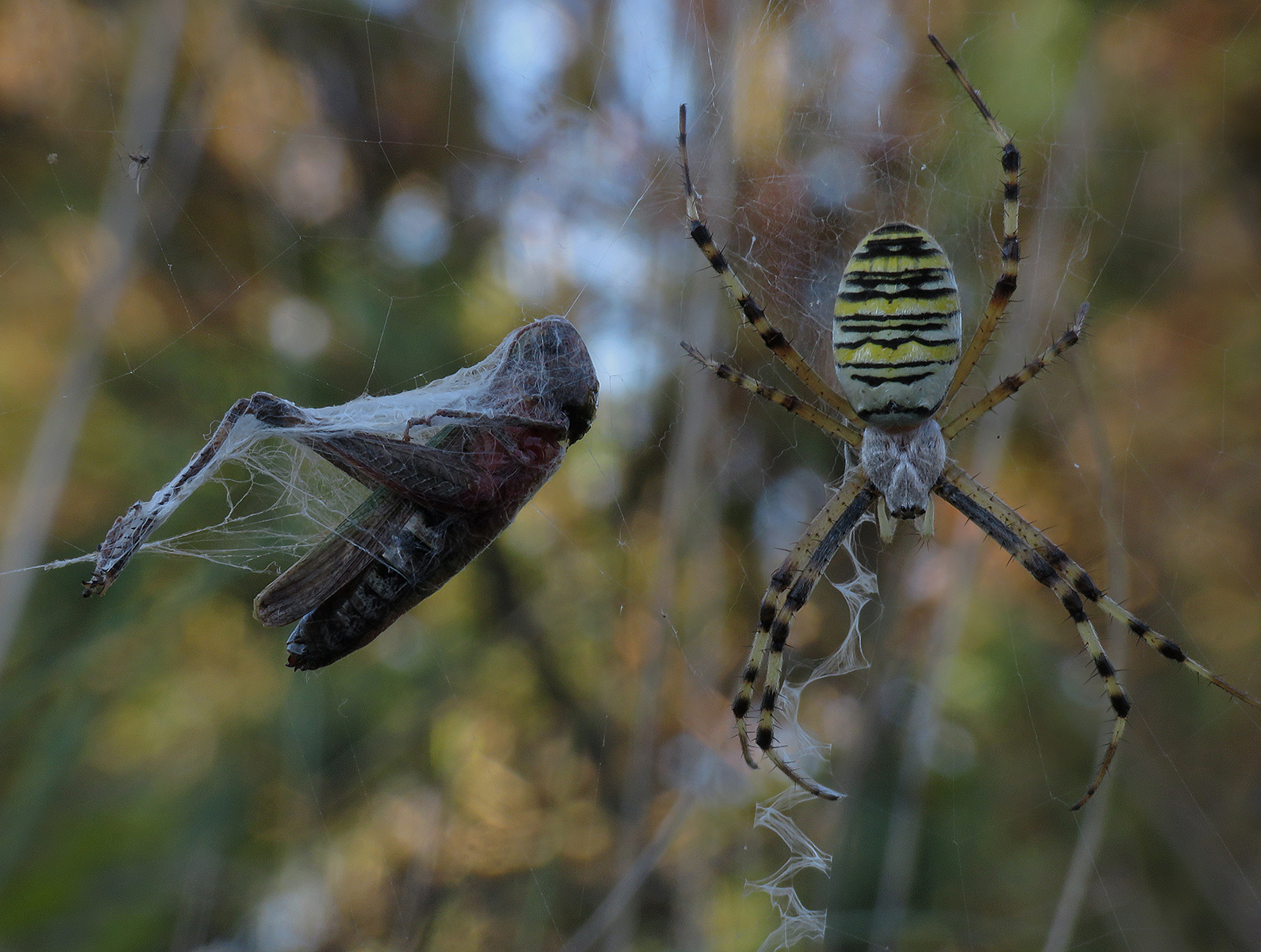
Five or six meters further, I came across another spider. This orb weaver, the Argiope bruennichi, has caught a grasshopper in its web.

Here you can see the same scene lit in a different way. The flash was used in this photograph.
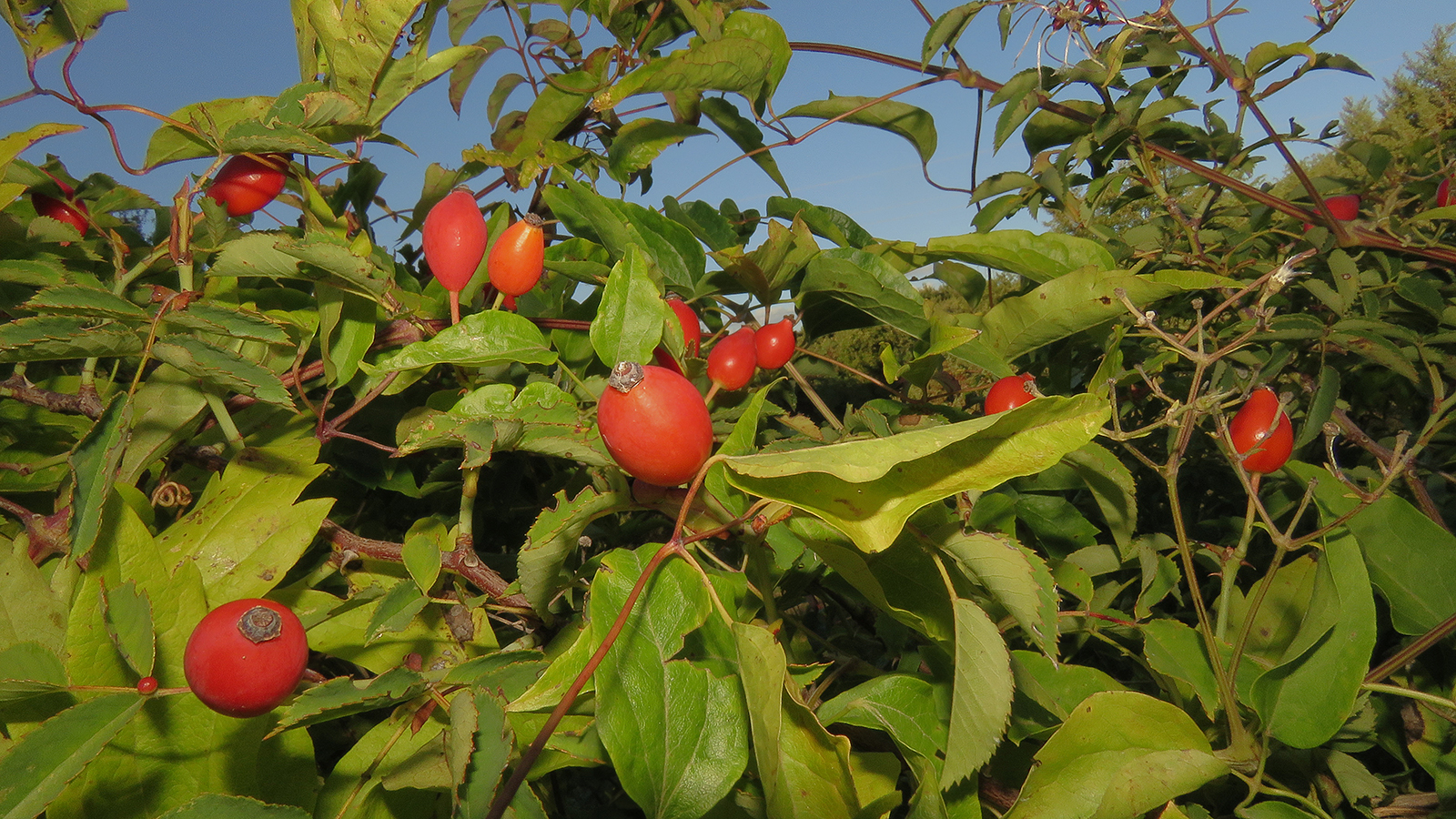
On my way back to the car, I stopped once again by the wild rose. Soon after taking this last photograph, I was driving back home.
The following links will take you to the sites with more information about some of the protagonists of this post. I found some stuff about them there.
https://en.wikipedia.org/wiki/Ectobius_vittiventris
https://www.plantea.com.hr/svib/
https://en.wikipedia.org/wiki/Agriphila_inquinatella
https://en.wikipedia.org/wiki/Rosa_canina
https://en.wikipedia.org/wiki/Tylopsis_lilifolia
https://en.wikipedia.org/wiki/Phaneroptera_nana
https://www.plantea.com.hr/smrika/
http://orthoptera.speciesfile.org/Common/basic/Taxa.aspx?TaxonNameID=1142384
https://en.wikipedia.org/wiki/Micrommata_virescens
AND THAT'S IT. AS ALWAYS IN THESE POSTS ON HIVE, THE PHOTOGRAPHS ARE MY WORK - THE END.