
Kreuzenzian-Ameisenbläuling ■ Mountain alcon blue
Phengaris rebeli (Hirschke, 1904)
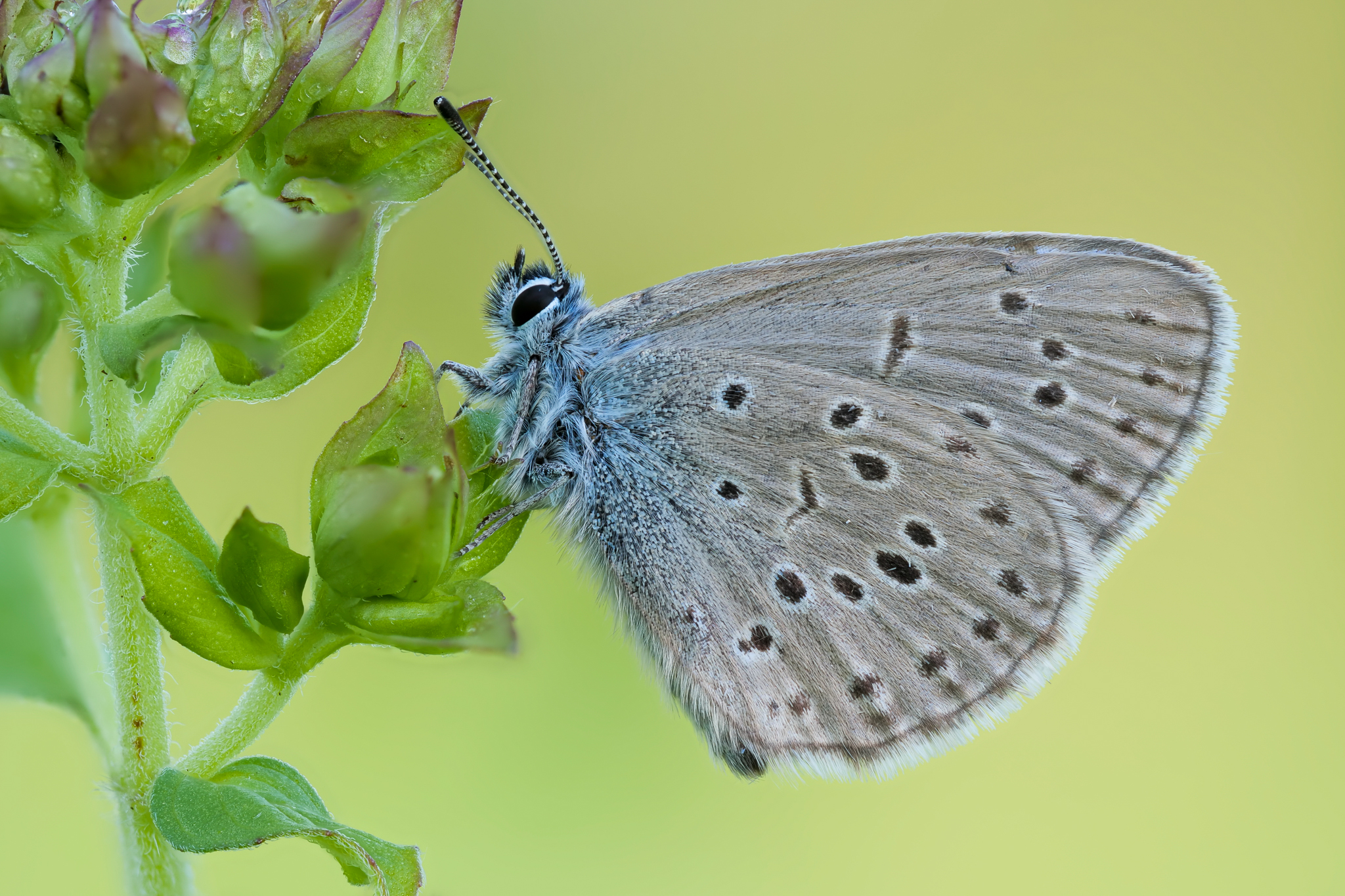
Der Kreuzenzian-Ameisenbläuling ist ein Tagfalter aus der Familie der Bläulinge (Lycaenidae). Der Falter lebt in einer engen Symbiose mit dem Kreuzenzian und Knotenameisen. Nach der dritten Häutung wird die kleine Raupe von Knotenameisen in ihr Nest gebracht und dort von den Ameisen über den Winter versorgt. Die Raupe nimmt dabei den Geruch der Ameisenlarven an. Als Brutparasit wir sie von den Ameisen über den Winter gefüttert.
The mountain alcon blue is a butterfly of the family Lycaenidae. The butterfly lives in a close symbiosis with the cross gentian and ants. After the third moult, the small caterpillar is brought to its nest by nodular ants, where it is taken care of by the ants over the winter. The caterpillar takes on the smell of the ant larvae. As a breeding parasite it is fed by the ants over the winter.
▲ Click on the image for full resolution ▲
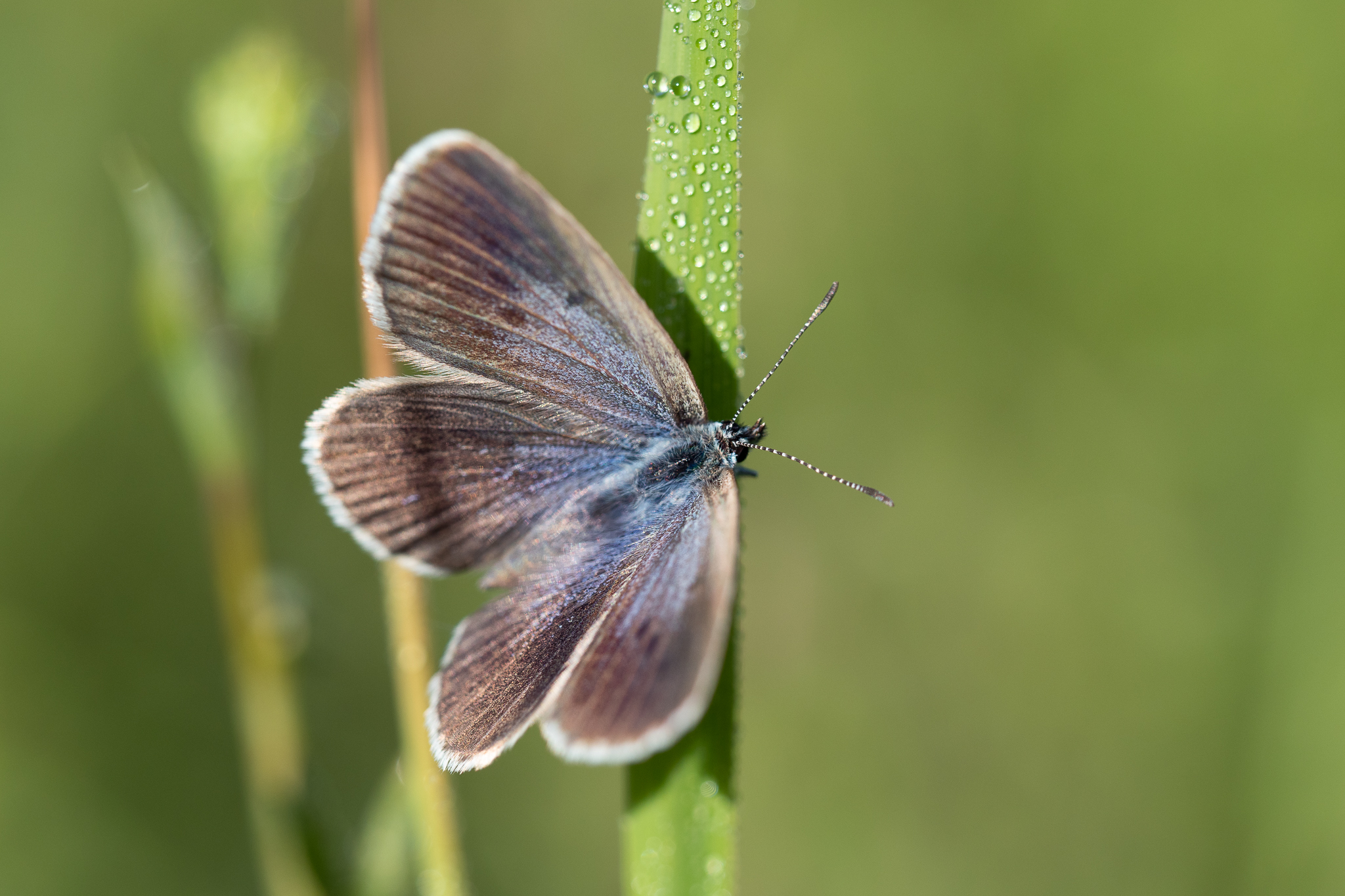
Im Taubertal existiert das größte Vorkommen dieser Art in ganz Deutschland. Als einzige Futterpflanze der Raupen dient der Kreuzenzian (Gentiana cruciata). Finden kann man den Falter auf Kalkmagerrasen. Er fliegt von Mitte Juni bis Ende Juli in einer Generation.
In the Tauber valley there is the largest occurrence of this species in all of Germany. The only forage plant for the caterpillars is the gentian (Gentiana cruciata). The butterfly can be found on limestone grassland. It flies from mid-June to the end of July in one generation.
▲ Click on the image for full resolution ▲
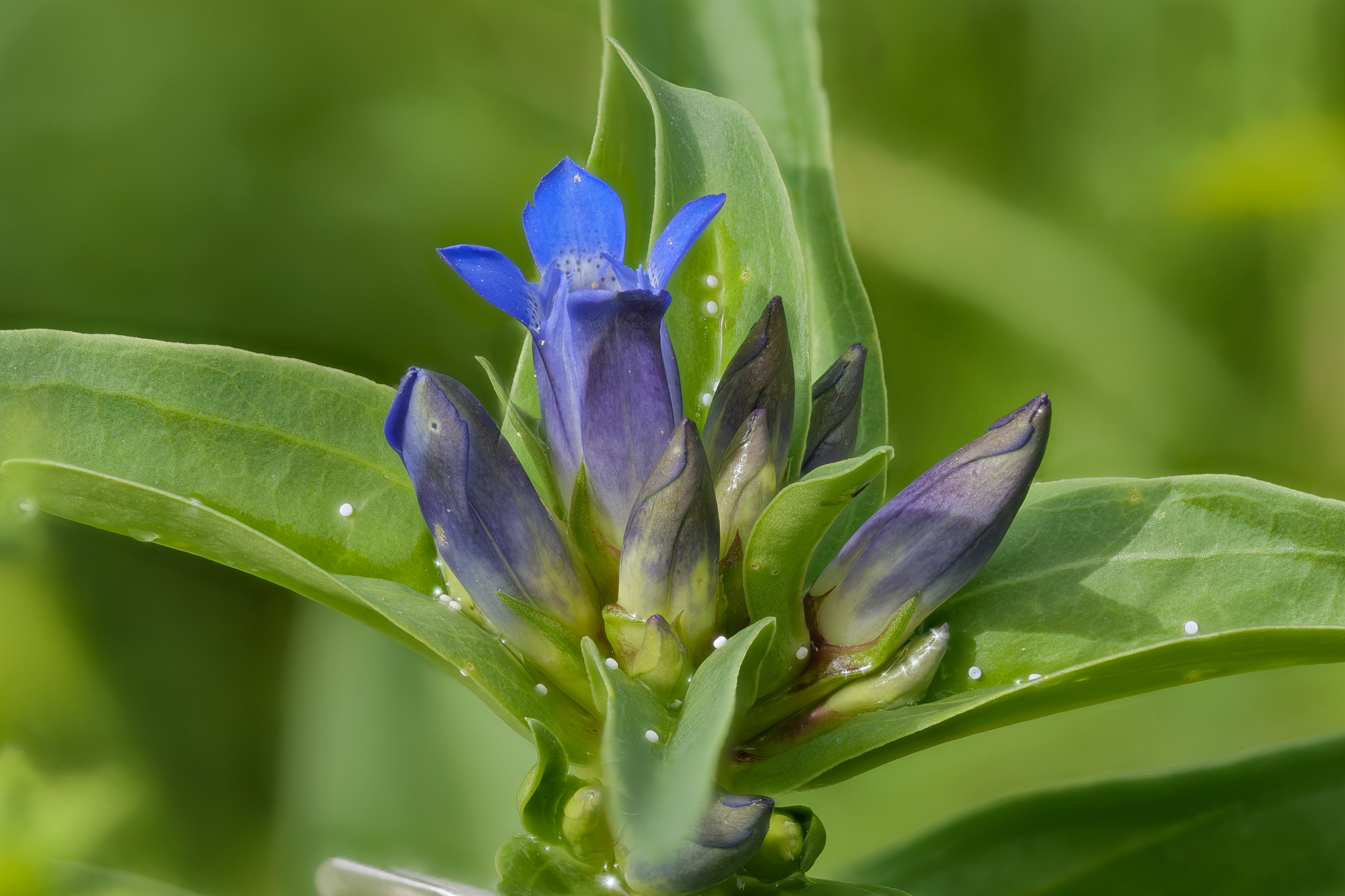
Auf dem nachfolgenden Bild kann man sehr gut die Eier des Kreuzenzian-Ameisenbläuling am Kreuz-Enzian (Gentiana cruciata) erkennen. Die Eier werden vom Weibchen auf die Blattoberseite der Blätter und Blüten angeheftet. Die Raupen ernähren sich von den Blüten der Pflanze. Der Falter wird in der Roten Liste, als stark gefährdet eingestuft. Die wenigen Vorkommen in Deutschland sind streng geschützt.
On the following picture you can see very well the eggs of the mountain alcon blue on the gentian (Gentiana cruciata). The eggs are attached by the female to the upper side of the leaves and flowers. The caterpillars feed on the flowers of the plant. The butterfly is classified in the Red List as highly endangered. The few occurrences in Germany are strictly protected.
▲ Click on the image for full resolution ▲
〰️
| Category: | Macro |
| Camera: | Panasonic Lumix DC-G9 |
| Lens: | Olympus M.Zuiko Digital ED 60mm 1: 2.8 Macro |
| Location: | Germany, Baden Württemberg, Königshofen |
〰️
Wenn dir mein Beitrag gefällt, freue ich mich über deine Nachricht.
Herzlichen Dank und viele Grüße vom 
If you like my contribution, I am looking forward to your message.
Many thanks and greetings from Germany 🦋
🔴 PeakD (Best user interface for the decentralized Hive Blockchain)🔴