
Hello Fascinating Insects! For my first post here I thought that I might introduce you all to a permanent resident of one of my favorite local forests: the Allegheny mound ant (Formica exsectoides).

Allegheny mound ants are a species of field ant native to Eastern North America ranging from Nova Scotia to Northern Georgia and as far West as the Midwestern plains. Large colonies can reach into the hundreds of thousands with many different mounds being connected to one another via subterranean passages. Unlike most other ant species, Allegheny mound ants have multiple egg-laying queens living harmoniously within the same colony.


The species produces large mounds using soil excavated in the process of building their underground nests. The mounds themselves act as incubators for developing ant larvae by insolating incoming solar radiation. The warmth collected by the mounds then serves to warm the larvae and colony contained within. Large mounds may reach up to 1 m in height and 2 - 3 m in diameter.
Another identifying feature of the species is the conspicuous lack of vegetation in the regions extending up to 15 m surrounding the colony's mounds. Worker ants from the colony will systematically inject formic acid into vegetation immediately surrounding their mound constructions. Successive and consistent injections of the acid causes surrounding trees and bushes alike to die. Over time, this leads to progressively larger openings in the forest canopy that, in turn, allow more solar radiation to reach the forest floor and the mounds built upon it.

Adult worker ants are around 1 to 1.5 cm in length and possess a bright orange-red thorax and head along with a black abdomen. The species is highly aggressive and will readily attack intruders by biting and injecting formic acid if a mound is disturbed. Thankfully I had long socks and pants on while taking these pictures, since I was quickly swarmed for invading their territory!
This particular colony is located in Western Michigan, USA and easily has hundreds of thousands of resident members. Upon approaching the largest mound (pictured below), the workers were so numerous and densely concentrated that the collective sound of them marching across the forest floor was easily audible up to 10 m away. These truly are fascinating insects that stand as a testament to how influential a single species can be on shaping the very ecosystem in which they are found.

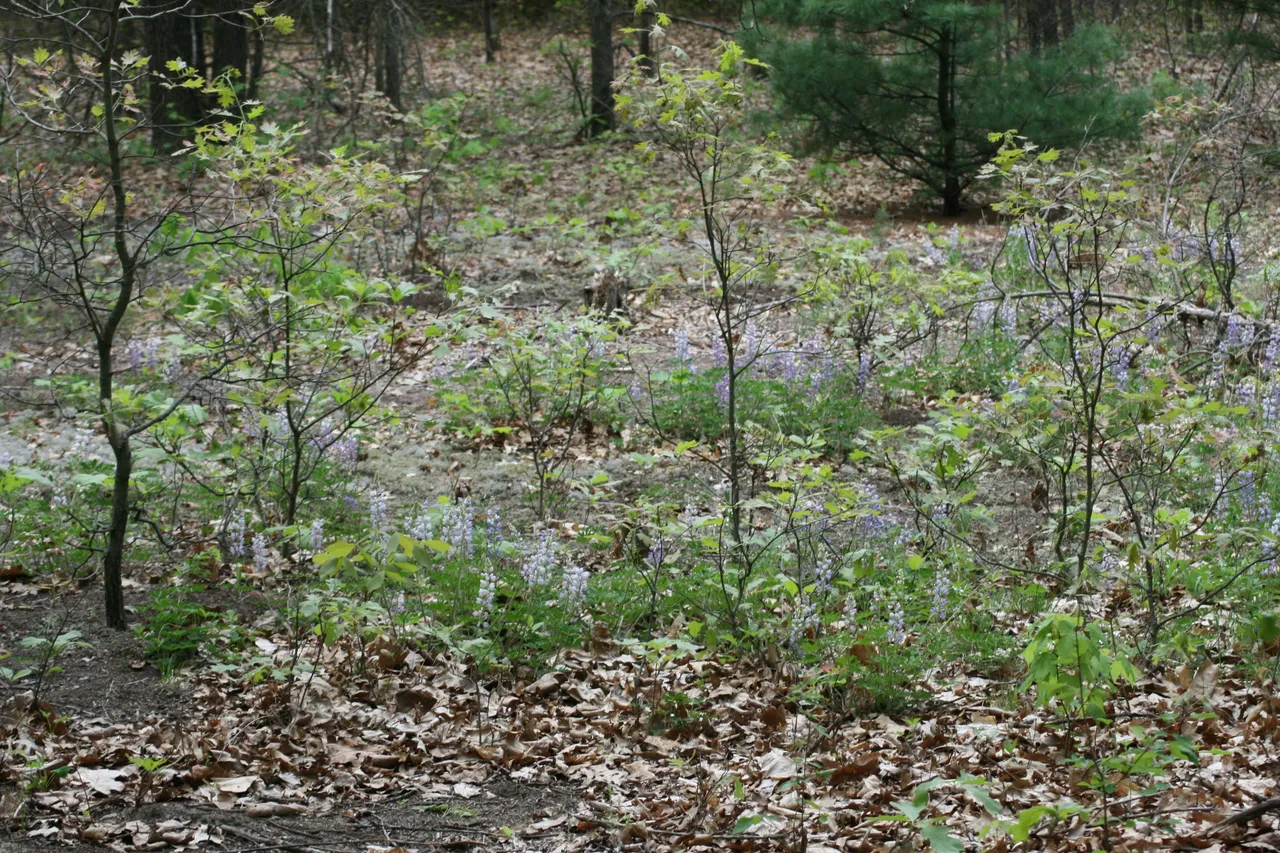
Despite being devastatingly effective at clearing away virtually all large vegetation surrounding their colony, I was able to find some species, such as lichens and a few wildflowers, that seemed to prefer the clearings made by the ants. Perhaps they are not as affected by the formic acid produced by the ants, or perhaps were even spared by the ants as potential sources of food. These are merely speculations, but the species is known to be omnivorous, feeding on everything from honeydew produced by aphids to the larvae of insect pests such as gypsy moths and white pine weevil alike. I have also personally noticed large quantities of blewit mushrooms growing in association with the areas cleared by this particular colony during the late summer and autumn months, but I do not know if this is merely coincidental.




I hope that you find these insects as fascinating as I do!
References:
- https://en.wikipedia.org/wiki/Allegheny_mound_ant
- https://extension.umaine.edu/blueberries/factsheets/insects/195-allegheny-mound-ant/
- http://bugoftheweek.com/blog/2016/7/25/mounds-of-mountain-marvels-allegheny-mound-ant-iformica-exsectoidesi
- https://www.canr.msu.edu/news/mound_ants
My NFT Showroom gallery: https://nftshowroom.com/tych021/gallery
Creary Gallery: https://creary.net/@tych021/projects
Publish0x reflink: https://www.publish0x.com?a=M7e58kDYd2
PeakD reflink: https://peakd.com/register?ref=tych021
NFTShowroom reflink: https://nftshowroom.com/?r=tych021
Twitter: https://twitter.com/tych021