


Similar to the Balinese dances I showed you in a previous post, hand gestures also play an important role in some traditional dances in Cambodia. I enjoyed a dance show in Siem Reap 6 years ago and would love to share the wonderful experience with you now.
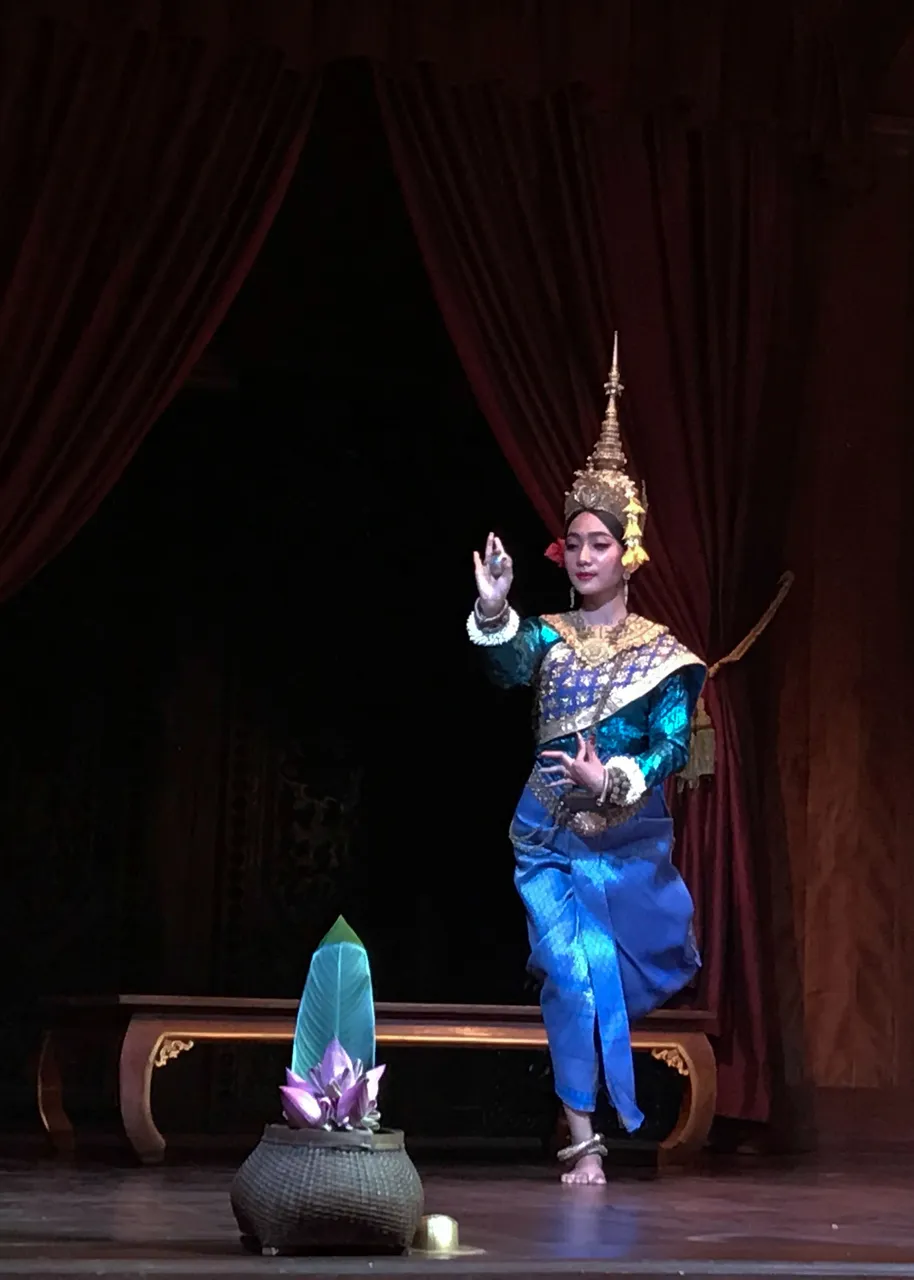
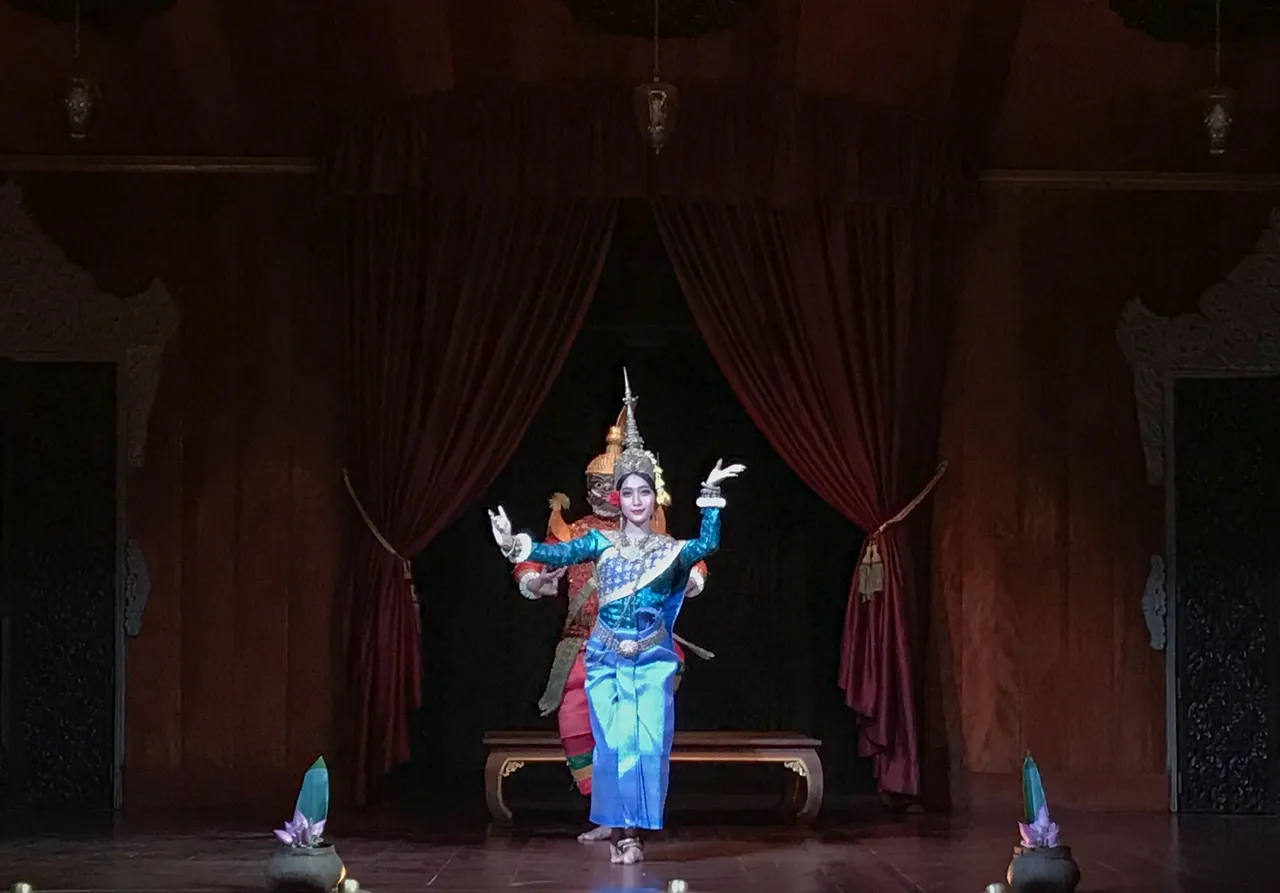
It took place in Apsara Theatre, Siem Reap’s oldest theatre. It's a grand structure designed in the traditional semi-colonial style, complete with antique décor and marquee lights. Unfortunately, I was only carrying my phone at the time, so the charming wooden exterior in the dark night is difficult to capture. Additionally, only wider-angle pictures and videos rather than close-ups of the dancers were taken. But I do hope you'll have an idea through looking at these shots here.
It's a pleasing experience for the eyes and ears, as well as the tastebuds, because an assortment of delicious Khmer dishes were also served. It included the popular Cambodian dish fish amok. As much as I enjoyed the dance show, I also enjoyed the coconut fish curry steamed in banana leaves.:)
The show began after the light dinner. The three classical and two folk dances performed to the music of the traditional orchestra lasted more than an hour. Classical dances are based on ancient tales and originated in royal courts. They depict figures such as Apsara fairies and characters from The Reamker, a Cambodian epic poem based on the Ramayana of Sanskrit.
The Apsara dance in Cambodia originated in Hinduism and had been influenced by the local Khmer culture. I remember seeing vivid carvings of apsara dancers on the temple walls in Angkor Wat. However, with the decline of the Khmer Empire in the 15th century, the dance came to an end.
It was revived in the 1940s thanks to the efforts of Cambodian Queen Sisowath Kossamak. She was inspired by a schoolchildren's dance performance in a paper apsara costume and has since given the traditional dance new life. Princess Norodom Buppha Devi, her first granddaughter, began practising the dance at five and toured the world with the royal dance troupe.
The dancers wore ornately adorned headdresses and elaborate costumes. I was wowed by their graceful and elegant performance. Their movements were soft and gentle, emphasising the delicate intricacy of the dance and evoking the ancient stories.
Each dance movement is associated with a symbol. For instance, a curved finger pointing upwards represents "today"; an arm placed at chest level means "happiness". Foot postures, like hand gestures, convey different meanings as well.
Between the three classical dances, two vivacious folk dances were performed. They were excellent companions to the calm and peaceful classical ones. Interestingly, I found their costumes and moves similar to some of the folk dances I saw in southwest China.
These traditional dances were once performed in the royal court on significant occasions. These days, you can also find them at weddings and festivals. Furthermore, dance shows are staged for tourists in places such as theatres, hotels, and restaurants. So, if you ever visit Cambodia, don't forget to see these beautiful performances.
如果说玻利维亚的摔跤表演风格是魔幻彪悍, 巴厘舞剧是夸张怪诞,那这次要展示的柬埔寨传统舞蹈应该算是古典优美的。
表演是在暹粒最古老的剧院阿普萨拉剧院。这座半殖民地传统风格的建筑古色古香,很有特色。可惜当时天热懒得拿相机,六年前的渣手机在暗光下拍不清楚那雅致的木质结构,也没法拍舞者的特写,只有广角照片和视频。
我发现那时候拍的大多是领舞的美女XD,很养眼,一出场就惊为天人,天仙般的容貌气质还真是适合那古典的天女舞。
舞蹈开始前先上了高棉特色菜,包括柬埔寨著名的咖喱椰汁鱼,用香蕉叶包裹着蒸出来,清香鲜美。
可口的晚餐过后,就开始表演舞蹈。这些古典舞源于古代传说,有些来自史诗《罗摩衍那》的柬埔寨当地版本。
其中,优美的天女舞最初起源于印度教,后来受到高棉本土文化的影响。我记得在吴哥窟的寺庙看到过很多生动的舞者浮雕。然而,随着15世纪高棉帝国的衰落,这种舞蹈也逐渐消亡。直到20世纪40年代,在柬埔寨王后西索瓦·哥沙曼的带领下,才又得到复兴。她钦定的长孙女从五岁起就开始练舞,后来还常在全球巡回演出。
就像上次介绍的巴厘舞剧,柬埔寨宫廷舞也有系统的手势。每个动作都表达着不同的含义,脚的姿势也用来传达意思。但他们的动作更加缓慢柔和,没有巴厘舞剧那么动感夸张。
三场古典宫廷舞中间还穿插了两出活泼的民间舞,类似我在国内西南看过的一些少数民族传统歌舞,很熟悉的感觉。





 . Thank you for visiting!
图文 by Donica,谢谢来访!=)
