
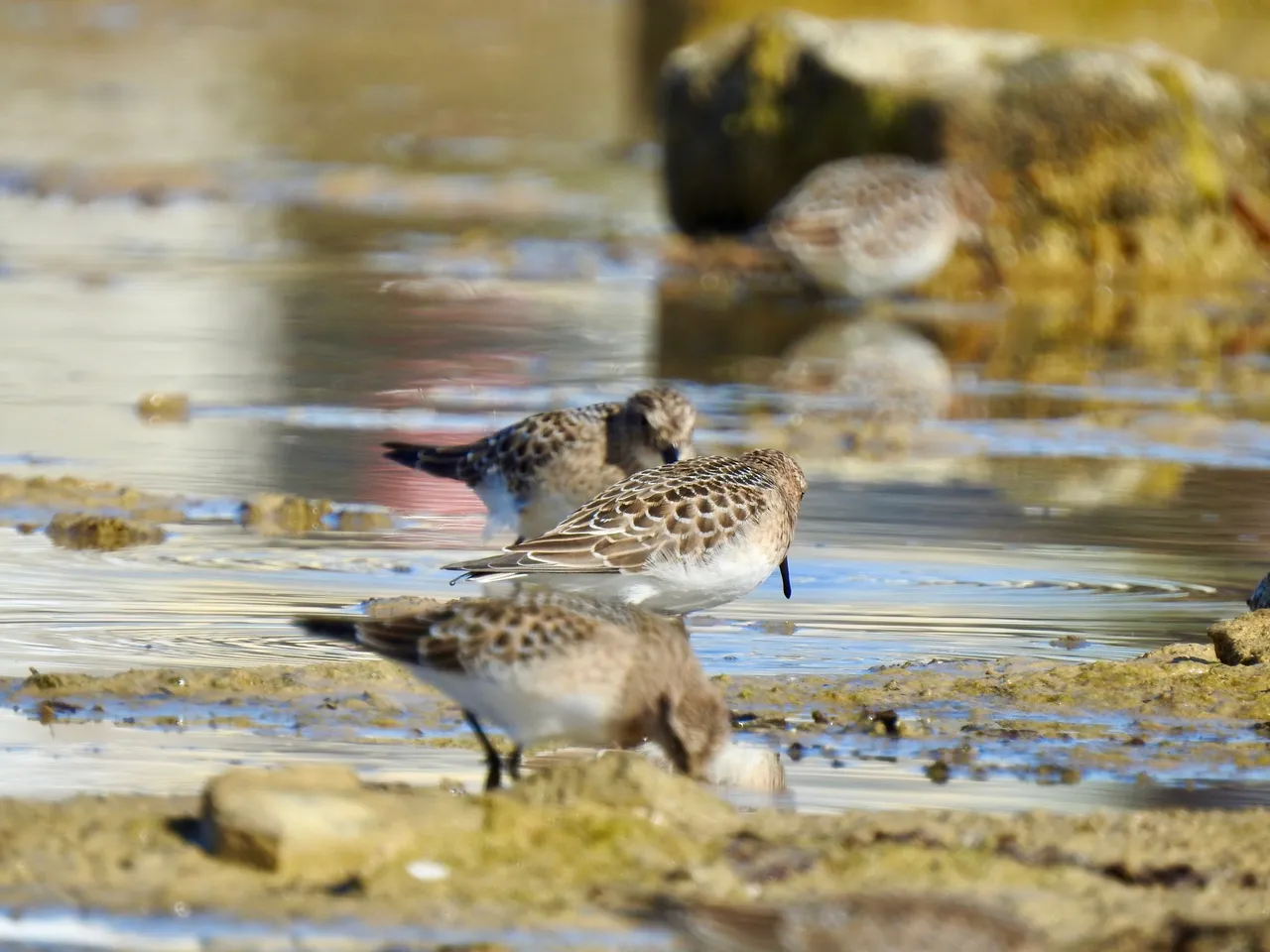
The birds must be done breeding and getting back to normal habits as the tidal ponds at the bay in center of town have been rife with the activity of feeding pipers of late. Dozens of birds can be found slowly plodding through the ponds, pecking into the water to grab various bugs and possibly shrimp trapped due to the tide. The nights are getting longer and colder, so I imagine it's time to pack on some flying calories for the mass migrations south. Sandpipers have a cosmopolitan distribution, meaning they are practically worldwide, but they breed only in higher northern hemisphere areas. With one or two species claiming "the most northerly breeding bird."


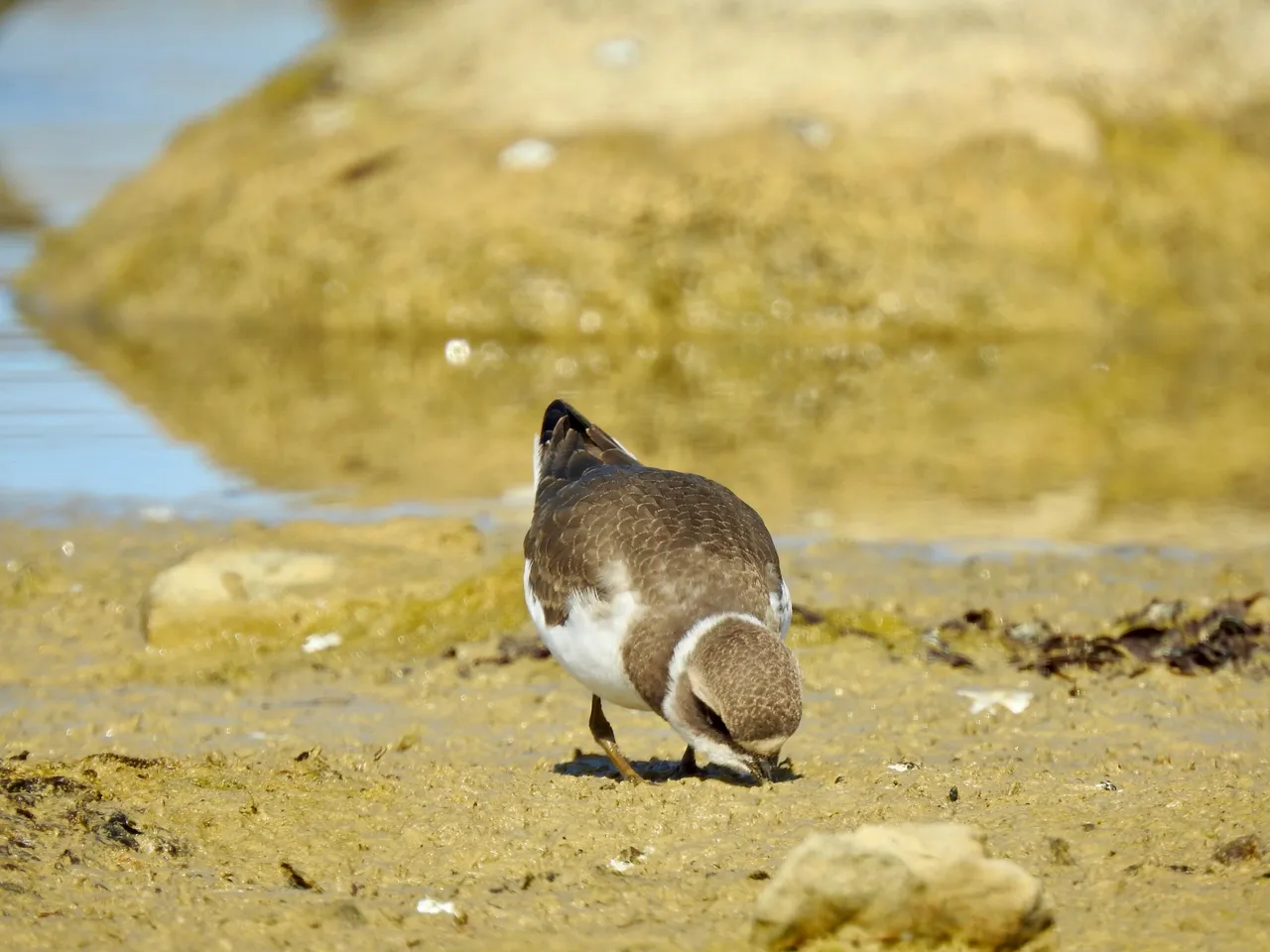
The Semipalmated Plovers get their name from their half webbed feet. (Semi Palm) They are often confused with their European counterpart, the Ringed Plover with identification most easily made by observing the toes of the animal (Good Luck With That!) The Ringed Plover has their outer 2 toes semi-webbed while the Semipalmated Plover has three toes half webbed. The black band on the belly is also thinner on the Semipalmated Plover. I am now second guessing if these are a species of European bird that made it over to Canada. There is one subspecies that will breed in Canada and then fly to AFRICA! It always blows my mind the distances that 30 gram birds will travel in one year. Let alone their entire lifetime.
All photos are my own, taken by myself. They are taken using a Nikon P900 and a Samsung S20. Consider checking out my website, Midnight Sunsets. I'm also on Twitter and Instagram!

Hive Divider provided by

