
Hello to everyone. This time, we'll talk about the Love Bird, a bird known for its love of romance.
Small, weighing between 40 and 60 g, and measuring between 13 and 17 cm in length, this bird has a long beak and a short tail. There are six different species of this bird, five of which are native to Africa and one of which is from Madagascar.

These birds are monogamous and pair-oriented; they will sit close to and adore one another.
Depending on how we care for it, this bird may live longer or shorter than my prediction of 10 to 15 years.
Because they are an extremely active species of bird, lovebirds require a cage that is both comfortable and spacious enough for them to fly and move around in. To provide this for them, the ideal cage should have plenty of room, for example, be large enough so that they don't feel confined. and is unrestricted in movement.


As was previously mentioned, because these lovebirds are social and active birds, they require a sufficient amount of care and interaction from their owners.

As the owner of these parrots, it is my responsibility to provide them with adequate space each day so that they can eat, drink, and play so that they live a long life.
They interact with one another and let go of each other's longing by always singing in a style that is full of love. They occasionally kiss each other and, for a brief period, they also hold each other in love and adoration while their style sings romantically. As a result, they cannot be separated from one another.


Although there are nine species of lovebirds in the genus Agapornis, I was only able to photograph six of them in this cage: Fischeri violet, Lovebird Ewing Biola Blue, Fischer's Lovebird, Lilian's Lovebird, Peach-faced Lovebird, and Love Birds Pet. They are very similar, and occasionally I find it difficult to tell which type I am looking at.

However, when I pay closer attention, I realize that they have different types even though they appear to be similar. Like the violin blue edwing lovebird and the blue masked lovebird, they have similar appearances on their heads but different colors on their wings.

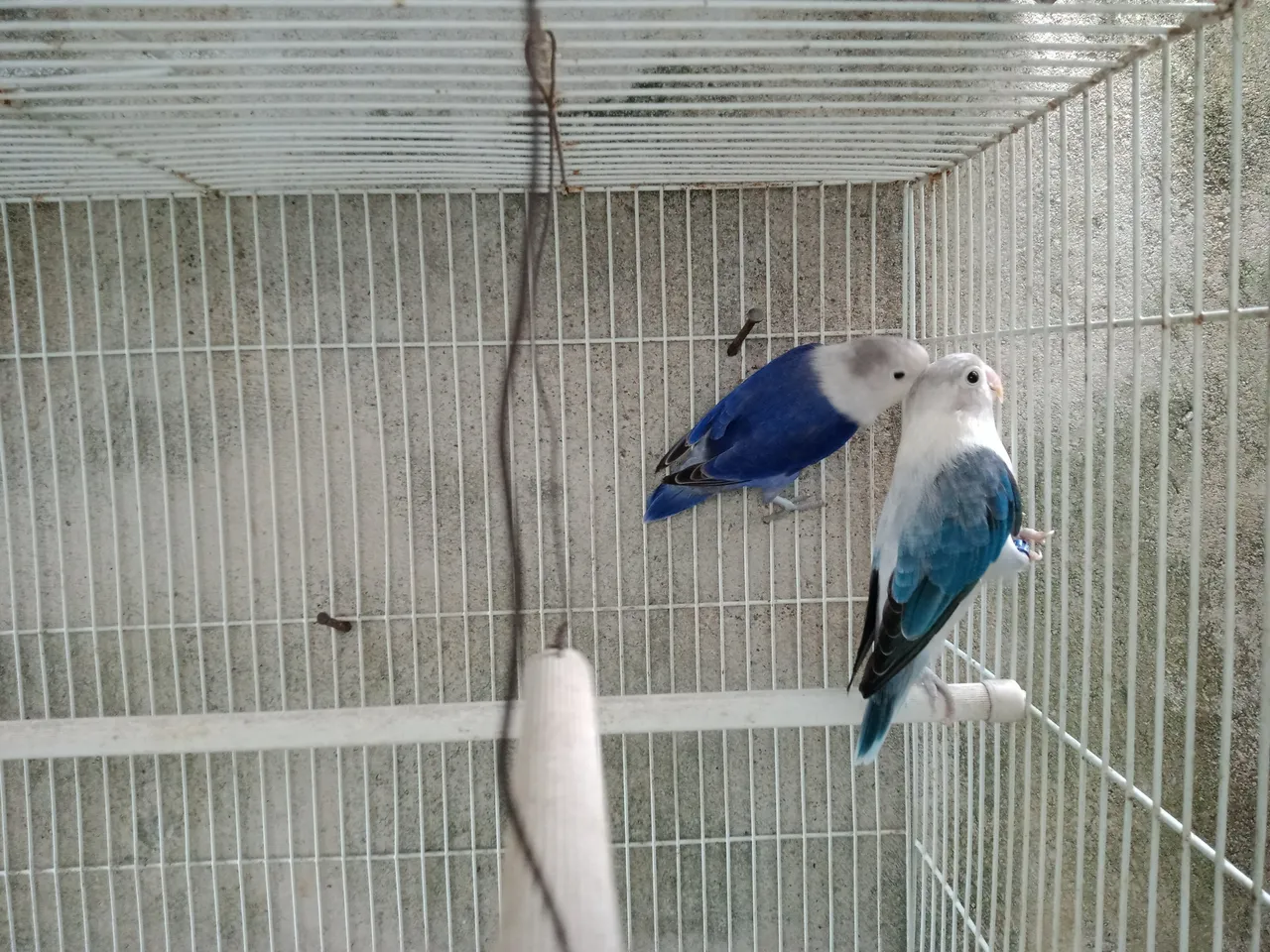
The Blue Masked and Edwing violin blue lovebirds, which belong to the same species, are housed in this aviary. but their wings are a different color. Additionally, I purposefully separate 2 cages for them from other lovebirds so they can play with birds of the same species. On occasion, I also place all of them in one cage so they can get to know one another and experience different types of romantic arousal.


The photos above are genuine, I took with the Realmi C55 smartphone camera.
I appreciate your time, and see you soon.
