
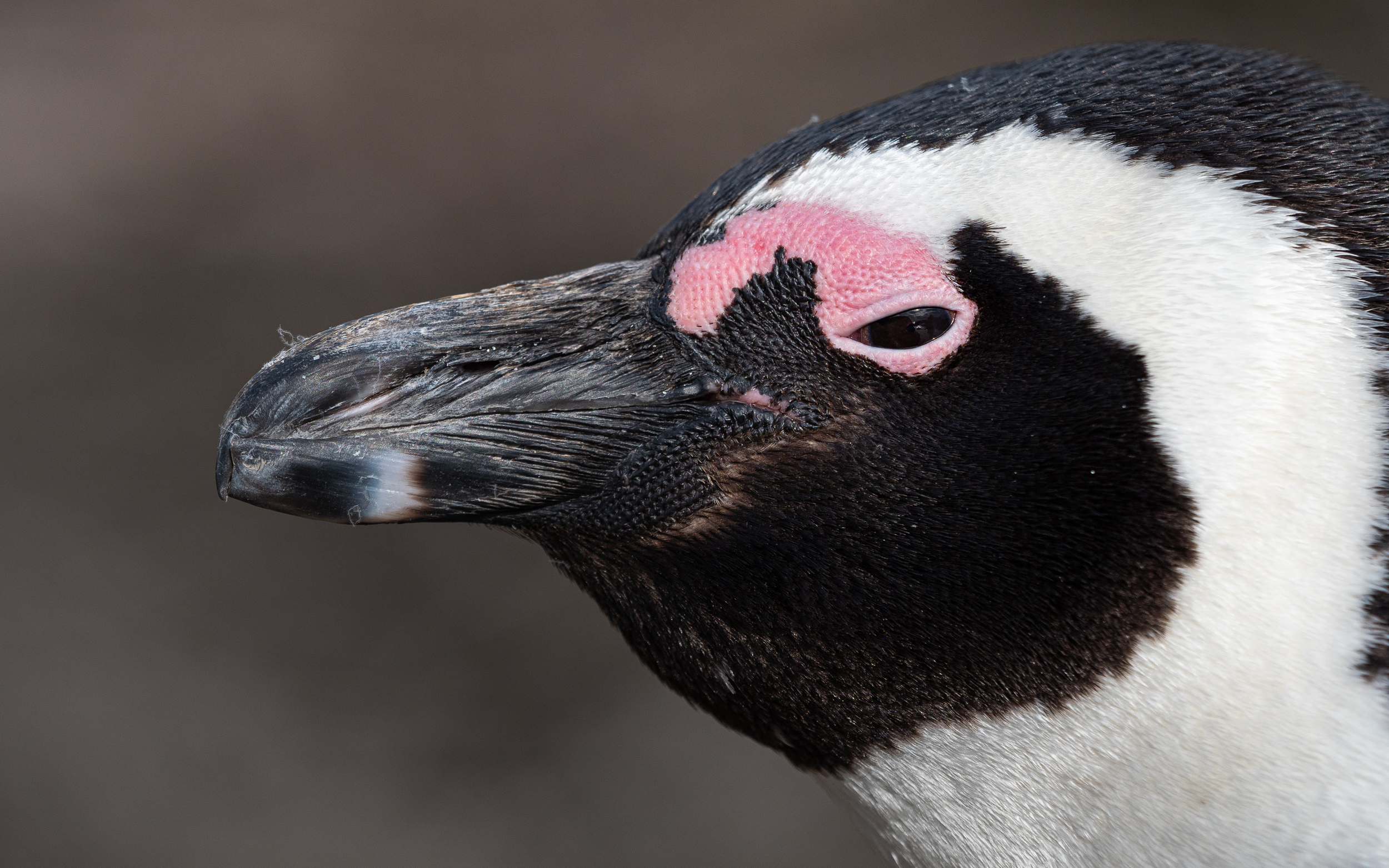
Remembering my travels, I will return today to sunny South Arica. Its flora and fauna are diverse and interesting for those who do not live on this continent, and today I will continue to talk about the colony of African penguin in the Simon's Town, near the city of Cape Town.
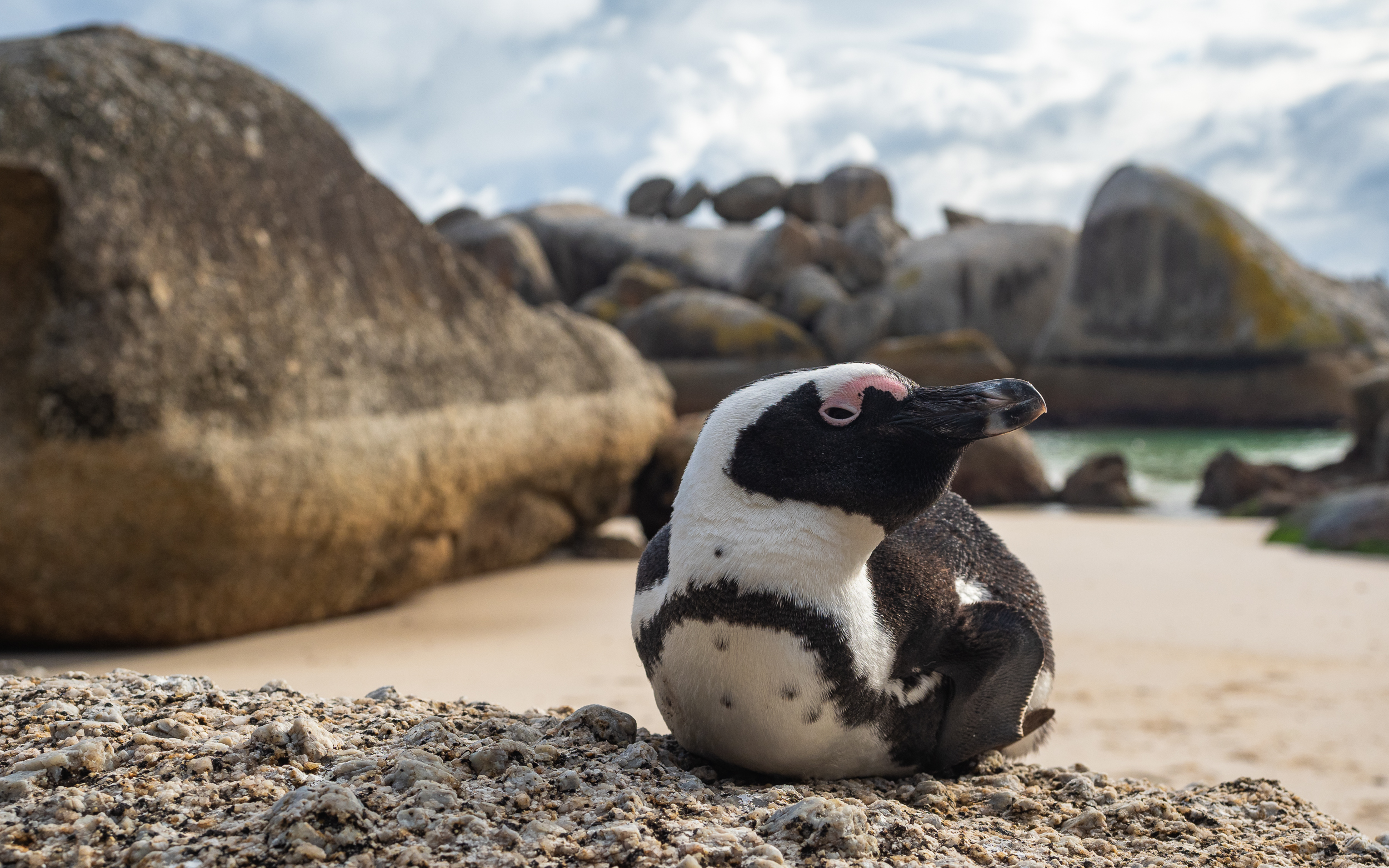
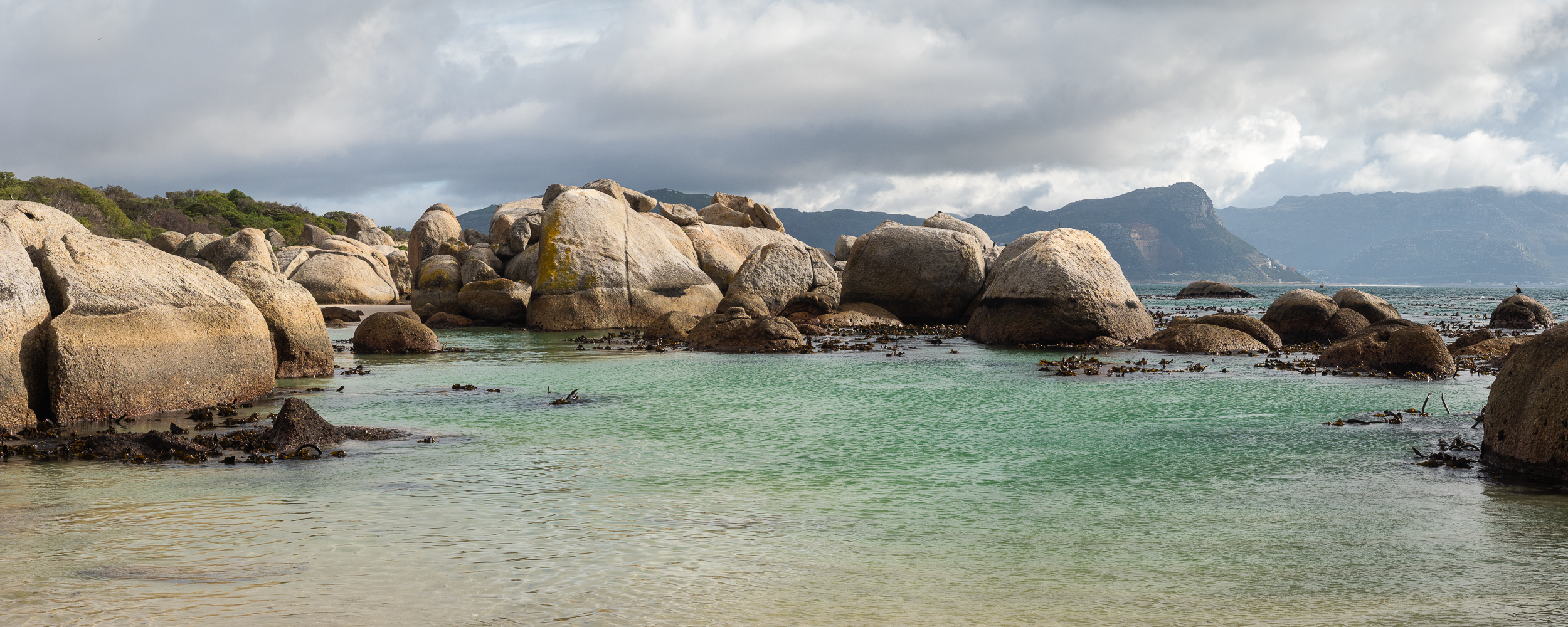
Usually, when talking about this colony of penguins, everyone mentions Boulders Beach, after which the colony itself is named Boulders Penguin Colony. It is a beautiful beach with huge boulders, where you can walk and even swim with the penguins after paying a little entrance fee. I already wrote more about it here.
But the heart of the colony — the place where penguins nest, hatch eggs and chicks — is located a little further, on another beach called Foxy beach.
This is a small sandy beach, to enter which, as well as to the Boulders beach, you need to purchase a ticket, or rather, a ticket bought at the ticket office of one of two beaches is common and is valid for both — buying it once, you can go to the both.
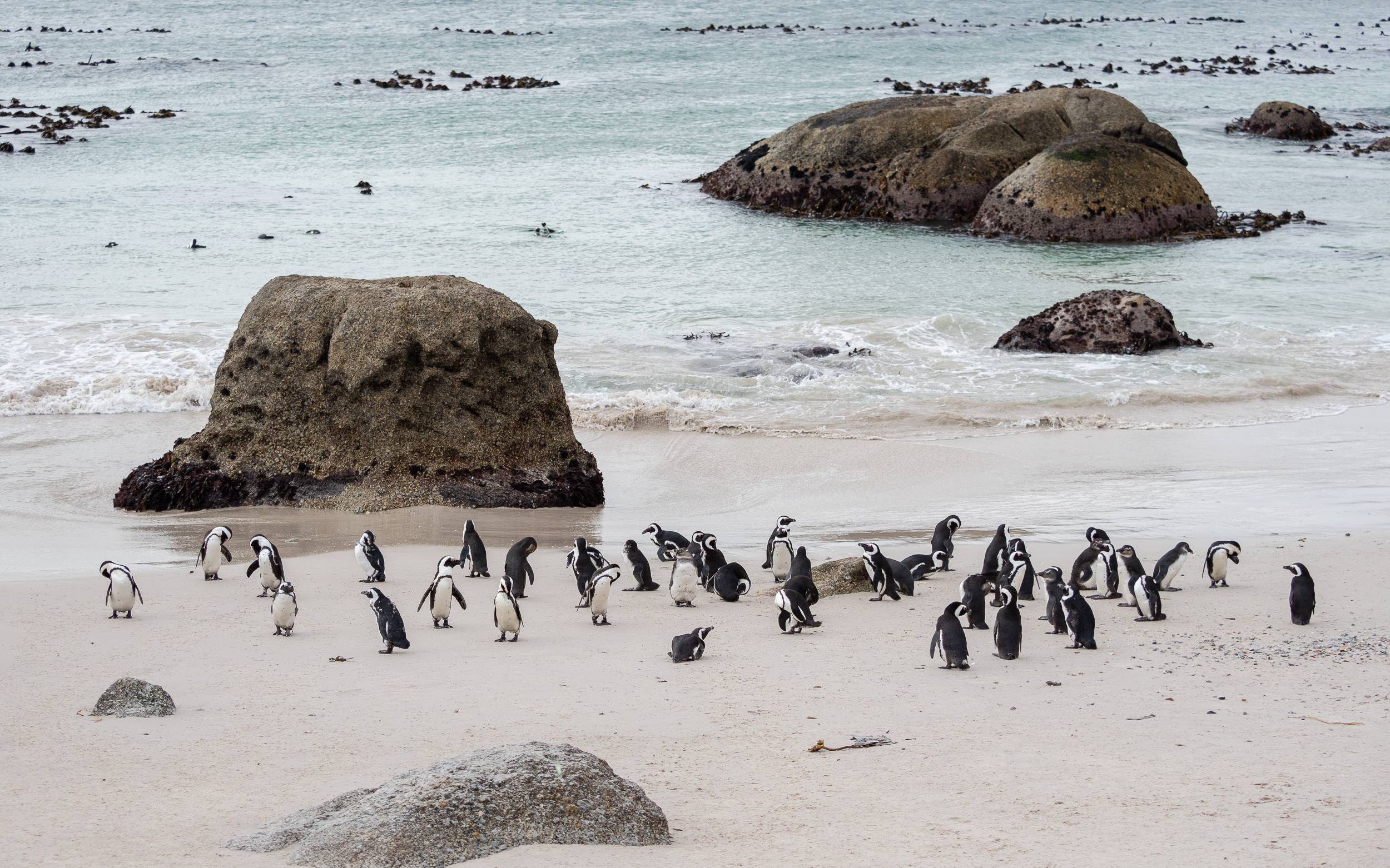
However, Foxy Beach, unlike Boulders Beach, is completely penguin territory, where people can only move along a fenced trail ending with an observation deck, from where we can watch the beach and its inhabitants, but we cannot get off on the sand so as not to disturb them. And this is good, because here, in addition to independent adult birds, there are nesting penguins and defenseless chicks.
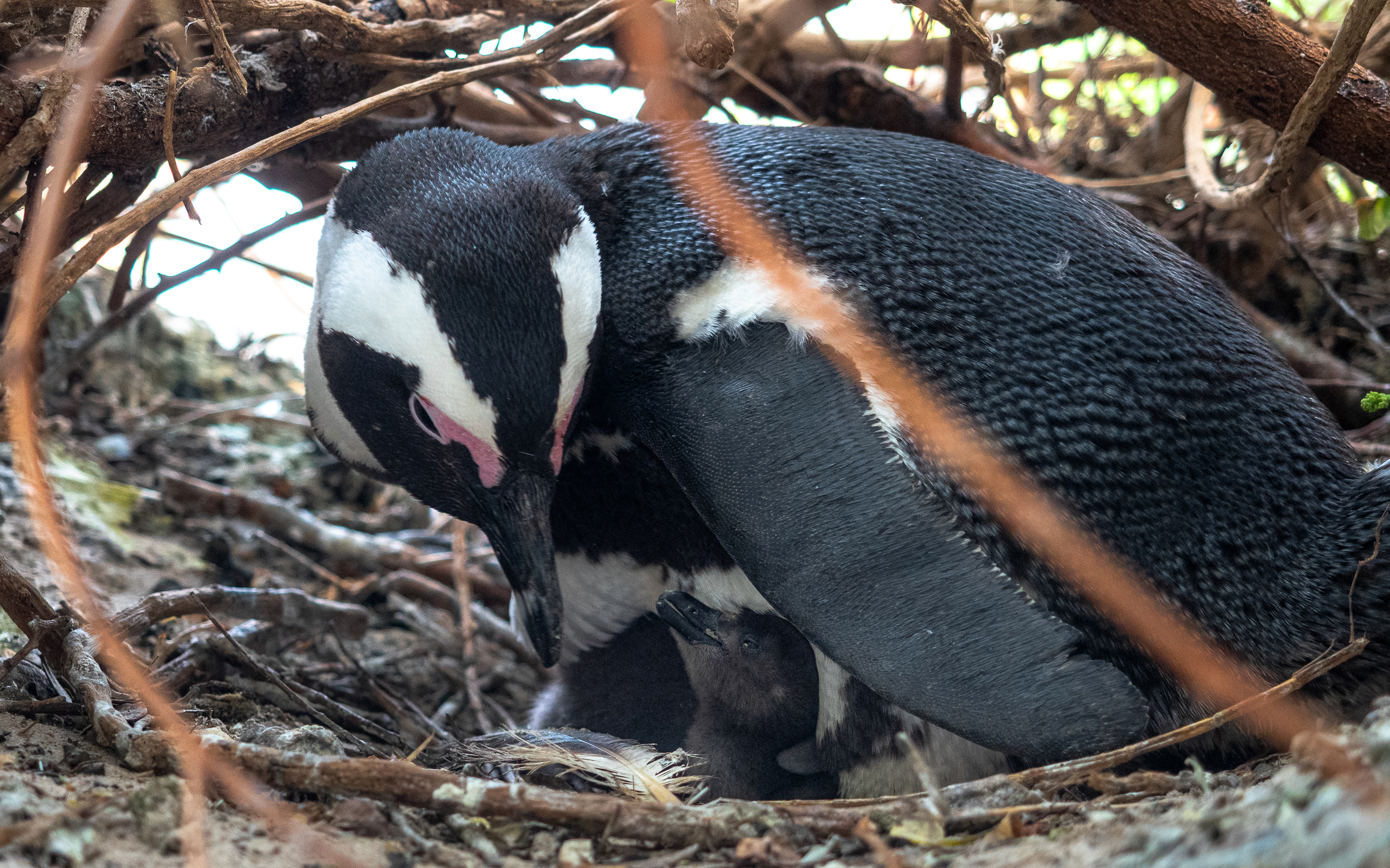
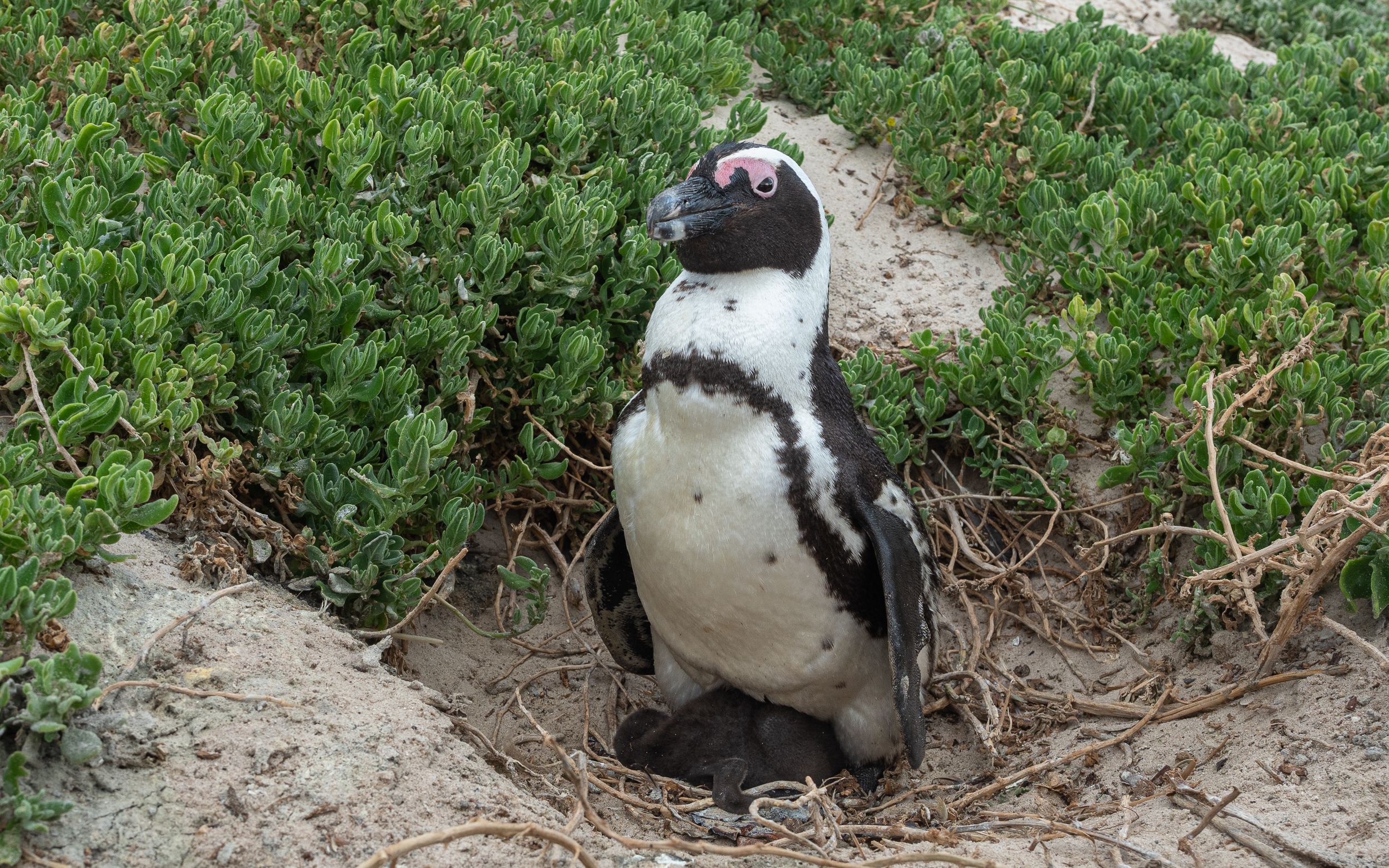
African penguins are interesting and unusual birds. In addition to the obvious fact that they do not live in the snow, but in quite a warm and even sometimes hot climate, it was unexpected for me to see their nests. To lay eggs, they dig small holes in the ground or sand, while a smaller part does it in bushes, the most of them nest right on the beach, just in the sand!
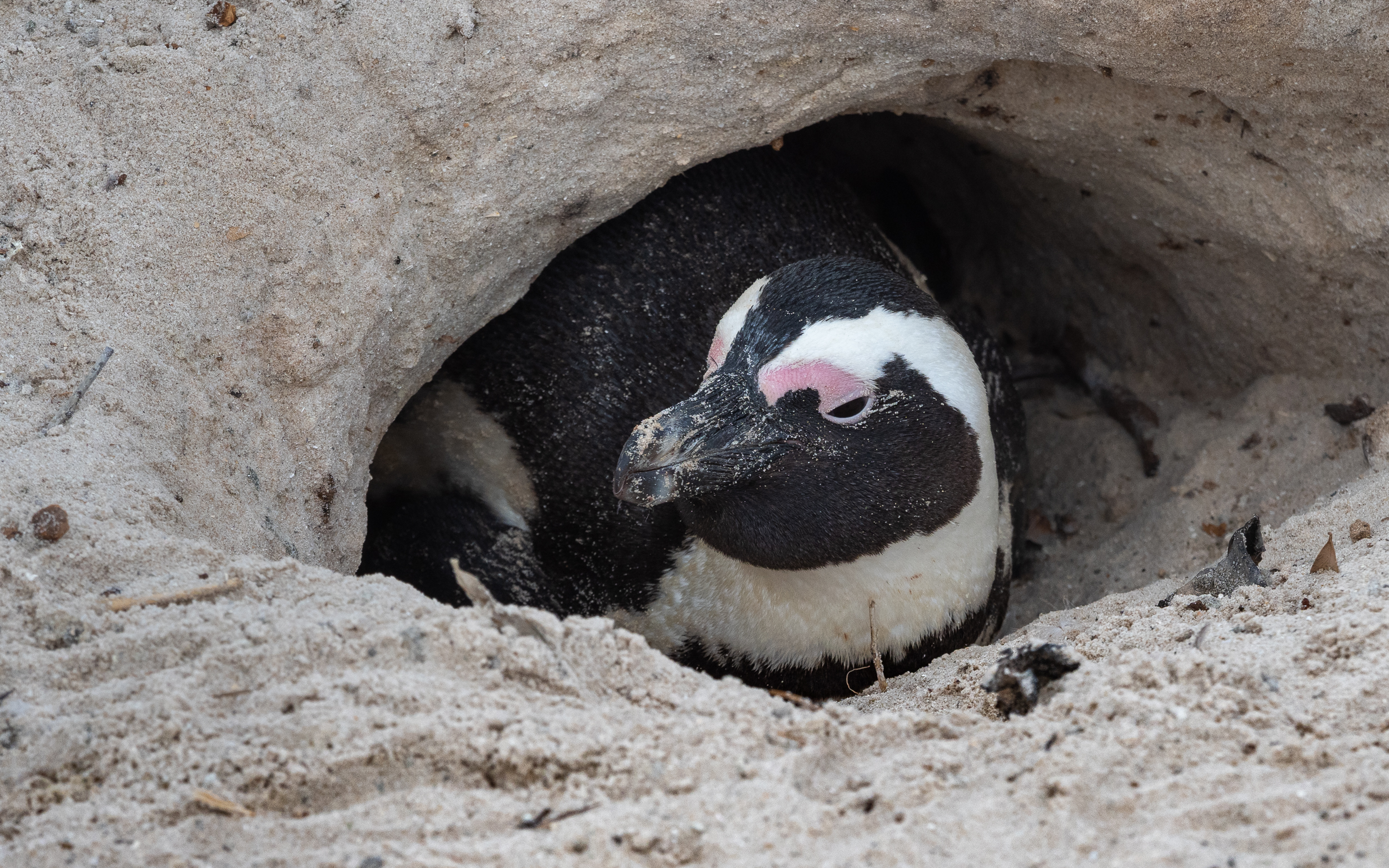
Some penguins dig not just holes in the sand, but small caves or burrows. But here I saw very few of them. And it looks very unusual.
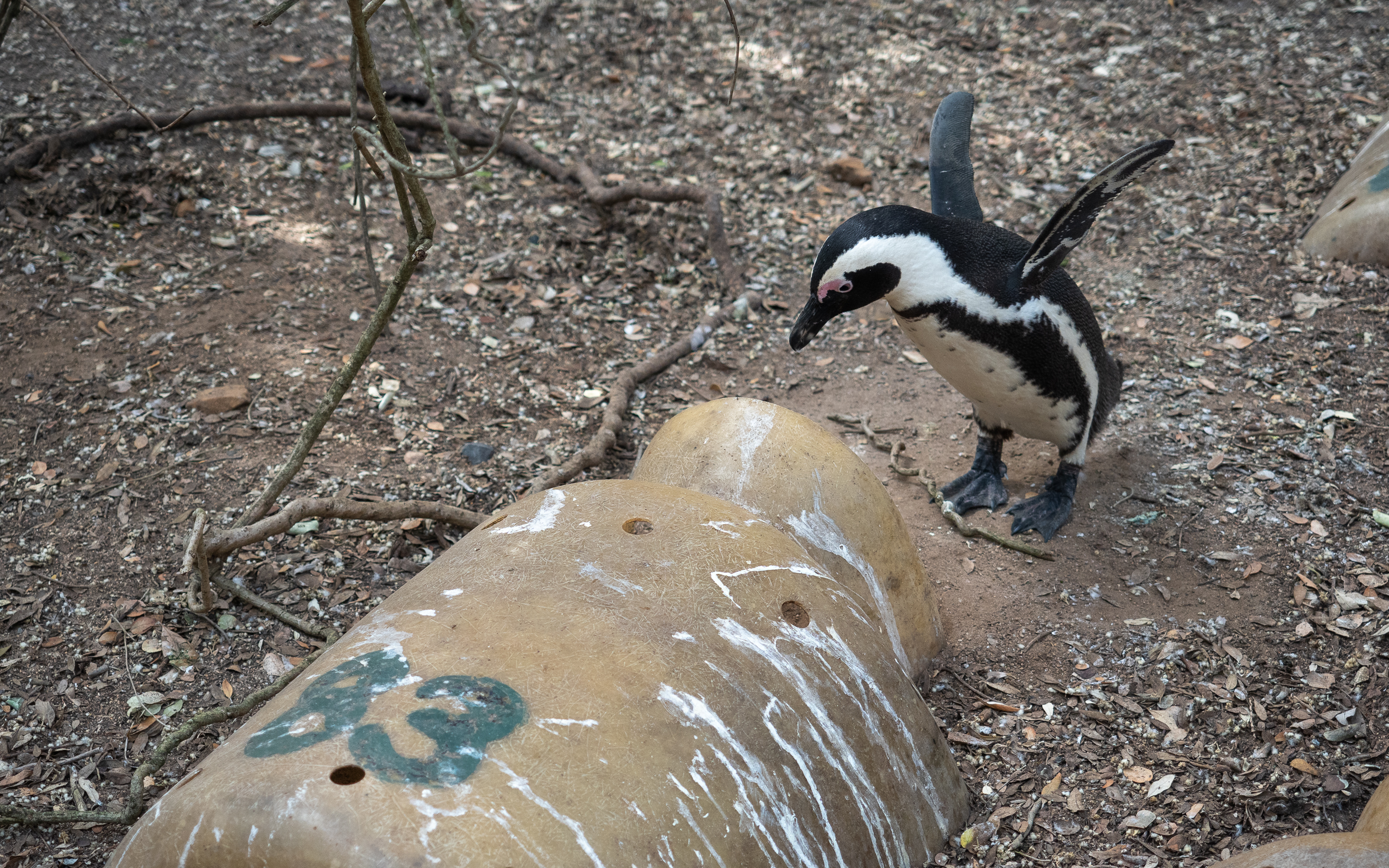
Well, sometimes people who look after the colony put special containers for them, which penguins use as a nest. For example, here is one of these.
The nesting period is several months (for example, May-July, but depending on the location of the colony, the months may be different), when almost all penguins, usually spending most of their time in the water, return to their permanent place on the shore.
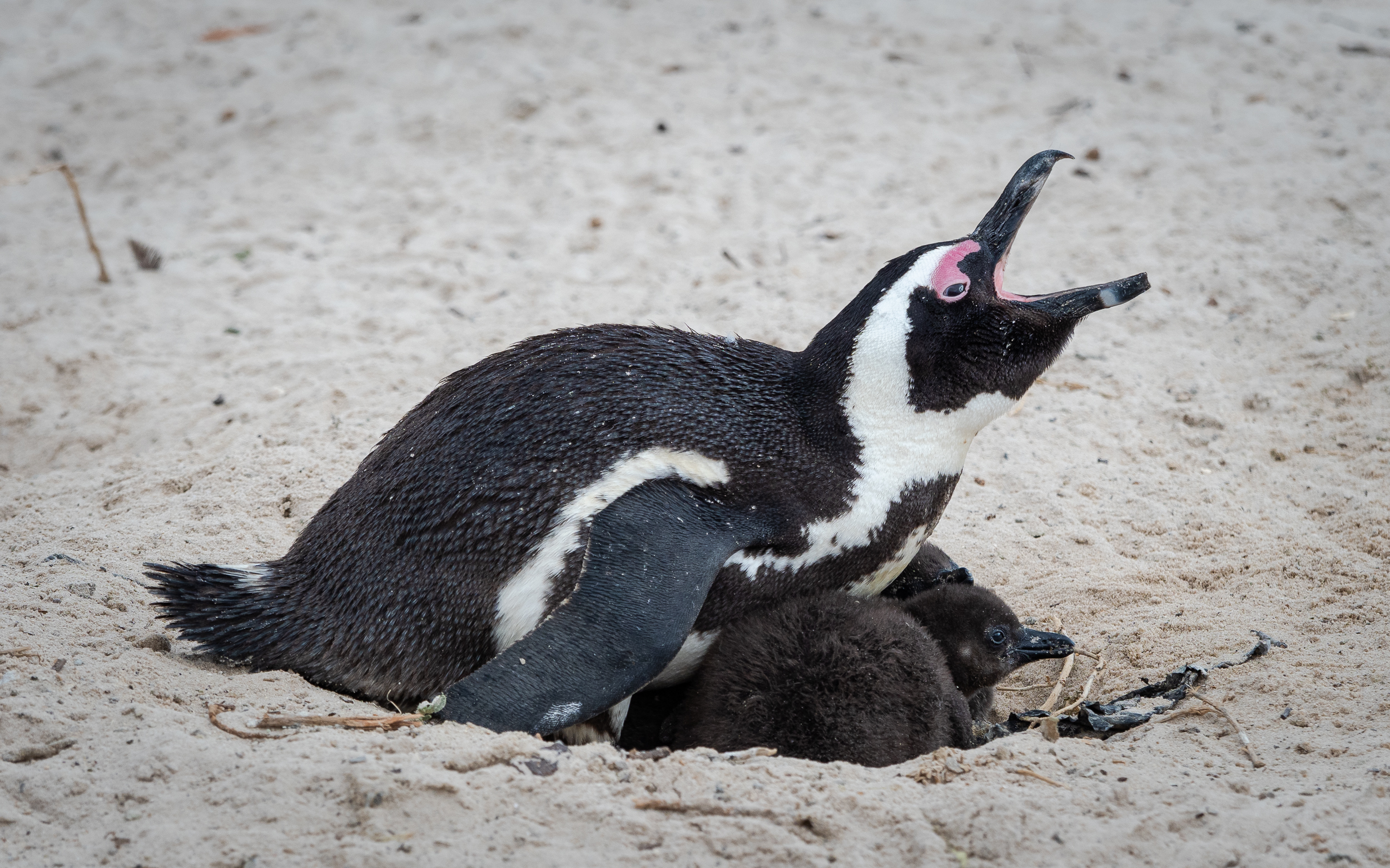
During this period, a fairly large area of Foxy Beach is dotted with figures of lying penguins, incubating eggs or guarding their young chicks in holes in the sand.
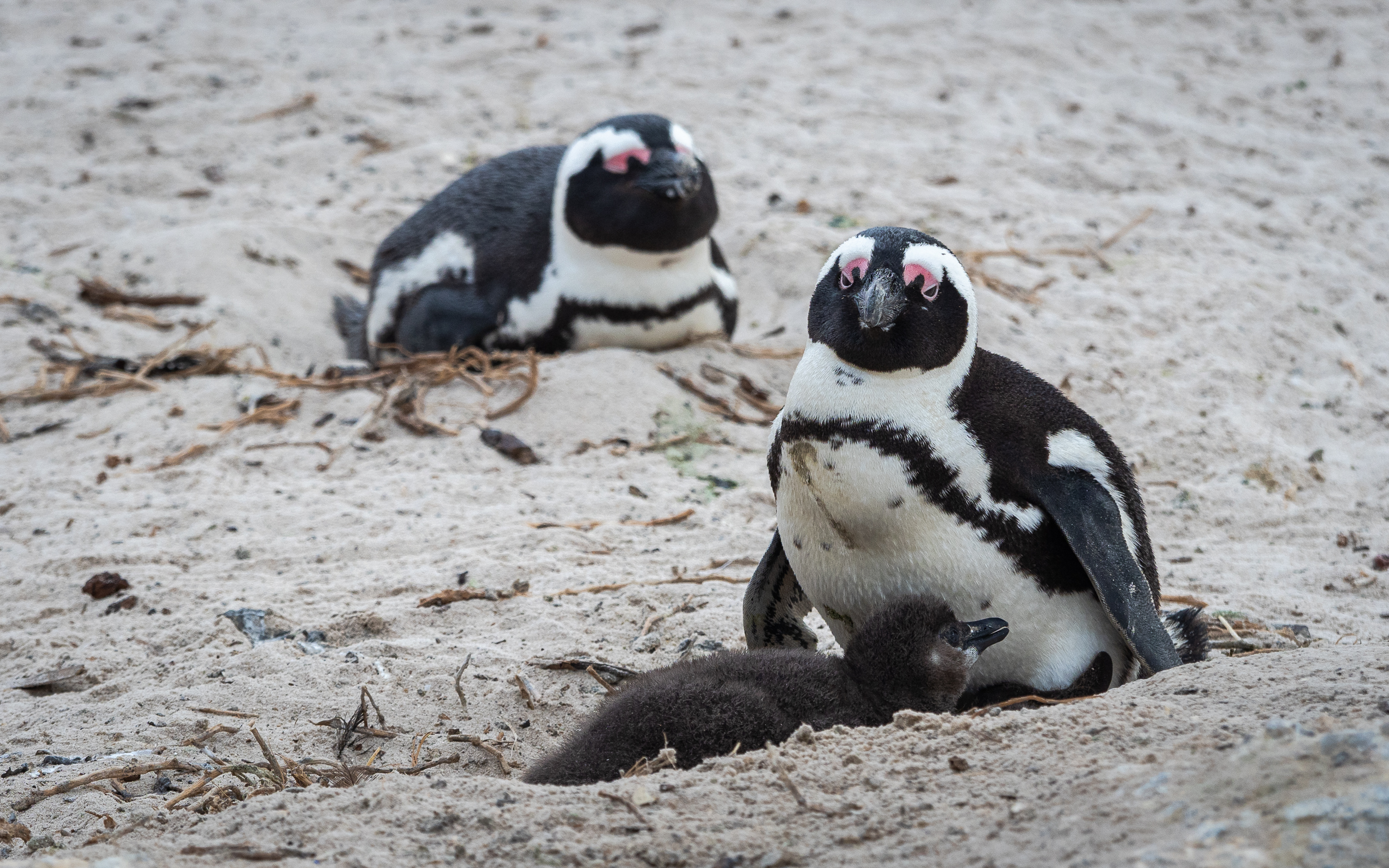
After all, such babies need to be warmed and fed, and protected from possible dangers.
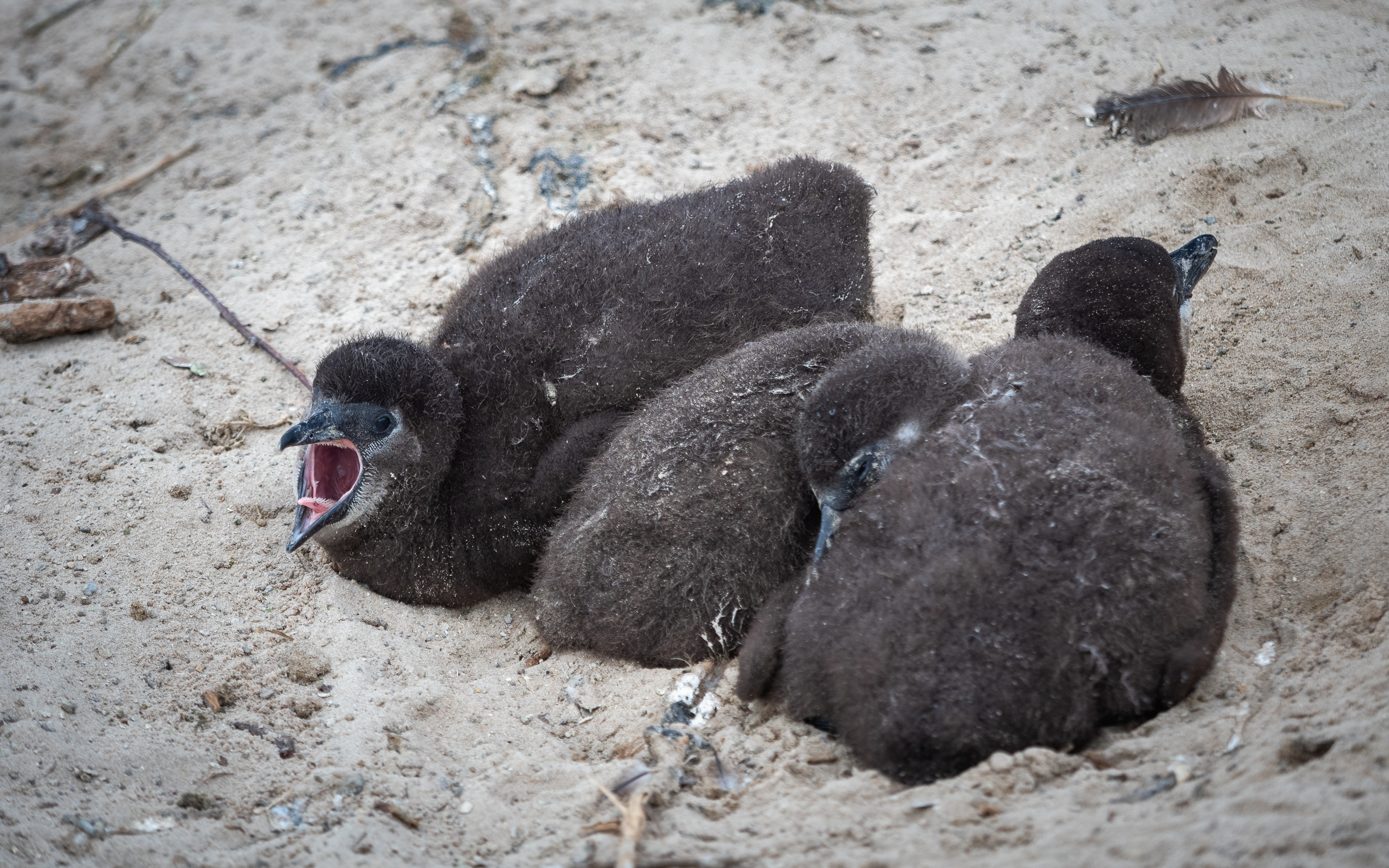
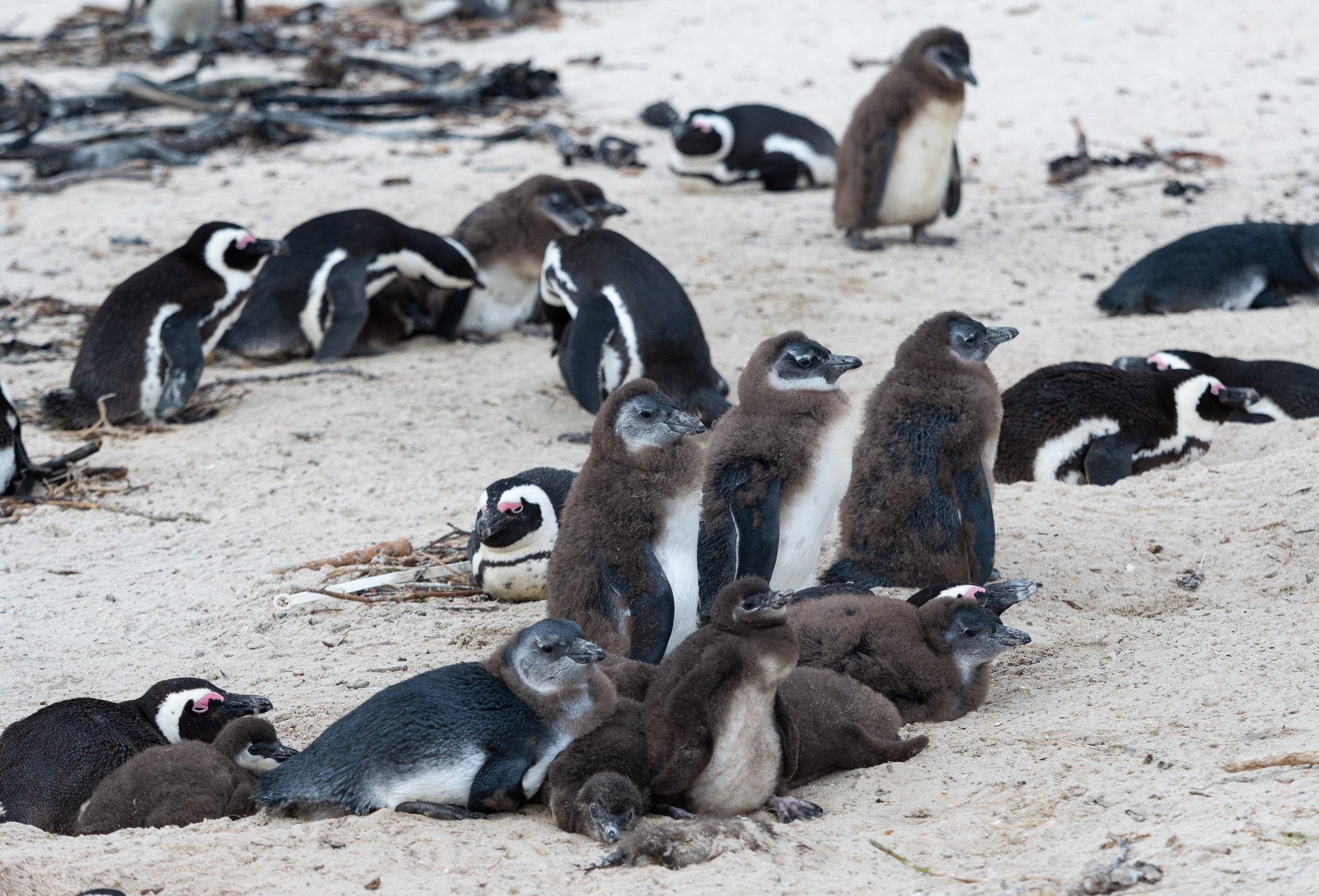
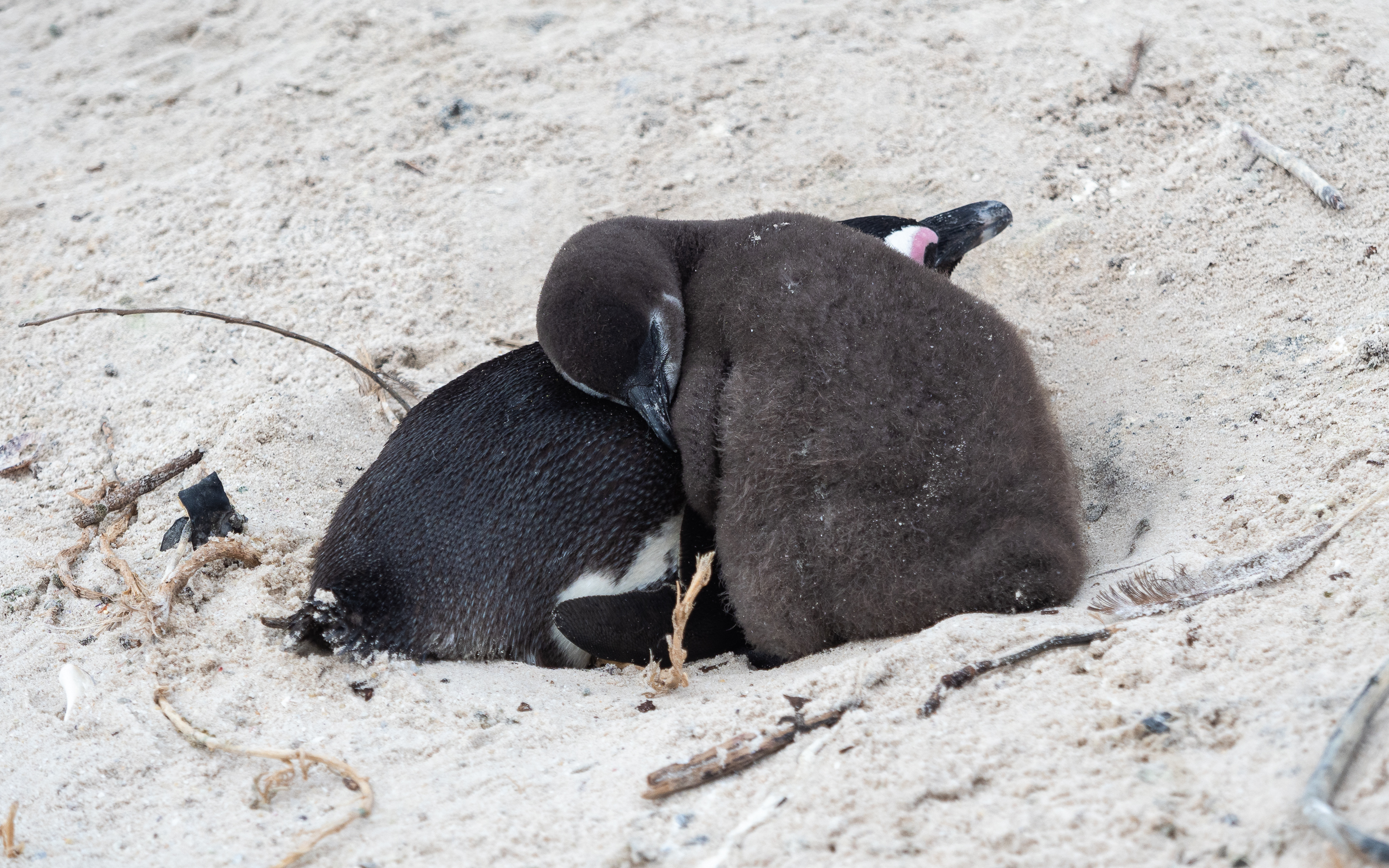
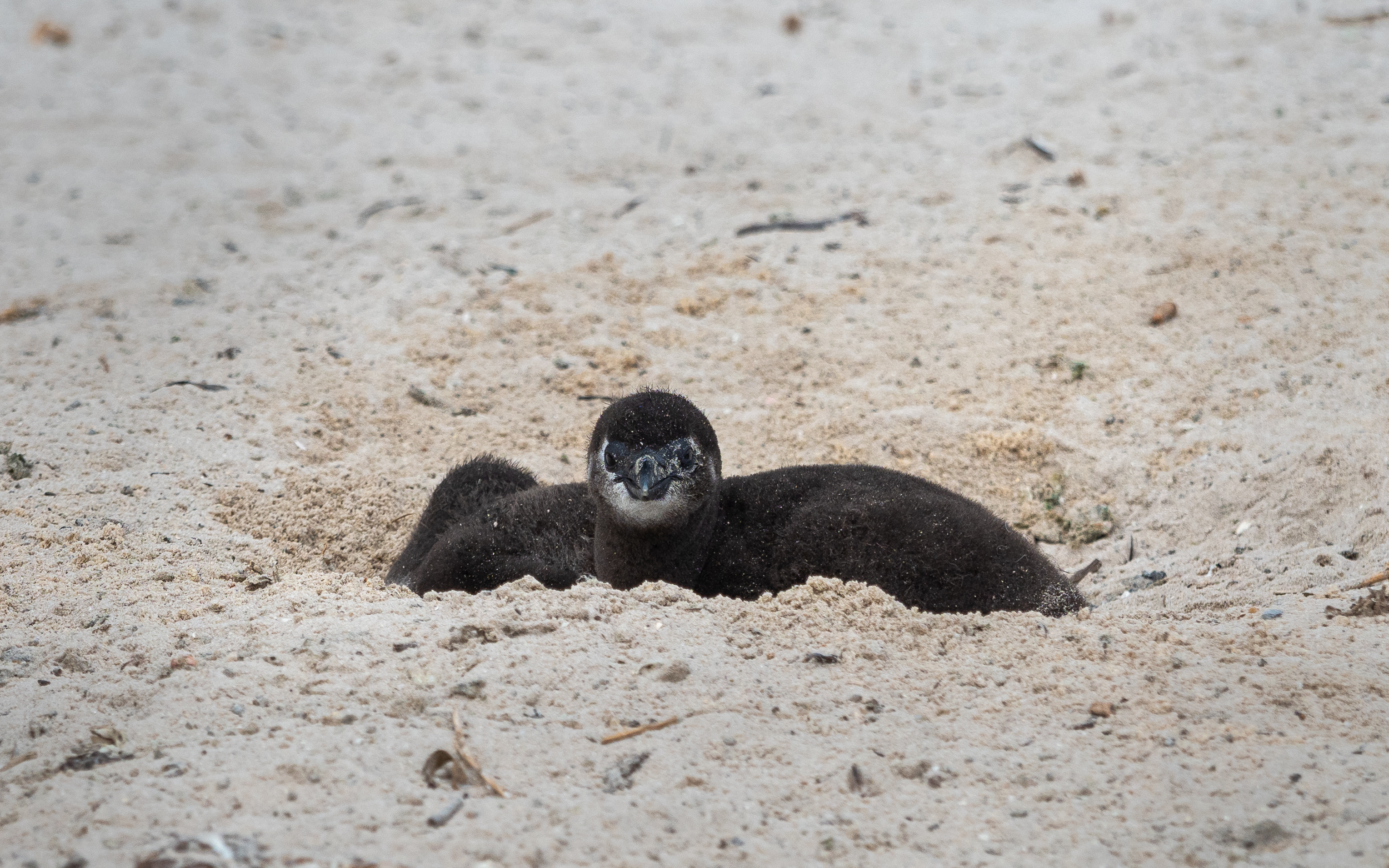
In the nest, they huddle together and even lie on each other — probably this way it is warmer and more comfortable :)
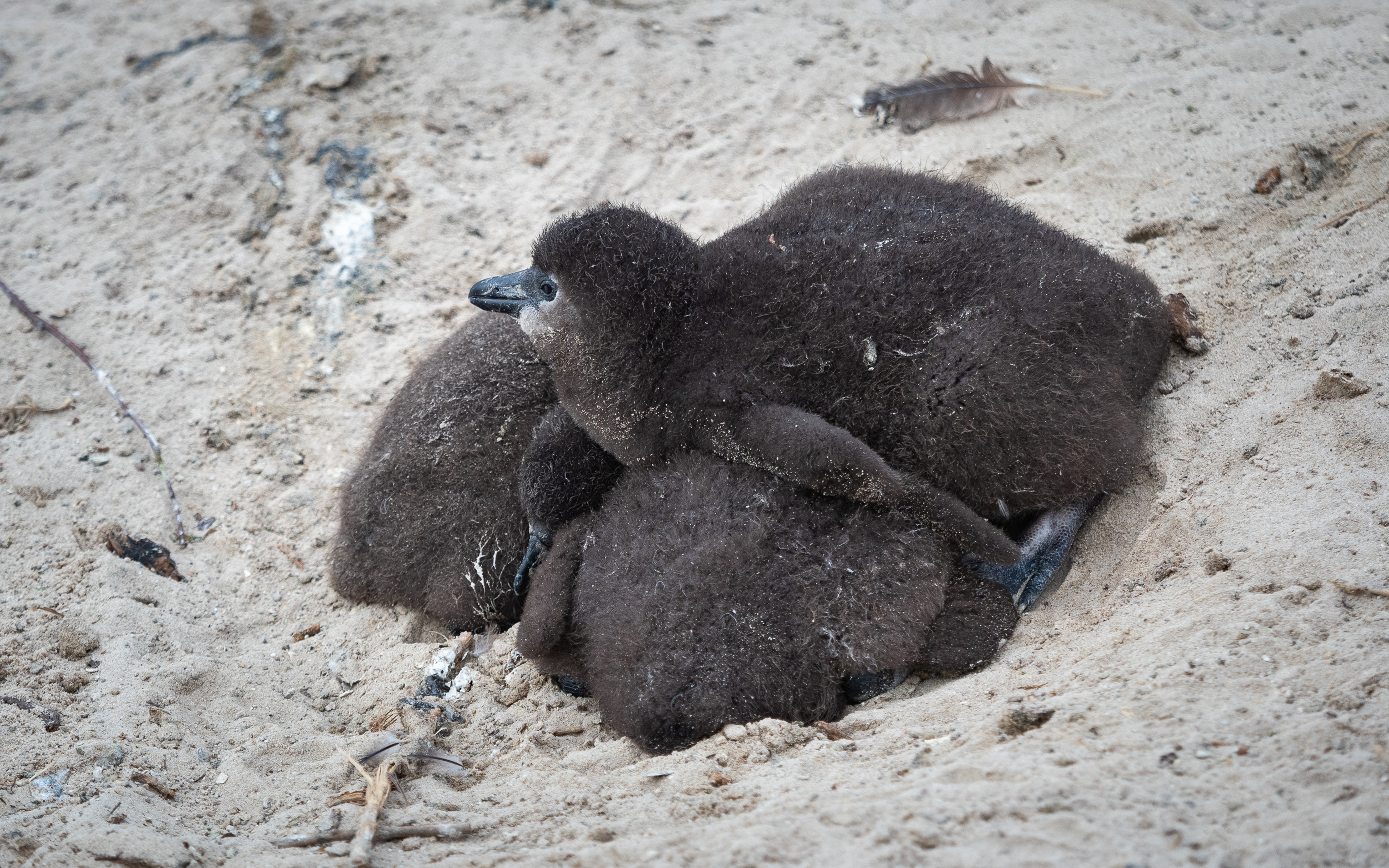
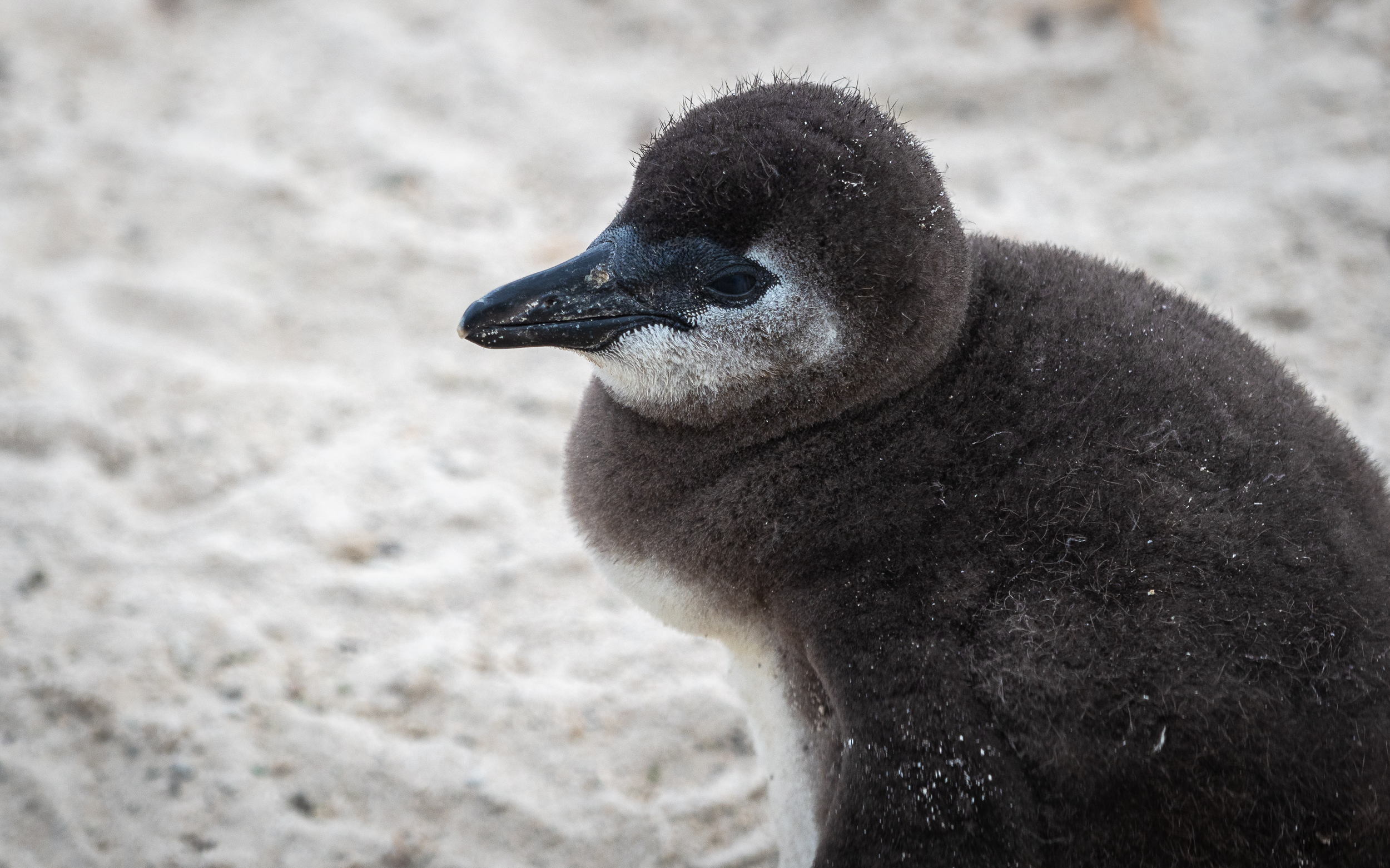
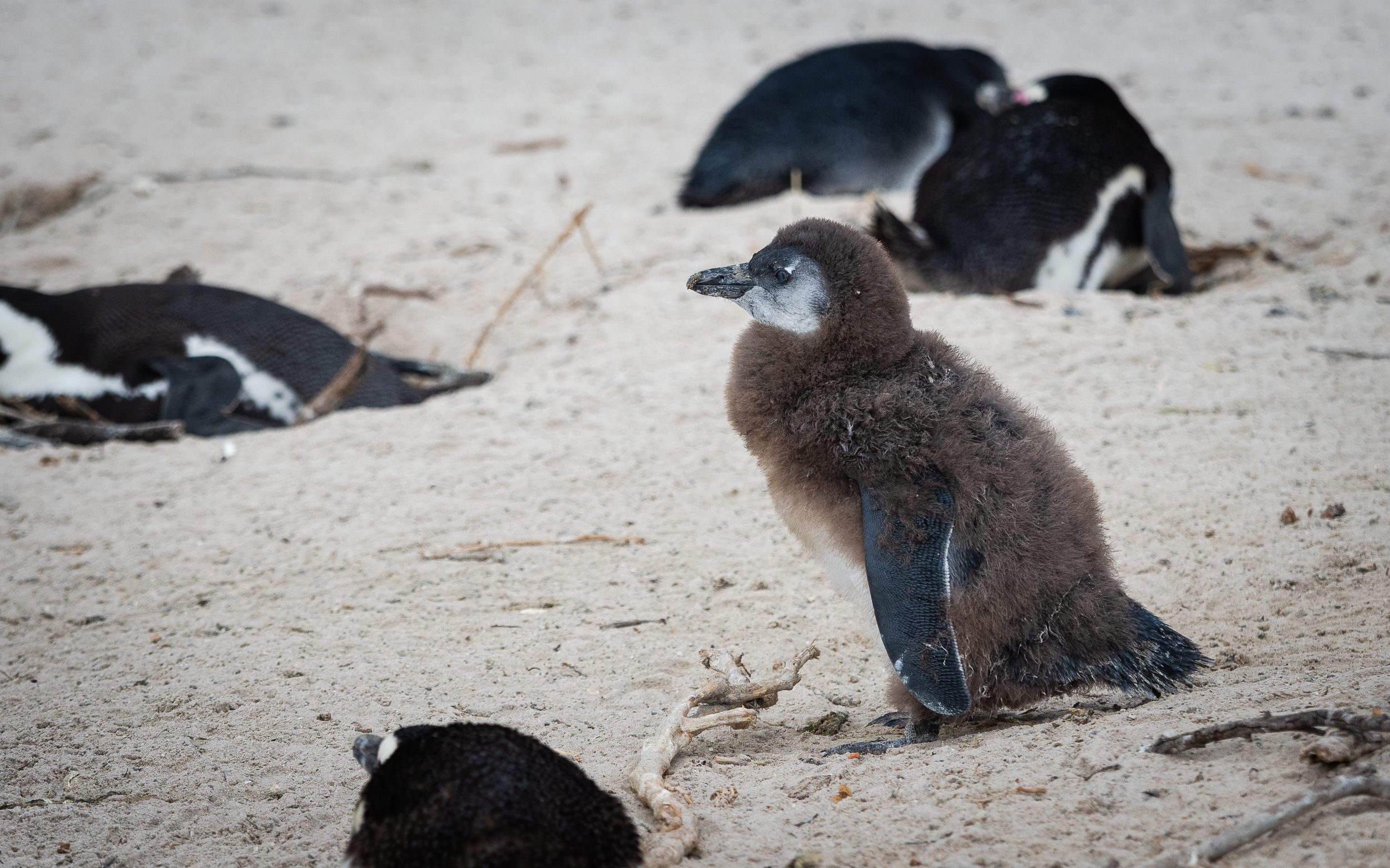
After birth, the chicks do not look very much like adult penguins: they are covered with brown down, very voluminous. I think it warms the babies well, but it is clearly not suitable for staying in the water. Therefore, for the first few months the chicks do not get there.

By the end of childhood, brown down is replaced by white and gray-black-blue feathers, which are already suitable for swimming in water.
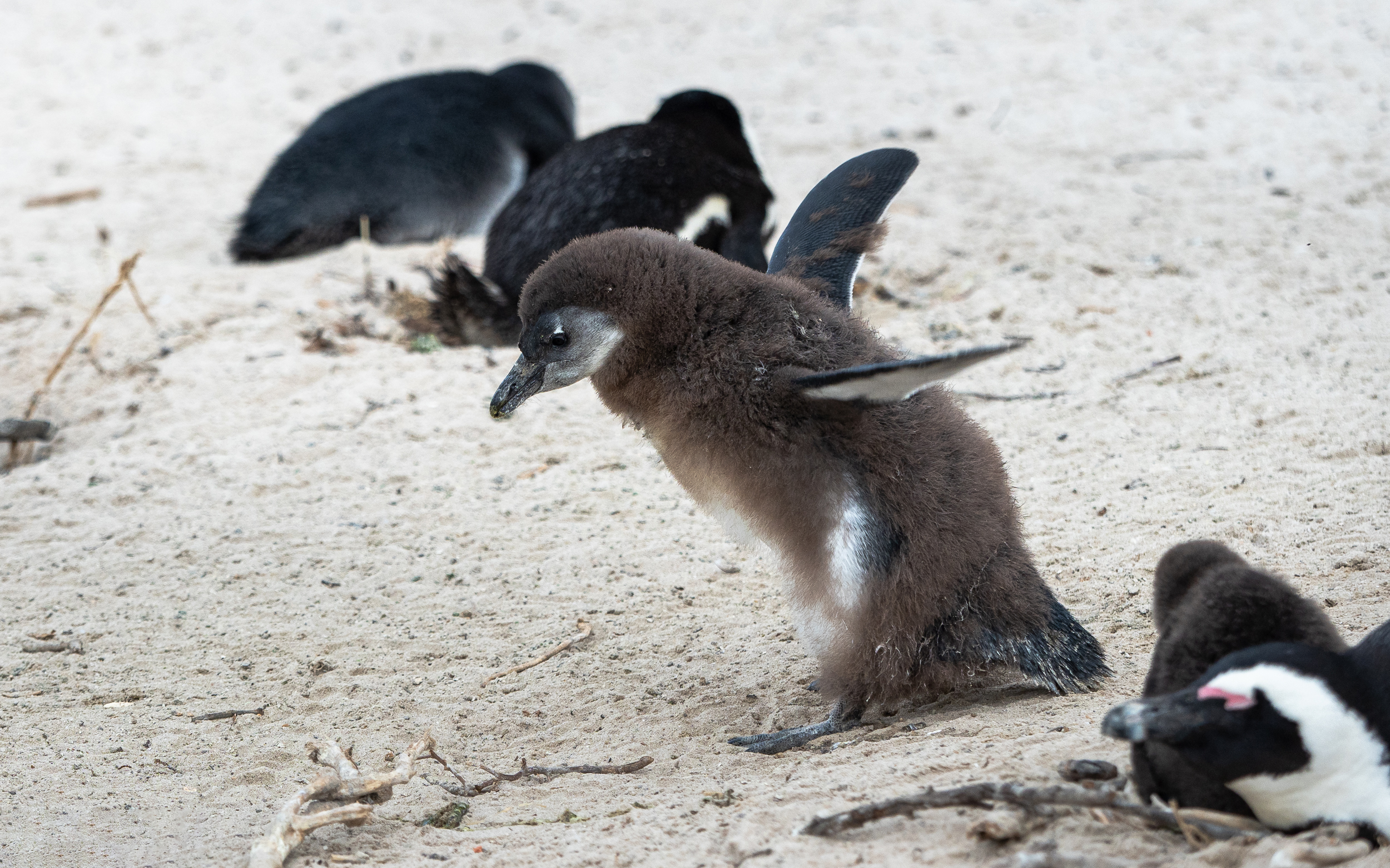
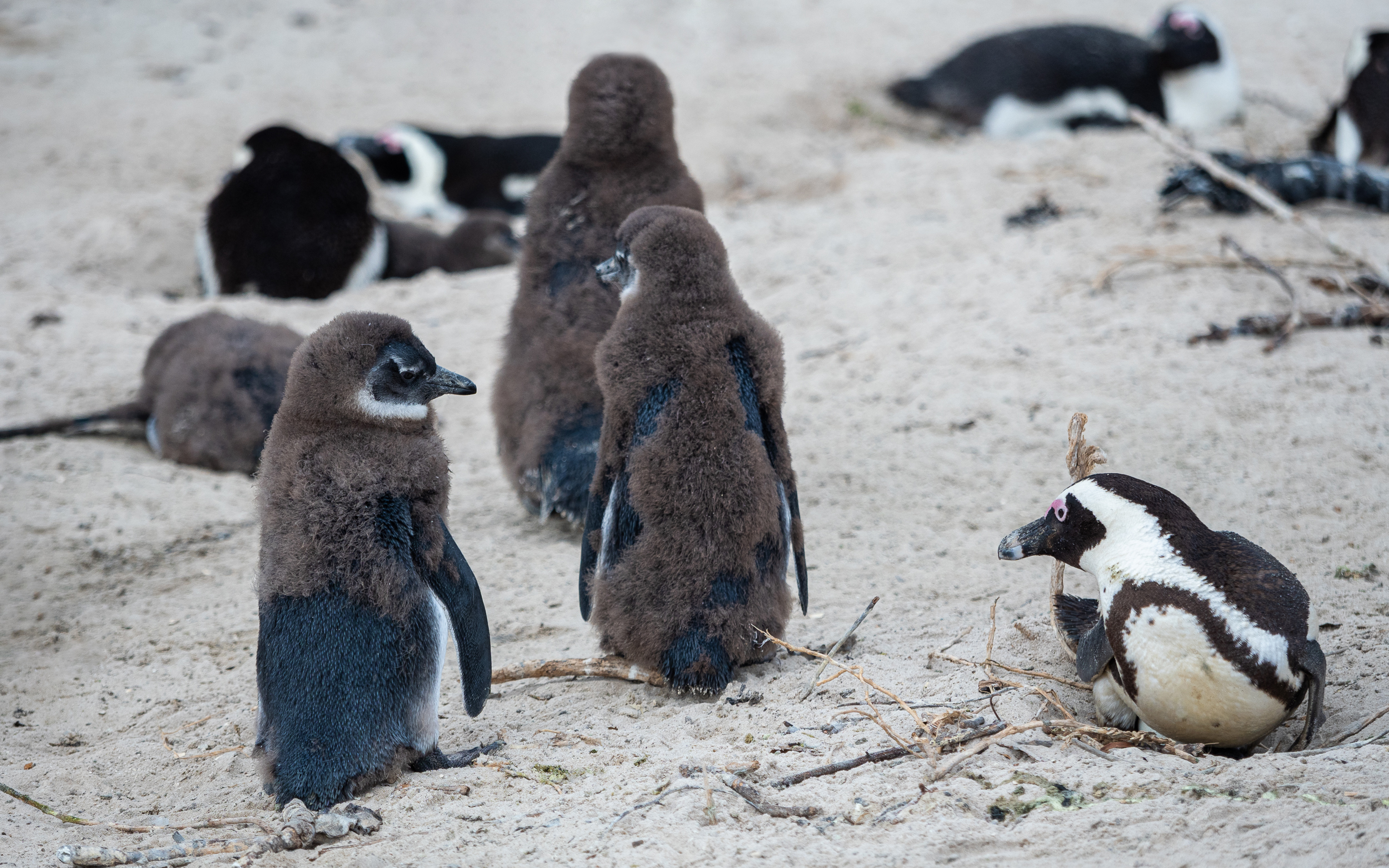
Such half-fluffy penguins, which have not yet completely replaced baby down, look pretty funny.
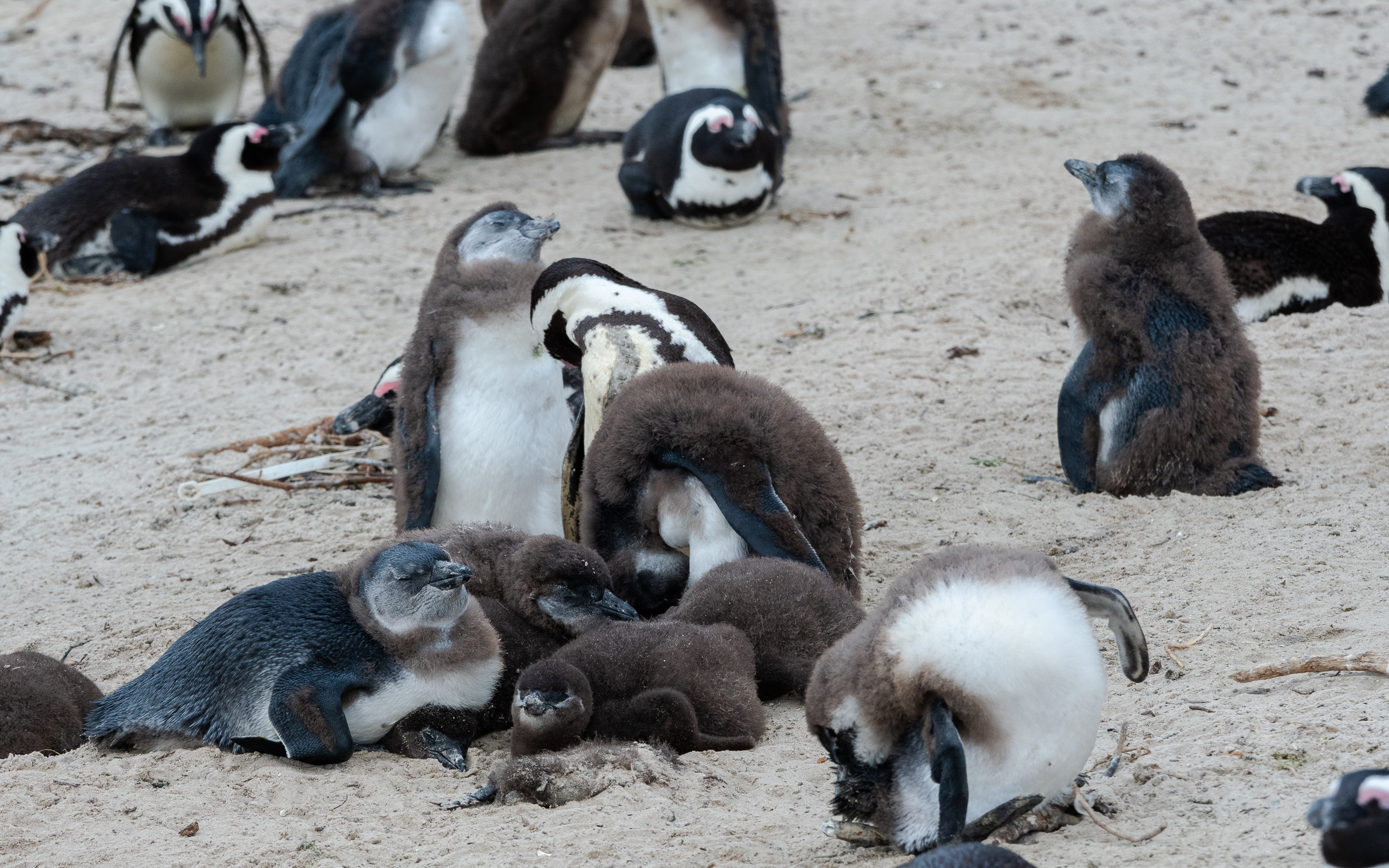
Here is quite a large and well-fed chick still completely in baby brown down, and next to it there are chicks of the same size, but already almost fledged.
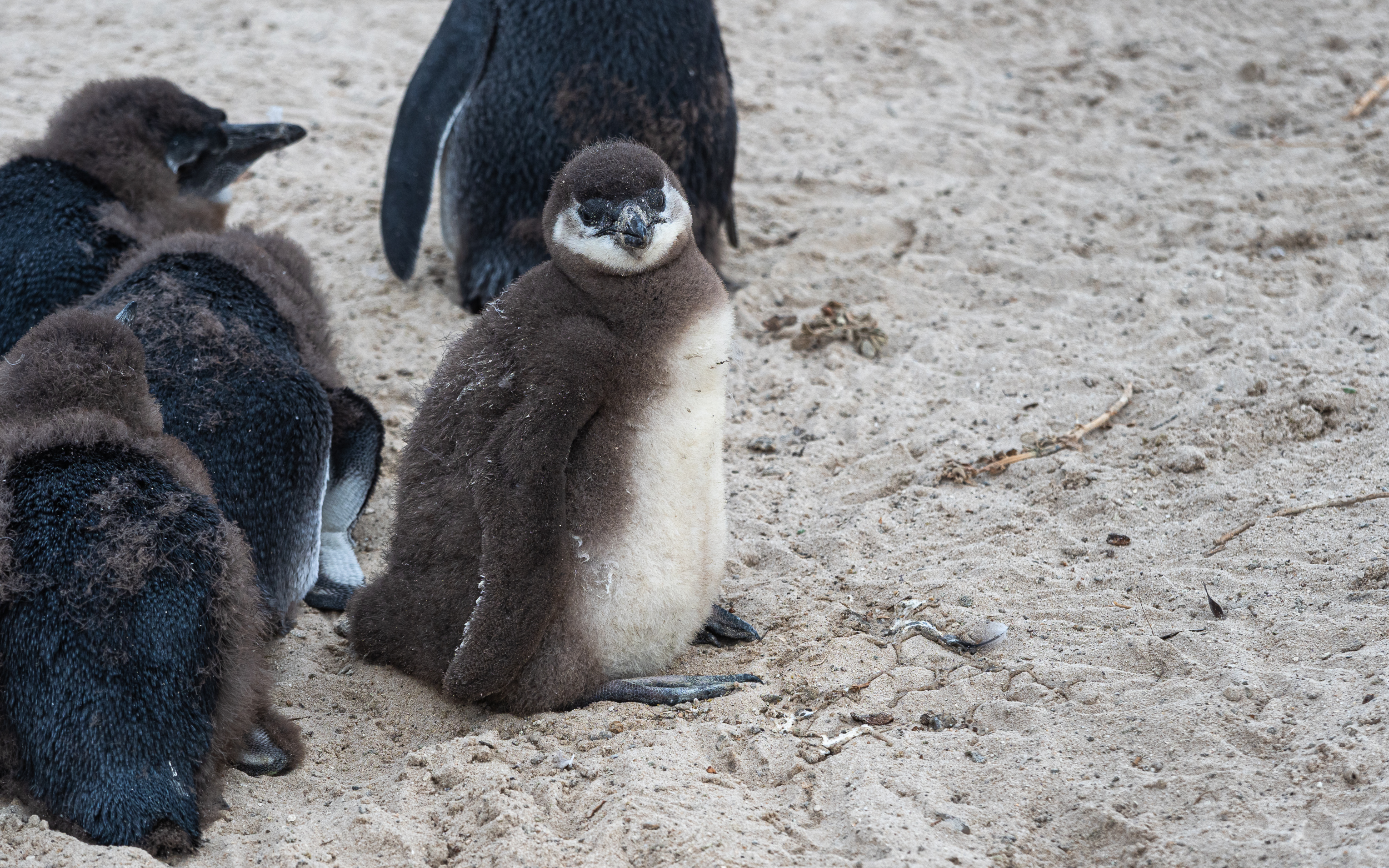
It's funny that at the same time there are penguins, still hatching eggs, and small chicks, and almost adult chicks.
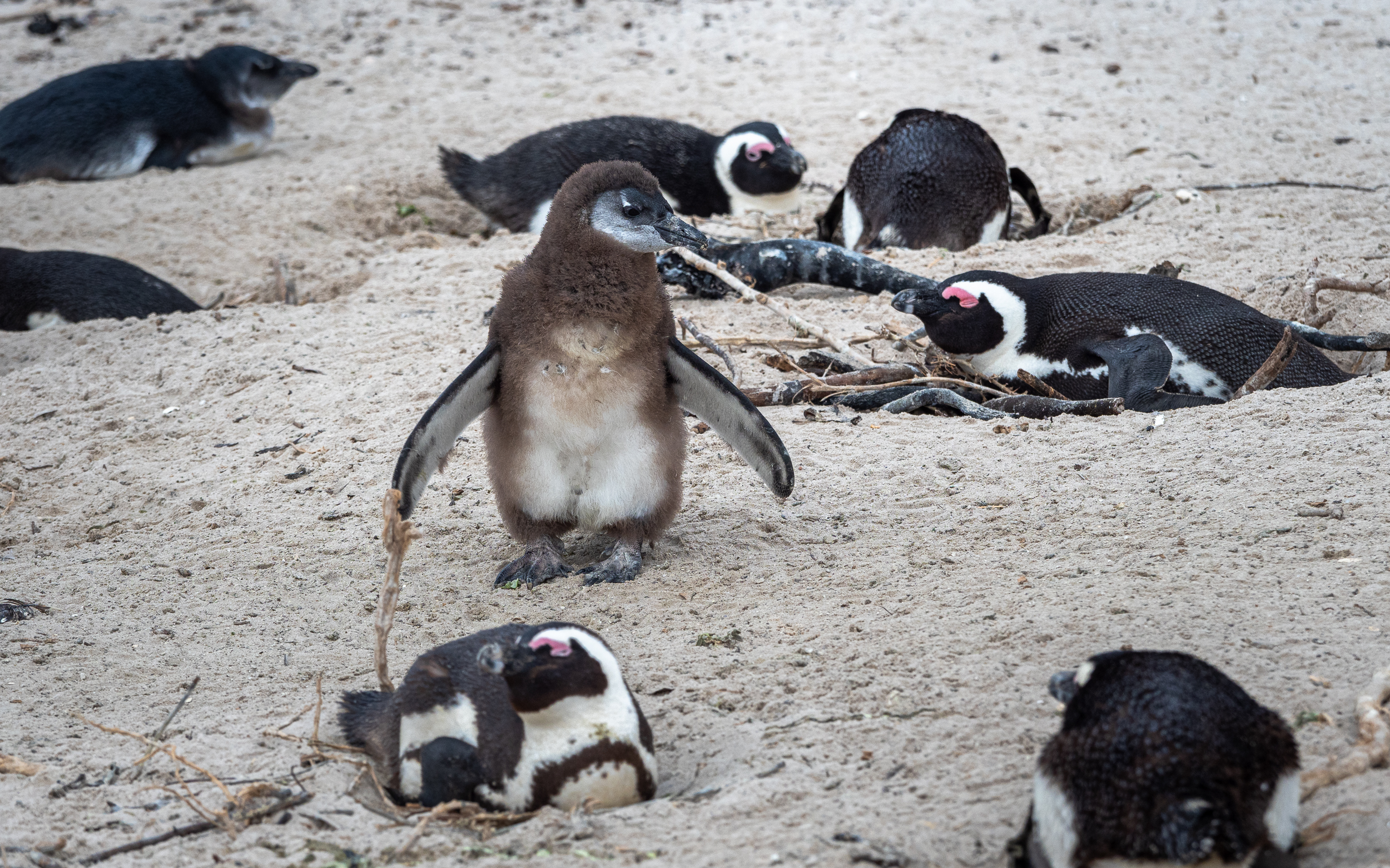
A real kindergarten with children of different ages! Well, with adults looking after them, of course :)
The first reproduction begins at the age of about four or five years with a life expectancy of about 10-30 years.
By the way, African penguins form quite persistent pairs, most of the pairs (although not all) continue to stay together and have offspring together from year to year.
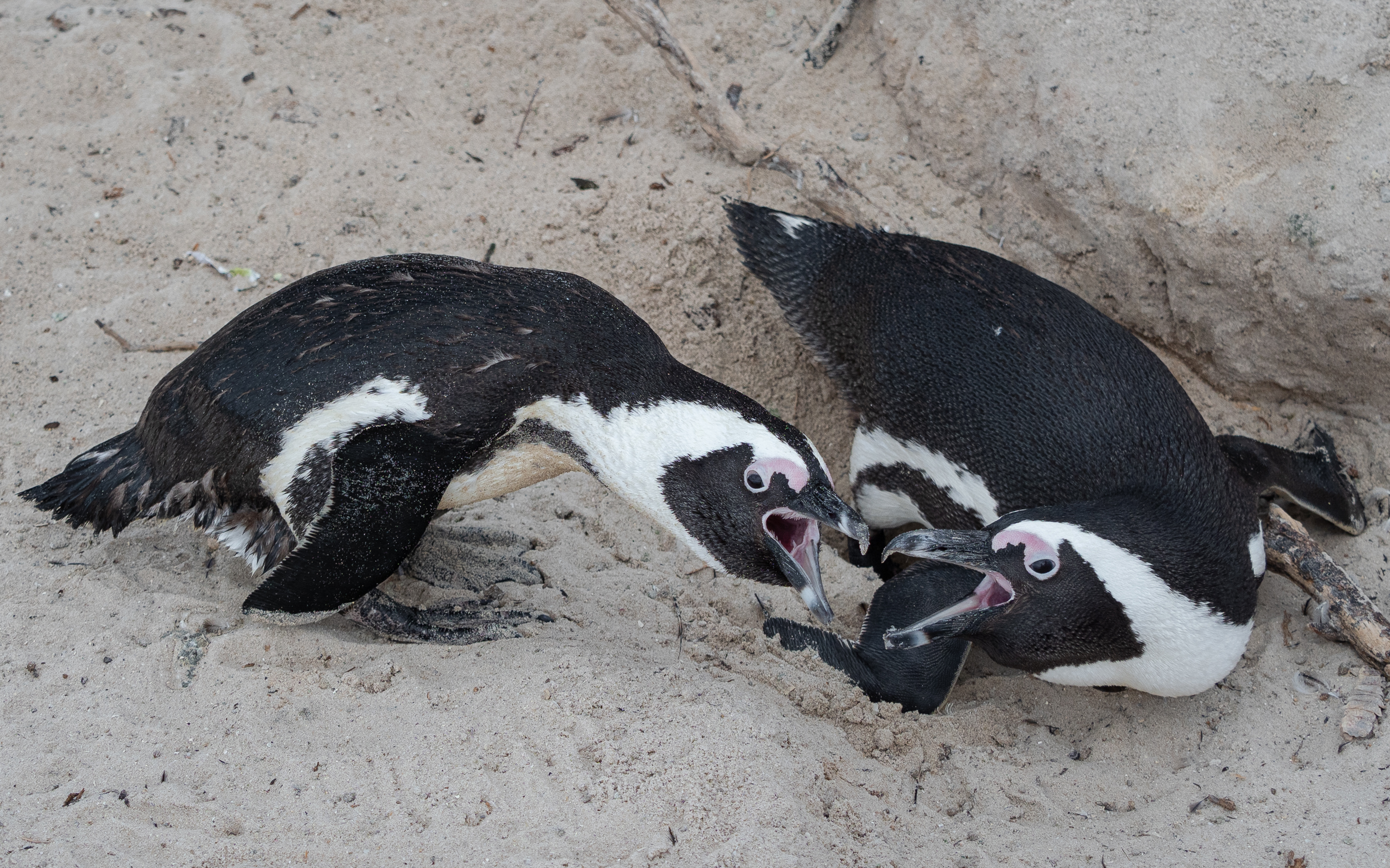
Both the male and the female take turns incubating the laid eggs for about 40 days, without leaving the nest empty — while one is hunting, the other is in the nest. The same continues for several weeks after the chicks hatch.
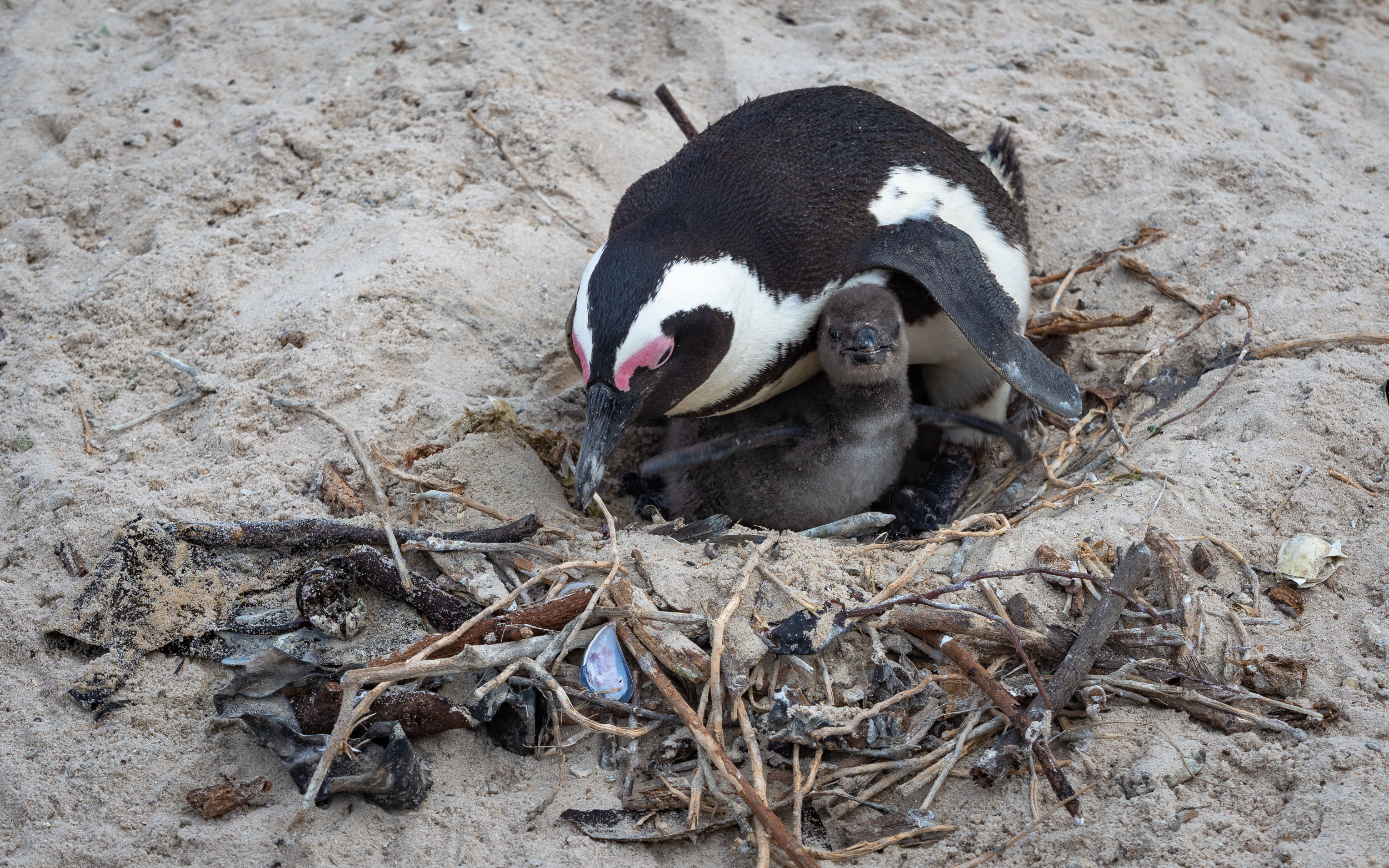
After this period, both parents go to sea for food for themselves and their children (they feed on fish, sometimes squid and crustaceans), leaving the grown chicks alone, so they stray into groups, which are called nurseries - together they are safer.
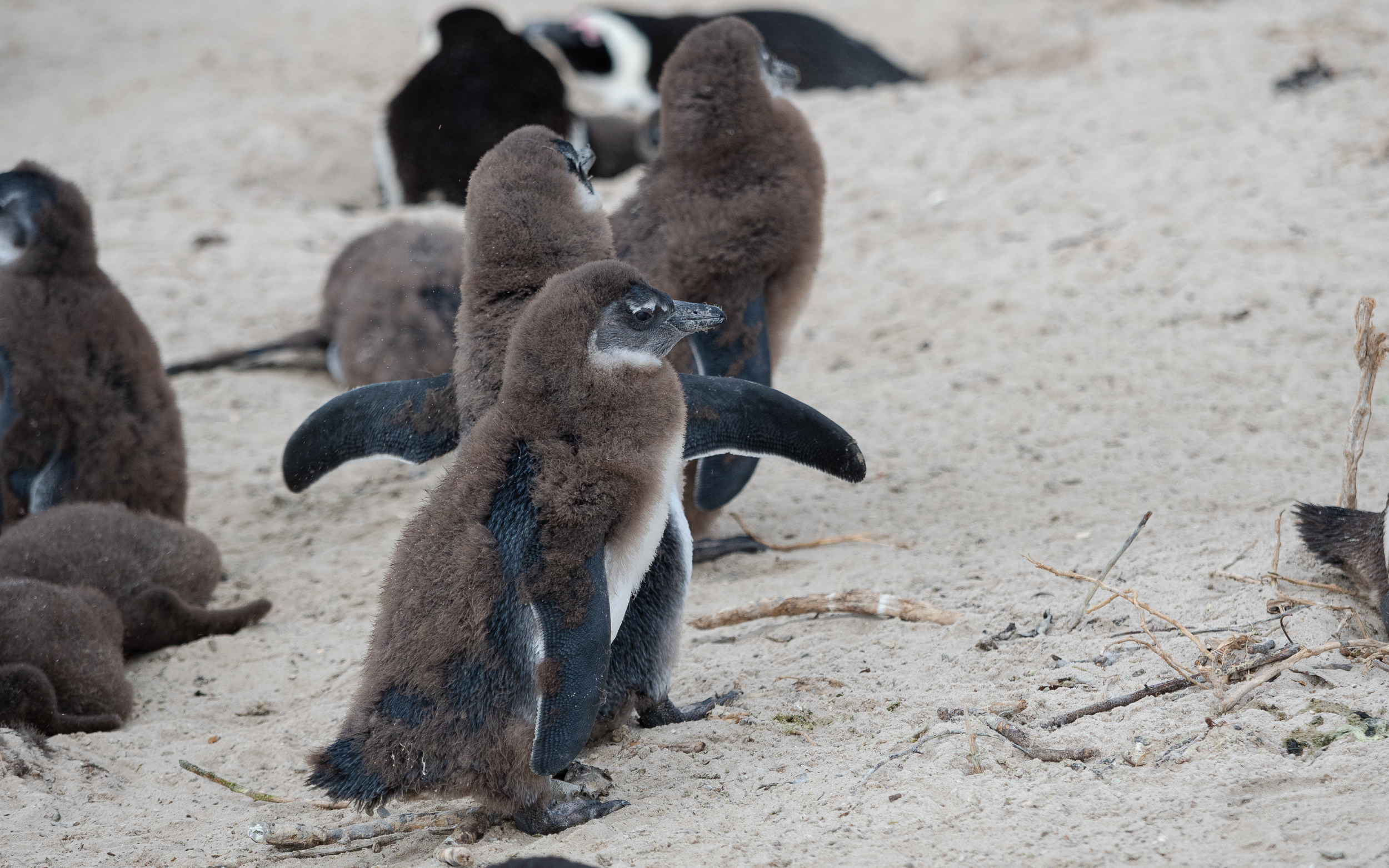
In addition to land-based enemies such as some predators, feral cats, people (who collected eggs due to which the population has decreased to a critical one), some birds including seagulls pose a danger to eggs and young chicks. And it's easier to defend against them in a group.
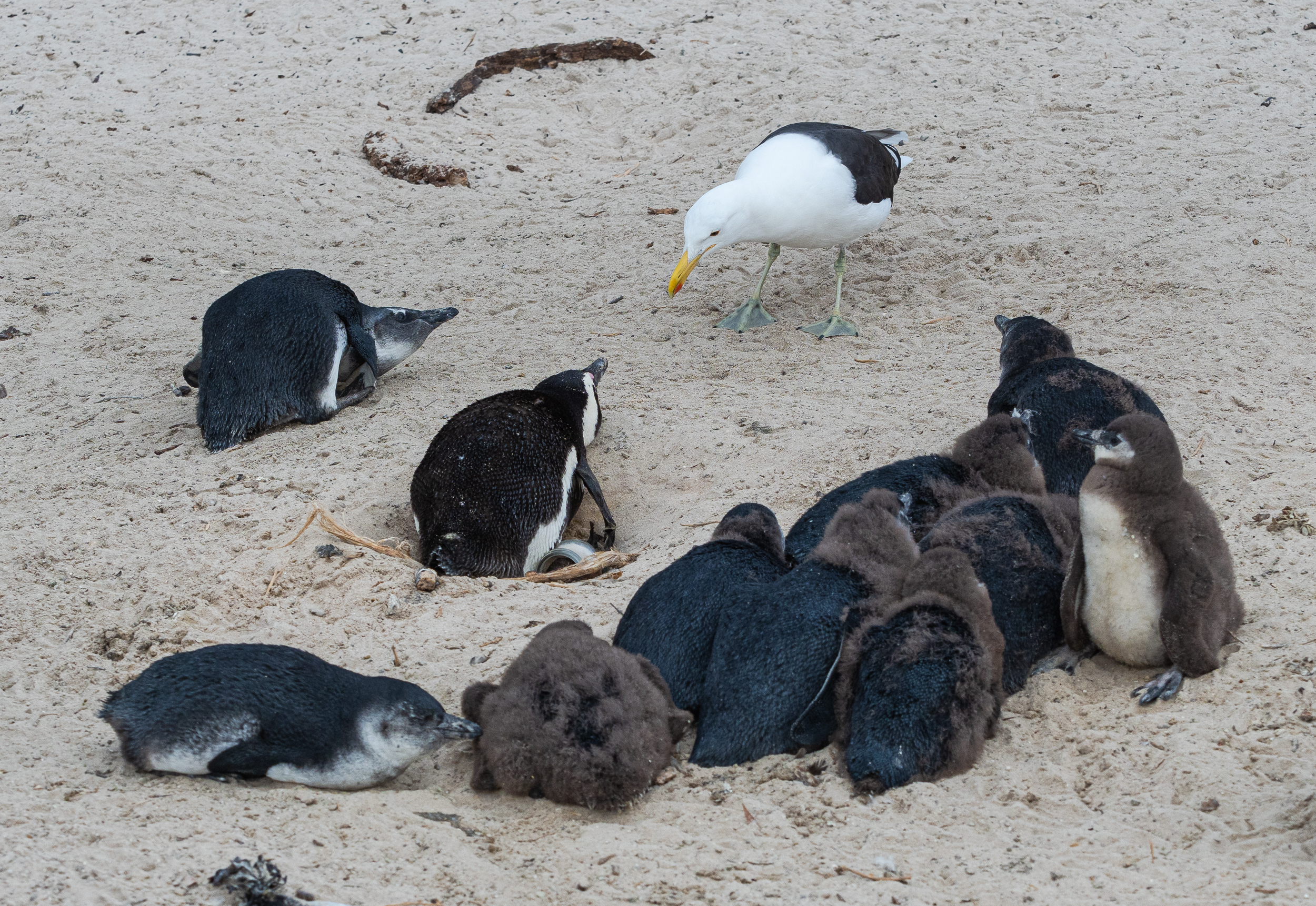
Parents feed their chicks for 2-4 months. I wonder how do they not lose each other? But this is for us they are all alike, and they certainly distinguish each other with ease and will always find their cub.
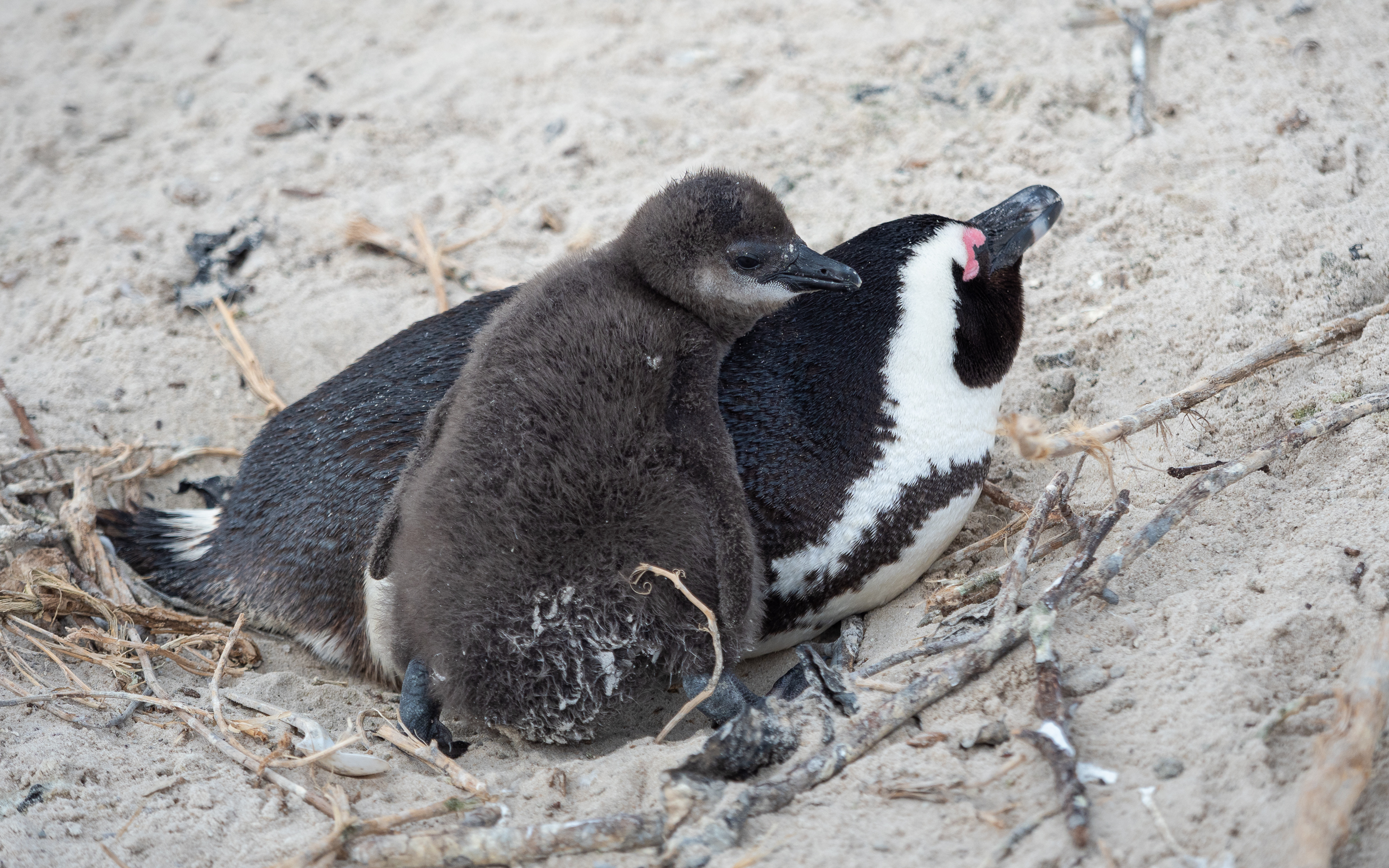
By the end of this period, the chicks have molted into their first adult plumage, which will allow them to start hunting in the sea themselves. After that, they go to sea for a period of 1-2 years.
This is what their first adult outfit looks like.
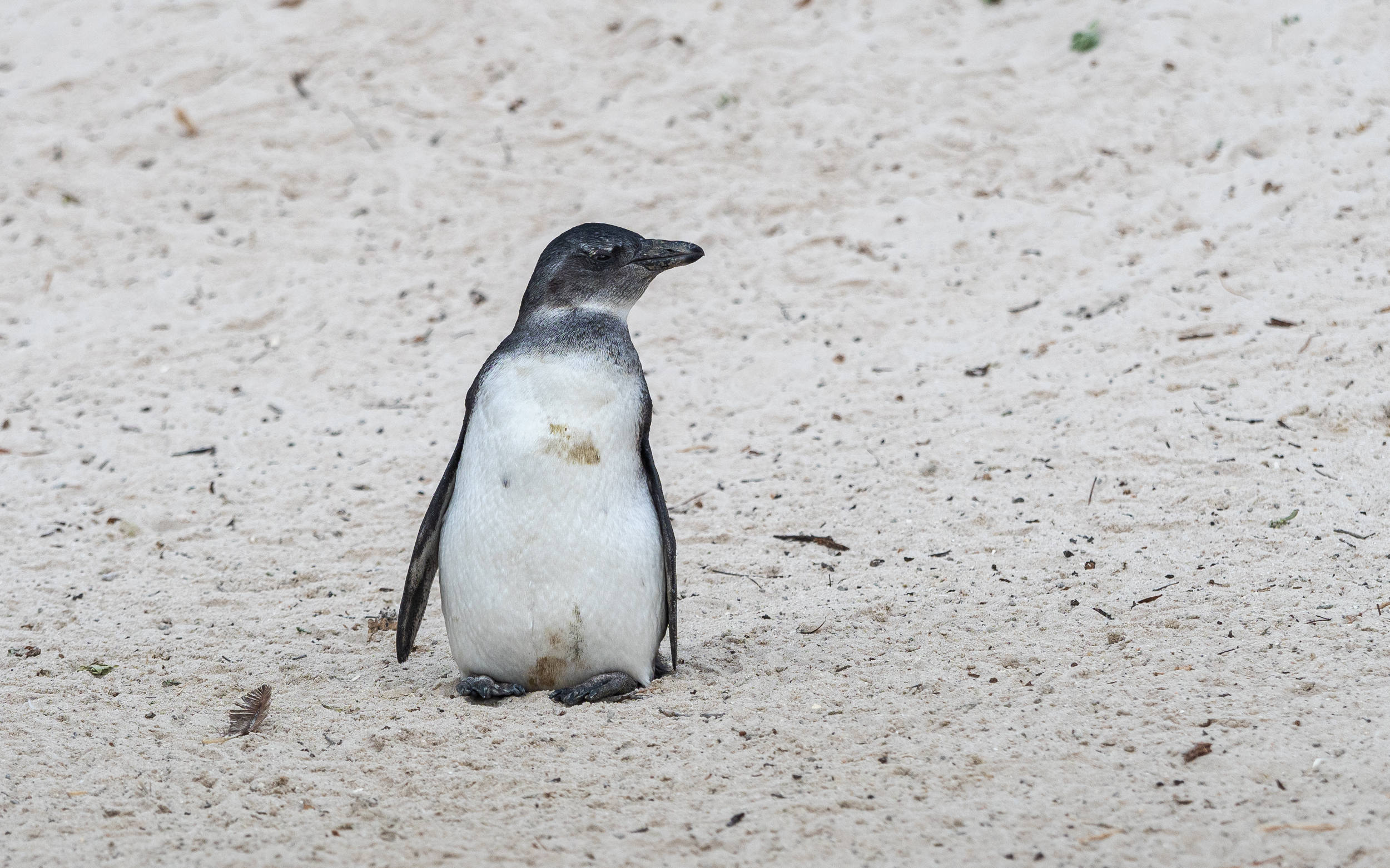
But this is not the final appearance, we can find many differences from the plumage of adult penguins: the coloring is less bright and contrast, including the characteristic feature of this species - a black strip in the form of a horseshoe on the white breast, and the thermoregulatory glands around eyes that turn pink when the penguins need to cool off.
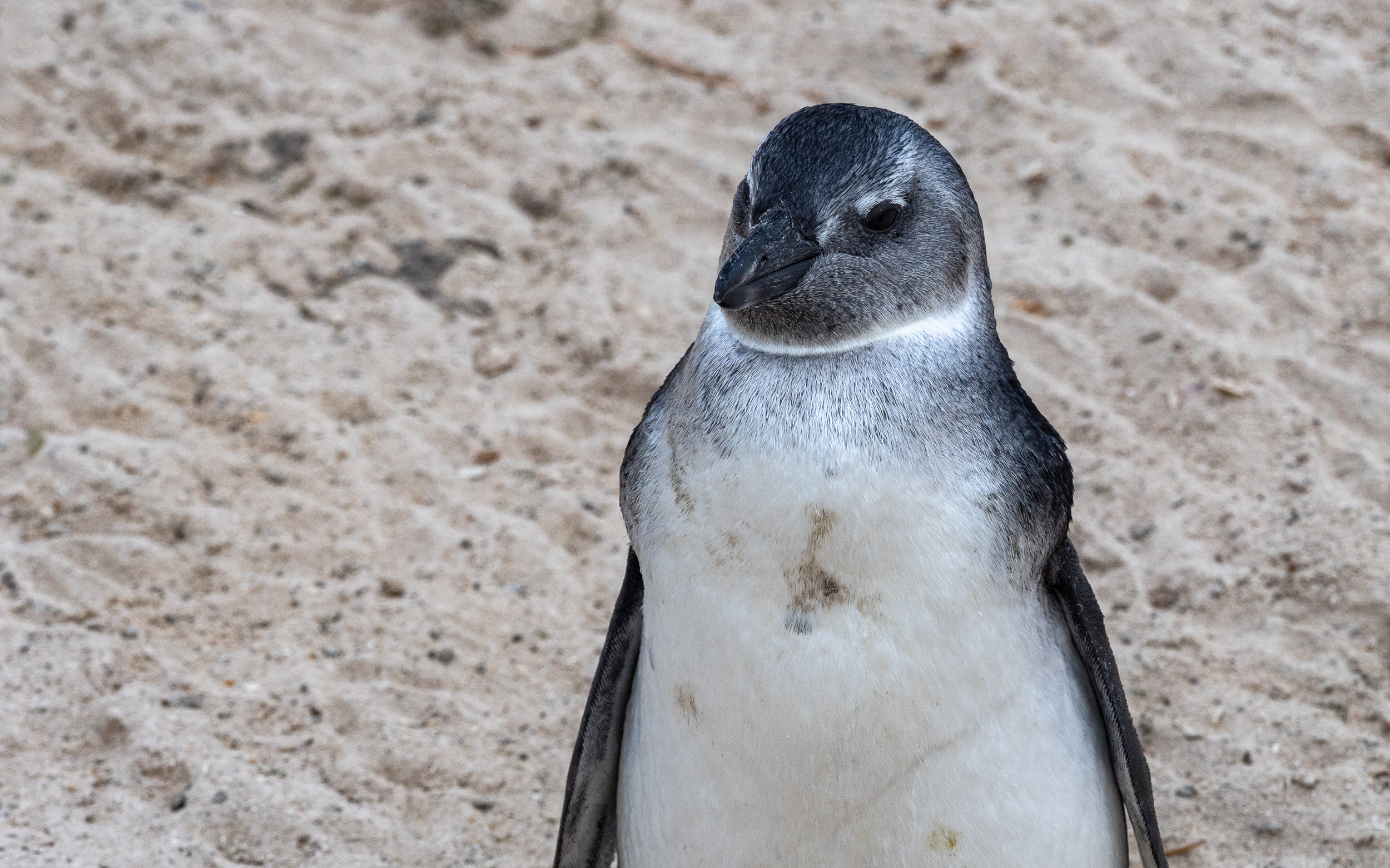
Apparently, these features are not yet needed by young penguins, since they will be in a rather cold ocean for a long time until they grow there into adult birds. Just after the first return of the penguins to the shore in their colony, they molt again, now getting their permanent adult plumage of contrasting black and white feathers with clearly defined borders between these colors, with stripe and dots on the chest and abdomen, which, by the way, are unique for each individual, like our fingerprints.
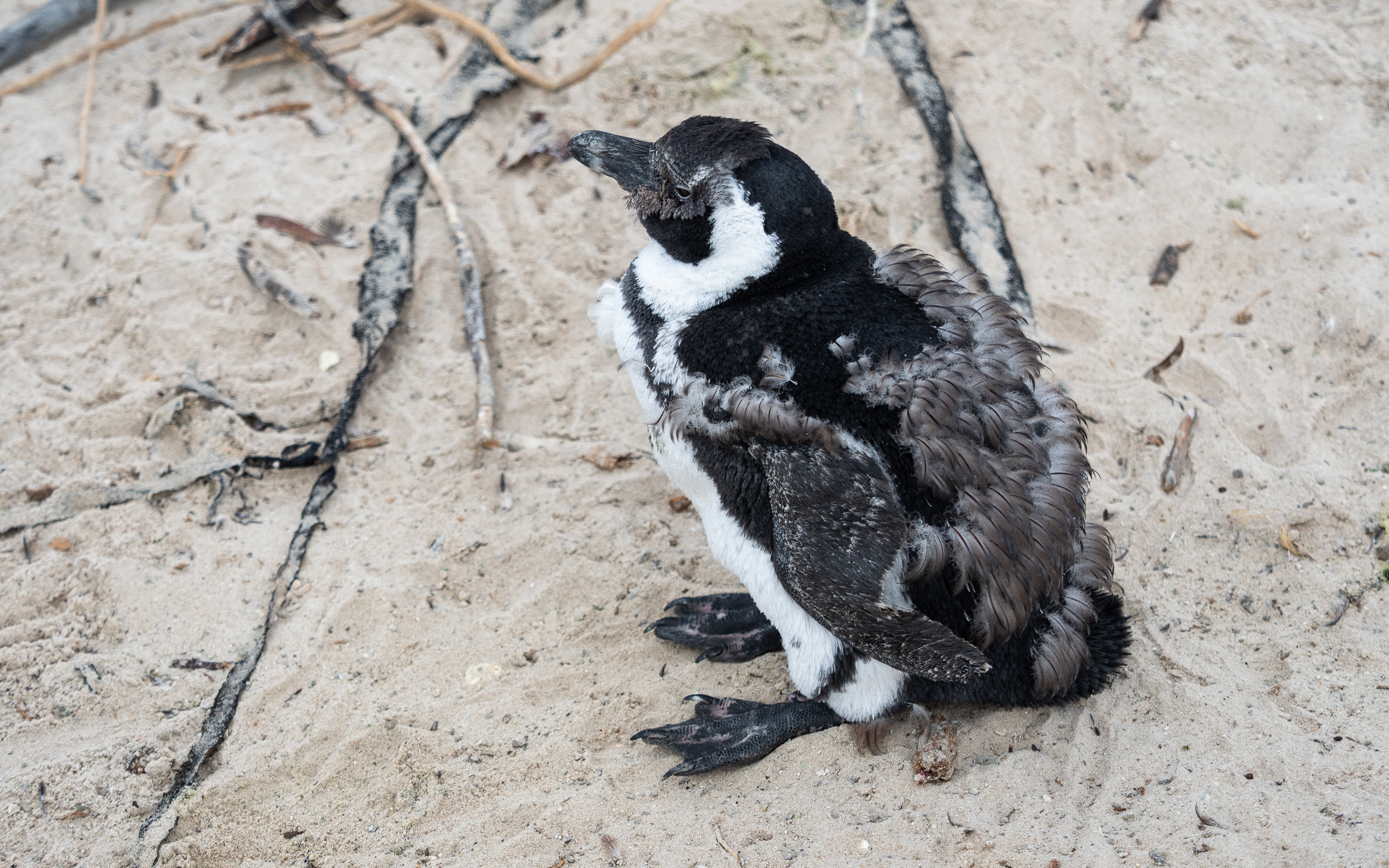
While they molt, they cannot swim and hunt, so they are forced to constantly be on the shore in the company with adults incubating chicks.
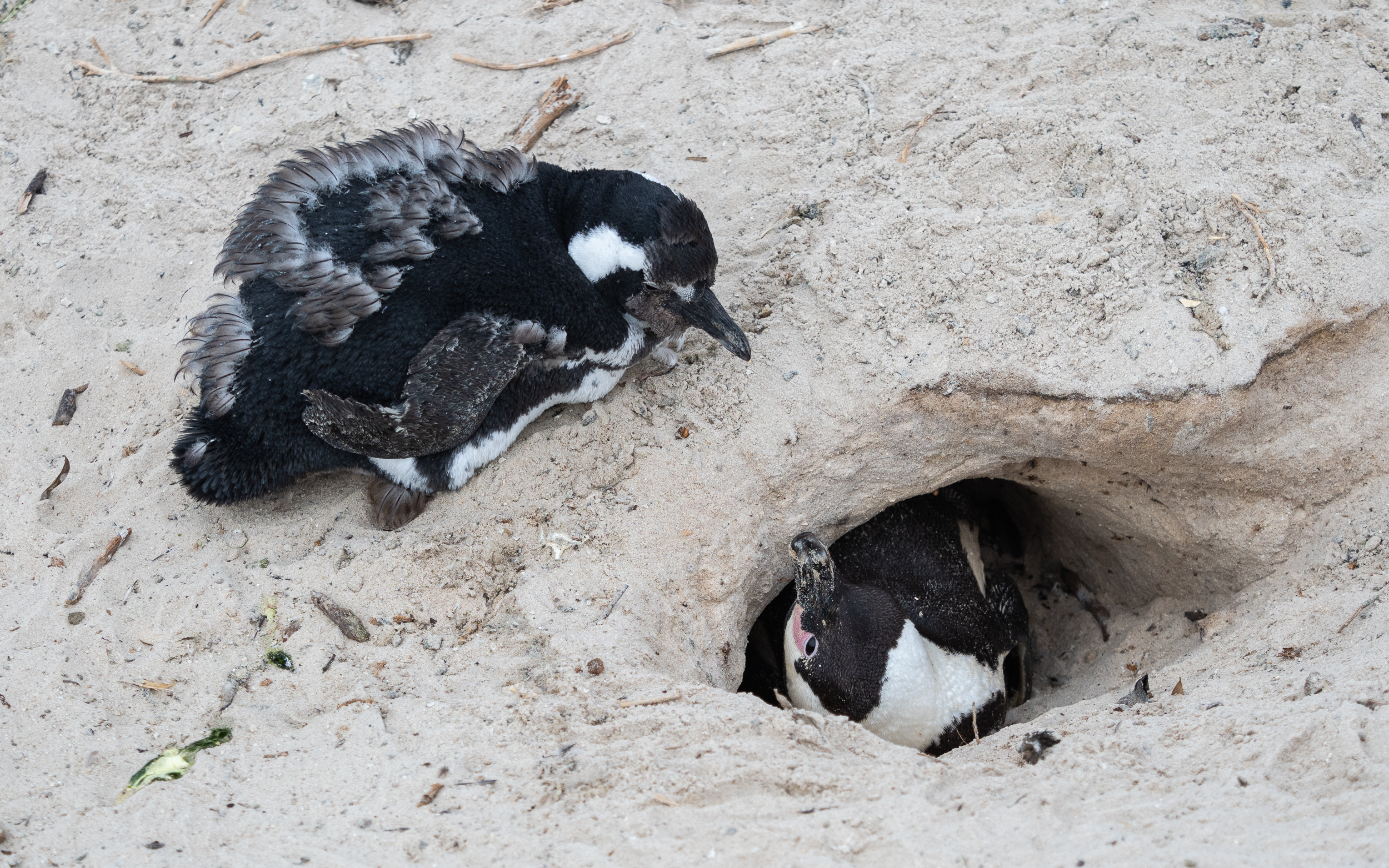
During this time, they lose a lot of weight. But when it’s over, they become so handsome.
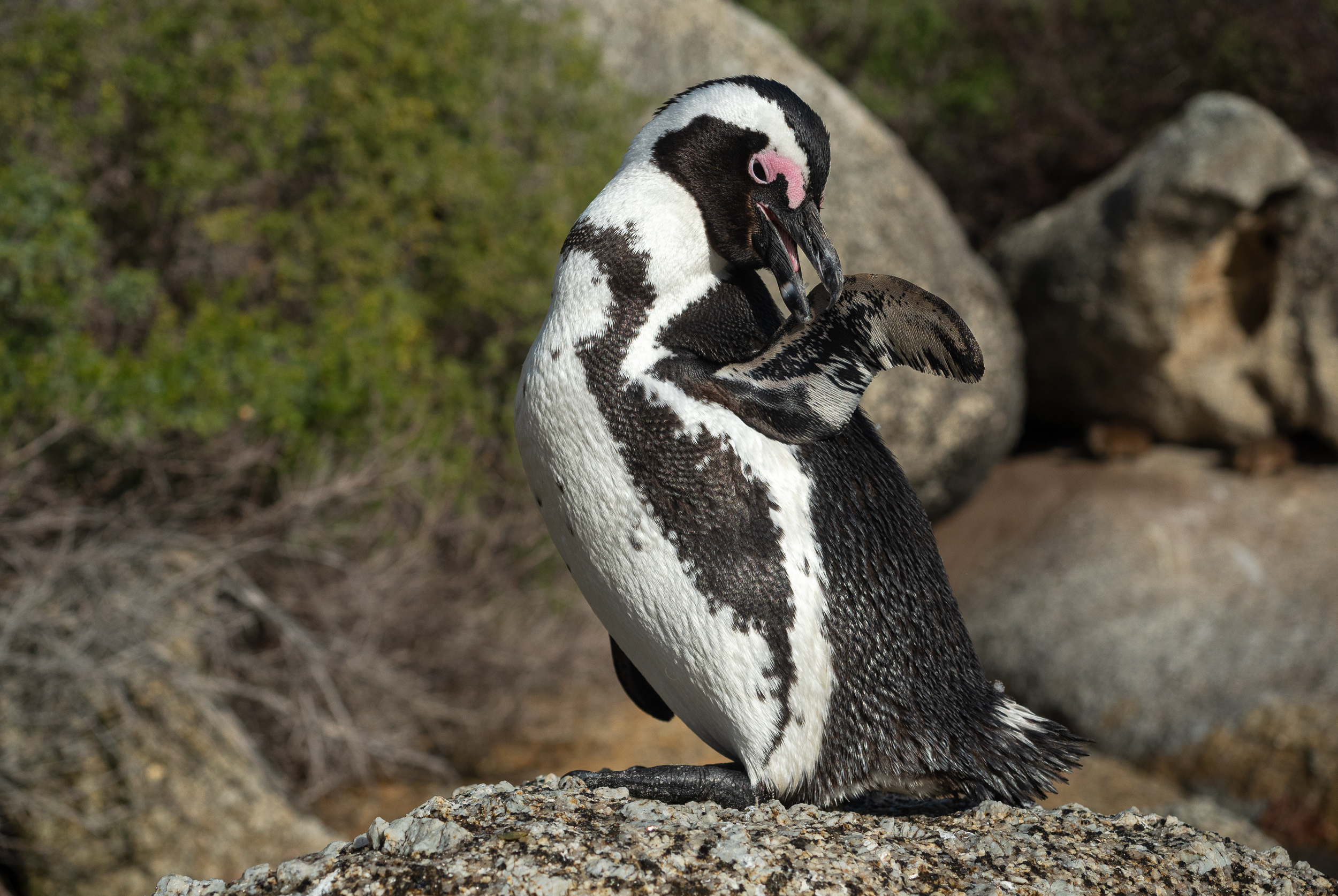
And in a couple of years they will be able to have their own chicks.
In general, when you are in the vicinity of Cape Town, be sure to drop by here. I recommend visiting both beaches, Foxy and Boulders, and be sure to walk along the trail between them — the Willis Walk trail, which is open to everyone for free.
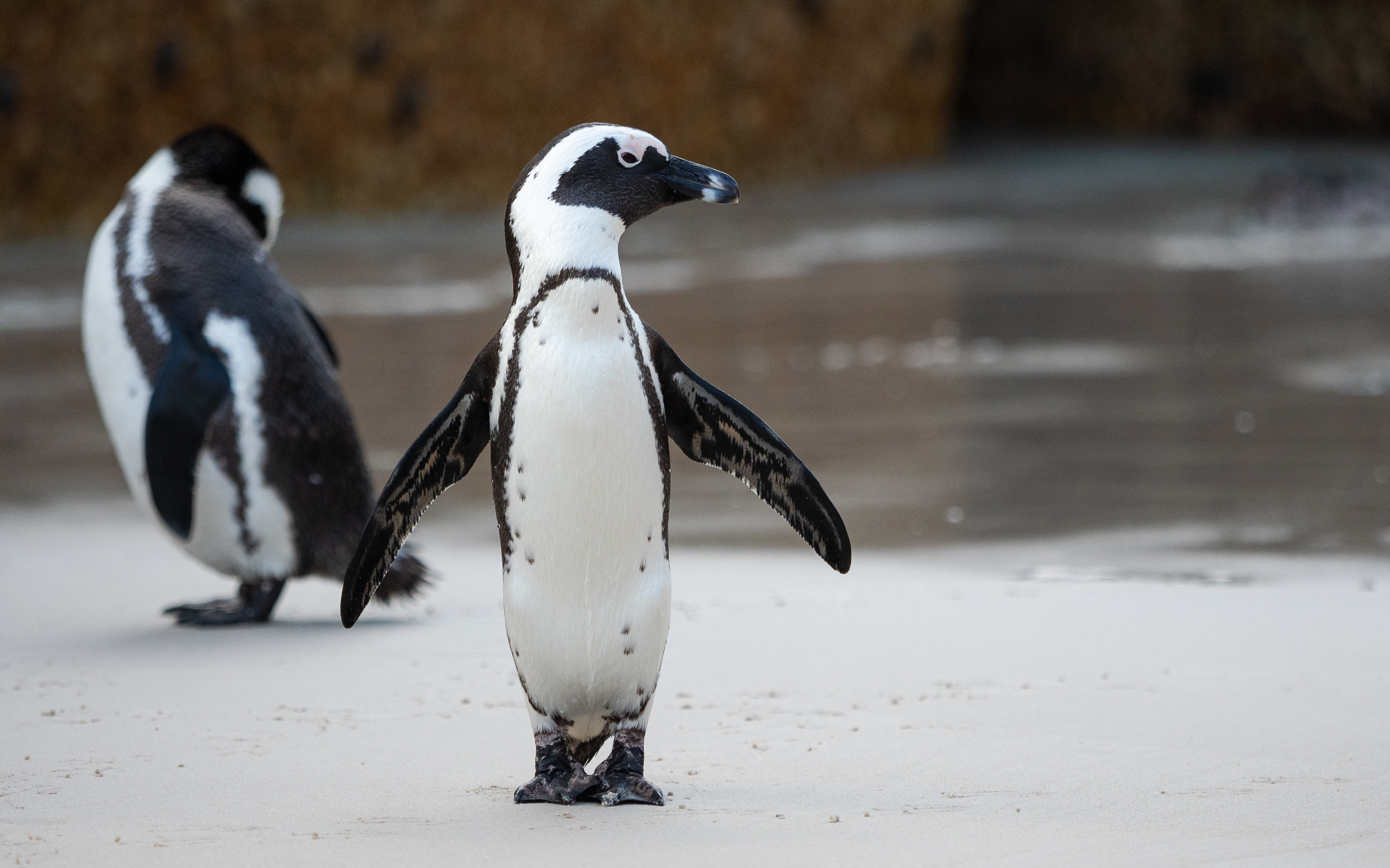
Plan half a day for this activity, especially if you want to swim with them or take pictures of them. I think everybody will like both adults and baby penguins :)
It's better to watch the photo in high resolution.
OLYMPUS E-M1 Mark II
Exposure time: 1/800 sec
Aperture: F 4
Sensitivity: ISO 200
Focal length: 150 mm
35 mm equivalent: 300 mm
You can also see my photos in my blog LJ and in my profile on NatGeo
