


Puesto que me dijo para cubrir los tubos qué están al frente de su casa para evitar qué la humedad los pueda dañar muy rápido y tengan la posibilidad de durar un tiempo más. Lo primero que debíamos hacer era quitar el exceso de concreto en la base y tratar de dejarlo lo más limpio posible.
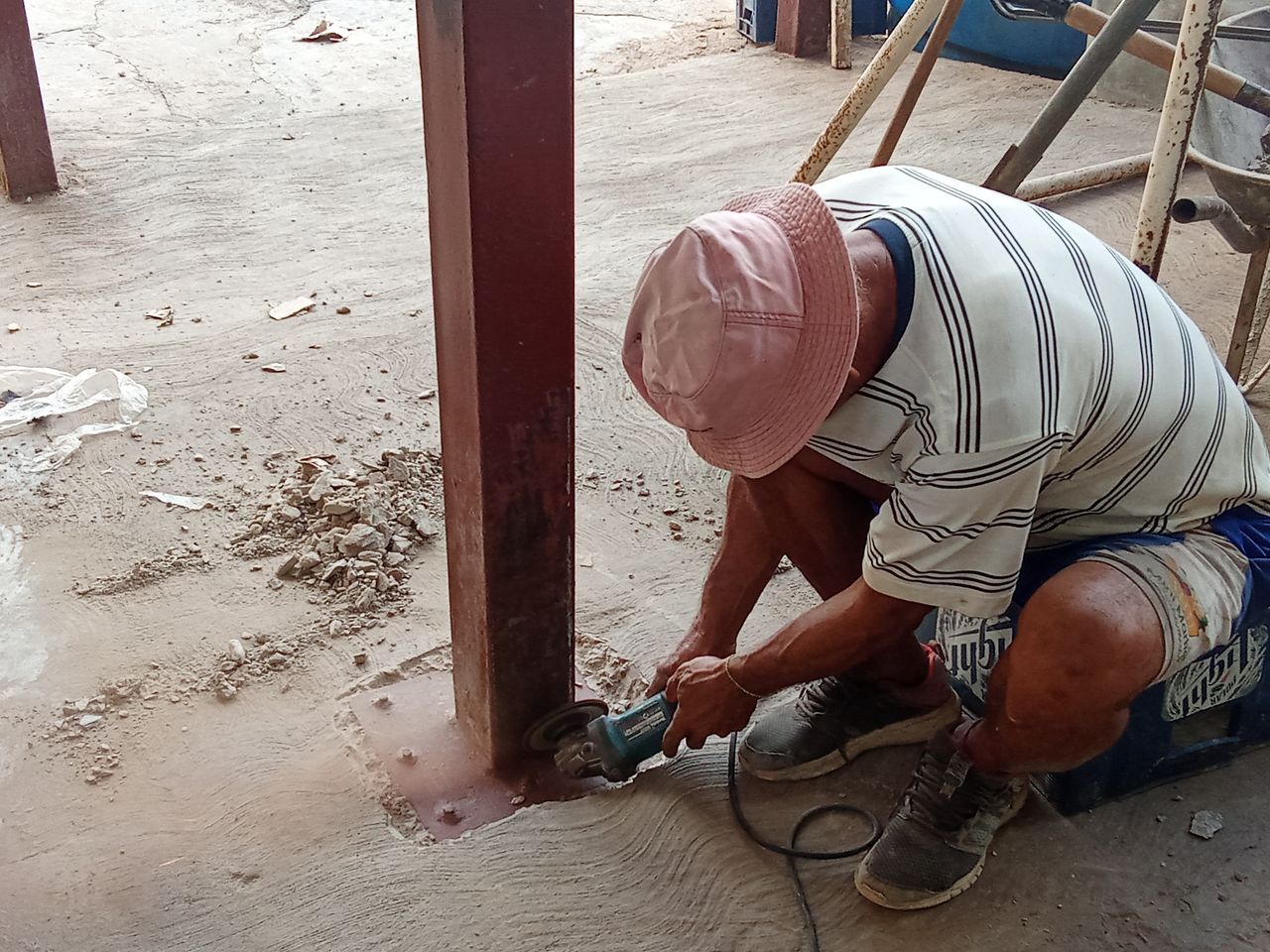


Después mí tío con un Esmeril y su disco especial, para tratar de retirar el exceso de óxido del tubo para después con la ayuda de una brocha dejar toda la superficie bien limpia sin rastro de ese polvo y después aplicar el Tanitec líquido especial para la prevención del óxido con otra brocha se deja que el líquido haga su trabajo y al reaccionar con esa presencia el tubo se pone de un color negro oscuro lo cuál nos indica qué va todo muy bien. Queda todo así de limpio e ideal para empezar a pegar los bloques para una mayor protección.


Para los bloques que son un poco más grande de lo qué necesitamos mí tío con el esmeril realizó los cortes para dejarlos a la medida justa para después empezar a batir la pega (concreto) para pegar los bloques qué no eran muchos sólo unos 20 después y para finalizar por los momentos salpicarlos con la misma pega que sobró pero con un poco más de agua.


Así por ahora termina mí publicación para la comunidad #HomeSolutions pero todavía faltan algunas actividades más qué hemos realizado últimamente en busca de qué tenga una mayor comodidad en su casa y por su puesto yo tener material para compartirles a todos ustedes.
English Version
Greetings, Hivers friends, we share great posts every day, especially here in the #HomeSolutions community. At the beginning of the week, I told you I was helping an uncle install some ceramic tiles (porcelain tiles) that we're about to finish. Now, after a few days of doing nothing, we've started working on other repairs for his home, which I'll tell you about below.
He told me to cover the pipes in front of his house to prevent moisture from damaging them too quickly and to ensure they last longer. The first thing we had to do was remove the excess concrete from the base and try to leave it as clean as possible.
Afterwards, my uncle used a grinder and its special disc to try to remove the excess rust from the tube. Then, with the help of a brush, he left the entire surface completely clean, free of any trace of that dust. Then, he applied the special Tanitec rust-preventive liquid with another brush. He let the liquid do its work, and when the liquid reacts with the rust, the tube turns a dark black, which tells us everything is going very well. Everything is now clean and ideal for starting to glue the blocks for greater protection.
For the blocks that are a little larger than we need, my uncle used the grinder to make the cuts to the right size. Then, he began mixing the concrete to glue the blocks, which weren't many, only about 20 later. To finish, he sprinkled them with the same leftover glue but with a little more water.
So for now, my post for the #HomeSolutions community ends, but there are still a few more activities we've been doing lately in search of greater comfort in your home and, of course, I have material to share with all of you.