
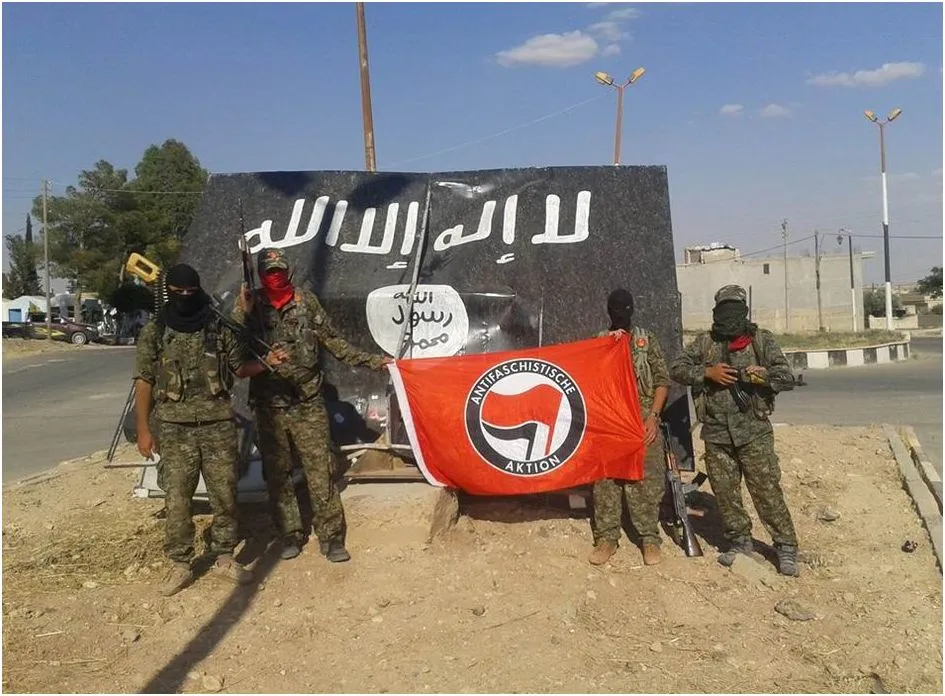
 Arson: an Act of War
Folks, keep an eye out for tweets or posts bragging up the attack on Oregon. People here are interested. The hardy farmers, fisherman, and loggers I serve here reckon they've been attacked by Antifa in an act of war. Oregon is an open carry state, and a lot of folks that didn't used to carry do now, because they intend to shoot arsonists on sight.
Hereabouts, they're thinking Kate Brown and Antifa are trying to kill them for their land.
I'm not sure they're wrong about that. We'll have to see if a bunch of these arsonists are released, like they have been in the riots. If they are, God help the cities.

By watching 
The birth of American journalism!?
I am amazed by
I am an East Asian who has been educated and trained to be faithful servants of overlords for 2,000 years.
So, I'm always shocked by
 Sima Qian ([sɹ̩́mà tɕʰjɛ́n]; c. 145 – c. 86 BC)
Sima Qian ([sɹ̩́mà tɕʰjɛ́n]; c. 145 – c. 86 BC) was a Chinese historian of the early Han dynasty. He is considered the father of Chinese historiography for his Records of the Grand Historian, a general history of China covering more than two thousand years beginning from the rise of the legendary Yellow Emperor and the formation of the first Chinese polity to the reigning sovereign of Sima Qian's time, Emperor Wu of Han. As the first universal history of the world as it was known to the ancient Chinese, the Records of the Grand Historian served as a model for official history-writing for subsequent Chinese dynasties and the Chinese cultural sphere (Korea, Vietnam, Japan) up until the 20th century.[1]
Sima Qian's father, Sima Tan, first conceived of the ambitious project of writing a complete history of China, but had completed only some preparatory sketches at the time of his death. After inheriting his father's position as court historian in the imperial court, he was determined to fulfill his father's dying wish of composing and putting together this epic work of history. However, in 99 BC, he would fall victim to the Li Ling affair for speaking out in defense of the general, who was blamed for an unsuccessful campaign against the Xiongnu. Given the choice of being executed or castrated, he chose the latter in order to finish his historical work. Although he is universally remembered for the Records, surviving works indicate that he was also a gifted poet and prose writer, and he was instrumental in the creation of the Taichu calendar, which was officially promulgated in 104 BC.
As his position in the imperial court was "Grand Historian" (tàishǐ 太史, variously translated as court historian, scribe, or astronomer/astrologer), later generations would accord him with the honorific title of "Lord Grand Historian" (Tàishǐ Gōng 太史公) for his monumental work; however, his magnum opus was completed many years after his tenure as Grand Historian ended in disgrace and after his acceptance of punitive actions against him including imprisonment, castration, and subjection to servility. He was acutely aware of the importance of his work to posterity and its relationship to his own personal suffering. In the postface of the Records, he implicitly compared his universal history of China to the classics of his day, the Guoyu by Zuoqiu Ming, Lisao by Qu Yuan, and the Art of War[note 1] by Sun Bin, pointing out that their authors all suffered great personal misfortunes before their lasting monumental works could come to fruition. Sima Qian is depicted in the Wu Shuang Pu (無雙譜, Table of Peerless Heroes) by Jin Guliang.
Sima Qian ([sɹ̩́mà tɕʰjɛ́n]; c. 145 – c. 86 BC) is called the father of East Asian history. From my perspective, he is in the same position as Moses, who wrote Genesis, in East Asian history.
I consider him to be the person who created the first religion that turned East Asian overlords into gods!
Sima Qian ([sɹ̩́mà tɕʰjɛ́n]; c. 145 – c. 86 BC) was a genius who portrayed the Chinese overlords as great gods and heroes who ruled all of East Asia.
He recreated the successes, failures, achievements, and personal characteristics of Chinese monarchs from a historical perspective, giving them a divine status.
So, Chinese, Japanese, Korean, and Vietnamese people who read his books admire the history of China's great overlords to this day.
Since I was a child, while reading the works of Sima Qian ([sɹ̩́mà tɕʰjɛ́n]; c. 145 – c. 86 BC), I dreamed of becoming like the great Chinese overlords!😄
I wonder what my esteemed senior
Can
Perhaps Chinese civilians felt that
I guess the Chinese felt that a humble hunter and carpenter living in Oregon, USA, was daring to insult the great history of China!😆
In fact, Chinese, Japanese, Vietnamese, and Koreans generally tend to believe that overlords symbolize the tradition and greatness of East Asian history!
So, they think the President and Governors of the United States are like overlords!
So, they will have a hard time understanding
They will recognize
In particular, Japan's overlords were confident that civilians from the New World
I am easy going and a great neighbor. I am shocked that there are folks who might find it impossible to get along with me - except their definition of coexistence is to oppress me. Since I am unwilling to be oppressed, only that could prevent our good association, and since the alternative is to be oppressed by folks whose intentions, as revealed in their histories, are as malignant as can be imagined, I am certain sure I am glad to be unwilling to be their subject, and will continue to be as I am able.
I'll say that them with malice towards my freedom should rejoice that I have no such avarice for theirs. It might appear at first I labor under an uneven burden, as I do not cause my enemies to fear my oppression of them, but must myself ensure I do not succumb to their oppression. However, such indifference to enslaving others avails me opportunity to apply myself to helping allies to attain to greater freedom and prosperity, and the more free and prosperous folks bearing me goodwill are, the more assistance I can expect from them in the development and security of my own life and treasure. I would much rather outbuild and outprosper devils than oppress them. The best revenge is living well, after all.
Besides, because overlords are obligate parasites and choose to be dependent on oppression, all I must do to render them to penury is remain free and share my happiness with all and sundry. It is their own dependence on parasitism that causes their desperation as I remain free, and as I develop my own independence I aid and abet others to attain to that happy condition also, doubling the decimation of the devils I dish out thereby. By intending them no harm, I disappoint them twice what I might were I to spend myself into poverty trying to harm them. Both evil and good are their own respective reward.
Thanks!
1. Why Japanese Fear America forever?
2. Why Japanese Fear America forever?
3. Why Japanese Fear America forever?
4. Why Japanese Fear America forever?
 Tokugawa Ieyasu[a] (徳川家康, January 31, 1543 – June 1, 1616; born Matsudaira Takechiyo and later taking other names[b])
Tokugawa Ieyasu[a] (徳川家康, January 31, 1543 – June 1, 1616; born Matsudaira Takechiyo and later taking other names[b]) was the founder and first shōgun of the Tokugawa Shogunate of Japan, which ruled from 1603 until the Meiji Restoration in 1868. He was one of the three "Great Unifiers" of Japan, along with his former lord Oda Nobunaga and fellow Oda subordinate Toyotomi Hideyoshi. The son of a minor daimyo, Ieyasu once lived as a hostage under daimyo Imagawa Yoshimoto on behalf of his father. He later succeeded as daimyo after his father's death, serving as ally, vassal and general of the Oda clan,[3] and building up his strength under Oda Nobunaga.[4]
After Oda Nobunaga's death, Ieyasu was briefly a rival of Hashiba Hideyoshi, before declaring his allegiance and fighting on his behalf. Under Hashiba, Ieyasu was relocated to the Kanto plains in eastern Japan, away from the Hashiba power base in Osaka. He built his castle in the fishing village of Edo (now Tokyo). He became the most powerful daimyo and the most senior officer under the Toyotomi regime (Hideyoshi's new clan name). Ieyasu preserved his strength in Toyotomi's failed attempt to conquer Korea. After Hideyoshi's death, Ieyasu seized power in 1600, after the Battle of Sekigahara.[3][page needed] He received appointment as shōgun in 1603, and voluntarily abdicated from office in 1605, but remained in power until his death in 1616. He implemented a set of careful rules known as the bakuhan system, designed to keep the daimyo and samurai in check under the Tokugawa Shogunate.[3][4]
Tokugawa Ieyasu[a] (徳川家康, January 31, 1543 – June 1, 1616; born Matsudaira Takechiyo and later taking other names[b]) was the first to create the concepts of state and overlord and nation in modern Japan.
Modern Japanese equate him with China's Qin Shi Huang.
Qin Shi Huang (Chinese: 秦始皇, pronunciationⓘ; February 259[e] – 12 July 210 BC) was the founder of the Qin dynasty and the first emperor of a unified China.[9] Rather than maintain the title of "king" (王, wáng) borne by the previous Shang and Zhou rulers, he ruled China from 221 to 210 BC as the first "emperor" (皇帝, huáng dì) of the Qin dynasty. This title, which he invented for himself, would see continuous use by Chinese monarchs for the next two millennia.
Born in the Zhao state capital Handan, as Ying Zheng (嬴政) or Zhao Zheng (趙政), his parents were King Zhuangxiang of Qin and Lady Zhao. The wealthy merchant Lü Buwei assisted him in succeeding his father as the ruler of Qin, after which he became Zheng, King of Qin. By the age of 38 in 221 BC, he had conquered all the other Warring States and unified all of China, and he ascended the throne as China's first emperor. During his reign, his generals greatly expanded the size of the Chinese state: campaigns south of Chu permanently added the Yue lands of Hunan and Guangdong to the Chinese cultural orbit, and campaigns in Inner Asia conquered the Ordos Loop from the nomadic Xiongnu, although the Xiongnu later rallied under Modu Chanyu.
Qin Shi Huang also worked with his minister Li Si to enact major economic and political reforms aimed at the standardization of the diverse practices of the earlier Chinese states. He is traditionally said to have banned and burned many books and executed scholars. His public works projects included the incorporation of diverse state walls into a single Great Wall of China and a massive new national road system, as well as his city-sized mausoleum guarded by a life-sized Terracotta Army. He ruled until his death in 210 BC, during his fifth tour of Eastern China.[10]
Historically, Qin Shi Huang was often portrayed as a tyrannical ruler and strict Legalist, in part from the Han dynasty's scathing assessments of him. Since the mid 20th-century, scholars have begun to question this evaluation, inciting considerable discussion on the actual nature of his policies and reforms. Regardless, according to the sinologist Michael Loewe "few would contest the view that the achievements of his reign have exercised a paramount influence on the whole of China's subsequent history, marking the start of an epoch that closed in 1911".[11]
Tokugawa Ieyasu[a] (徳川家康, January 31, 1543 – June 1, 1616; born Matsudaira Takechiyo and later taking other names[b]) believed that Christianity would collapse his power and regime, so he pursued national persecution.
Kakure kirishitan (Japanese: 隠れキリシタン, lit. 'hidden Christians')
Kakure kirishitan (Japanese: 隠れキリシタン, lit. 'hidden Christians') is a modern term for a member of the Catholic Church in Japan who went underground at the start of the Edo period in the early 17th century due to Christianity's repression by the Tokugawa shogunate.[1][2][3]
Tokugawa Ieyasu[a] (徳川家康, January 31, 1543 – June 1, 1616; born Matsudaira Takechiyo and later taking other names[b]) and his descendants persecuted Christianity for 250 years, leading to the complete disappearance of Christianity in Japan.
After the American fleet appeared in Japan, religious freedom was achieved in the 1860s, but Japan's indigenous Christianity had all but disappeared.
Japan's overlords began to study the Christian empires of the New World.
 The Chinese characters (kanji) for "Rangaku". The first character "ran" is an abbreviation of the ateji for "Holland" (阿蘭陀, or with 2 Kanji 和蘭), o-ran-da, abbreviated to "ran" – because it is the emphasized syllable; cf. List of foreign place names in Japanese). The second character "gaku" means "study" and "learning".
The Dutch traders at Dejima in Nagasaki were the only Europeans tolerated in Japan from 1639 until 1853 (the Dutch had a trading post in Hirado from 1609 till 1641 before they had to move to Dejima), and their movements were carefully watched and strictly controlled, being limited initially to one yearly trip to give their homage to the shōgun in Edo. They became instrumental, however, in transmitting to Japan some knowledge of the industrial and scientific revolution that was occurring in Europe: In 1720 the ban on Dutch books was lifted and the Japanese purchased and translated scientific books from the Dutch, obtained from them Western curiosities and manufactures (such as clocks, medical instruments, celestial and terrestrial globes, maps and plant seeds) and received demonstrations of Western innovations, including of electrical phenomena, as well as the flight of a hot air balloon in the early 19th century. While other European countries faced ideological and political battles associated with the Protestant Reformation, the Netherlands were a free state, attracting leading thinkers such as René Descartes.[citation needed]
Altogether, thousands of such books were published, printed, and circulated. Japan had one of the largest urban populations in the world, with more than one million inhabitants in Edo, and many other large cities such as Osaka and Kyoto, offering a large, literate market to such novelties. In the large cities some shops, open to the general public, specialized in foreign curiosities.[citation needed]
Beginnings (1640–1720)
Because Japan's great monarchs had been trading with Europe since the 16th century, they were very interested in excellent Western medicine and science.
In particular, Dutch ideas, scholarship, science, and medicine were popular in Japan.
They spent a long time and effort translating Dutch books into Japanese original knowledge.
The Japanese study that was born when Japanese scholars translated Dutch studies was called “Rangaku 蘭學.”
 Leaders of the Iwakura Mission photographed in London in 1872. L-R: Kido Takayoshi, Yamaguchi Masuka, Iwakura Tomomi, Itō Hirobumi, Ōkubo Toshimichi
The Iwakura Mission or Iwakura Embassy (岩倉使節団, Iwakura Shisetsudan) was a Japanese diplomatic voyage to the United States and Europe conducted between 1871 and 1873 by leading statesmen and scholars of the Meiji period. It was not the only such mission, but it is the most well-known and possibly most significant in terms of its impact on the modernization of Japan after a long period of isolation from the West. The mission was first proposed by the influential Dutch missionary and engineer Guido Verbeck, based to some degree on the model of the Grand Embassy of Peter I.
The aim of the mission was threefold; to gain recognition[1] for the newly reinstated imperial dynasty under the Emperor Meiji; to begin preliminary renegotiation of the unequal treaties with the dominant world powers; and to make a comprehensive study of modern industrial, political, military and educational systems and structures in the United States and Europe.[2]
The Iwakura Mission followed several such missions previously sent by the Shogunate, such as the Japanese Embassy to the United States in 1860, the First Japanese Embassy to Europe in 1862, and the Second Japanese Embassy to Europe in 1863.
The Iwakura Mission or Iwakura Embassy (岩倉使節団, Iwakura Shisetsudan) were those who studied "Rangaku".
They attempted to observe and understand America and Europe from a Dutch perspective. Their influence on the birth of 20th century Japan was enormous.

Uncharted Waters (originally released as Daikoukai Jidai (大航海時代, Daikōkai Jidai)
Uncharted Waters (originally released as Daikoukai Jidai (大航海時代, Daikōkai Jidai), "Great Age of Sailing") is a Japanese video game series produced by Koei under its "Rekoeition" brand.
It is a simulation and role-playing video game series dealing with sailing and trading, themed around the Age of Discovery. In the games, the player takes up the role of a captain (or commodore in some translations) and manages a seagoing fleet to participate in trades, privateering, treasure hunting, exploration, and plain piracy. Even though the series is largely open-ended, there is still a loose plot which requires the player to follow certain paths, and deviating from these paths may stall the progress of the story.
In East Asia, the series has a large cult following, but it has not received much recognition outside the region. It has been compared to the earlier Sid Meier's Pirates! in gameplay and theme.
Uncharted Waters (originally released as Daikoukai Jidai (大航海時代, Daikōkai Jidai)), a game created by Japan's Koei in the 1990s, reveals the Japanese's admiration for the Netherlands.
The Japanese wanted to become a powerful maritime empire and have many overseas colonies like Great Britain, Spain, Portugal, and the Netherlands.
They wanted to emulate the overlords of European empires and be able to defeat and conquer the civilian


 Japanese foreign affairs minister Mamoru Shigemitsu signs the Japanese Instrument of Surrender aboard the USS Missouri as American General Richard K. Sutherland watches, 2 September 1945.
The surrender of the Empire of Japan in World War II was announced by Emperor Hirohito on 15 August and formally signed on 2 September 1945, bringing the war's hostilities to a close. By the end of July 1945, the Imperial Japanese Navy (IJN) had become incapable of conducting major operations and an Allied invasion of Japan was imminent. Together with the United Kingdom and China, the United States called for the unconditional surrender of the Japanese armed forces in the Potsdam Declaration on 26 July 1945—the alternative being "prompt and utter destruction". While publicly stating their intent to fight on to the bitter end, Japan's leaders (the Supreme Council for the Direction of the War, also known as the "Big Six") were privately making entreaties to the publicly neutral Soviet Union to mediate peace on terms more favorable to the Japanese. While maintaining a sufficient level of diplomatic engagement with the Japanese to give them the impression they might be willing to mediate, the Soviets were covertly preparing to attack Japanese forces in Manchuria and Korea (in addition to South Sakhalin and the Kuril Islands) in fulfillment of promises they had secretly made to the United States and the United Kingdom at the Tehran and Yalta Conferences.

They still believe that if they can defeat the civilians of the New World

The Americans taught the Japanese enough lessons.
What can we learn from U.S.-Japan trade war of 1980s?
Disclamir : Since this post is entirely my own research, there is a possibility of misunderstandings and errors. The source of the data cannot be provided.
I especially hope that my respected seniors Steve and