

Los hemos visto en infinidad de películas con temática del holacausto y la segunda guerra mundial, en ellas hemos visto reflejado el horror de vivir dentro de uno de estos lugares equivalentes al infierno en la tierra, pero ¿de verdad sabemos con detalle como era vivir en un lugar así como prisionero? ¿qué tipos de trabajo debían hacer ellos? Como sabemos existieron muchos campos de concentración y exterminio tanto dentro como fuera de Alemania: Sobibbor, Treblinka, Chelmno, Ravensbrück, Bergen- Belsen, tan solo por poner un ejemplo, pero para este post decidí concentrarme en el más grande y terrible de todos, Auschwitz.
We have seen them in countless films about the Holocaust and the Second World War, in them we have seen reflected the horror of living in one of these places equivalent to hell on earth, but do we really know in detail what it was like to live in such a place as a prisoner? What kind of work did they have to do? As we know there were many concentration and extermination camps both inside and outside Germany: Sobibbor, Treblinka, Chelmno, Ravensbrück, Bergen-Belsen, just to name a few, but for this post I decided to concentrate on the largest and most terrible of them all, Auschwitz.

Ubicado en Oswiecim, Polonia a 43 kilómetros al oeste de Cracovia, fue fundado en 1940 como un campo para prisioneros de guerra, principalmente soviéticos, pero posteriormente lo usarían como un campo de trabajo y exterminio para las etnias consideradas como «inferiores» por el reich alemán.
Located in Oswiecim, Poland 43 kilometres west of Kraków, it was founded in 1940 as a camp for prisoners of war, mainly Soviets, but later used as a labour and extermination camp for ethnic groups considered "inferior" by the German reich.
Era tan enorme que estaba dividido en tres partes: Auschwitz I (que era más que todo la parte administrativa y también donde estaba la casa del comandante del campo) Auschwitz II o Birkenau (la parte más terrible ya que se trataba del campo de exterminio y contaba con cuatro cámaras de gas con sus respectivos hornos crematorios) y finalmente Auschwitz III o Monowitz que era donde se encontraba la fábrica de caucho para la IG Farben.
It was so huge that it was divided into three parts: Auschwitz I (which was mostly the administrative part and also where the camp commandant's house was located) Auschwitz II or Birkenau (the most terrible part as it was the extermination camp and had four gas chambers with their respective crematorium ovens) and finally Auschwitz III or Monowitz which was where the rubber factory for IG Farben was located.
¿Cómo llegaba la gente ahí?
How did people get there?
Imaginemos que eres un prisionero judío, entonces ya podrás deducir el trato al que serás sometido a partir del momento en el que te capturaron junto a tu familia. En los campos de concentración había mucho más que judíos, también había católicos, testigos de Jehová, gitanos, homosexuales, enfermos mentales y demás personas, pero los judíos eran los más despreciados por el reich (el imperio alemán)
Let's imagine that you are a Jewish prisoner, then you will be able to deduce the treatment to which you will be subjected from the moment in which you and your family were captured. In the concentration camps there was much more than Jews, there were also Catholics, Jehovah's Witnesses, gypsies, homosexuals, mental patients and other people, but the Jews were the most despised by the reich (the German empire )

Los soldados te conducirían a ti y a tu familia a rastras hasta uno de los vagones de los trenes de carga que usaban para el transporte, eran tan horribles que la gente solía llamarlos «Trenes de la muerte». Los cincuenta vagones de cada tren estaban diseñados originalmente para trasladar carga o ganado, cada uno de ellos medía 9 metros de largo por 3.60 metros de ancho. Tenían una capacidad máxima para cincuenta personas pero los solados los llenaban hasta con más del doble de su capacidad.
The soldiers would drag you and your family to one of the freight train cars they used for transportation, they were so horrible that people used to call them "Death Trains". The fifty wagons of each train were originally designed to move cargo or livestock, each of them measuring 9 meters long by 3.60 meters wide. They had a maximum capacity for fifty people but the soldiers filled them to more than double their capacity.

Imagine being surrounded by so many people and not even having a space to sit let alone lie down. Each train only had a small window for ventilation. The deportees traveled worse than animals since they were not provided with water or food, just a vacinilla so that all the people in the car (100 or more) could relieve their physiological needs there, and then they had to throw the waste out of that one window.
Imagínate estar rodeado por tantas personas y que ni siquiera tuvieras un espacio para sentarte y mucho menos acostarte. Cada tren solo tenía una pequeña ventana para ventilación. Los deportados viajaban peor que animales ya que no les proporcionaban agua ni comida, tan solo una vacinilla para que todas las personas del vagón (100 o más) pudieran aliviar sus necesidades fisiológicas allí, y luego debían arrojar los desechos por esa única ventana.

Depende del lugar de partida, el viaje hasta Auschwitz podía durar entre cuatro y 18 días (éste fue el viaje más largo y desde luego fallecieron todos los pasajeros del tren) pero si corrías con la suerte de llegar vivo a tu destino, todavía te quedaba mucho sufrimiento por delante. Al llegar debías hacer fila frente a los médicos del campos, los cuales decidirían tu destino inmediato. Ellos te daban una rápida mirada y posteriormente te pedirían que te ubicaras a la derecha o a la izquierda. Si eras seleccionado para ir a la izquierda no tenías ninguna posibilidad, serías fusilado y enviado a uno de los crematorios, si te seleccionaban para la derecha, aún podías seguir viviendo ya que te consideraban apto para el trabajo.
Depending on the place of departure, the trip to Auschwitz could last between four and 18 days (this was the longest trip and of course all the passengers on the train died) but if you were lucky enough to reach your destination alive, you still had much suffering ahead. Upon arrival, you had to line up in front of the camp doctors, who would decide your immediate fate. They would give you a quick glance and then ask you to stand to the left or right. If you were selected to go to the left you had no chance, you would be shot and sent to one of the crematoria, if you were selected to the right you could still live as you were considered fit for work.

En este momento seguramente ya te habrían separado de alguno o más miembros de tu familia, algunos seleccionados para morir y otros simplemente clasificados para otro lugar, porque hombres mujeres y niños eran separados. Luego te subirían en un camión y te llevarían a un lugar del campo donde te ordenarían quitarte la ropa, probablemente preguntarías por tu equipaje, el mismo que marcaste con tu nombre para no perderlo pero... lamentablemente no lo verías nunca más, así que estás allí, desnudo frente a cientos de personas en las mismas condiciones que tú, esperando pacientemente a que te corten el cabello al ras y te tatúen un número en el brazo, a partir de ahora esa sería tu única identificación porque perdiste tus pertenencias, tu cabello y tu nombre. Lo único que te darían sería un uniforme a rayas y unos suecos de madera.
At this time, you would surely have been separated from one or more members of your family, some selected to die and others simply classified for another place, because men, women and children were separated. Then they would put you on a truck and take you to a place in the camp where they would order you to take off your clothes, you would probably ask for your bags, the same one that you marked with your name so as not to lose it but... unfortunately you would never see it again, so you are there, naked in front of hundreds of people in the same conditions as you, patiently waiting for your hair to be cut short and a number tattooed on your arm, from now on that would be your only identification because you lost your belongings, your hair and your name. All they would give you would be a pinstripe uniform and wooden swedes.

El uniforme tenía cocido en la manga y la pechera el mismo número que tú tendrías tatuado en el antebrazo, y además una insignia según tu clasificación étnica: un triángulo rojo si eras comunista, verde si eras un delincuente común, azul si eras considerado un traidor del gobierno, morado si eras un Testigo de Jehová, rosa para los homosexuales, negro para las prostitutas y enfermos mentales y finalmente la estrella amarilla de seis puntas para los judíos.
The uniform had the same number sewn on the sleeve and chest that you would have tattooed on your forearm, and also an insignia according to your ethnic classification: a red triangle if you were a communist, green if you were a common criminal, blue if you were considered a traitor. from the government, purple if you were a Jehovah's Witness, pink for homosexuals, black for prostitutes and the mentally ill, and finally the yellow six-pointed star for Jews.

Luego te enviarían a tu nuevo hogar, que no era más que una enorme barraca maloliente y mugrienta con unos compartimientos que los prisioneros solían llamar «Coías» y que servían de cama, pero no dormirías solo allí, sino que debías compartirlo con otras cinco o seís personas.
Then you would be sent to your new home, which was nothing more than a huge smelly and filthy barrack with some compartments that the prisoners used to call "Coías" and that served as a bed, but you would not sleep there alone, but had to share it with five or so others six people.

Al día siguiente (si es que lograste dormir) te despertarían al sonido de un gong y te darían menos de cinco minutos para ir al baño (que no era otra cosa más que otra barraca maloliente llena de letrinas) luego tomarías tu desayuno el cuál consistía en medio litro de un sucedáneo de malta compuesto con una cocción de hierbas, a los que los polacos solían llamar «Chai» (té). El desayuno era distribuido por los Kapos, estos eran una especie de carceleros, igualmente prisioneros pero se les concedía ciertos privilegios como raciones extras de comidas, duchas de vez en cuando y barracas con menos personas para dormir, a cambio de que mantuvieran controlados a los demás prisioneros.
The next day (if you managed to sleep) you would be woken up by the sound of a gong and given less than five minutes to go to the bathroom (which was nothing more than another smelly barrack full of latrines) then you would have your breakfast which consisted in half a liter of a malt substitute compounded with a decoction of herbs, which the Poles used to call "Chai" (tea). Breakfast was distributed by the Kapos, these were a kind of jailers, also prisoners but they were granted certain privileges such as extra food rations, showers from time to time and barracks with fewer people to sleep, in exchange for keeping the prisoners under control other prisoners.

Luego, cuando los guardias lo ordenaban debías formarte rápidamente afuera del barracón para el conteo diario. Ellos contaban a cada prisionero para evitar las fugas, y esto lo hacían bajo cualquier inclemencia del clima, ya fuese el sol, la lluvia o la nieve, y si alguno de los prisioneros faltaba, podían fusilar a varios de ellos o al resto del grupo hasta que el fugitivo apareciera. Posteriormente debías ir a trabajar. Podrías haber sido seleccionado como cocinero, para la construcción, para abrir zanjas de desagüe, para arar la tierra, como obrero de la fabrica de caucho o miles de trabajos más, cualquiera de ellos era extenuante y debías hacerlo por muchas horas, aunque no era tan difícil como ser un Sonderkomando.
Then, when the guards ordered it, you had to line up quickly outside the barracks for the daily count. They counted each prisoner to avoid escapes, and they did this under any inclement weather, be it sun, rain or snow, and if any of the prisoners were missing, they could shoot several of them or the rest of the group. until the fugitive showed up. Then you had to go to work. You could have been selected as a cook, for construction, to open drainage ditches, to plow the land, as a worker in the rubber factory or thousands of other jobs, any of them were strenuous and you had to do them for many hours, although it was not as difficult as being a Sonderkomando.

Los Sonderkomando era una unidad de prisioneros encargada de los cadáveres, ellos debían conducir a los prisioneros hasta las cámaras de gas, y posteriormente retirar los cadáveres cuando el gas había hecho su trabajo, luego debían revisar los cuerpos en busca de algo de valor, como dientes de oro (los cuales tenían que retirar cuidadosamente para no estropearlos) y finalmente metían los cadáveres en los hornos crematorios para reducirlos a cenizas, las cuales eran barridas y amontonadas para usarlas como fertilizante.
The Sonderkomando was a unit of prisoners in charge of the corpses, they had to lead the prisoners to the gas chambers, and later remove the corpses when the gas had done its job, then they had to check the bodies in search of something of value, such as gold teeth (which they had to carefully remove so as not to spoil them) and finally they put the corpses in the crematorium ovens to reduce them to ashes, which were swept up and piled up to use as fertilizer.

Otro de los trabajos que existía en los campos de concentración era como recolector en las las Kanadas, éstas eran barracas donde se almacenaban las pertenencias de los prisioneros, los recolectores debían seleccionar los objetos de valor como dinero joyas u obras de arte para ser enviados a Berlín como botín del reich, recursos que luego serían usados en la guerra. El cabello de los prisioneros también se aprovechaba ya que era vendido a la industria textil.
Another of the jobs that existed in the concentration camps was as a collector in the Kanadas, these were barracks where the prisoners' belongings were stored, the collectors had to select valuable objects such as money, jewelry or works of art to be sent to Berlin as loot from the Reich, resources that would later be used in the war. The hair of the prisoners was also used as it was sold to the textile industry.

Bien, sea cuál sea el trabajo para el que hayas sido asignado, probablemente al mediodía ya estabas exhausto y hambriento, esperando con ansias el almuerzo, pero éste no lograba reponer la energía perdida pues se trataba de un litro de caldo en el que solo flotaban algunos pedazos de verduras (si tenías suerte) como nabos, cebollas o patatas, y aveces les ponían un extracto cárnico llamado «Avo». Algunos prisioneros que se encargaban de los cultivos estaban tan hambrientos que a menudo mordían las verduras después de quitarles un poco la tierra con la mano, pero esto podía costarles la vida o al menos unos azotes.
Well, whatever job you were assigned to, probably by noon you were already exhausted and hungry, looking forward to lunch, but it couldn't replace the lost energy as it was a liter of broth in which they only floated some pieces of vegetables (if you were lucky) like turnips, onions or potatoes, and sometimes they put a meat extract called “Avo”. Some prisoners tending the crops were so hungry that they would often bite into the vegetables after scraping off some of the soil by hand, but this could cost them their lives or at least a few lashes.


Vale acotar que en Auschwitz, al igual que en todos los campos de concentración existía un mercado negro en el que los prisioneros más privilegiados que tuvieron acceso a algún producto de uso cotidiano pero que para ellos resultaba un lujo como cepillos de dientes, mantas, zapatos o alguna ración extra de comida, solían intercambiarlos por otros productos que necesitaban, o incluso por sexo.
It is worth noting that in Auschwitz, as in all concentration camps, there was a black market in which the most privileged prisoners who had access to some product of daily use but that for them was a luxury such as toothbrushes, blankets, shoes or some extra ration of food, they used to exchange them for other products they needed, or even for sex.
Por la noche solo te darían para cenar una rebanada de pan de molde negro, bastante duro y solo en algunos casos untado con un poco de mantequilla o mermelada, los prisioneros a menudo solían comer la mitad y guardaban la otra para comerla en almuerzo o el desayuno y así trataban de engañar a sus estómagos al sentir que comían un poco más. Este déficit alimenticio evidentemente derivó en una grave desnutrición, debilidad y enfermedades que terminaron por destruir a muchos prisioneros, que si no morían por sí solos, pronto terminarían seleccionados para las cámaras de gas porque ya no eran útiles.
At night they would only give you a slice of black sliced bread for dinner, quite hard and only in some cases spread with a little butter or jam, the prisoners often used to eat half and save the other to eat it for lunch or dinner. breakfast and so they tried to trick their stomachs into feeling that they ate a little more. This nutritional deficit evidently led to severe malnutrition, weakness and illnesses that ended up destroying many prisoners, who, if they did not die on their own, would soon end up selected for the gas chambers because they were no longer useful.


Imagina lo que debió haber sido ver como perdías peso poco a poco, viviendo entre la suciedad, el hambre, el olor a carne quemada de los crematorios, y los desechos humanos regados por doquier (cuando alguno o varios de los prisioneros era víctima de la disentería, solo por nombrar una de las muchas enfermedades que a menudo afectaban a la población) y a esto debemos sumarle la incertidumbre de no saber si el resto de tu familia sigue viva o murió, otras veces podías ser víctima de robo pues mientras dormías, alguno de los otros prisioneros podría robarte lo poco que tenías (un trozo de manta desgastada, el trozo de pan que guardaste, cualquier cosa)
Imagine what it must have been like to see how you lost weight little by little, living among the dirt, the hunger, the smell of burned meat from the crematoria, and the human waste scattered everywhere (when one or more of the prisoners was a victim of the dysentery, just to name one of the many diseases that often affected the population) and to this we must add the uncertainty of not knowing if the rest of your family is still alive or died, other times you could be the victim of theft because while you were sleeping, someone from the other prisoners I could steal what little you had (a piece of worn blanket, the piece of bread you saved, anything)

Imagina el terror que sentían cada vez que una comisión de médicos entraba en el barracón para hacer sus acostumbradas selecciones, seguramente rogarías a Dios que no fueses elegido porque si entrabas en su lista, podías terminar en la cámara de gas o siendo el conejillo de indias de alguno de esos médicos que no dudaría un solo segundo en incrementar tu sufrimiento. Por no mencionar lo que te sucedería en el caso de que tuvieses un hermano gemelo y fueses descubierto por Josef Mengele a quien apodaban «El Ángel de la Muerte» (ya les hablaré en otro post de lo que significaba ser un gemelo a manos de Mengele)
Imagine the terror they felt every time a commission of doctors entered the barracks to make their usual selections, surely you would pray to God that you were not chosen because if you entered their list, you could end up in the gas chamber or being the guinea pig from one of those doctors who would not hesitate for a single second to increase your suffering. Not to mention what would happen to you in the event that you had a twin brother and were discovered by Josef Mengele who was nicknamed "The Angel of Death" (I will tell you in another post about what it meant to be a twin at the hands of Mengele )
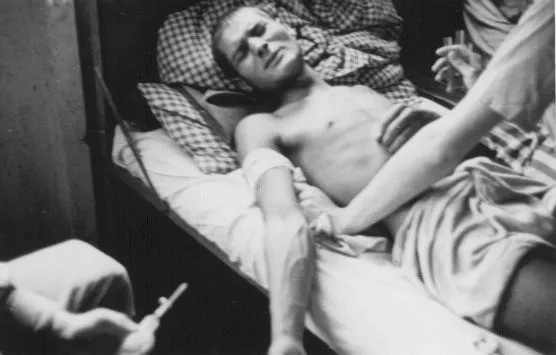
Tan solo he nombrado algunas de las atrocidades que se vivían a diario en Auschwitz, pero al menos puedes tener una idea de lo que pudo haber sido tu vida allí, por eso puedes imaginar lo que significó para ellos aquella tarde del 27 de enero de 1945 cuando el campo finalmente fue liberado por las tropas soviéticas. Algunos de los prisioneros fueron obligados por los nazis a salir del campo en lo que llamaron «La Marcha de la Muerte», pero los más afortunados que aún permanecían dentro del campo pudieron finalmente ser libres.
I have only named some of the atrocities that were experienced daily in Auschwitz, but at least you can have an idea of what your life there could have been, so you can imagine what it meant for them that afternoon of January 27, 1945 when the camp was finally liberated by Soviet troops. Some of the prisoners were forced by the Nazis to leave the camp in what they called "The Death March", but the luckiest ones who still remained inside the camp were finally able to be free.


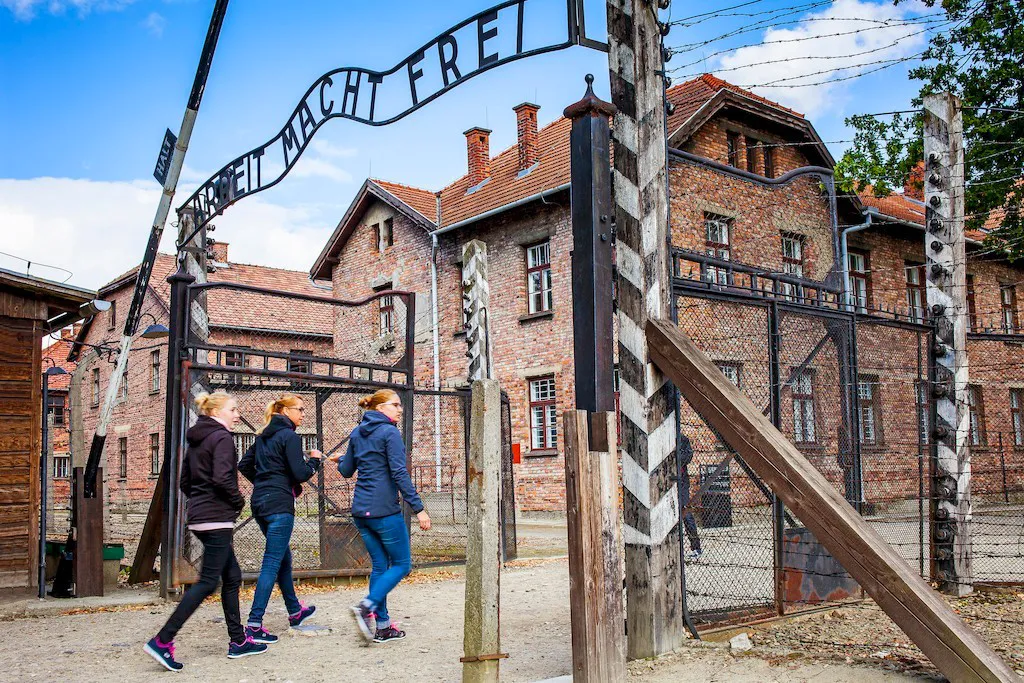
A veces resulta inadmisible que algo tan espantoso haya sucedido, pero esa es la realidad, sí sucedió, por esa razón los mismos prisioneros se negaron a que Auschwitz fuese demolida y pidieron que se conservara tal como estaba como un museo, para enseñarle a la humanidad y a las futuras generaciones que el holocausto existió y que durante la segunda guerra mundial, el ser humano más perverso demostró de lo que era capaz. Hoy en día puedes visitarlo en Polonia donde te recibirán las verjas sobre las cuales todavía está escrita la leyenda más irónica del tercer reich «Arbeit Macht Frei» (Él trabajo los hará libres)
Sometimes it is inadmissible that something so horrible has happened, but that is the reality, it did happen, for that reason the prisoners themselves refused to allow Auschwitz to be demolished and asked that it be preserved as it was as a museum, to teach humanity and to future generations that the holocaust existed and that during the second world war, the most perverse human being demonstrated what he was capable of. Today you can visit it in Poland where you will be greeted by the gates on which the most ironic legend of the third reich “Arbeit Macht Frei” (Work will set you free) is still written.
Esto ha sido todo por hoy amigos, no ha sido una experiencia agradable en los absoluto ponernos en los zapatos de los prisioneros de los campos de concentración, pero considero que eso es lo que nos falta hoy en día, ponernos en el lugar de los otros, tratar de entenderlos y sobre todo nunca, jamás olvidar el pasado para que la historia no se repita. Muchas gracias por su atención, nos vemos en otra oportunidad.
This has been all for today friends, it has not been a pleasant experience at all to put ourselves in the shoes of the prisoners of the concentration camps, but I consider that this is what we lack today, to put ourselves in the place of others, try to understand them and above all never, never forget the past so that history does not repeat. Thank you very much for your attention, see you another time.

Image designed by me in canva editor