
Today the Bank of England raised interest rates by 0.5% to 5% in what many commentators described as a shock announcement. Andrew Bailey, Governor of the Bank of England, commented that pay cannot keep rising at its current pace if people want inflation and borrowing costs to fall.
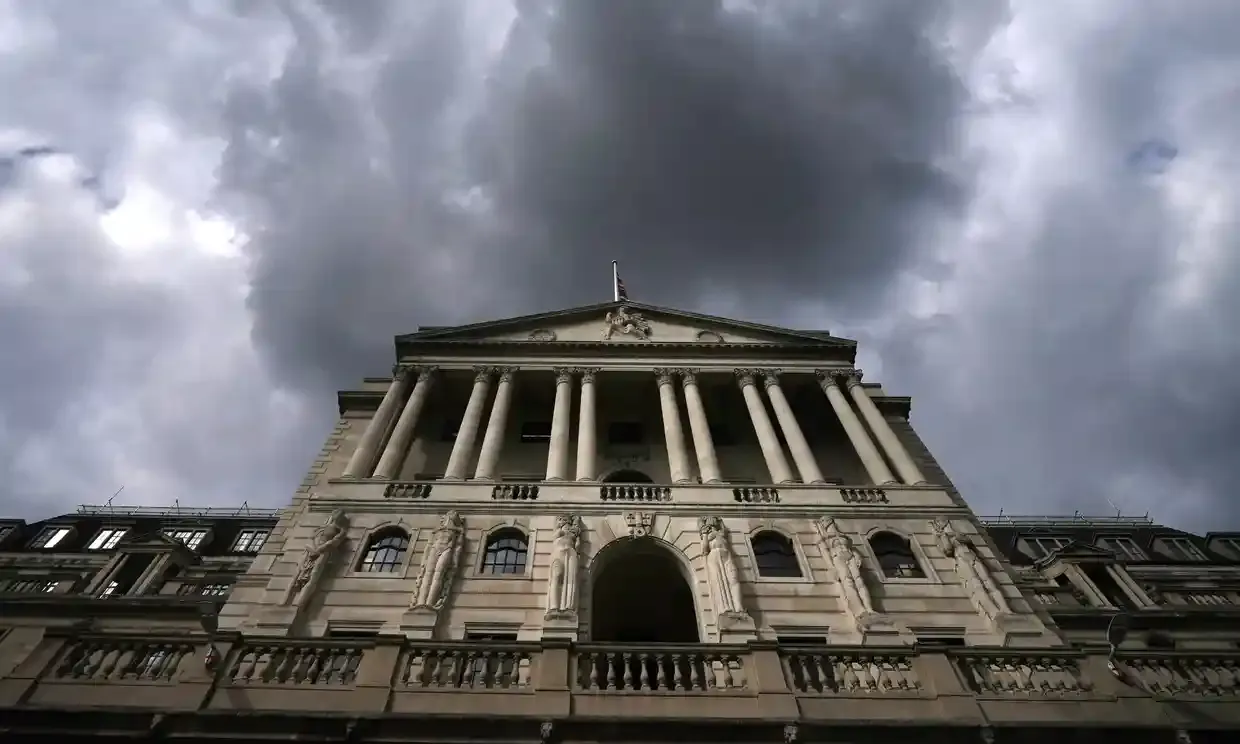
The Bank of England in the City of London. Photograph: Yui Mok/PA
Meanwhile with fixed mortgage rates now forecast to rise to 6.5% an estimated 800,000 fixed rate mortgages are set to expire in the next six months. A further 1.6 million are set to expire next year. This spells a world of pain for many households already struggling with the increased cost of living.
This could be exasperated if people find themselves in negative equity and can only borrow on the more expensive SVR (standard variable rate).
Following today’s big increase the Governor said:
We’ve got to get and we will get inflation back to its target.
So far a modest recovery in the U.K.’s service sector let the nation avoid a recession, at least for now.
An uptick in retail and the creative industry pulled the economy to a 0.2-percent expansion in April, countering a slump in construction and a 0.3-percent slip in manufacturing and reversing a 0.3-percent contraction in March.
According to Bloomberg the British economy was 0.3 percent larger on 1 May than at the beginning of the COVID War in early 2020. However, “consumer-facing industries” are still doing 8.7 percent less business than before the COVID era, the Office of National Statistics (ONS) reported.
Suren Thiru, economics director at the Institute of Chartered Accountants, said in a public statement;
Although GDP rebounded in April, this reflects more the reversal of the squeeze on service sector activity from poor weather in March than a meaningful improvement in our underlying growth trajectory.

Even though April’s positive growth reduces the risk of a recession, defined as two consecutive quarters of economic shrinkage. However, as the inflation rate was above 8.6 percent, putting pressure on the Bank of England to continue raising its interest rate in the months ahead.
Markets are pricing in the likelihood that the bank’s key rate will reach at least 6 percent by next February, which would be its highest since 2001. Moreover, climbing interest rates increase the chances of a recession as this year proceeds.
Already due to the higher rates homeowners are “hesitant to request work” on home repair and remodeling projects. The construction industry blames its 0.6-percent drop in April on the higher rates plus real estate agents also report doing less business.
Governor of the Bank of England Andrew Bailey {Photograph: Oli Scarff/AFP via Getty Images}

Facing flak Bailey has denied that the UK’s central bank is looking to trigger a recession as it tries to control inflation. Yesterday, JP Morgan economist Karen Ward said the Bank needs to “create a recession” to cool demand, and price rises.
Over the past six weeks, Bailey has been forced to admit that the bank has underestimated short-term inflation and that its forecasting model is not working properly.
What a shocker! The inflation has been there for everyone to see, just as the consequences for raising these rates so quickly will be to create a worse recession. But it’s not like they care about the pain of the everyday man and woman. That much is also blatantly clear.