
Growing orchids is easy! If you imitate a plant's natural habitat, it will thrive. The most commonly available orchids, such as the Moth Orchid, Phalaenopsis, are so popular because they do well in typical homes.

As a general guideline, orchids should be given as much light as they can happily tolerate. Leaves will tend to become greener when lighting is low, and yellower (occasionally with red spotting) when there is a lot of light.

Orchids generally appreciate a 10-15°F drop in temperatures at night (6-8C). Most of the commonly-available orchids are chosen to make growing orchids for beginners easy, which means that if you got your plant at a supermarket or orchid mass-market place, it will probably do well in temperatures that are comfortable for humans.
Most orchids like humidity to be about 70%. This is considerably more humid than most homes, so you'll want to make some effort to provide your plants with extra humidity. Orchids usually appreciate misting with a spray bottle. If the plant has aerial roots growing up out of the pot, those roots will especially appreciate getting some moisture.
You can also set up a humidity tray: put water in the bottom of a tray, with enough gravel that a plant set on top does not sit in the water. As the water evaporates, it will provide some extra humidity for the plant.

Overwatering kills far more orchids than underwatering; it's the most common cause of orchid disease. So when in doubt, don't water! The potting mix used has a lot to do with how often an orchid needs watering, but most orchids are sold in mixes that allow for roughly weekly watering. For most orchids, stick a finger a couple inches into its potting mix, and if the mix is dry, it's time to water. Don't water until it's at least approaching dryness.
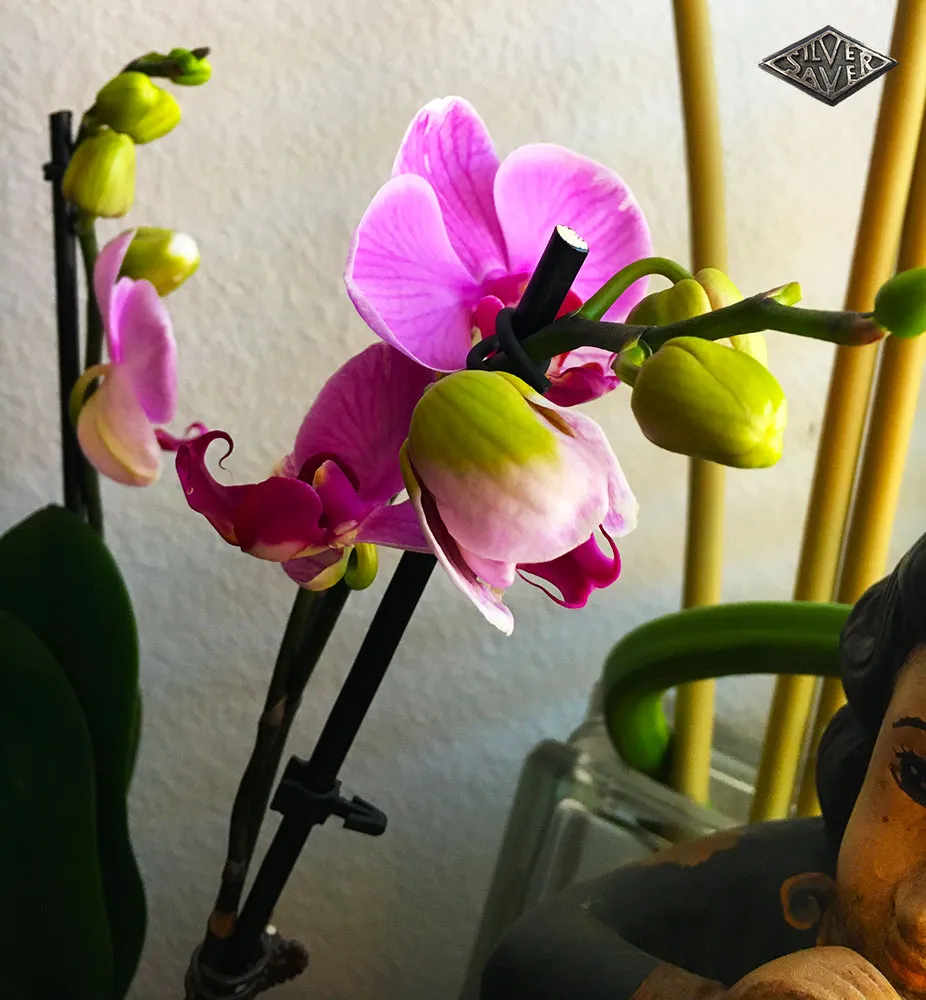
To water an orchid, take it to the sink and run water through the pot until it flows out the bottom, trying to get as much of the potting mix wet as possible. Alternatively, submerge the plant's pot in a bucket for a few seconds, then lift it out and let it drain off excess water.

Symptoms of overwatering are similar to symptoms of underwatering: the plant appears to shrivel and dry out. In the case of overwatering, this is because most of the roots have died and rotted. If in doubt whether you're overwatering or underwatering, lift the plant out of the pot and see whether the roots are firm and white (healthy) or soft and mushy (dead). In the latter case, the plant should also be repotted.
Souce: Growing Orchid for Beginners, Orchid Care Tips
😍#ilikeitalot!😍
The Orchid Lover's Community .. This community was established as a place for Orchid Lovers to post about Orchids.

Best Regards,
I am not a financial adviser. This article is not meant to be financial advice. My articles on cryptos and precious metals share my personal opinion, experiences, and general information on cryptos and precious metals.
Thank you for stopping by to view this article.
I post an article daily, and I hope to see you again soon!

Join the Ladies of Hive Community and the Ladies of Hive in discord.
Would you like to support The Ladies of Hive Community?
Consider giving a delegation!
25 HP - 50 HP - 100 HP - 150 HP - 200 HP - 500 HP - 1000 HP - 5000 HP

