
Using six machines to turn a field of grasses into a hay product has been quite the eye opening experience. My first time harvesting a hay field, luckily we had some good tools for the job to get it all done. Using a disc mower, rotary rake and square baler, bale collector along with the tractor/skidsteer we get it done with each step. My foreman did the main fields and I mowed a smaller area for the first time. It was a cool experience driving the tractor and mowing. Excited to try the other attachments as well like the rotary rake and baler.

The fields on my property are getting tall with lots of plant growth, around where I live we can cut hay around three times a year. Though we were a little late this time as we were still acquiring equipment. But we now have all the attachments and implements needed to harvest. Using a mower, rotary rake, and square baler we will turn the fields into hundreds of bales of hay.
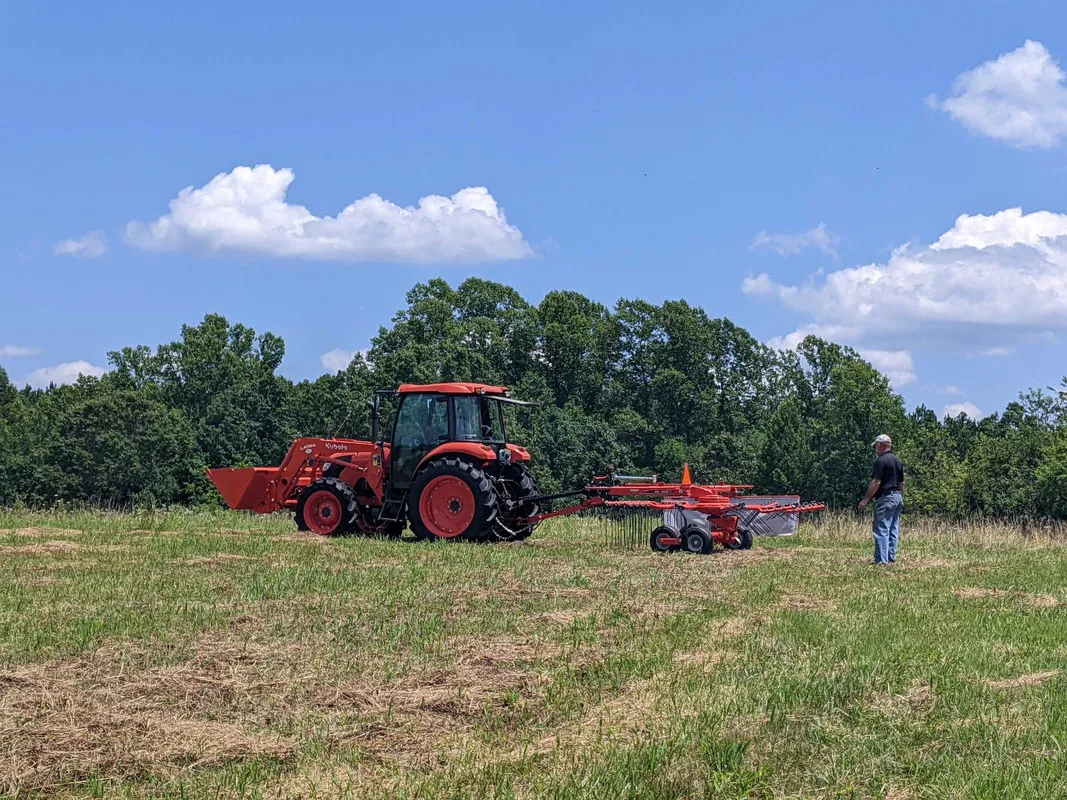
The rotary rake takes the mowed grass and forms it into piles known as windrows. These will be picked up by the baler. Compared to a manual tractor mounted rake this thing is very effective at getting air into the hay piles.

The baler attaches to the tractors output shaft (PTO) and is completely powered by the tractor.

With the windrows formed in the field we drive over it with the baler and it forms and ties square bales. They pop out the back and then I pick them up with the skid steer.

Using this attachment I drive up to the bales and they go into these guides that hold them in place. Once I have ten of them its time to engage those hooks you can see above.

With the hooks engaged I can lift the bunch of bales and put them where I would like.

Not all of the rows that were mowed have been formed into windrows yet, but with one pass we do indeed have many bales. Probably a hundred of so.
Sometimes I have to get out of the skid steer and place the bales in manually. I park the skid steer and put the bales under and then get back in. This one is full and ready to be moved once I engage the hooks.

I had no idea this thing existed until recently. But it indeed makes easy work moving bales.

At the end of the day there were still many bales to pick up, but I will come back and collect more once the next windrow is setup and ready to be baled.

The next day its all ready but since it rained we must wait now for the windrows to dry. We may need to hit it again with the rotary rake so it can dry up good. Otherwise it will jam up the baler and we have to stop it and move the system back to get the clog out.

It seemed like it rained every evening, quite heavily for a week. Which pushed us back on collection and raking of the hay. But the cut grassed loved the rain and was coming up quite green.

The meadows are made of tall grasses, not sure exactly what is growing here. But we must cut it, rake it and bale it.

We still have a few sections of the big field to go cut but we have most of it on the ground now. So the grasses can regrow and we can cut again in the autumn.

After waiting a week, we could now bale. We test the cut grass by walking on it. And if no water is on my boot after doing this we know its ready for raking and baling.

We got about half the windrows picked up but then started having trouble with the baler.

My foreman was getting video to send back to the equipment dealer to get some support on it. For some reason only one of the two strings are tieing up the bales and its causing them to come out of the baler untied on one side. These machines are very dangerous, so we will only do exactly what the dealer tells us to. And not try to mess with it without proper instruction.

The rake is what we use after cutting, it combines the grass into "windrows" which are piles of grass in this case.

It is known as a rotary rake, its powered by the hydraulics and PTO shaft of the tractor.

Going out to pick up the bales that came out good before the stringing went bad I came across a family of Geese. They live around here and frequent the pond and surrounding areas. They do not seem to notice me in the skid steer, but still cautious of the big machine around them.

Collecting the bales is done with the skid steer.

We placed the tractor attachment in the workshop, but found it easier to get it back out with the skid steer and using its forks.

Needing to buy some short tow straps we instead used some braided paracord to move it. This stuff had well over the strength to hold up the mower as we moved it.

Three cords in one, along with another wrapped around gives us many times more strength than one cord would.

We got it placed down and moved the tractor over to attach the mower.

My foreman drove it over to the area that was up next to be mowed. And I drove the tractor there for the first time with the mower.

He just made sure it was set right for me, and let me do the cutting of the field. It was really cool doing that for the first time.
After a few hours, all of the fields back there were cut. We now have to let the grass dry up for a few days before raking it. And then once we get the baler working again we can bale it all up.

I have already collected over 100 square bales, and probably another 100 on the way once we finish harvesting the hay. Our plans are to make soil out of the hay by placing it out in the sun, only one level high and then turning over the windrows formed. After months of doing this it should hopefully break down into soil, maybe more processing is needed. But I figured it would be a good use for the cut hay. There is a lot of milk weed growing in it, so we think selling it for consumption hay for cows and such is not the way to go. Instead composting the hay over time into dirt, I can use it for my garden and possibly sell the left over amount.