
Last summer I was gifted a single turmeric rhizome which, instead of eating, I decided to plant in a pot. I was not expecting much but, to my surprise, even in a temperate climate you can grow turmeric as easily as any other potted plant.

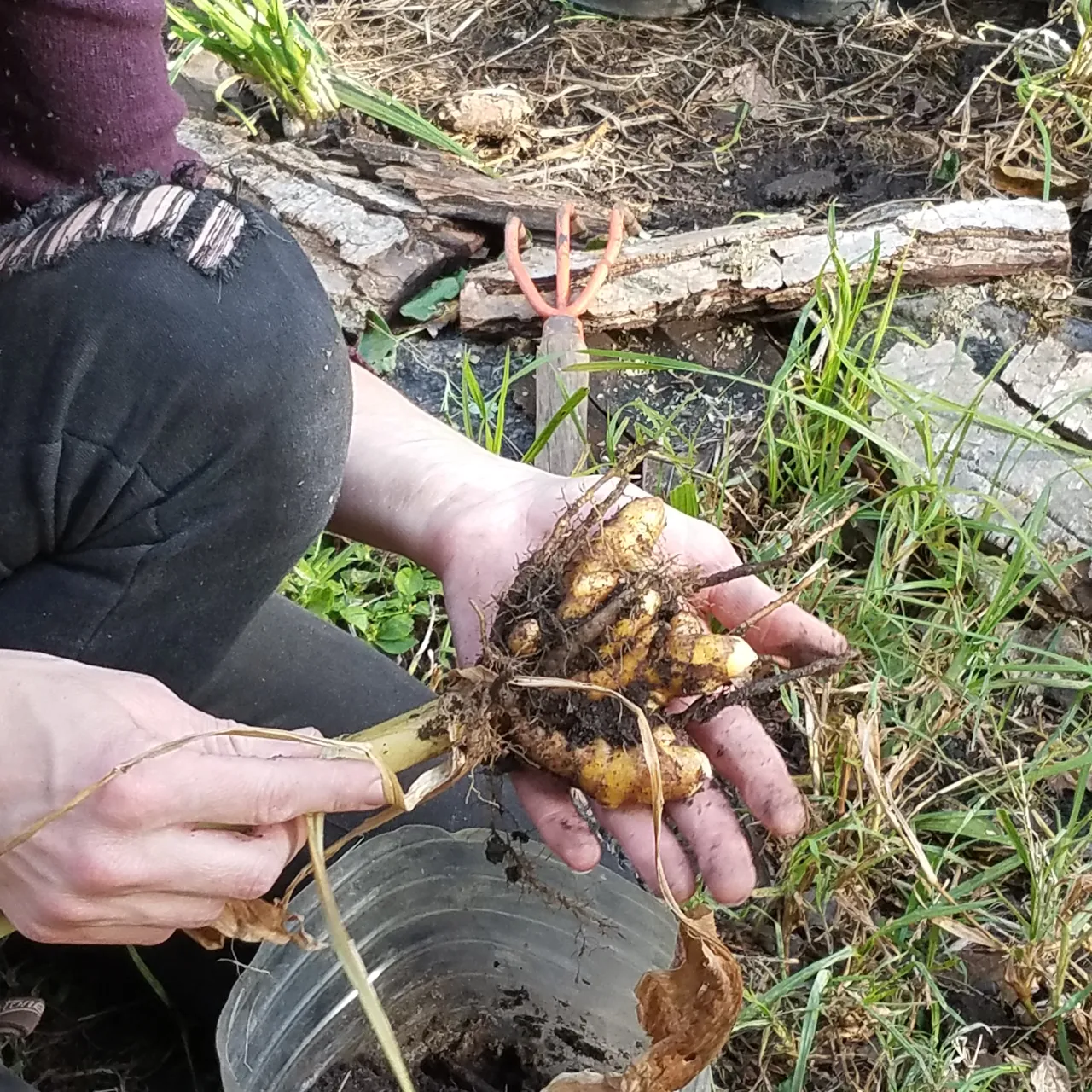
In a tropical climate turmeric can grow year round in the ground or a pot, but, not here. Now that winter is nearly upon us (in the Southern Hemisphere) and the aerial leaves of the turmeric plant have turned yellow, I decided to dig up the plant and see what has grown underground.

Why grow turmeric? What are the medicinal properties of this herb?
Well, in recent years this root (often in powdered form) has gained fame as a anti-inflammatory herb. I realized I had never truly verified this often repeated claim and decided to crack open my herbalism books to see what they had to say about this rhizomatic herb.

According to Rosemary Gladstar turmeric possess anti-tumor and anti-biotic properties which I had never heard before! Michael Tierra (another renowned North American herbalist) agrees as far as the tumor dissolving properties, especially in the uterus!
In his book "Planetary Herbology" Tierra has listed turmeric as an Emmenagogue, meaning the herbs can alleviate cramps and regulate the menstrual cycle. Along with the anti-tumor properties this herb sounds like a great ally for women of all ages. I wonder if taking turmeric can prevent or treat uterine fibroids? I will do more research on that and let you know soon, dear reader.

My turmeric roots are cleaned and harvested and sitting in my kitchen waiting to be used in cooking. With what I have learned from my recent research I also add a few slices to my pre-menstrual tea too. Of course, we are probably all most familiar with turmeric for it's role as a key ingredient in curries and now I know that it provides much more than color and flavor!!