
No, I am not digging my grave nor I have lost my mind! I am just building a hugelkultur bed, probably the most elaborated raised bed, one can built. But how and, most importantly, why I found myself in that pit throwing my hat in the air ?

It was about a year ago when I read this post by 
The main idea is to mimic what nature does in a forest. When an old tree falls down, it gets covered with organic matter, decomposes and eventually feeds the new trees that grow on top of it! Pretty simple, indisputably effective but how to bring this procedure in your garden or your farm?
A search in the internet will give you tons of answers on this question. There are countless variations, of all sizes and ways to be done but everyone agrees to the benefits.
- Minimizes irrigation and fertilization needs.
- Works in all kind of climates, even desert.
- Gives a solid alternative to the constant tilling of the soil.
After months of reading and consideration I have settled into my own version but I am not so good with words so I took a lot of pictures to give you a detailed overview of how I did it :)


At this point we are at the ground level again but with a radically different underground composition. From here you can continue like with any other type of raised bed. I have found some old boards and since I love straight things...


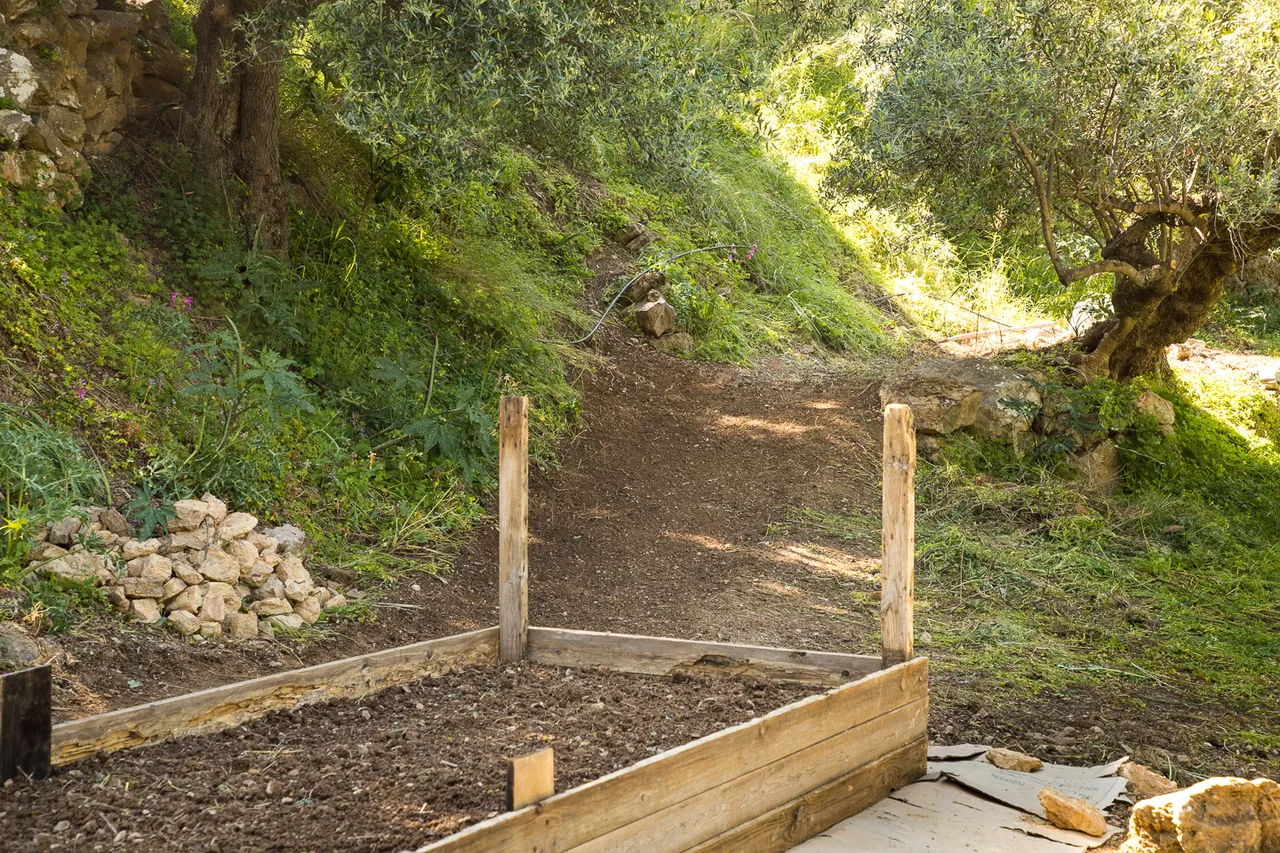


Mulching is essential for the success of all kind of raised beds. Actually even if you don't raise a bed or do nothing of the above, mulching is still an amazing gift to your plants. It can be any kind of organic material. Wood chips is the most common solution but whatever you can find close to you, will do. I am in the middle of olive groves so chopped olive branches and leaves are what I have. In the bed I used two years old mulch, that is partially composted, while I used this year's for the paths around it.
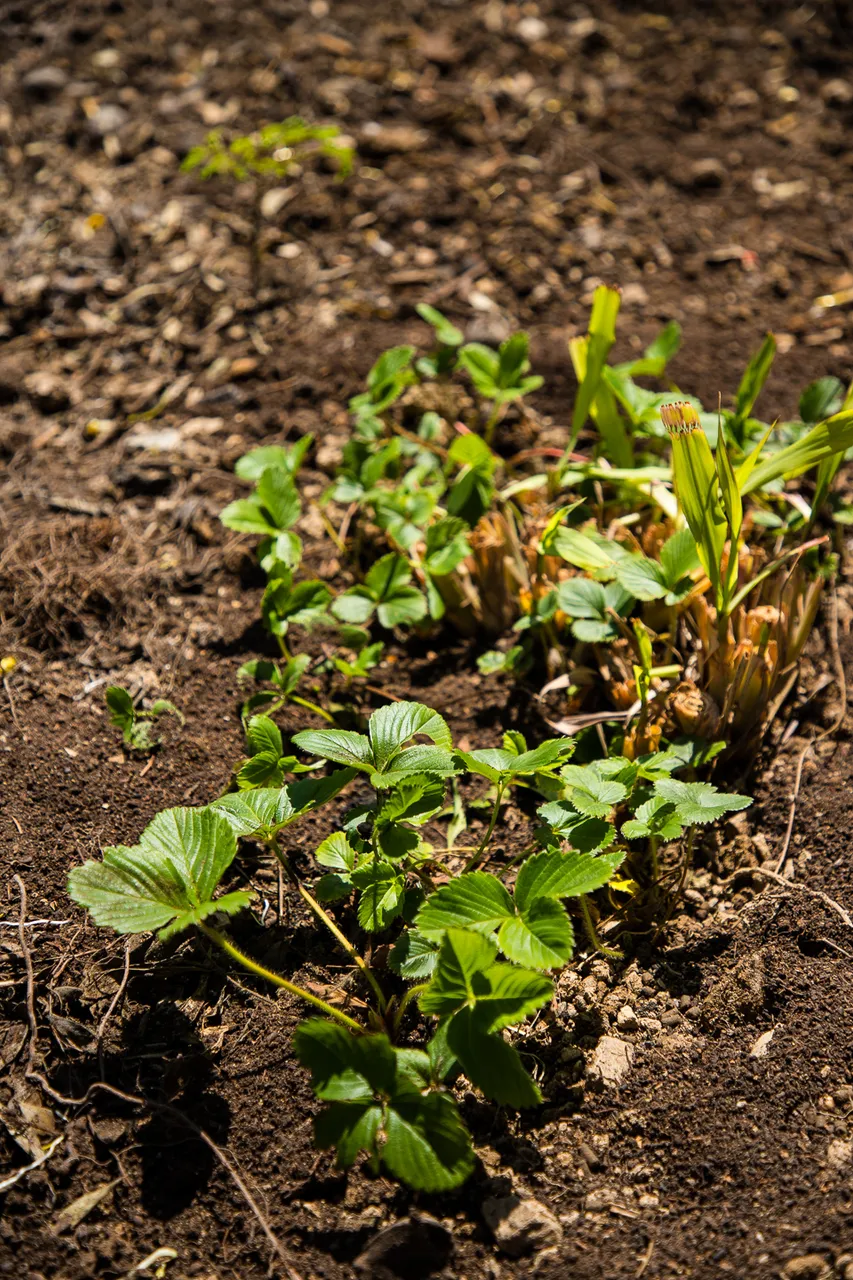


Variety is the other key characteristic of this kind of cultivation. The first "tenants" of our bed are the representatives of 3 categories that can live together, utilizing all the available space, both horizontal and vertical! Strawberries on the ground level, a lemon beebrush on low altitude and an acacia tree (major nitrogen fixer) above them. Of course there is going to be a lot more planting here and hopefully I'll post updates with an abundance of thriving flora on it!


The pales on the corners are there to hold a small fence that I am about to put around the bed to discourage field animals to enter and make a mess out of it.
I hope that you have found this post interesting, I will be more than glad to answer any of your questions on the comments and who knows you may even get a juicy upvote due to the Be POSH, Engage and help Hive Thrive initiative by 


I have also posted about a miniature version of this concept a couple of weeks ago, here.
And although it is probably over by now, this is my contribution to 

Thank you for reading and if you want to know more about me you can check out my introduction post.
Commenting, upvoting and rebloging are highly appreciated!