

This is a Spanish film directed by Alejandro Amenábar, set in the fourth century AD, in the city of Alexandria, Egypt, the story focuses on Hypatia, a philosopher, astronomer and mathematician played by Rachel Weisz.
Hypatia is an emblematic figure of the time, known for her intelligence and dedication to knowledge, in a context where the tension between science and religion intensifies.
The plot unfolds at a time of great social and political upheaval, where Christianity is on the rise and paganism, represented by ancient Greek wisdom, is in decline.
The film depicts Hypatia's life as she teaches her students about astronomy and philosophy, and how her quest for scientific truth is threatened by growing religious fanaticism.

Among her students are Orestes, a young man who falls in love with her, and Davo, a slave who also has a deep admiration for Hypatia.
As the tension between Christians and pagans increases, the city of Alexandria becomes an ideological battleground.
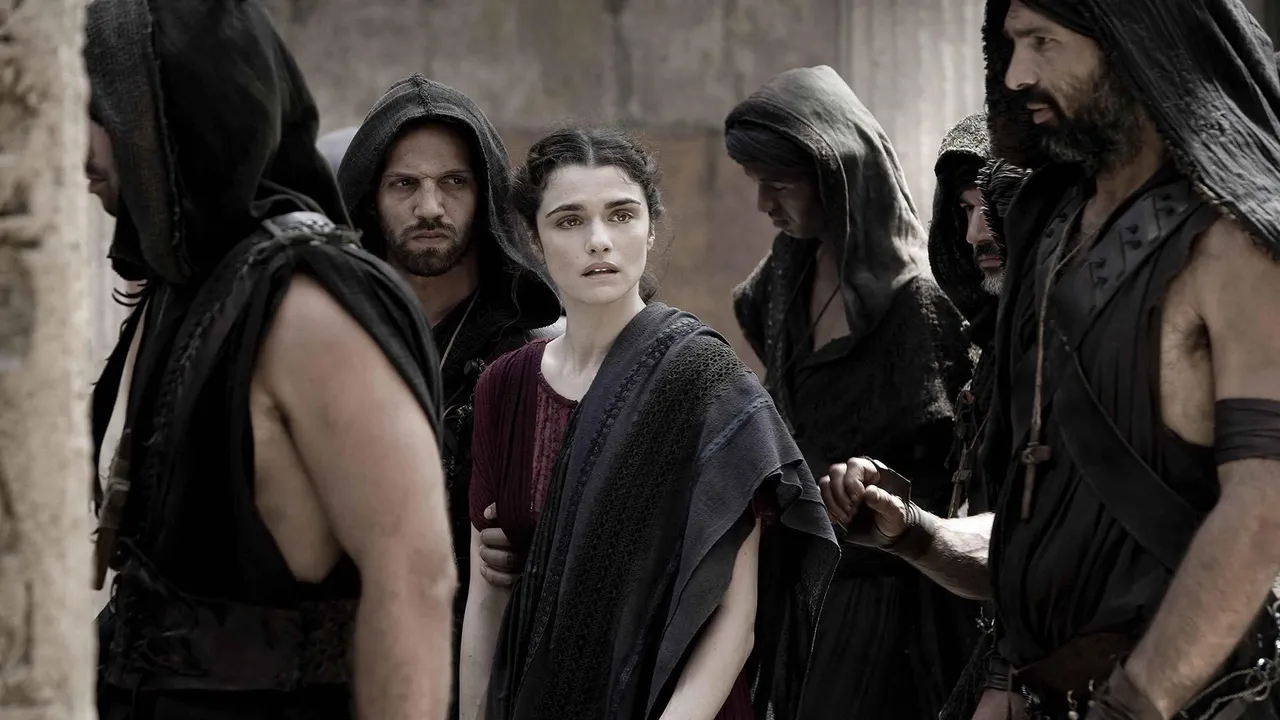
The film portrays how the followers of the new faith begin to attack pagan temples and persecute those who defend scientific knowledge.
Hypatia, despite her position as one of the most brilliant minds of her time, faces violence and intolerance arising from the religious power struggle.
One of the most shocking moments in the film is the destruction of the Library of Alexandria, a symbol of ancient knowledge and wisdom that is lost in the midst of the conflict.
The library, which housed thousands of texts and works of great thinkers, is consumed by flames, representing the tragedy of the loss of knowledge in favor of blind faith.
Throughout the film, Hypatia strives to find answers to fundamental questions about the universe and existence, using scientific and rational methods.
However, her dedication to truth places her in a vulnerable position in a world that is moving further and further away from reason and logic.