
Hi, I'm @roseri, welcome to my blog: #maternidadwithpurpose
Obtaining multiple benefits when children learn a foreign language.
A child is fully capable of learning a foreign language early on. In fact, it is proven that the learning of other languages is much easier and more effective when it occurs in the first years of a human being's life until the same complete seven years.
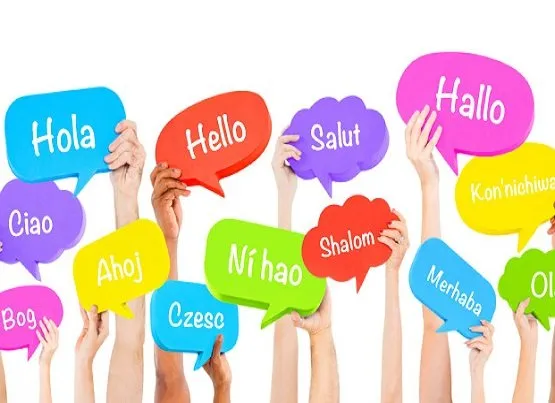
At what age can we start studying other languages?
So far there is no contraindication in relation to bilingual education. What is known until today is that there are more advantages than disadvantages in relation to this type of education?
In the range between 6 months and 4 years, there is a brain window in children. This means that the language circuits are being formed. Neurons, if properly stimulated, make new connections and experience. Therefore, presenting a new language to your child at that age can contribute to learning other content. There is also a greater chance of speaking without an accent since the basic nervous structures are still information.

It is scientifically proven that children who speak two languages demonstrate more facilities in different areas:
- Resolution of non-verbal problems.
- The communicative sensitivity.
- A better spatial perception.
- More creativity
- A more harmonious relationship with mathematics.
- For adults and children, the principle of assimilation is the same: you have to get used to listening to another accent, writing a new spelling, learning new rules.

Use music and songs: music and songs in another language are also an excellent way to familiarize the little ones with a new language.

Private and group classes: Doing English classes with a tutor can also be a good practical idea. For children under three years, group classes are not the best solution. It is better to wait 4 or 5 years to place a child in an individual class. The meetings can take place in the student's house or in the teacher's house.

It is important that, both in the classroom and in the home, the child be taught and encouraged to speak in another language naturally and within their own rhythm. Professionals who teach languages for very young children should be well trained and trained to understand and have the sensitivity to observe how each child responds to different teaching methodologies and stimuli.

In short, learning from an early age another language opens a range of possibilities to have better personal development scenarios, before a very competitive and demanding world, and helps the child to know other cultures without ceasing their intellectual learning.
Source of information
- https://www.kidslanguagesschool.com/idiomas-para-ni%C3%B1os/junior-de-9-a-12-a%C3%B1os/
- https://yoo.rs/64566bd83a68ff614e46b7db936c4142/blog/hou-op-met-spreken-over-talent-iedereen-kan-zingen-1518461345.html
- https://www.fluentu.com/blog/spanish/learn-spanish-grammar/