
In the activity of planting and production of plants for commercialization of flowers, it is more difficult to obtain the necessary foreign currency for the acquisition of plants, which have a high cost, leading to a delay in the planning of gerbera planting, often taking place outside the planting season.


▶ In addition, during the time elapsed by the transport (long periods) can cause damage to plants sometimes death of the same, losing much of the investment and raising production costs in the establishment of the crop.
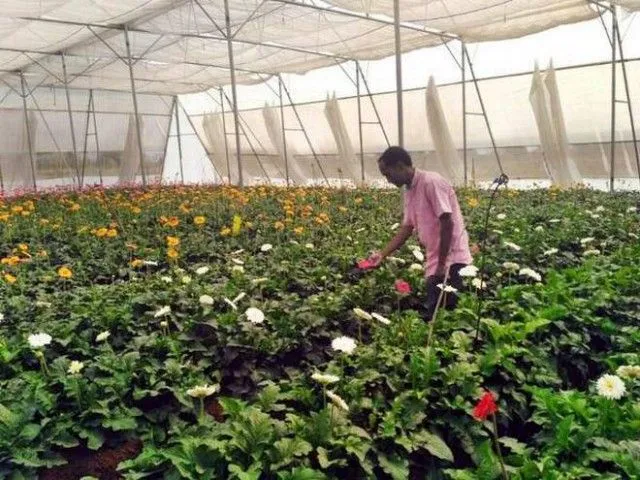
▶ Credits: Pinterest. – [Image of Public Domain]
Due to this problem, the implementation of techniques that allow the massive production of this species of plants in our country, in the different commercial varieties, healthy and productive materials, is becoming more and more necessary to reduce imports of this crop.
Since little research has been done on gerbera propagation by in vitro culture technique, biotechnology laboratories have begun to conduct research in this area of clonal propagation in order to obtain an effective technique for the multiplication of this species.
Given that once enough plant shoots have been obtained under in vitro conditions, the next step is to induce these shoots to form roots in order to obtain a complete plant ready to be taken to the field.
Unfortunately, the means of root induction are species-specific and may even differ between varieties, mainly modifying the concentration of auxin-based hormone regulators.
NOTE: Reference material.