
In late February I had the opportunity to check on the hive. Previous attempts it was either too cold or raining. During the winters in Georgia we tends to get warmer but wet days. Or dry but cold days, both are not really suitable for opening up the hive and seeing what is going on. Honestly I have not kept up with them recently, and did not supply them any sugar over the winter as I was suppose to.

February marks just about the one year mark with my honey bees, its been quite the experience. I think the most memorable part of the whole year was feeding the bees sugar water. It is wild just seeing bees emerge from the forest in the 100s just to get a taste of that lovely sugar water. 


Approaching the hive we do not see any activity.

Right away I noticed something off, the entry was filled with debris. Looks like wax and stuff like that.

Setting up my camera on the table I get ready to open the hive.

Using my hive tool I break the seal that the bees make.

Upon opening it I do not see any activity at all.

Pulling out trays they are very light, no honey inside.

Some of the trays have holes in them, looks like something ate it.

Down at the bottom of the hive there is just a bunch of debris, not normal. Something ate the hive. Probably a mouse or something like that.
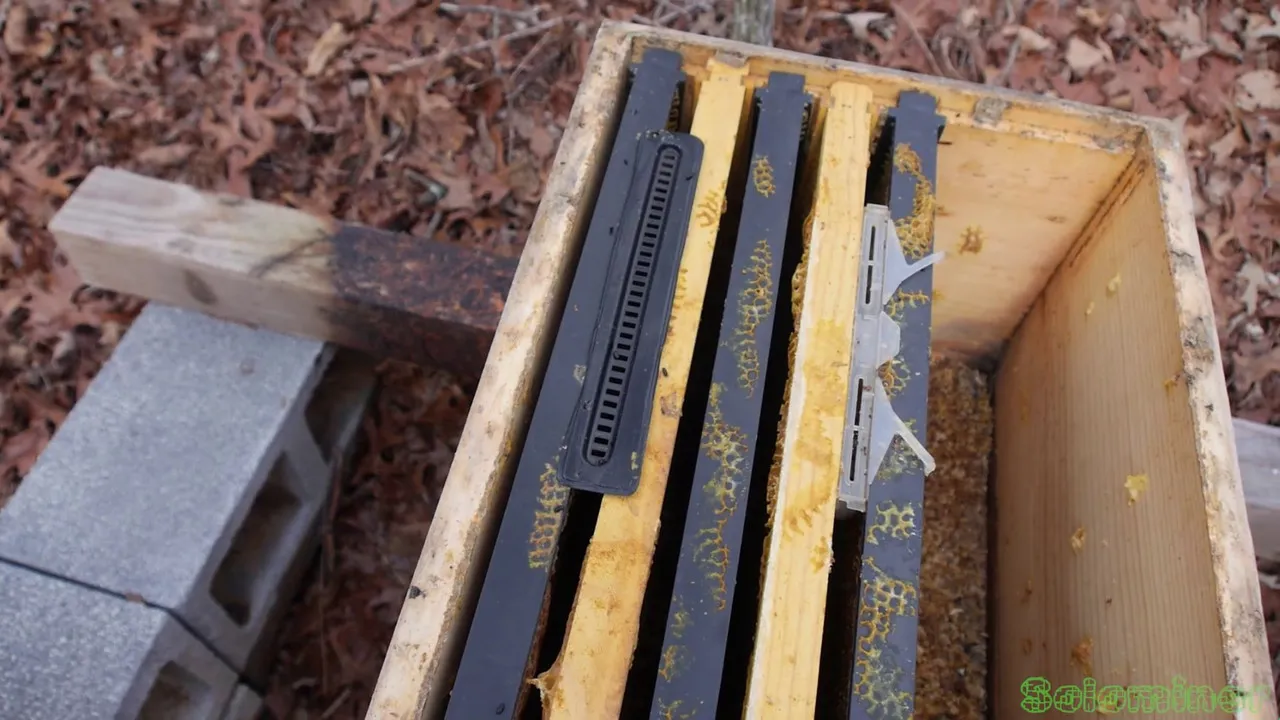
The beetle traps also dried out, making them not very effective. Though it appears to be animal damage and not small hive beetles.

As I pull out trays they are mostly black and have no honey at all. Seems like it was all consumed by the bees.

I think the bees starved and left the hive, and then some animal came in to feed on what was left. Hard to say for sure.

A foundation tray as well has that black wax with nothing in them but the cells themselves.

Pulling part the hive I leave everything out in the open for the rain to clean up a little bit. Will come back to retrieve my equipment soon. I will need to see what state the remaining wax is in, and clean up the boxes and trays well.

Just a bunch of debris on the bottom of the hive, mostly wax and a few nuts found. Making me think it was a mouse, chipmunk or something like that.. a rodent probably. Using an entrance reducer may have been a good idea, will keep that in mind for next time.

Here is one of the nuts I found, not something bees normal have in their hives.

Also looks like ants are getting into the debris, the tanglefoot ran out many months ago and did not reapply it. Normally that would be a good barrier but since I did not keep up on it the ants found a way in. Maybe ants pushed out the bees, not sure.
Pouring out the debris just let nature clean the rest up on its own. I placed the trays out in the open so the wildlife can feed on them before taking them back home to clean up.

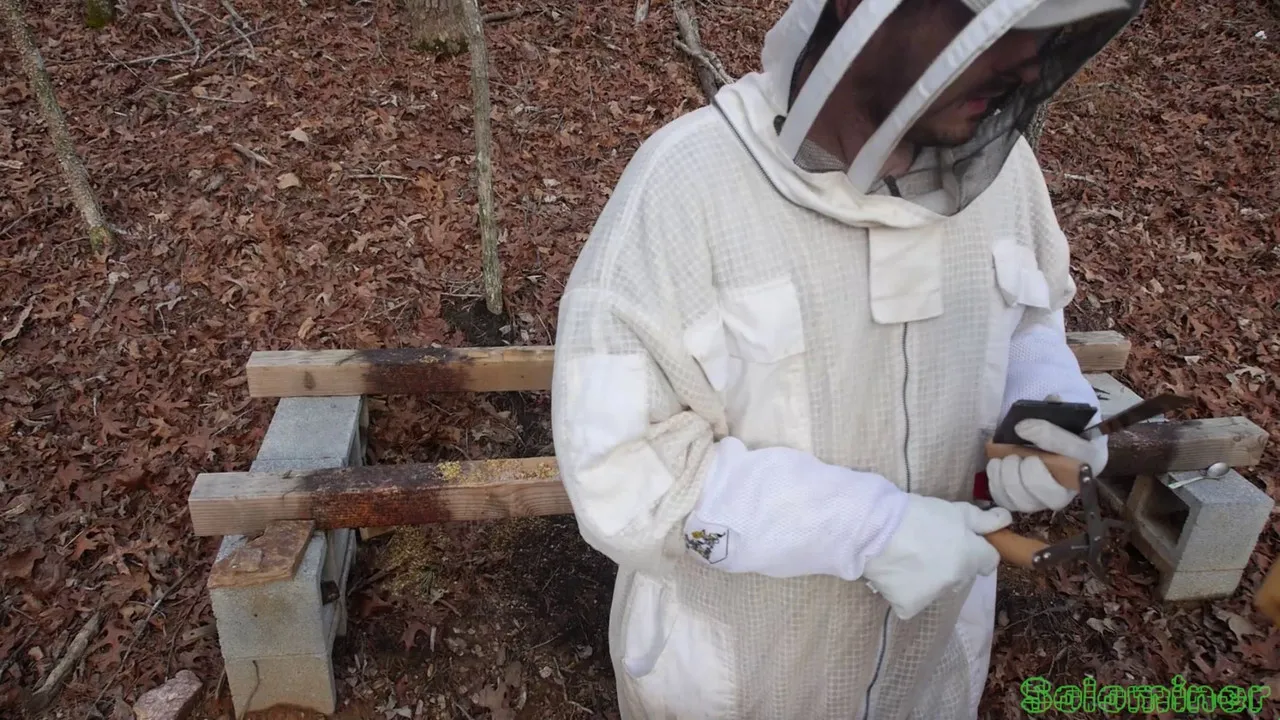
Cleaning up my tools its sad to think all my honey bees are gone, though with my upcoming move its one less thing to worry about. So maybe I will start some new hives once I move.

Not sure how I will do my next bee hives, maybe some wild caught bees would be an interesting start. This time I bought my bees from a farmer but I know someone that did wild caught and they are very happy with them. But I will have to wait a year or so before I am ready for a new project in a new home. As the hives at this old location had to go, regardless of them being active or not. Due to the land changing hands in ownership to someone else.