

Hello to everyone;
Today, I will talk about the conference I attended on the topic of daily life in Byzantium.
Herkese selam;
Bugün sizlere katılmış olduğum ‘Bizans’ta günlük hayat konulu’ konferanstan bahsedeceğim.

Siren Çelik, who works as an academician at Marmara University, shared her knowledge. A subject could be conveyed so well. With his presentation, he gave us very good information about the Byzantine period, which is his area of expertise. Siren lady included some translations in her presentation as she could easily read the written language of the period. This is what caught my attention the most.
Marmara Üniversitesinde akademisyen olarak görev yapan Siren Çelik adlı hocamız bilgilerini aktardı. Bir konu ancak bu kadar güzel aktarılabilirdi. Yaptığı sunumla bize uzmanlık alanı olan Bizans dönemiyle ilgili çok güzel bilgiler verdi. Siren hanım dönemin yazı dilini rahatlıkla okuyabildiği için sunumunda bazı çevirilere yer vermişti. Benim en çok dikkatimi çeken şey bu oldu.

In this photograph, we see the emperors of the Byzantine era, who have changed over the centuries.
Bu fotoğrafta Bizans döneminin yüzyıllar içinde değişen imparatorlarını görüyoruz.

I learn that one of the most important social activities in Byzantium is to go to hippodromes. Hippodromes were places where horse racing games were exhibited. People come here not only to play but also to socialize. At the same time, I learned that this place, where there were some obelisks in the middle of the hippodromes in ancient times, was used not only as a playground but also as an ideological center.
One of the daily life activities of the Byzantine period was to go to the bath. Baths are places used by both men and women for cleaning, washing and socializing.
Bizans’ta en önemli sosyal faaliyetlerden birisinin hipodromlara gitmek olduğunu öğreniyorum. Hipodromlar at yarışı oyunlarının sergilendiği yerlermiş. Halk buraya sadece oyun için değil aynı zamanda sosyalleşmek için geliyormuş. Aynı zamanda eski zamanlarda hipodromların ortasında bazı dikili taşların olduğu bu mekânın sadece bir oyun sergileme alanı değil ideolojik bir merkez olarak kullanıldığını öğrendim.
Bizans döneminin günlük hayat faaliyetlerinden biri de hamama gitmekmiş. Hamamlar hem kadınlar hem erkekler tarafından temizlenmek, yıkanmak aynı zamanda sosyalleşmek için kullanılan yerlermiş.

Next are the monasteries. This place was mostly used by the people for worship. Monasteries were not only used as places of worship.
There were some monasteries with hospitals. At the same time, there were times when it was used as a guest house.
Sırada manastırlar var. Burası halkın çoğunlukla ibadet etmek için kullandığı yerlermiş. Yalnız manastırlar sadece ibadethane olarak kullanılmıyormuş.
Hastaneleri olan bazı manastırlar varmış. Aynı zamanda konukevi olarak kullanıldığı zamanlar oluyormuş.

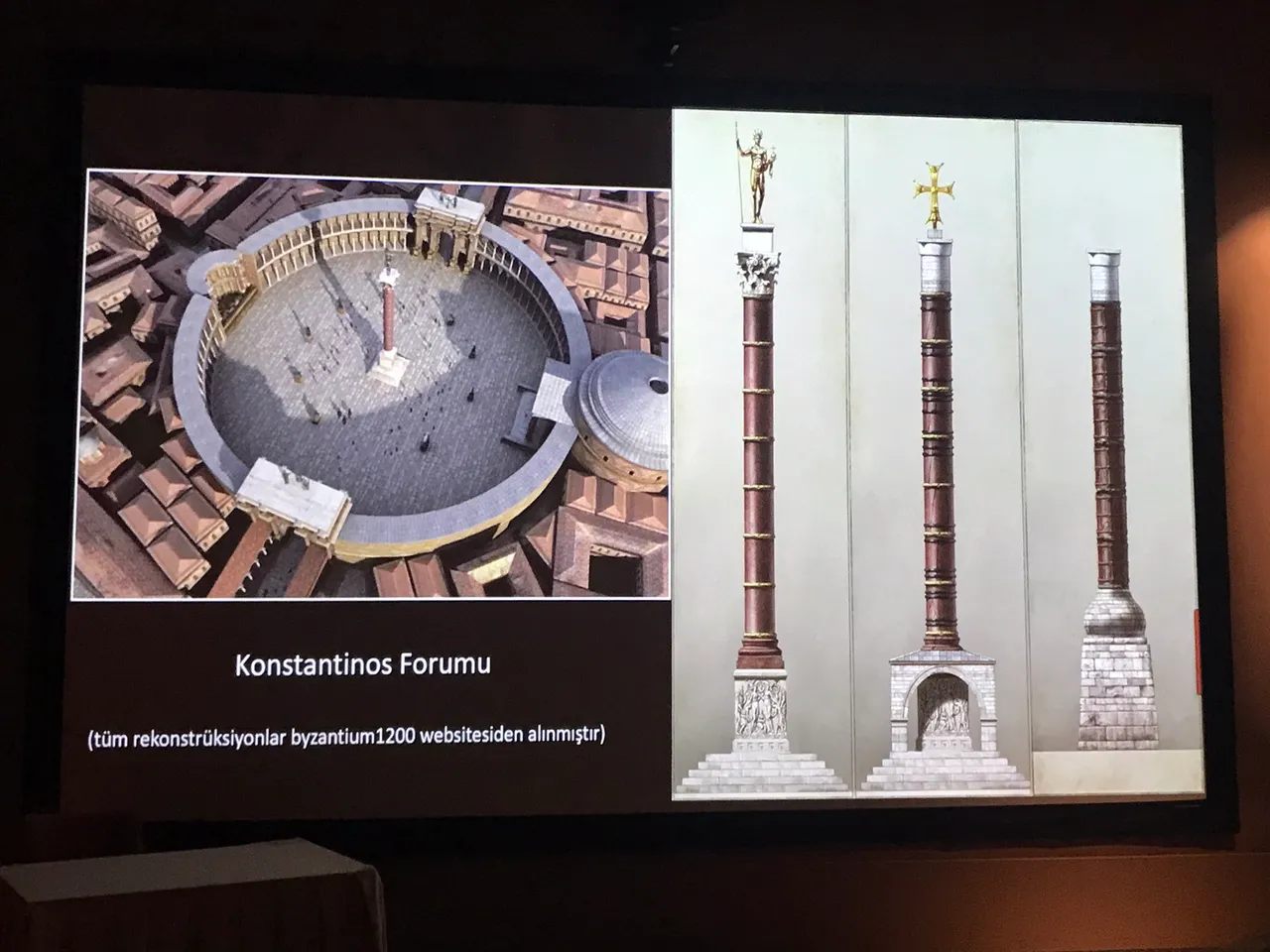
The forums were the meeting point of the people and also known as the shopping center.
In those days, women were mostly doing the housework.
Forumlar halkın toplanma noktası aynı zamanda alışveriş merkezi olarak biliniyormuş.
O zamanlarda da ev işlerini çoğunlukla kadınlar üstleniyormuş.
These were some of the daily life routines that changed over time.
As someone who is curious about past lives and people, this conference was very enjoyable and instructive for me.
I wanted to write down the notes I took and the information I gained and share them with you.
Zamanla değişen dönüşen günlük hayat rutinlerinden bazıları bunlardı.
Geçmiş yaşantıları ve insanları merak eden biri olarak bu söyleşi benim için hayli keyifli ve öğreticiydi.
Aldığım notları ve edindiğim bilgileri yazıya dökmek ve sizle paylaşmak istedim.

I hope you enjoyed reading it.
Take care of yourselves.
See you in my next post.
Umarım okurken keyif almışsınızdır.
Kendinize iyi bakın.
Bir sonraki yazımda görüşmek üzere.
