
Hay preguntas que parecen simples, pero que en realidad son pequeñas ventanas hacia nuestra identidad. Cuando me preguntan si prefiero el terror, la acción o el romance, me doy cuenta de que no puedo elegir un solo lugar para quedarme, porque me gustan todos. Quizás porque, desde que la carrera de comunicación social cruzó mi camino, aprendí a mirar el cine con otros ojos; ya no solo consumo historias, ahora observo cómo están construidas.
Me detengo en la fotografía, en cómo la luz acaricia una escena, sí es fría, natural o artificial; escucho el sonido que envuelve las emociones, analizo si la música utilizada está sincronizada con la historia, si tiene coherencia o no e incluso si es incidental o instrumental. Visualizo el silencio en los guiones, lo interpreto como duelo a veces, porque ahí nada es casualidad a través del montaje. Entendí que el cine se siente en capas, sin embargo, debo hablar de una película que me tatuó el alma hace muchos años, Bajo la misma estrella, basada en la novela de John Green.
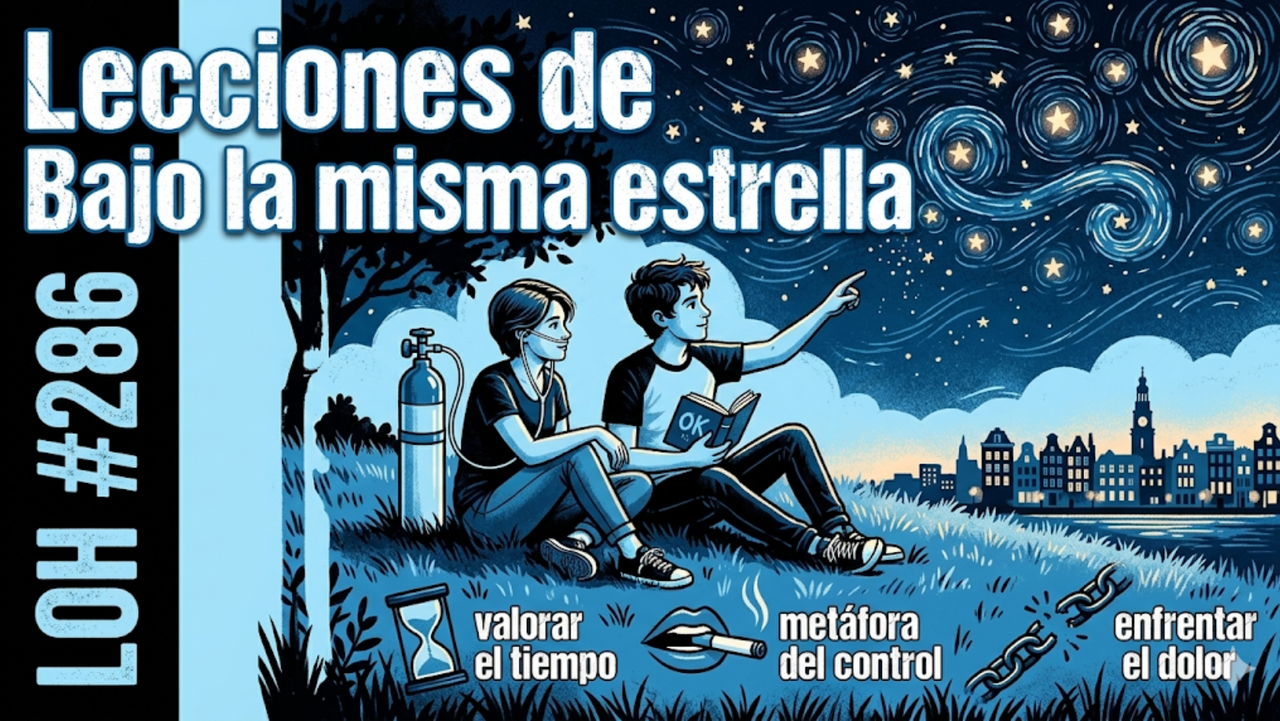
Crédito: Imagen creada con inteligencia artificial Gemini.
La vi por primera vez en plena adolescencia, esa etapa donde todo es frágil y eterno a la vez. En mi época fue un fenómeno, repetíamos sus frases como mantras y sentíamos que el amor podía doler bonito y ser una casualidad como la de Hazel Grace y Augustus Waters. Pero había algo más que me hacía conectar, un hilo invisible, uno tejido por la protagonista y yo, y es que nacimos el mismo día, somos tocayas en el tiempo, porque Shailene Woodley, nació el 15 de noviembre, pero de 1991.
No lloré simplemente por la trama, sino por la sacudida que provocó en mi interior: esa urgencia de sentir plenamente y la certeza de lo valioso que es coincidir con alguien que te mire como un milagro cotidiano. Esta historia me grabó a fuego que el amor no se mide en años, sino en profundidad; en esa fugacidad de los pequeños instantes que realmente alimentan el alma. Ahora, aunque mi mente analice cada encuadre, mi corazón se permite simplemente ser. Me permito atravesar las escenas, sentirlas y, como en un efecto mariposa, imaginar otros finales posibles donde el amor siempre tiene la última palabra. Estas son las lecciones que me quedaron marcadas:
Valorar el tiempo: No se trata de cuántos días vivimos, sino de lo que hacemos con ellos. La película nos enseña que algunos infinitos son más grandes que otros, y que una vida corta puede ser igual de plena y significativa que una larga si se comparte con las personas adecuadas.
La metáfora del control: Como Gus y su cigarrillo, la vida nos pone frente a "armas" que pueden destruirnos. La lección es aprender a convivir con el peligro o el dolor sin permitir que nos consuma, manteniendo el poder de decidir qué nos afecta y qué no. Sé que esto es bastante fácil de decir, y complicado de cumplir, pero la vida se trata de elecciones cotidianas, que pueden ser al azar, para bien o para mal.

Crédito: Imagen creada con inteligencia artificial Gemini.
Enfrentar el dolor sin miedo: El sufrimiento es inevitable "el dolor quiere que lo sientan", pero no tiene por qué ser el centro de nuestra existencia. Aprender a aceptar la vulnerabilidad nos permite conectar de forma más honesta con los demás.
La red de apoyo y el desahogo compartido: Las amistades correctas no intentan borrar tus dificultades, sino que las transitan contigo, haciendo la carga más ligera. La relación con Isaac nos enseña que el apoyo real a veces no necesita palabras solemnes, sino acciones compartidas; como aquel momento de catarsis tirando huevos podridos para transformar la tristeza y la rabia en una anécdota de complicidad. Tener a alguien que valide tus "bajones" y te acompañe en tus momentos más oscuros es lo que convierte una vida difícil en una vida plena.

Crédito: Imagen creada con inteligencia artificial Gemini.
El amor como redención: El amor no necesita ser perfecto ni eterno para ser real. A veces, amar a alguien sabiendo que el final está cerca es el acto de valentía más puro que existe, transformando la tragedia en una experiencia de mutuo apoyo y crecimiento. Los dos protagonistas estaban pendiendo de un hilo en cuanto a su salud, pero aún así decidieron sobreponerse ante su final, y aprovechar, vivir, disfrutar de lo poco que estaba a su alcance.

Crédito: Imagen creada con inteligencia artificial Gemini.
Dejar una huella personal: A diferencia de la obsesión de Augustus por ser recordado por todo el mundo, la historia nos muestra que ser importante para una sola persona es suficiente para que nuestra existencia haya valido la pena.
Porque al final, las películas que permanecen son las que nos enseñan a amar mejor, incluso cuando todo parece finito, efímero e intenso. Pienso que, hay conexiones breves que dejan huellas eternas y el amor verdadero es, ante todo, una forma de mirar al otro.

There are questions that seem simple, but are actually small windows into our identity. When people ask me if I prefer horror, action, or romance, I realize I can’t pick just one genre to stick with, because I like them all. Perhaps it’s because, ever since I started studying communication, I’ve learned to look at movies with fresh eyes; I no longer just consume stories—now I observe how they’re constructed.
I focus on the cinematography—on how the light caresses a scene, whether it’s cold, natural, or artificial; I listen to the sound that envelops the emotions; I analyze whether the music used is in sync with the story, whether it’s coherent or not, and even whether it’s incidental or instrumental. I visualize the silence in the scripts; I interpret it as grief at times, because nothing there is left to chance in the editing. I’ve come to understand that cinema is experienced in layers; however, I must mention a film that left an indelible mark on my soul many years ago, The Fault in Our Stars, based on the novel by John Green.
I first saw it in the midst of my teenage years, that stage where everything feels both fragile and eternal at the same time. Back then, it was a phenomenon; we repeated her lines like mantras and felt that love could hurt beautifully and be a coincidence, just like Hazel Grace and Augustus Waters. But there was something else that connected me to it—an invisible thread, one woven between the protagonist and me—and that is that we were born on the same day; we share the same birthday, because Shailene Woodley was born on November 15, but in 1991.
I didn’t cry simply because of the plot, but because of the emotional upheaval it stirred within me: that urgency to feel fully and the certainty of how precious it is to connect with someone who sees you as an everyday miracle. This story burned into my soul the realization that love isn’t measured in years, but in depth—in the fleetingness of those small moments that truly nourish the soul. Now, even though my mind analyzes every frame, my heart allows itself to simply be. I let myself drift through the scenes, feel them, and, like a butterfly effect, imagine other possible endings where love always has the last word. These are the lessons that stayed with me:
Valuing time: It’s not about how many days we live, but what we do with them. The film teaches us that some infinities are greater than others, and that a short life can be just as full and meaningful as a long one if shared with the right people.
The metaphor of control: Like Gus and his cigarette, life confronts us with “weapons” that can destroy us. The lesson is to learn to live with danger or pain without letting it consume us, retaining the power to decide what affects us and what doesn’t. I know this is pretty easy to say and hard to do, but life is all about daily choices, which can be random—for better or for worse.
Credit: Image created with Gemini artificial intelligence.
Facing pain without fear: Suffering is inevitable—“pain wants to be felt”—but it doesn’t have to be the center of our existence. Learning to accept vulnerability allows us to connect more honestly with others.
The support network and shared release: True friends don’t try to erase your struggles; instead, they walk through them with you, making the burden lighter. Our relationship with Isaac teaches us that real support sometimes doesn’t require solemn words, but rather shared actions—like that moment of catharsis when we threw rotten eggs to transform sadness and anger into a shared anecdote. Having someone who validates your “low points” and accompanies you in your darkest moments is what turns a difficult life into a fulfilling one.

Credit: Image created with Gemini artificial intelligence.
Love as redemption: Love doesn’t need to be perfect or eternal to be real. Sometimes, loving someone knowing that the end is near is the purest act of courage there is, transforming tragedy into an experience of mutual support and growth. Both protagonists were hanging by a thread in terms of their health, but even so, they decided to rise above their impending end and make the most of, live, and enjoy the little that was within their reach.
Credit: Image created with Gemini artificial intelligence.
Leaving a personal mark: Unlike Augustus’s obsession with being remembered by everyone, the story shows us that being important to just one person is enough to make our existence worthwhile.
Because in the end, the films that endure are the ones that teach us to love better, even when everything seems finite, fleeting, and intense. I believe there are fleeting connections that leave eternal marks, and true love is, above all, a way of looking at another person.

