
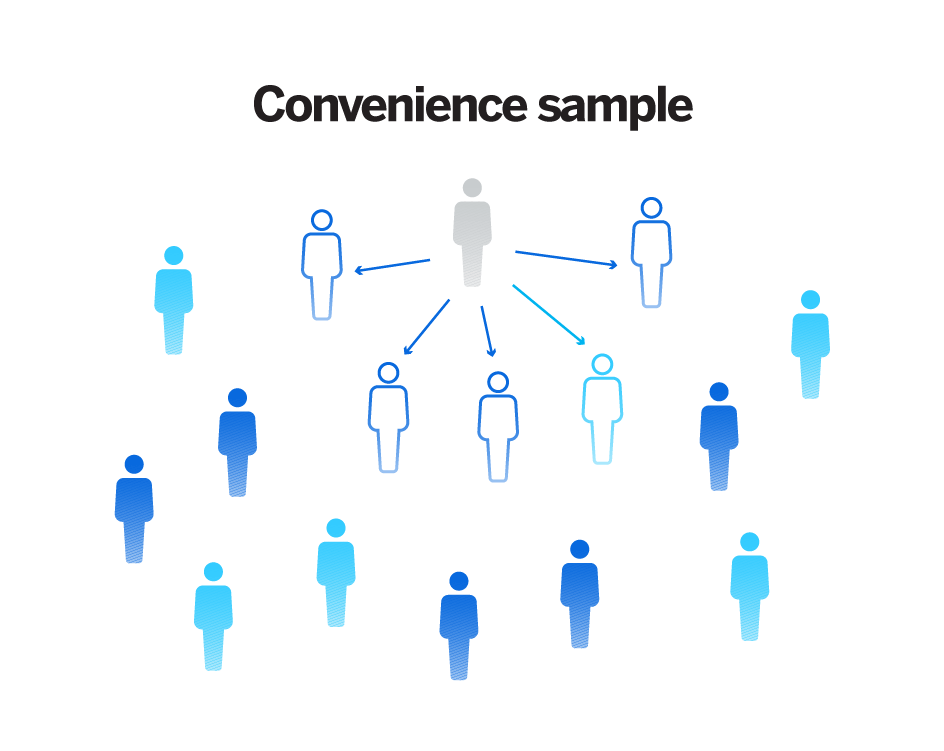
Convenience sampling is a non-probability sampling method that involves selecting participants who are easily accessible or readily available to the researcher. This method is often used when time, budget, or resources are limited, and the researcher needs to collect data quickly. However, convenience sampling has several limitations that researchers should be aware of.
One of the main limitations of convenience sampling is that it may not be representative of the population as a whole. This is because the sample is not selected randomly, and participants may have unique characteristics or behaviors that are not reflective of the larger population. For example, if a researcher only surveys shoppers in a mall, the results may not be generalizable to the entire population of shoppers in that area.
Another limitation of convenience sampling is that it may introduce bias into the results. Participants who are easily accessible or readily available may be more willing to participate in the study, or they may have certain characteristics or behaviors that make them more likely to be selected. For example, if a researcher surveys students in their classroom, they may only get responses from students who are more engaged in the class or who have strong opinions about the topic being studied.
Despite these limitations, convenience sampling can be a useful method for gathering data in certain situations. It is often used in exploratory research or pilot studies to gather preliminary data before conducting a larger study. It can also be useful for studies that have a narrow focus or specific target population, such as patients with a particular medical condition.
Overall, researchers should use caution when interpreting the results of convenience samples and should consider the limitations of this sampling method when designing their studies. They should also consider using other sampling methods, such as random sampling or stratified sampling, to increase the representativeness of their sample and reduce bias in their results.